Table of Contents
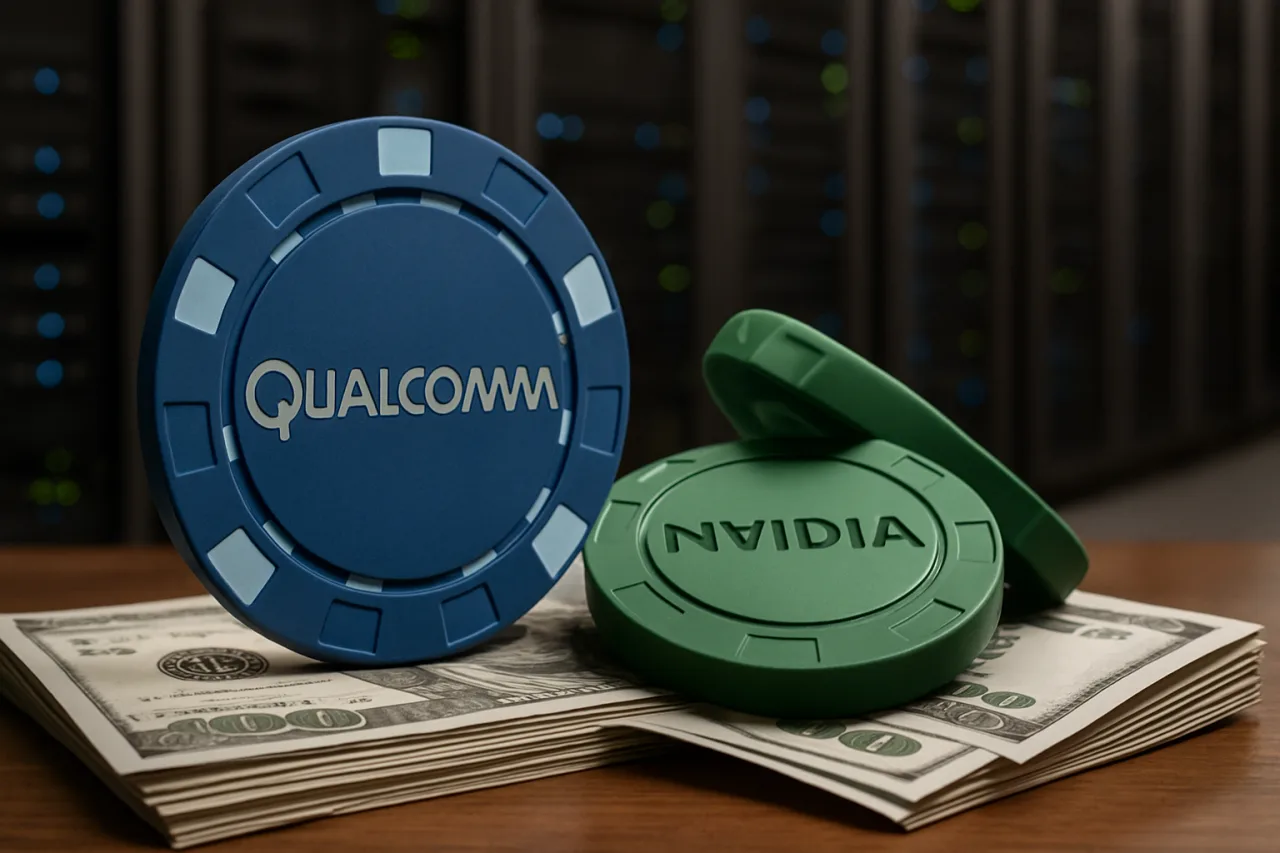
Qualcomm Modular acquisition is complete. On July 29, 2026, Qualcomm closed its $3.92 billion all-stock acquisition of Modular, the AI software startup founded by Swift creator Chris Lattner. The deal gives Qualcomm up to 19.2 million newly issued shares — and positions the chipmaker as the first credible challenger to NVIDIA’s CUDA monopoly. “The future belongs to developer-friendly, horizontal platforms that can run across diverse compute environments and give customers real choice in how and where they deploy AI,” said Qualcomm CEO Cristiano Amon. Modular’s software lets AI models run efficiently across any hardware — NVIDIA, AMD, Qualcomm, and others — without developers rewriting code. If successful, the Qualcomm Modular deal breaks the lock that NVIDIA’s CUDA ecosystem has held over AI development for a decade. For Filipino developers, engineers, and investors watching the AI infrastructure race, this acquisition signals that the AI hardware market is about to become competitive — and competition means lower costs, more choice, and new opportunities.
Key Takeaway
- 💰 $3.92 Billion All-Stock: Qualcomm acquired Modular for approximately $3.92 billion in stock — up to 19.2 million Qualcomm shares. The deal closed on July 29, 2026, roughly five weeks after announcement.
- 🛡️ CUDA Challenger: Modular’s software is hardware-agnostic — it runs AI models across NVIDIA, AMD, and Qualcomm chips without code rewrites. This directly challenges NVIDIA’s CUDA, which has locked developers to NVIDIA hardware for a decade.
- 👨💻 Chris Lattner: Modular was founded by Chris Lattner, creator of Apple’s Swift programming language and former head of AI software at Google. He now becomes EVP of Advanced AI Software and Platforms at Qualcomm.
- 📊 $40B Revenue Target: Qualcomm raised its fiscal 2029 target to $40 billion in non-handset revenue, with $15 billion from data centers. The Qualcomm Modular acquisition is central to this strategy.
- 🌐 For Filipino Developers: If Qualcomm Modular succeeds, AI development becomes hardware-agnostic — meaning developers can choose the cheapest or fastest chip for each task. This could reduce AI infrastructure costs by 30-50% for cost-conscious Filipino startups.
What Modular Actually Does
Modular builds software that sits between AI models and hardware. Today, if you write an AI application using NVIDIA’s CUDA framework, it only runs on NVIDIA GPUs. If you want to run the same application on AMD or Qualcomm chips, you have to rewrite significant portions of your code. This is why NVIDIA’s CUDA has become a monopoly — not because NVIDIA’s hardware is always the best, but because the software ecosystem locks developers in.
Modular solves this with a hardware-agnostic runtime. You write your AI model once, and Modular’s software — called MAX (Modular Acceleration X) — compiles and runs it across NVIDIA, AMD, Qualcomm, and other chips without modification. As the Wall Street Journal reported, Modular “provides software that allows AI to run efficiently across hardware architectures.” This is the exact opposite of CUDA’s lock-in model.
The company was founded by Chris Lattner, who created Apple’s Swift programming language and later led AI infrastructure at Google Brain and TensorFlow. Lattner’s reputation gave Modular instant credibility in the developer community. As AI Weekly reported, Qualcomm paid “a large multiple for a compiler-and-runtime startup that had raised about $380 million in total, most recently a $250 million round in September 2025 at a $1.6 billion valuation.” The $3.92 billion price tag represents roughly 2.4x the previous valuation — a premium that reflects Qualcomm’s strategic urgency.
Why Qualcomm Bought Modular
Qualcomm’s core business is smartphone chips. But the AI era has shifted compute demand from mobile to data centers, where NVIDIA dominates. Qualcomm needs a data center strategy, and it needs one fast. The Qualcomm Modular acquisition serves that strategy in two ways.
First, Modular gives Qualcomm a software layer that makes Qualcomm’s chips viable for AI workloads. Without software support, even the best AI chip is useless — developers will not write for a platform with no ecosystem. Modular’s MAX runtime gives Qualcomm instant credibility with developers who have been locked into CUDA.
Second, Modular positions Qualcomm as the “choice” alternative to NVIDIA. As CNBC reported, Qualcomm CEO Cristiano Amon said: “We believe the future belongs to developer-friendly, horizontal platforms that can run across diverse compute environments and give customers real choice in how and where they deploy AI.” That statement is a direct shot at NVIDIA’s vertically integrated model, where CUDA software and NVIDIA hardware are sold as a bundle.
On the day of the announcement, Qualcomm held an investor day and raised its fiscal 2029 targets to $40 billion in non-handset revenue, with more than $15 billion expected from the data center. The Qualcomm Modular acquisition is central to hitting that target. For more on how AI infrastructure is consolidating, see our coverage of Stripe’s OpenRouter acquisition and Jensen Huang’s LPS framework.
The CUDA Monopoly: Why It Matters
NVIDIA’s CUDA is not just software — it is a moat. CUDA was launched in 2007, and over 18 years, it has built a developer ecosystem that no competitor can easily replicate. Millions of AI applications, research papers, and production systems are written in CUDA. Switching to a different hardware platform means rewriting that code — a cost most companies will not bear. This is why NVIDIA commands premium pricing for its GPUs despite AMD and others offering competitive hardware.
The Qualcomm Modular deal attacks this moat from a new angle. Instead of trying to build a competitor to CUDA (which AMD has attempted with limited success), Modular makes CUDA irrelevant by providing a layer above it. Write once in Modular’s framework, run anywhere. If this works, NVIDIA’s pricing power diminishes because customers can switch to cheaper chips without rewriting their code. For more on how NVIDIA is responding to competitive pressure, see our analysis of NVIDIA’s Ohio AI factory.
What the Qualcomm Modular Deal Means for Filipino Developers
For Filipino developers, startups, and freelancers building AI applications, the Qualcomm Modular acquisition matters in three practical ways:
1. AI infrastructure costs may drop. If Modular’s hardware-agnostic approach succeeds, developers will be able to choose the cheapest chip for each task — NVIDIA for training, Qualcomm for edge deployment, AMD for inference. This could reduce AI infrastructure costs by 30-50% for cost-conscious Filipino startups. For more on cost-saving AI strategies, see our DeepSeek V4 Pro guide — another cost-reduction play in the AI market.
2. Edge AI becomes more viable. Qualcomm’s strength is in edge devices — smartphones, IoT, and embedded systems. Modular’s software makes it easier to deploy AI models on these devices without NVIDIA GPUs. For Filipino developers building AI applications for mobile or IoT, this opens a new hardware option. See our guide to AI prompts for Filipino professionals for practical development guidance.
3. The AI infrastructure market is diversifying. The Qualcomm Modular deal, combined with the rise of open-source models like DeepSeek V4 and the Manus Meta split, shows that the AI market is moving away from single-vendor lock-in. Filipino developers should build AI applications that are platform-agnostic — able to run on multiple hardware and software platforms. This is the same multi-model strategy that Satya Nadella recommends, as we covered in our AI World This Week #006.
The Broader AI Infrastructure Race: Where Qualcomm Modular Fits
The Qualcomm Modular acquisition does not exist in isolation. It is one of several major AI infrastructure deals in 2026 that are reshaping the competitive landscape. SpaceXAI acquired Cursor for $60 billion, gaining a coding-focused AI platform. Stripe acquired OpenRouter for $7.5 billion, gaining the AI model routing layer. NVIDIA secured $105 billion in Ohio infrastructure through the LPS framework. Now Qualcomm has spent $3.92 billion to break into the AI software layer. Each deal targets a different part of the AI stack — compute, routing, infrastructure, and now software. Together, they show that every layer of the AI economy is being consolidated, and the companies that own each layer will determine who profits from the AI revolution.
For Filipino investors, the Qualcomm Modular deal offers a window into how AI competition affects stock valuations. Qualcomm’s stock rose after the acquisition announcement, while NVIDIA’s remained flat — a signal that investors see Modular as a genuine threat to NVIDIA’s pricing power. If Qualcomm successfully commercializes Modular’s technology, NVIDIA’s gross margins — currently among the highest in the semiconductor industry — could compress. This would affect NVIDIA’s stock price and, by extension, any Philippine-based funds or ETFs with NVIDIA exposure. For more on investing in AI infrastructure, see our guide to PSE investing for OFWs and our analysis of the Anthropic IPO.
The deal also raises a question for Filipino engineers and developers: should you learn CUDA or learn platform-agnostic frameworks? For the past decade, CUDA has been the safe bet — it was the only game in town. The Qualcomm Modular deal, combined with the rise of open-source models that run on any hardware, suggests that the future is platform-agnostic. Developers who build skills in framework-agnostic AI development — using tools like Modular’s MAX, PyTorch, or ONNX — will be better positioned than those who are locked into CUDA. The Qualcomm Modular acquisition is not just a business story — it is a signal that the technical skills needed to succeed in AI are changing. The developer who can write code that runs on any chip is more valuable than the developer who can only write code for one. For more on building AI skills, see our guide to AI skills for Filipino professionals and our free AI tools for students guide. The Qualcomm Modular acquisition proves that the AI hardware market is no longer a one-horse race — and Filipino developers should position themselves for a multi-vendor future.
Frequently Asked Questions
What is the Qualcomm Modular acquisition?
Qualcomm acquired Modular, an AI software startup founded by Swift creator Chris Lattner, for approximately $3.92 billion in stock. The deal closed on July 29, 2026. Modular’s software lets AI models run across any hardware — NVIDIA, AMD, Qualcomm — without code rewrites, challenging NVIDIA’s CUDA monopoly.
Why did Qualcomm buy Modular?
Qualcomm bought Modular to enter the AI data center market. Modular’s hardware-agnostic software gives Qualcomm a way to make its chips viable for AI workloads, challenging NVIDIA’s CUDA lock-in. Qualcomm CEO Cristiano Amon said the future belongs to “developer-friendly, horizontal platforms that give customers real choice.”
Who is Chris Lattner?
Chris Lattner is the creator of Apple’s Swift programming language and former head of AI infrastructure at Google. He founded Modular and became EVP of Advanced AI Software and Platforms at Qualcomm after the acquisition. His reputation in the developer community gave Modular instant credibility.
How does the Qualcomm Modular deal challenge NVIDIA?
Modular’s software sits above CUDA and other hardware-specific frameworks. Instead of writing code for NVIDIA GPUs, developers write once in Modular’s framework and run it on any chip. This breaks NVIDIA’s software lock-in, which has been the source of its pricing power. For more on NVIDIA’s strategy, see our Jensen Huang LPS article.
What does the Qualcomm Modular deal mean for Filipino developers?
If successful, the Qualcomm Modular deal could reduce AI infrastructure costs by 30-50% by enabling hardware-agnostic deployment. Filipino developers should build AI applications that are platform-agnostic. See our guides to DeepSeek V4 and AI tools pricing for cost-saving strategies.
Is the Qualcomm Modular acquisition good for AI competition?
Yes. The Qualcomm Modular deal introduces a credible challenger to NVIDIA’s CUDA ecosystem. Competition in AI infrastructure means lower costs, more choice for developers, and less vendor lock-in. For Filipino startups operating on thin margins, this is a positive development.
Disclaimer: This article is for informational and educational purposes only and does not constitute financial, investment, or legal advice. References to specific companies, valuations, and acquisitions are based on publicly available information as of August 2026. Readers should conduct their own research and consult a licensed financial advisor before making investment decisions.