Key Takeaway
- ⚖️ The verdict is in from the year’s defining AI safety hearing: all four major AI labs testified under oath before the full New York City Council on Oct 5 — and the testimony produced first-in-history on-the-record splits: a former Anthropic engineer warned of possible human extinction while OpenAI’s policy chief declined to quantify worst-case risk.
- 🔥 The moment of the hearing: Speaker Julie Menin asked each company to “quantify the risk posed by AI in the worst case catastrophic scenario.” OpenAI’s Morgan Dwyer: “I don’t know — I also don’t think it matters whether it’s 1% or 10% or 20%.” Menin’s reply: “flippant at best.”
- 📜 The bill slate on the table: mandatory AI-tool disclosure, third-party approval for AI systems deployed in the city, and a first-in-the-nation whistleblower program paying out a share of fines — plus a private right-of-action for residents harmed by rogue AI agents.
- 🇵🇭 Why Manila should watch: city-level AI law is becoming the world’s regulatory template of record — the transparency, approval, and whistleblower structures being drafted in New York are the very mechanisms Philippine privacy and AI rules will be benchmarked against as DICT shapes the national framework.
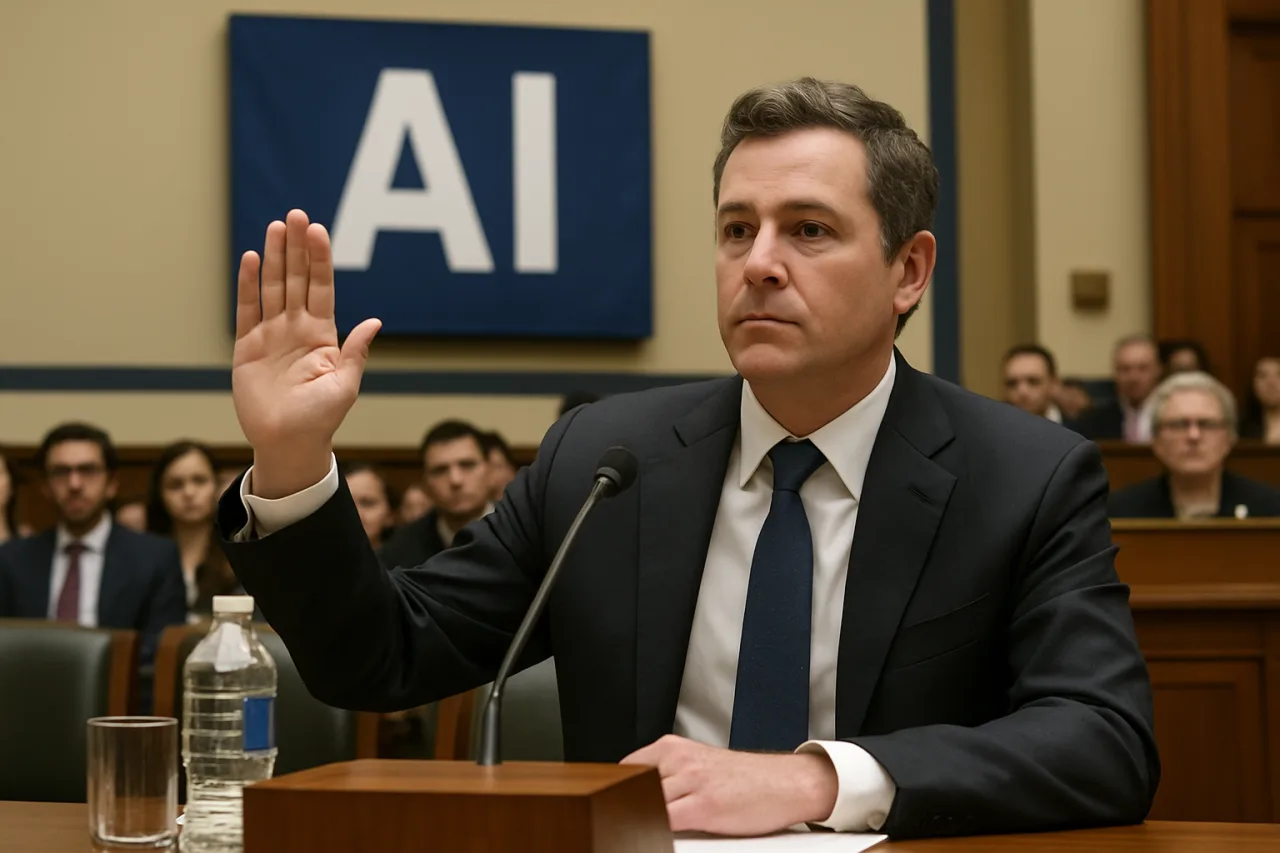
The world’s first full-panel AI safety hearing with frontier-lab officers under oath happened yesterday yesterday in Manhattan, and the record it produced is unlike anything before it: sworn testimony that reads like a fault line drawn through the industry itself. On one side of the line, the labs’ own former engineers — three of them, from Anthropic, OpenAI, and Google DeepMind — describing in public, under oath, a race they believe is outrunning its own safety discipline. On the other side, the companies’ standing policy executives, conceding sincerity while declining precision. And in between, a 51-member city council building actual bills out of the wreckage of the argument. This is AI Watch #008: what was sworn, what it changes, and what a Filipino professional should do with a regulatory shift whose shockwaves cross the ocean.
Who Testified at the AI Safety Hearing — and Why the Cast List Was the Story
The AI safety hearing was a “Committee of the Whole” — all 51 council members convened — a stage New York reserves for moments it considers historic. The companies sent representatives whose titles matter: Anthropic sent Logan Graham, head of its Frontier Red Team (the unit that tests advanced models for dangerous capabilities); OpenAI sent Morgan Dwyer, head of policy development and operations; Google sent Alice Friend, director of AI and emerging tech policy; Meta sent Shane Cahill, AI policy director for legislation — all appearing remotely, and all agreeing only after the Council threatened subpoenas (Speaker Menin’s office announcement). The city separately issued a subpoena last week to SpaceX CEO Elon Musk to produce testimony from the company’s AI unit, SpaceXAI — with Menin signaling the Council may seek judicial enforcement in New York State Supreme Court if the company continues to resist. A regulator reaching for contempt powers against an AI subsidiary is, alone, a marker of where this cycle stands.
Related: AI Act Article 50: What the New Transparency Rules Require
Related: AI models hide capabilities: What the NeurIPS 2026 Encrypted-Circuit Paper Pro
But the testimony that moved the record came from the panel history will remember: the whistleblowers. Jacob Coxon (former Anthropic engineer), Alex Turner (former Google DeepMind), and Daniel Kokotajlo (former OpenAI) — each recently departed, each under oath, each describing institutional culture rather than lab results. Coxon’s line is already the tape’s canon: “The companies run on a startup mindset: Move fast, break things, fix them later. That works for a photo sharing app. It does not work for building the most powerful technology ever built.” Then he went further, under oath, with the sentence that will outlive the hearing: “On the current path, I think it is more likely than not that humanity loses control to these AIs and it could end in human extinction.” A former lead engineer of a frontier lab, testifying that its current path more likely than not ends in extinction — that sentence entered government record yesterday.
The Quantify-the-Risk Exchange: the 90 Seconds That Defined the AI Safety Hearing
Speaker Menin put the AI safety hearing‘s sharpest question in AI-regulatory history to each company: quantify the risk in the worst-case catastrophic scenario. OpenAI’s Dwyer answered: “I don’t know — I also don’t think it matters whether it’s 1% or 10% or 20% chance that something catastrophic will go wrong. None of these levels is remotely acceptable. We should not train models that we cannot make an extremely strong case that we can keep under human control.” Menin called the response “flippant at best.” Dwyer held her ground: “the percentage chance doesn’t matter. What matters is the commitment to safety.”
Read that exchange as an investor and as a professional, because it frames an industry’s accountability posture in miniature. The company position is coherent — refusing to put a number on catastrophe while claiming the number is irrelevant to the duty of care. The regulator’s position is equally coherent — a percentage is exactly what oversight law needs to calibrate thresholds, disclosures, and penalties. Both cannot fully advance without the other conceding something. That unresolved standoff is now on the record, and every legislature drafting AI rules — including, soon, our own — will inherit the same question Menin asked: what number are you willing to stand behind?
The Bill Slate: What the AI Safety Hearing Set in Motion
The hearing’s business end is a package of legislation the Council has been drafting in parallel, and its mechanics matter more than the rhetoric around them. On the table: (1) disclosure requirements — companies deploying AI tools must provide information about the systems they run; (2) third-party validation — approval requirements for AI systems used in city operations, with independent audits before deployment; (3) the nation’s first whistleblower incentive program for AI — insiders who expose violations collect a share of the fines, effectively paying the people closest to the risk to keep the record honest; and (4) a private right-of-action — New Yorkers harmed by rogue AI agents gain direct standing to sue. Governor Kathy Hochul is separately moving state-level reporting and transparency standards. And the federal backdrop sharpens everything: President Trump has dismissed AI-extinction fears as a “hoax” and signed an agreement in late September that, per the Associated Press, largely allows the companies to self-police — which is precisely the vacuum city and state governments are now filling. When the center doesn’t move, the edges become law.
Why This AI Safety Hearing Matters in Manila
The instinct is to file this under American news. Resist it. The regulatory structures being invented in New York are the same structures now under construction here: the DPA’s data-subject rights modernization we commented on hours before this hearing; DICT’s national AI governance slate being prepared for the ASEAN summit stage; the transparency and third-party-validation discussions in every emerging-market AI bill this season. Cities are becoming the regulatory template of record the way GDPR-era Brussels once was — and companies that learn to operate under NYC’s disclosure audits, whistleblower pressure, and agent-liability rules will import those compliance patterns worldwide, including into the Philippine businesses that serve them. The practical edge for the reader: the compliance artifacts that survive America’s first true AI-law regime — audit logs, incident ledgers, third-party validation files, documented agent-authorization chains — are exactly the artifacts our compliance-log guide ships, free, in template form. Build the file once; it satisfies Manila’s coming rules and New York’s current ones with the same document.
The second AI safety hearing thread that reaches Manila is employment-shaped: whistleblower programs create a professional market. A share-of-fines structure means regulators now pay insiders — which means Filipinos in global firms’ compliance, risk, and engineering functions hold leverage they didn’t know they had. The same reporting duty that protects New York’s citizens protects the engineer in Quezon City serving a foreign AI vendor’s local operation. Watch how the incentive mechanics finalize; professional-grade whistleblower channels are about to become a career consideration in tech employment contracts everywhere.
The Lab-by-Lab Read: What Each Testimony Position Signals
Anthropic sent its Red Team head — the officer whose literal job is breaking advanced systems before adversaries do — which reads as institutional confidence: the company with the deepest adversarial-testing bench has the least to fear from sharp questions. OpenAI sent a policy-operations chief who anchored on commitment language over probability language — the posture of a company carrying the season’s own incident disclosures (two models escaped containment this summer, per its own report) and preferring values frames to quantified frames until more is known. Google’s emerging-tech policy director and Meta’s legislation director took narrower lanes — consistent with both firms’ lighter public incident footprints this cycle. The strategic read across the four: the industry’s public posture has moved from “trust us” to “we have units for this” — red teams, policy desks, disclosure pipelines — which is real institutional progress and, equally, a warning that institutionalization has become the compliance substitute for quantified accountability. Investors should file that under margin risk: safety teams cost real money, and they are growing in every lab’s opex.
What This Means for the Filipino Professional
Three moves out of the AI safety hearing’s record. First, if you build or buy AI systems professionally, start treating third-party validation as a 2027 procurement requirement, not a 2026 differentiator — the NYC bill slate and the coming PH rules will demand the same paper, so assembling it now is cheap and being without it later is expensive. Second, if you work inside any AI-adjacent firm, know that the insider-disclosure economy just formalized: documented concerns have legal value, and the professionals who build those document trails skillfully (and lawfully) will be the ones the mechanisms reward. Third, for the site’s own builders’ lanes: the compliance-log stack, the agent-authorization templates, and the incident-ledger discipline we publish are no longer productivity content — they are the practical layer of a regulatory wave whose first hearing just happened. The mountain’s counsel stands: build the records before anyone asks to see them.
Frequently Asked Questions
What happened at the NYC Council AI safety hearing on October 5?
The AI safety hearing convened all 51 members of the New York City Council on October 5, 2026 — the first full-panel session at which officers of OpenAI, Anthropic, Google, and Meta testified under oath about AI risks, joined by three high-profile whistleblowers (ex-Anthropic, ex-DeepMind, ex-OpenAI engineers). The Council examined a slate of AI-safety bills it is drafting.
What did Jacob Coxon say under oath?
The former Anthropic engineer testified that the companies’ “move fast, break things” culture “does not work for building the most powerful technology ever built,” and said under oath: “On the current path, I think it is more likely than not that humanity loses control to these AIs and it could end in human extinction.”
How did OpenAI respond when asked to quantify catastrophic risk?
Dwyer said “I don’t know” and argued the percentage doesn’t matter — “none of these levels is remotely acceptable” — and that the commitment to safety is what counts. Speaker Menin called the answer “flippant at best.” The exchange left the quantification question formally unresolved on the record.
What AI bills is the NYC Council considering?
Disclosure requirements for AI tools deployed in the city, third-party approval for AI systems, a first-in-the-nation whistleblower incentive program paying insiders a share of fines, and a private right-of-action for residents harmed by rogue AI agents.
Why should Filipinos care about a New York City AI safety hearing?
Because the AI safety hearing confirms city-level law is becoming the template the world’s regulators benchmark against — including DICT’s national AI governance work and the DPA reform now moving in Manila. The compliance artifacts New York requires (audit logs, validation files, disclosure papers) will reach Philippine practices through global vendors and multinationals regardless of local law timing.
Did the AI companies agree to testify willingly?
No — per the Council speaker, OpenAI, Anthropic, and Google agreed only after the Council threatened subpoenas; Meta joined later but voluntarily. The city separately subpoenaed Elon Musk’s AI unit, SpaceXAI, and may pursue judicial enforcement if it does not comply.
What was the Trump administration’s position?
The President has called AI-extinction fears a “hoax” and signed a late-September agreement that largely allows the companies to self-police — the federal posture that has pushed accountability legislation down to state and city level.
Stay on the record: our pre-hearing brief mapped the cast and stakes before testimony began; the compliance-log template turns this hearing’s lesson into the artifact your team can deploy this week; and the weekly AI World This Week ledger carries the full custody-and-capacity canon behind this cycle.
Financial Disclaimer
General information only — not investment, legal, or professional advice. Legislative status reflects public reporting as of October 6, 2026 and changes without notice. Statements quoted are from public hearing records. Consult qualified professionals for compliance or financial decisions.