Table of Contents
Land power shell — three words that Jensen Huang, CEO of NVIDIA, used on August 17, 2026, to redefine what the AI industry’s biggest bottleneck actually is. Not chips. Not algorithms. Not talent. Land, power, and shell. “AI is becoming infrastructure — the foundation for intelligence in every industry — and land, power, and shell have become vital in the age of AI,” Huang wrote in a blog post titled “Securing the Infrastructure of Intelligence,” published on NVIDIA’s official blog. “Now is the time to scale the AI infrastructure that will power the next industrial revolution.” The statement came with a $105 billion commitment: NVIDIA partnered with SB Energy to secure land, power, and shell capacity at the PORTS-Pike Technology Campus in Ohio, with OpenAI as the 20-year tenant. The deal covers 4.25 gigawatts initially, expandable to 8 gigawatts — enough electricity to power a small country. For Filipino engineers, investors, and professionals watching the AI race, Huang’s LPS framework explains where the next wave of value, jobs, and opportunity will be created.
Key Takeaway
- 🗣️ The Quote: “AI is becoming infrastructure — the foundation for intelligence in every industry — and land, power, and shell have become vital in the age of AI.” — Jensen Huang, CEO of NVIDIA, August 17, 2026.
- 🏗️ LPS Framework: Land, Power, and Shell (LPS) is Huang’s term for the physical infrastructure — real estate, electricity, and data center buildings — that AI factories need to operate. Huang says LPS is now the bottleneck, not chips.
- 💰 $105 Billion Deal: NVIDIA partnered with SB Energy at the PORTS-Pike campus in Ohio. OpenAI is the 20-year tenant. Initial capacity: 4.25 GW, expandable to 8 GW. Each generation of NVIDIA GPUs deployed there represents $150-200 billion in revenue.
- ⚡ Why It Matters: If the bottleneck has shifted from chips to electricity and real estate, then the companies and countries that control power generation and land will determine who wins the AI race — not just who has the best algorithms.
- 🇵🇭 Filipino Angle: The Philippines is positioning as a data center hub through the Pax Silica corridor. Filipino engineers in the Middle East already build power plants and infrastructure — the same skills AI factories need.
The Full Quote in Context
Jensen Huang published the blog post on August 17, 2026, the same day NVIDIA announced the PORTS-Pike partnership. The full statement reads:
“AI is becoming infrastructure — the foundation for intelligence in every industry — and land, power, and shell have become vital in the age of AI. Now is the time to scale the AI infrastructure that will power the next industrial revolution. We are securing long-lived infrastructure for NVIDIA compute so OpenAI can deploy the most productive AI factories that can be upgraded repeatedly with each new generation delivering more intelligence and more revenue.”
— Jensen Huang, Founder and CEO of NVIDIA
The quote is not a throwaway line from an earnings call. It is the thesis of a 2,000-word blog post that NVIDIA published on its official corporate blog, accompanied by a press release filed with the SEC. Huang is making a formal declaration: the AI industry has entered a new phase where physical infrastructure — not algorithms — is the constraint that determines who can compete at the frontier.
What Is LPS? Breaking Down the Framework
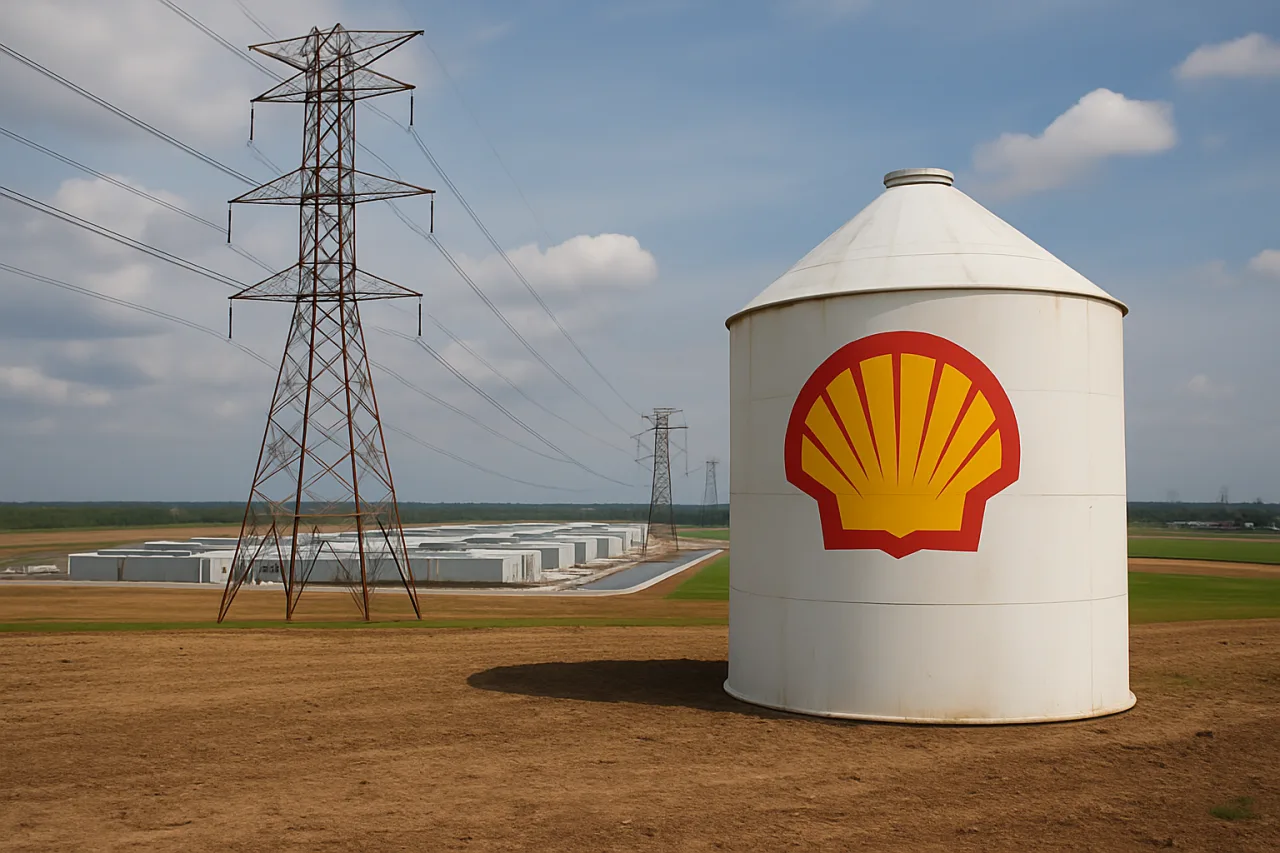
LPS stands for Land, Power, and Shell. Each component represents a physical resource that AI factories — the massive data centers where AI models are trained and deployed — require to operate. Huang’s argument is that land power shell has become the bottleneck preventing AI from scaling faster, replacing the previous bottleneck which was semiconductor supply.
Land: AI factories require enormous physical sites. The PORTS-Pike campus in Ohio spans hundreds of acres. Finding land that is close enough to power generation, connected to fiber optic networks, and permitted for industrial data center use is increasingly difficult. Huang notes that “exceptional sites” — locations with the right combination of land, power access, and connectivity — are rare and becoming harder to secure.
Power: A single AI factory can consume gigawatts of electricity — comparable to a small city. The PORTS-Pike facility’s initial 4.25 GW deployment is enough to power approximately 3 million homes. Securing long-term power purchase agreements at that scale requires relationships with utility companies, grid operators, and energy producers. As Big News Network reported, Huang said NVIDIA’s role has evolved “from building accelerated computing chips to developing complete systems, networking, CUDA software and AI factories, and now to helping secure the physical infrastructure required to deploy those systems.”
Shell: The “shell” is the data center building itself — the physical structure that houses the servers, cooling systems, power distribution, and networking equipment. Building a shell capable of housing 1.5 million GPUs requires specialized construction, advanced cooling, and years of lead time. The shell is designed to last decades and support multiple generations of computing hardware, making it a long-lived asset. For more on the scale of NVIDIA’s Ohio investment, see our NVIDIA Ohio AI factory guide.
Why the Bottleneck Shifted From Chips to LPS
For the past three years, the AI industry’s biggest constraint was semiconductor supply. NVIDIA’s H100 and Blackwell GPUs were in such demand that customers waited months for deliveries. TSMC’s CoWoS packaging capacity was the rate-limiting step for AI model training. Huang’s blog post signals that this bottleneck has been addressed — and a new one has emerged.
The reason is simple mathematics. NVIDIA has increased GPU production dramatically. TSMC has expanded CoWoS capacity. The supply of advanced chips is now growing fast enough to meet demand. But each new GPU requires electricity to run and a building to house it. You can manufacture a GPU in 12 weeks. You cannot build a 4.25-gigawatt data center in 12 weeks — it takes years of permitting, construction, and power infrastructure development.
As analyst Ricky Ho wrote on LinkedIn, “Land, power and shell could become the new CoWoS.” This is the key insight: the bottleneck that previously limited AI growth — advanced packaging capacity — has been replaced by a bottleneck that is harder to solve because it involves physical infrastructure, construction timelines, and energy policy.
The PORTS-Pike Deal: What NVIDIA Actually Bought
The PORTS-Pike Technology Campus is located in Portsmouth, Ohio — a region that was once home to steel manufacturing and heavy industry. SB Energy, a renewable energy developer, will build, own, and operate the data center. OpenAI will be the tenant under a 20-year lease. NVIDIA is supporting the LPS infrastructure — the land, power, and shell — while OpenAI pays the lease and operates the AI factory inside.
The numbers are staggering. Each generation of NVIDIA GPUs deployed at PORTS-Pike represents approximately 1.5 million GPUs, generating $150 to $200 billion in NVIDIA revenue. The site can support multiple upgrade cycles over 20 years, meaning the same shell can house successive generations of NVIDIA hardware. OpenAI’s total commitments to NVIDIA infrastructure through 2030 represent approximately 12 gigawatts, expandable to 16 gigawatts — roughly $600 billion in NVIDIA compute.
Huang addressed the obvious question in his blog post: “Is this circular financing?” His answer: “No. OpenAI will pay the lease. NVIDIA uses its scale and long-term visibility to secure PORTS-Pike to host NVIDIA compute.” NVIDIA is not lending OpenAI money. NVIDIA is guaranteeing the land, power, and shell so that OpenAI can deploy NVIDIA’s hardware there. If OpenAI does not use the site, NVIDIA can resell the capacity to other customers — what Huang calls the “fungibility” of NVIDIA compute, enabled by CUDA’s broad developer ecosystem.
What This Means for the Philippines
Huang’s LPS framework has direct implications for the Philippines, which is positioning itself as a Southeast Asian data center hub through the Pax Silica corridor — a planned network of data centers and semiconductor manufacturing facilities across Luzon. If the AI bottleneck is now land, power, and shell, then the Philippines’ competitive advantage is not in designing AI algorithms but in providing the physical infrastructure that AI factories need.
Three practical implications for Filipinos:
1. Power engineering skills are now AI skills. AI factories need gigawatts of electricity. The same electrical engineering, power grid, and facility operations skills that Filipino OFWs use in the Middle East’s oil and gas industry are the skills that AI factories need. Filipino engineers working on power plants in Saudi Arabia or the UAE have transferable expertise for data center power infrastructure. For more on how AI is reshaping Filipino careers, see our guide to AI skills for Filipino professionals.
2. The Philippine data center market is strategically positioned. The Pax Silica initiative aims to make the Philippines a semiconductor and data center hub. Huang’s LPS framework validates this strategy — if land, power, and shell are the bottleneck, then countries with available land, growing power generation capacity, and strategic location are valuable. The Philippines has all three, plus a workforce experienced in infrastructure construction. For more on Philippine investment opportunities, see our guide to PSE investing for OFWs.
3. Energy policy is now AI policy. If AI factories need gigawatts of power, then a country’s energy policy determines its AI competitiveness. The Philippines’ renewable energy push — solar, wind, and geothermal — aligns with the AI industry’s demand for clean power. SB Energy, NVIDIA’s partner at PORTS-Pike, is a renewable energy company. The connection between clean energy and AI infrastructure is not coincidental — it is the LPS framework in action.
The Broader Pattern: NVIDIA Becomes an Infrastructure Company
Huang’s blog post reveals a strategic shift at NVIDIA that goes beyond one deal. The company that built its reputation on designing GPUs is now securing real estate, power contracts, and data center buildings. Huang frames this as a natural evolution: “We began by building accelerated computing chips. We then expanded to systems, networking, CUDA and full-stack AI factories. Today, we are helping secure the critical infrastructure required to build these factories.” The land power shell framework is not just a description of a bottleneck — it is a strategic roadmap for NVIDIA’s next decade.
This is a significant shift. NVIDIA is no longer just a chip company. It is becoming what Huang calls “the full-stack AI infrastructure platform” — a company that secures the land, guarantees the power, provides the shell, and deploys the computing hardware inside. For NVIDIA’s competitors — AMD, Intel, Google’s TPU team — this raises the bar. Matching NVIDIA no longer means building a better chip. It means matching NVIDIA’s ability to secure physical infrastructure at gigawatt scale.
The pattern extends beyond NVIDIA. SpaceX acquired Cursor for $60 billion. Stripe bought OpenRouter for $7.5 billion. Anthropic is preparing a $2 trillion IPO. The AI industry’s leading companies are all making infrastructure plays — securing the physical and digital foundations that the next decade of AI growth will depend on. For our full coverage of this week’s AI industry moves, see AI World This Week #006.
Frequently Asked Questions
What does land power shell mean in AI?
Land power shell (LPS) is a term introduced by NVIDIA CEO Jensen Huang on August 17, 2026. It refers to the three physical resources that AI factories need: land for the data center site, power (electricity) to run the servers, and shell (the data center building itself). Huang argues that land power shell — not chips or algorithms — is now the primary bottleneck limiting AI industry growth.
Who said “land, power, and shell have become vital in the age of AI”?
Jensen Huang, founder and CEO of NVIDIA, in a blog post titled “Securing the Infrastructure of Intelligence” published on August 17, 2026, on NVIDIA’s official blog. The land power shell framework describes the physical infrastructure that AI factories require to operate at scale.
What is the PORTS-Pike deal?
NVIDIA partnered with SB Energy to secure land power shell capacity at the PORTS-Pike Technology Campus in Portsmouth, Ohio. OpenAI is the 20-year tenant. The initial deployment is 4.25 gigawatts, expandable to 8 gigawatts. Each generation of NVIDIA GPUs deployed there represents approximately 1.5 million GPUs and $150-200 billion in NVIDIA revenue.
Why is NVIDIA securing land power shell instead of just making chips?
According to Huang, the semiconductor supply bottleneck has been addressed, and the new constraint is physical infrastructure. AI factories need gigawatts of electricity and large data center buildings, which take years to permit and build. By securing land power shell capacity, NVIDIA ensures that its customers have places to deploy its hardware.
How does land power shell affect the Philippines?
The Philippines is positioning as a data center hub through the Pax Silica corridor. If land power shell is the AI bottleneck, then the Philippines’ available land, growing power generation, and workforce experienced in infrastructure construction become strategic advantages. Filipino engineers with power plant and infrastructure experience have transferable skills for AI factory operations.
Is the NVIDIA-OpenAI deal circular financing?
No, according to Huang’s blog post. OpenAI pays the lease. NVIDIA uses its balance sheet and long-term visibility to guarantee the land, power, and shell. If OpenAI does not use the site, NVIDIA can resell the capacity to other customers because NVIDIA compute is fungible — it can serve any qualified tenant in NVIDIA’s global ecosystem.