Table of Contents
Project Agila, the Bangko Sentral ng Pilipinas wholesale CBDC initiative, has completed its proof-of-concept testing and is now moving toward a full digital currency roadmap that BSP officials say will be finalized within three months. For Filipino financial professionals, bankers, fintech developers, and investors, Project Agila represents the most significant transformation of the Philippine payment infrastructure since the launch of InstaPay and PESONet — and understanding it is essential for anyone working in or alongside the Philippine financial system.
Key Takeaway
- 🏦 What it is: Project Agila is the BSP’s wholesale central bank digital currency (wCBDC) proof-of-concept, successfully testing whether financial institutions can transfer funds to each other during off-business hours using distributed ledger technology on Oracle Cloud Infrastructure.
- 📅 Timeline: BSP Deputy Governor Mamerto Tangonan says the CBDC roadmap will be completed in three months (target: October 2026), with a full wholesale CBDC issuance targeted by 2029 or earlier.
- 🏛️ Six participating banks: BDO Unibank, China Banking Corporation, Land Bank of the Philippines, RCBC, Union Bank of the Philippines, and Maya Philippines are the pilot institutions.
- 💱 Use cases: Interbank funds transfer, securities settlement (including government bonds), large-value cross-border payments, and as a potential backup to the Real-Time Gross Settlement (RTGS) system.
- 🇵🇭 Why it matters: Project Agila could reduce transaction costs, eliminate settlement lags, enable 24/7 interbank transfers, and position the Philippines as a digital currency leader in Southeast Asia — creating career and investment opportunities for Filipino professionals.
What Is Project Agila and Why Does It Matter for the Philippines?
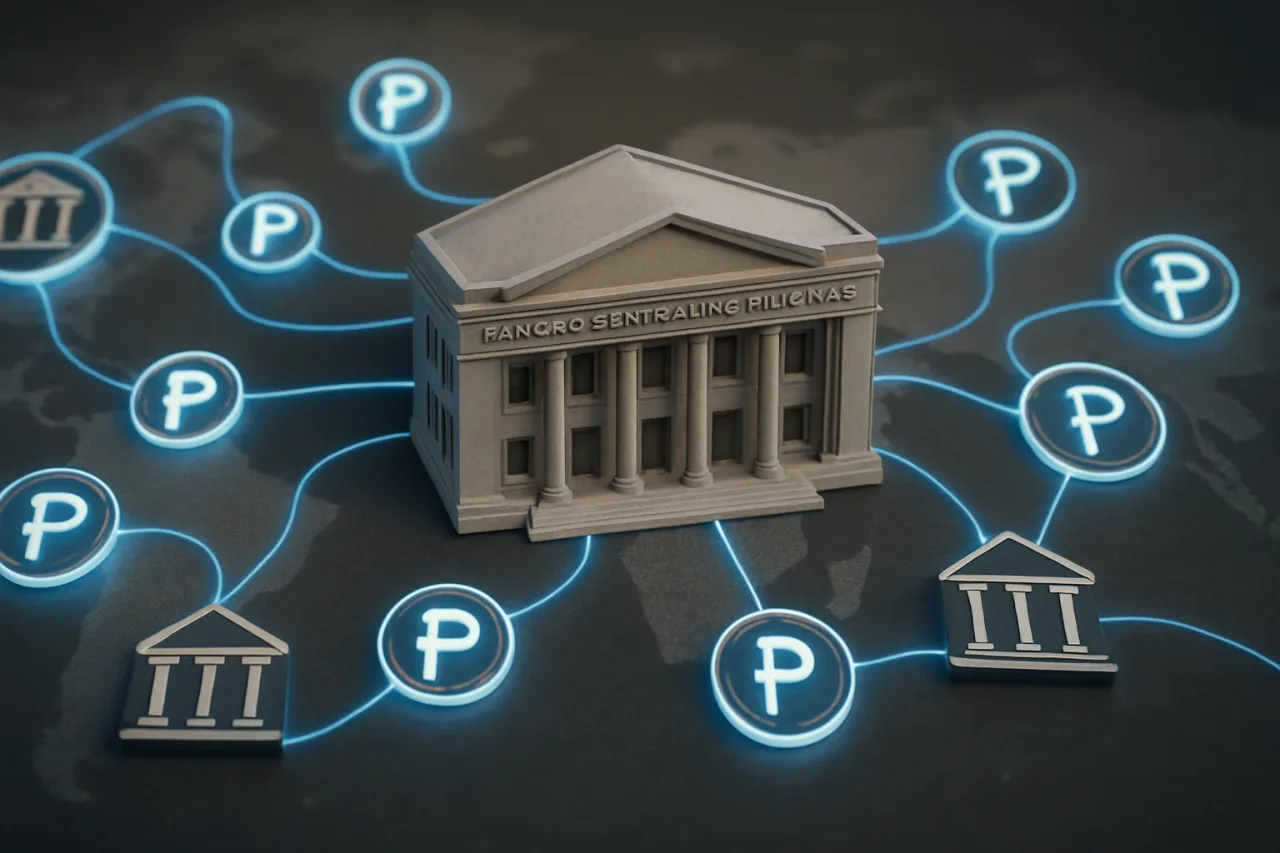
Project Agila is the Bangko Sentral ng Pilipinas initiative to explore a wholesale central bank digital currency (wCBDC) for the Philippine financial system. Unlike retail CBDCs that would be used by individual consumers, a wholesale CBDC is designed for interbank transactions — the large-value transfers that financial institutions make between themselves to settle trades, clear payments, and manage liquidity. The BSP announced its decision to pilot a wholesale CBDC in 2022, originally under the name Project CBDCPh, as part of an effort to promote the stability of the country’s payment system.
The proof-of-concept phase of Project Agila has now been completed. According to the BSP, the testing demonstrated that financial institutions can transfer funds to each other even during off-business hours — evenings, weekends, and holidays — using open-source distributed ledger technology hosted on Oracle Cloud Infrastructure. This is a significant breakthrough because the current Real-Time Gross Settlement (RTGS) system operated by the BSP operates only during business hours, creating settlement gaps that affect liquidity management and transaction efficiency.
BSP Governor Eli M. Remolona Jr. stated that wholesale CBDCs are expected to enhance liquidity management, reduce settlement risks, and support financial stability. He emphasized that insights from Project Agila will inform the central bank’s broader CBDC roadmap, which will lay out the strategic direction for exploring and developing what the BSP calls “highly compelling” CBDC use cases for the Philippines.
The Technology Behind Project Agila: Distributed Ledger and Tokenization
Project Agila is built on distributed ledger technology (DLT), the same foundational technology that powers blockchain systems. The BSP chose to test the wCBDC on Oracle Cloud Infrastructure, which provides the enterprise-grade security, scalability, and performance required for central bank operations. The use of tokenization — the process of representing financial assets as digital tokens on a ledger — enables programmable money that can execute complex settlement logic automatically.
For Filipino fintech professionals and developers, the technology behind Project Agila represents a significant shift in how financial infrastructure will be built. Tokenization enables new forms of programmable settlement, where conditions can be embedded directly into the digital currency itself. For example, a wholesale CBDC token could be programmed to settle a securities trade only when both the payment and the asset transfer are confirmed simultaneously — eliminating the settlement risk that exists in traditional systems where payment and asset transfer happen sequentially.
The Philippine blockchain ecosystem has been growing steadily, with the DICT signing a national blockchain MOU with Malaysia’s Zetrix in 2026. Project Agila adds central bank-level credibility to the blockchain and DLT space in the Philippines, potentially creating demand for Filipino developers with expertise in distributed ledger technologies, smart contracts, and tokenization. The Philippine fintech sector, valued at $4.26 billion, stands to benefit directly from the infrastructure modernization that Project Agila represents.
The Six Participating Banks: Who Is Involved in Project Agila?
The BSP selected six financial institutions to participate in the Project Agila proof-of-concept, representing a cross-section of the Philippine banking sector. These include BDO Unibank, the country’s largest bank by assets; China Banking Corporation, one of the oldest universal banks in the Philippines; Land Bank of the Philippines, the government-owned bank focused on agricultural and rural development; Rizal Commercial Banking Corporation (RCBC), a major universal bank; Union Bank of the Philippines, recognized as the country’s most digitally advanced bank; and Maya Philippines, the leading digital banking and payments platform.
The selection of these six institutions is strategic. BDO represents the traditional banking giant. Union Bank represents the digital transformation leader. Maya represents the digital-native fintech disruptor. Land Bank represents the government banking sector. China Bank and RCBC represent the mid-tier universal banks. Together, they cover the full spectrum of the Philippine financial system, ensuring that Project Agila’s findings will be applicable across the industry.
For professionals working at these institutions, Project Agila creates direct career opportunities. Banks participating in CBDC pilots need teams with expertise in distributed ledger technology, cybersecurity for digital infrastructure, regulatory compliance for new financial instruments, and integration of legacy systems with new DLT-based platforms. The Philippine banking software market, projected to grow from $362 million to $933 million by 2034, will be directly influenced by the infrastructure changes that Project Agila drives.
The CBDC Roadmap: What Comes Next for Project Agila
BSP Deputy Governor Mamerto Tangonan announced that the central bank would need approximately three months to complete its CBDC roadmap, putting the target completion date around October 2026. The roadmap will outline the BSP’s strategic direction for exploring and developing wholesale CBDC use cases, with three primary areas of focus identified during the proof-of-concept phase.
The first focus area is interbank funds transfer. Much like the current RTGS system, a wholesale CBDC would allow each bank to maintain an account with the BSP — but with the added capability of 24/7 operation and programmable settlement. The second focus area is securities settlement, including government bond settlements. The BSP has already expressed interest in using wholesale CBDC to settle tokenized treasury bonds, which could modernize the Philippine government securities market. The third focus area is large-value cross-border payments, where CBDC technology could reduce the cost and time of international transactions — a critical improvement for a country that receives over $40 billion in annual remittances.
Tangonan also noted that the BSP is exploring whether a wholesale CBDC could serve as a backup to the RTGS system, providing redundancy and resilience in the national payment infrastructure. This is particularly relevant given the increasing frequency of cyber threats targeting financial systems — a concern highlighted in the broader Philippine cyber threat landscape where 100% of organizations experienced supply chain cybersecurity incidents in 2025.
Why the BSP Chose Wholesale Over Retail CBDC
A critical decision in Project Agila is the BSP’s choice to pursue a wholesale CBDC rather than a retail CBDC. Governor Remolona has been clear that the central bank does not see a reason to issue a retail CBDC — a digital peso for everyday consumers — at this time. This decision is rooted in the Philippine context, where digital payment adoption has been accelerating rapidly through existing infrastructure like InstaPay, PESONet, GCash, and Maya.
The BSP’s Financial Inclusion Survey shows that approximately 65% of Filipino adults now own a formal financial account, a significant increase from just a few years ago. The country’s real-time payment infrastructure, powered by InstaPay and PESONet, has become an essential part of everyday commerce. With these systems already addressing retail payment needs, the BSP’s focus on wholesale CBDC makes strategic sense — it targets the infrastructure layer where the biggest efficiency gains are possible.
For Filipino professionals, this means the career opportunities from Project Agila are concentrated in the B2B and institutional side of finance — interbank operations, treasury management, securities settlement, and cross-border payments — rather than in consumer-facing digital payments. The AI banking transformation already underway in the Philippines, where banks are moving from AI co-pilots to autonomous workflows in collections, KYC, fraud, and advisory, will be accelerated by the infrastructure improvements that Project Agila enables.
Project Agila and the ASEAN Context
The Philippines is not alone in exploring wholesale CBDCs. Across Southeast Asia, central banks are experimenting with digital currency technology. Singapore’s Project Ubin explored wholesale CBDC for cross-border payments. Thailand’s Project Inthanon tested CBDC for interbank settlement. Indonesia’s Bank Indonesia has explored a wholesale CBDC for government securities. What sets Project Agila apart is its practical focus — the proof-of-concept specifically tested off-business-hours settlement, a real operational pain point that no other ASEAN CBDC project has directly addressed.
The Manila Tech Summit 2026 and the broader ASEAN digital economy agenda, including the ASEAN Digital Economy Framework Agreement (DEFA) projected to unlock $2 trillion by 2030, create a regional context where Philippine CBDC infrastructure could become a competitive advantage. If the Philippines can offer faster, cheaper, 24/7 interbank settlement through Project Agila, it could attract more international financial business and strengthen Manila’s position as a regional financial hub.
The cross-border payment use case is particularly relevant for the Philippines given its status as one of the world’s largest remittance recipients. According to the BSP, personal remittances exceeded $40 billion for the first time during 2025. If Project Agila’s wholesale CBDC technology can eventually be extended to cross-border settlement, it could reduce the cost and time of remittance transactions — directly benefiting millions of Filipino families.
What Project Agila Means for Filipino Financial Professionals
For Filipino financial professionals, Project Agila is not just a technology project — it is a career signal. The transition from traditional RTGS to DLT-based wholesale settlement will create demand for new skills and expertise across the financial sector. Here are the key implications:
1. DLT and Blockchain Expertise Will Be in High Demand
Banks participating in Project Agila and the broader market will need professionals who understand distributed ledger technology, smart contracts, and tokenization. Filipino developers and engineers who build expertise in these areas will find themselves in a seller’s market as Philippine banks race to integrate CBDC capabilities.
2. Cybersecurity for Digital Infrastructure Becomes Critical
A wholesale CBDC operates on digital infrastructure that must be secured against cyber attacks. The cybersecurity certifications that are already in high demand — CISSP, CISM, CEH — will become even more valuable as banks build teams to protect CBDC infrastructure. The intersection of DLT security and traditional banking security is a specialized niche that Filipino professionals can own.
3. Treasury and Settlement Operations Will Transform
Professionals working in bank treasury departments, settlement operations, and liquidity management will need to adapt to 24/7 settlement capabilities. The skills required will shift from managing business-hours settlement windows to operating in a continuous settlement environment — a fundamental change in how Philippine banks manage liquidity.
4. Regulatory and Compliance Expertise Will Expand
The BSP’s CBDC roadmap will create new regulatory frameworks that compliance professionals must understand. The intersection of digital currency regulation, data privacy law, and anti-money laundering requirements for DLT-based systems will require specialized expertise that is currently scarce in the Philippine market.
5. Investment Opportunities in Fintech and Banking Infrastructure
For Filipino investors, Project Agila signals that the infrastructure layer of Philippine fintech is entering a new investment cycle. Companies building DLT infrastructure, CBDC integration tools, and digital settlement platforms will see increased demand. The Philippine digital economy, now at $40 billion and 8.5% of GDP, will be a direct beneficiary of payment infrastructure modernization.
The IMF’s Role and International Validation
The International Monetary Fund has been actively involved in supporting the BSP’s CBDC exploration. In 2026, the IMF published a Technical Assistance Report titled “Stakeholder Engagement and Roadmap for Wholesale Central Bank Digital Currency in the Philippines,” which facilitated stakeholder engagement and developed a preliminary roadmap for wCBDC exploration. The IMF mission identified inefficiencies in securities settlement and cross-border payments as the most promising exploratory areas for potential wCBDC use cases.
The IMF’s involvement provides international validation for Project Agila and signals to global financial markets that the Philippines is serious about modernizing its financial infrastructure. For Filipino professionals working in international finance, this IMF engagement creates a common framework and vocabulary that aligns Philippine CBDC development with global standards and best practices.
Frequently Asked Questions About Project Agila
What is Project Agila?
Project Agila is the Bangko Sentral ng Pilipinas (BSP) wholesale central bank digital currency (wCBDC) proof-of-concept initiative. It tests whether financial institutions can transfer funds to each other using distributed ledger technology, enabling 24/7 interbank settlement outside of traditional business hours. The proof-of-concept phase has been completed, and the BSP is now developing a full CBDC roadmap.
Will Project Agila create a digital peso for consumers?
No. The BSP has explicitly chosen a wholesale CBDC approach, not a retail CBDC. The wholesale CBDC is designed for interbank transactions — large-value transfers between financial institutions — not for consumer payments. BSP Governor Eli Remolona has stated that the central bank does not see a reason to issue a retail CBDC, given that existing digital payment infrastructure like InstaPay, PESONet, GCash, and Maya already serve consumer needs effectively.
Which banks are participating in Project Agila?
Six financial institutions are participating in the Project Agila proof-of-concept: BDO Unibank, China Banking Corporation, Land Bank of the Philippines, Rizal Commercial Banking Corporation (RCBC), Union Bank of the Philippines, and Maya Philippines. These institutions represent a cross-section of the Philippine banking sector, from traditional giants to digital-native platforms.
When will the BSP’s wholesale CBDC be launched?
BSP Deputy Governor Mamerto Tangonan has stated that the CBDC roadmap will be completed in approximately three months (target: October 2026). A full wholesale CBDC issuance is targeted by 2029 or earlier, depending on the findings of the roadmap and subsequent development phases.
What technology does Project Agila use?
Project Agila uses open-source distributed ledger technology (DLT) hosted on Oracle Cloud Infrastructure. The system employs tokenization — representing financial assets as digital tokens on a ledger — enabling programmable settlement that can execute complex transactions automatically. This technology allows for 24/7 interbank transfers, unlike the current RTGS system which operates only during business hours.
How does Project Agila affect Filipino professionals?
Project Agila creates career opportunities in distributed ledger technology, blockchain development, cybersecurity for digital infrastructure, treasury and settlement operations, regulatory compliance, and fintech innovation. Banks will need teams with DLT expertise to integrate CBDC capabilities, and the broader market will see increased demand for professionals who understand tokenization, smart contracts, and digital settlement systems.
Can Project Agila reduce remittance costs for OFWs?
Potentially yes. One of the three primary use cases identified for Project Agila is large-value cross-border payments. If wholesale CBDC technology can be extended to cross-border settlement, it could reduce the cost and time of international transactions. This is particularly relevant for the Philippines, which receives over $40 billion in annual remittances. However, cross-border CBDC implementation would require international coordination and is likely years away.
Disclaimer: This article is for informational purposes only and does not constitute financial or investment advice. For official information on Project Agila and the BSP’s CBDC roadmap, visit the Bangko Sentral ng Pilipinas at bsp.gov.ph.