Table of Contents
Key Takeaway
- 🎯 Philippine fintech dominates startup funding in 2026, with digital payments reaching 59% of total transaction value: Nearly triple from 20% in 2018 — the shift to digital payments is no longer emerging, it is mainstream. The Foxmont 2026 Philippine Private Capital Report confirms fintech as the most active startup category.
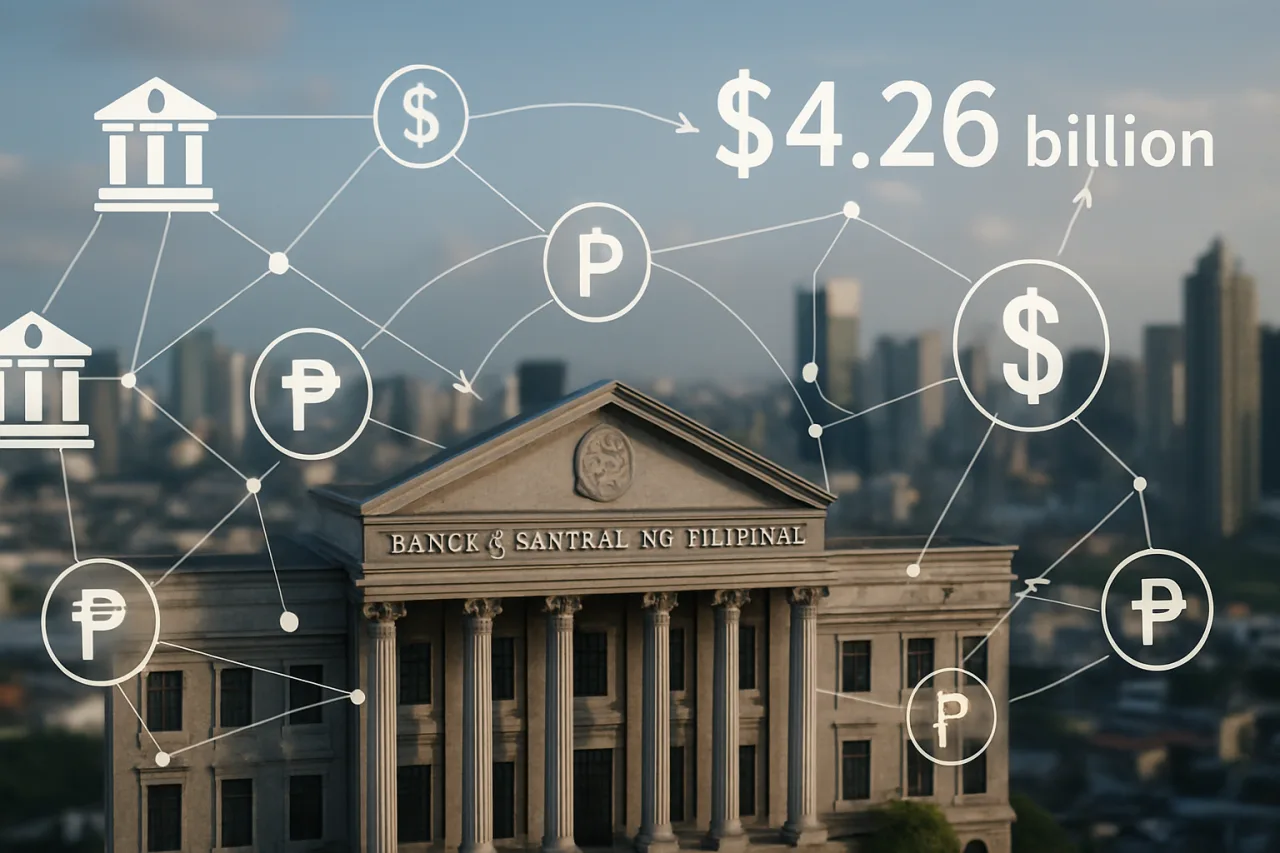
- 📊 The digital loan book hit $4.26 billion in 2025, an 11% increase from $3.84 billion in 2024: Digital lending is the fastest-growing fintech vertical, driven by unbanked population demand and regulatory support from the Bangko Sentral ng Pilipinas.
- 💼 The Philippine fintech market is projected to reach $4,661 million by 2034, growing at 16.75% CAGR: With $1,156 million in 2025, the market is expanding rapidly. Payment and fund transfer dominates with 45% market share. Banking end users hold 50% market share.
- 🔧 Foxmont Capital Partners plans to invest ₱4 billion in the Philippine startup ecosystem: Secretary Frederick Go welcomed the plan as “a strong signal of investor confidence.” The Philippines now commands 19% of Southeast Asian funding, up from 2% in 2021.
- ⏱️ 44% of Filipinos remain unbanked — the massive opportunity driving fintech growth: Digital wallets (GCash, Maya), online lending, and mobile banking are bridging the gap. The digital wallet market reached $13.7 billion in 2025 and is expected to hit $62.7 billion.
Philippine fintech 2026 is the most active sector in the country’s startup ecosystem. Digital payments have grown from 20% of transaction value in 2018 to 59% in 2024 — a near-threefold increase in six years. The digital loan book reached $4.26 billion. And Foxmont Capital Partners, the Philippines’ leading venture capital firm, plans to invest ₱4 billion to accelerate the next wave of fintech innovation.
The 2026 Philippine Private Capital Report by Foxmont Capital Partners, published March 2026, confirms that fintech maintained dominance in the Philippine funding landscape throughout 2025. Core fintech verticals — digital payments, digital lending, and online trading — continue to demonstrate robust growth and market traction. For Filipino professionals, entrepreneurs, and OFW investors, understanding Philippine fintech 2026 is essential for navigating where capital is flowing and where opportunities are emerging.
This article examines the state of Philippine fintech 2026 — the data, the trends, the investment climate, and what it means for Filipinos building wealth, starting businesses, or investing in the digital economy.
The Numbers: Philippine FinTech 2026 by the Data
| Metric | Figure | Source | Implication |
|---|---|---|---|
| Digital payments share | 59% of transaction value | Foxmont 2026 Report | Nearly 3x from 20% in 2018 |
| Digital loan book | $4.26 billion | Foxmont 2026 Report | +11% from $3.84B in 2024 |
| Fintech market size (2025) | $1,156 million | OpenPR / IMARC | Base for 16.75% CAGR growth |
| Projected market (2034) | $4,661 million | OpenPR / IMARC | 16.75% CAGR through 2026-2034 |
| Payment/fund transfer share | 45% of fintech market | OpenPR / IMARC | Dominant vertical |
| Banking end user share | 50% of market | OpenPR / IMARC | Banks driving digital transformation |
| Digital wallet market (2025) | $13.7 billion | LinkedIn market report | Expected to reach $62.7B |
| Prepaid card/wallet (2026) | $4.42 billion | Yahoo Finance | 10.6% annual growth |
| Foxmont investment plan | ₱4 billion | Department of Finance | Signal of investor confidence |
| PH share of SEA funding | 19% (up from 2% in 2021) | Foxmont 2025 Report | Philippines rising in regional VC |
| Unbanked population | 44% of Filipinos | BSP financial inclusion data | Massive untapped market |
Digital Payments: From 20% to 59% — The Mainstream Shift
The most striking data point in Philippine fintech 2026 is the growth of digital payments. In 2018, digital payments accounted for just 20% of total transaction value in the Philippines. By 2024, that share had grown to 59% — a near-threefold increase in six years. The Foxmont 2026 Philippine Private Capital Report documents this shift as evidence of “the continued shift towards digital payments in the Philippines and evolving customer preferences and behavior.”
This is not a trend — it is a structural transformation. The Philippines, once a cash-dominated economy, has become a digital-first payments market. GCash, Maya, GrabPay, and bank mobile apps have made digital payments accessible to Filipinos who never had traditional banking services. For OFWs sending remittances home, digital payment platforms have reduced costs, increased speed, and improved transparency.
The Open Finance Philippines 2026 framework, which reached ₱775 billion in digitally-enabled transactions, has accelerated this shift by enabling secure data sharing between financial institutions and fintech platforms. The BSP’s Digital Payments Transformation Roadmap provided the regulatory foundation, while fintech innovation provided the consumer-facing tools.
Digital Lending: The $4.26 Billion Loan Book
Digital lending is the fastest-growing vertical within Philippine fintech 2026. The digital loan book reached $4.26 billion in 2025, an 11% increase from $3.84 billion in 2024. This growth reflects two converging forces: demand from the 44% of Filipinos who remain unbanked, and supply from fintech platforms that use alternative data for credit scoring.
| Digital Lending Segment | Market Share | Key Players | Growth Driver |
|---|---|---|---|
| Consumer lending | Largest segment | GCash (GLoan), Maya, Tala | Unbanked population; mobile-first access |
| MSME lending | Fastest growing | First Circle, Uploan, SeekCap | Formal credit access for small businesses |
| Salary-based lending | Stable growth | Vidalia, Cashalo | Employed Filipinos needing short-term credit |
| Buy Now Pay Later | Emerging | BillEase, Atome, Plentina | E-commerce integration; Gen Z adoption |
For OFW investors, the growth of digital lending creates both opportunity and risk. Opportunity: fintech lending platforms offer higher yields than traditional savings. Risk: the 44% unbanked population includes vulnerable borrowers, and regulatory oversight is still maturing. The PSE investment approach — diversified, long-term, blue-chip focused — remains the foundation, with fintech as a higher-risk, higher-reward complement.
The Startup Funding Climate: Fintech Dominates
Within Philippine fintech 2026, fintech startups dominate the funding landscape. The Foxmont 2026 Philippine Private Capital Report confirms that fintech remained the most active startup category in the Philippines in 2025, accounting for the largest share of deal volume.
However, the broader startup funding climate is tightening. Bilyonaryo News Channel reported on January 7, 2026 that “Philippine startups are heading into a tougher funding climate this year, as investors turn more selective and capital becomes scarce.” This creates a paradox: fintech is the most funded sector, but even fintech startups face more scrutiny than in 2024-2025.
| Funding Dimension | 2024-2025 Climate | 2026 Climate | What Founders Must Do |
|---|---|---|---|
| Investor selectivity | Growth at all costs | Path to profitability | Show revenue, not just users |
| Deal sizes | Large rounds common | Smaller, more targeted | Raise what you need, not what you can |
| Stage preference | Later stage favored | Early stage favored | Seed/Series A more active than Series B+ |
| Due diligence | 4-6 weeks | 8-12 weeks | Prepare deeper financials |
| Valuation expectations | Inflated | Corrected | Accept lower valuations for survival |
| Sector preference | Broad interest | Fintech, AI, cybersecurity | Align with investor thesis |
Foxmont’s ₱4 Billion Bet: Signal of Confidence
Despite the tighter funding climate, Philippine fintech 2026 received a major vote of confidence from Foxmont Capital Partners. The Department of Finance reported that Secretary Frederick Go welcomed Foxmont’s plan to invest up to ₱4 billion in the local startup ecosystem during a meeting in early 2026.
“This is a strong signal of investor confidence and a boost to the country’s innovation-driven growth,” the DOF stated. The planned investment is expected to “accelerate innovation, expand access to capital, and further strengthen the Philippines’ growing startup ecosystem — ultimately generating more jobs and economic opportunities for Filipinos.”
Foxmont’s 2026 report also revealed that private capital in the Philippines accounts for approximately 0.3% of annual GDP — and its continued expansion signals the Philippines’ strong potential to emerge as a leading global economy. The Philippines now commands 19% of Southeast Asian funding, up from just 2% in 2021 — a dramatic rise that positions the country as a serious player in regional venture capital.
The Unbanked Opportunity: 44% of Filipinos
The engine driving Philippine fintech 2026 is the massive unbanked population. Despite the growth of digital payments, 44% of Filipinos remain unbanked — meaning they have no access to traditional banking services. This is both a challenge and the single largest opportunity in Philippine fintech.
| Unbanked Challenge | Fintech Solution | Market Impact |
|---|---|---|
| No bank account | Digital wallets (GCash, Maya) | $13.7B wallet market (2025) |
| No credit history | Alternative data lending | $4.26B digital loan book |
| No access to investments | Micro-investment apps | Democratized wealth building |
| No insurance coverage | Micro-insurance platforms | New market segment |
| No remittance access | Digital remittance | OFW-focused fintech growth |
| No financial literacy | Financial education apps | Long-term inclusion impact |
For the OFW community, fintech solutions are particularly transformative. OFWs can now send remittances digitally at lower cost, pay Philippine utility bills from abroad, invest in PSE stocks from overseas, and access digital lending for family needs — all through mobile apps.
The Digital Wallet Market: $13.7 Billion and Growing
The digital wallet market is the consumer-facing front line of Philippine fintech 2026. The market reached $13.7 billion in 2025 and is expected to grow to $62.7 billion — a trajectory driven by smartphone penetration, QR payment adoption, and the integration of financial services into wallet platforms.
Google Pay and Google Wallet went live in the Philippines in November 2025, with initial support from GCash, Maya, GoTyme Bank, UnionBank, RCBC, China Bank, and EastWest. This signals stronger local readiness for tokenized, device-based card usage — and positions the Philippines for the next phase of digital wallet evolution.
| Wallet Platform | Market Position | Key Feature | 2026 Trajectory |
|---|---|---|---|
| GCash | Market leader | Full financial ecosystem (pay, borrow, invest, insure) | Expanding GLoan and GInvest |
| Maya | Challenger | Bank + wallet hybrid; crypto features | Growing credit and investment products |
| GoTyme Bank | Digital bank | Physical kiosks + digital app | Rapid user acquisition |
| UnionBank | Traditional bank digital | Full banking services + digital wallet | API-first strategy; Open Finance leader |
| Google Pay | New entrant (Nov 2025) | Tokenized payments; device-based | Expanding issuer partnerships |
Regulatory Environment: BSP and Open Finance
The Philippine fintech 2026 growth story is enabled by a regulatory environment that balances innovation with consumer protection. The Bangko Sentral ng Pilipinas (BSP) has been a progressive regulator — implementing the Digital Payments Transformation Roadmap, the Open Finance Framework, and digital banking licenses.
The Open Finance Framework enables secure data sharing between financial institutions, allowing fintech platforms to access customer data (with consent) to provide better services. The BSP has also issued digital banking licenses to GoTyme, Maya Bank, Overseas Filipino Bank, UnionDigital, and Tonik Digital Bank — creating a new category of banks that operate entirely online.
However, regulation is also tightening. The NPC Advisory 2026-01 on data scraping affects fintech companies that use scraped data for credit scoring. The cybersecurity threat landscape — with 100% supply chain breach rate — means fintech platforms must invest in cybersecurity to protect customer data and financial transactions.
The Connection to the Digital Economy
Philippine fintech 2026 exists within the broader digital economy, which the Philippine Statistics Authority reported reached ₱2.74 trillion in Gross Value Added in 2025 — equivalent to 9.8% of GDP. The digital economy employed 10.39 million Filipinos in 2025, representing 21.2% of total employment.
Fintech is a critical component of this digital economy. Digital payments enable e-commerce. Digital lending fuels small business growth. Digital remittance supports OFW families. Digital investment platforms democratize wealth building. Every dimension of the digital economy depends on fintech infrastructure.
The AI automation push, the cloud computing adoption, and the broader data center expansion all create new opportunities for fintech innovation. AI-powered credit scoring, cloud-native banking platforms, and data-driven personalization are converging to make Philippine fintech 2026 the most dynamic sector in the Philippine economy.
What Filipino Professionals Should Do
For Entrepreneurs and Founders
If you are building a fintech startup, focus on the unbanked market, demonstrate revenue (not just users), and prepare for longer due diligence. The funding climate is tighter but capital is available — Foxmont’s ₱4 billion plan proves it. Target early-stage rounds, build in fintech or adjacent sectors, and show a clear path to profitability.
For OFW Investors
Digital lending platforms offer higher yields than traditional savings, but carry higher risk. Treat fintech investments as a complement to blue-chip PSE stocks, not a replacement. Use digital wallets (GCash, Maya) for remittances to reduce costs. Consider micro-investment platforms for portfolio diversification. Always verify that platforms are BSP-regulated.
For Professionals in Finance
The growth of Philippine fintech 2026 creates career opportunities in digital banking, fintech product management, regulatory compliance, and cybersecurity. Pursuing cybersecurity certifications alongside financial credentials positions you at the intersection of fintech and security — a high-demand specialty.
Related reading: see the the GCash IPO week’s first stress test, and how payday rules like how holiday pay computation works fit Philippine money mechanics.
Related reading: money moving in is the other half of fintech — our OFW remittances 2026 war-risk map, and the rate picture in the best digital bank in the Philippines, compared after tax.
Related reading: consolidation keeps reshaping the rails — see the Grab-Atome acquisition.
FAQ: Philippine FinTech 2026
How large is the Philippine fintech market in 2026?
The Philippine fintech market reached $1,156 million in 2025 and is projected to grow to $4,661 million by 2034, with a CAGR of 16.75%. Digital payments account for 59% of total transaction value, and the digital loan book stands at $4.26 billion.
What is driving Philippine fintech growth in 2026?
The 44% unbanked population creates massive demand for digital financial services. Smartphone penetration, BSP regulatory support (Open Finance Framework, digital banking licenses), and the shift from cash to digital payments are the primary growth drivers. Foxmont Capital’s ₱4 billion investment plan signals continued investor confidence.
Which fintech sectors are growing fastest in the Philippines?
Digital lending is the fastest-growing vertical, with the loan book growing 11% to $4.26 billion. Digital payments dominate with 45% of the fintech market. Digital wallets reached $13.7 billion in 2025. Buy Now Pay Later and micro-insurance are emerging segments with rapid adoption.
What is Foxmont Capital’s role in Philippine fintech?
Foxmont Capital Partners is the Philippines’ leading venture capital firm. Its 2026 Philippine Private Capital Report documents fintech as the most active startup category. Foxmont plans to invest ₱4 billion in the Philippine startup ecosystem and reports that the Philippines now commands 19% of Southeast Asian funding, up from 2% in 2021.
How does Philippine fintech affect OFWs?
Fintech enables OFWs to send remittances digitally at lower cost, pay Philippine utility bills from abroad, invest in PSE stocks from overseas, and access digital lending for family needs. Digital wallets like GCash and Maya have reduced remittance costs and increased transaction speed for OFW families.
Is the Philippine startup funding climate getting tighter in 2026?
Yes. BNC reported that Philippine startups face tighter funding in 2026, with investors becoming more selective and capital becoming scarcer. However, fintech remains the most funded sector, and Foxmont’s ₱4 billion plan shows that capital is still available for strong founders with clear revenue paths.
What is the digital wallet market size in the Philippines?
The Philippine digital wallet market reached $13.7 billion in 2025 and is expected to grow to $62.7 billion. Google Pay and Google Wallet went live in the Philippines in November 2025, with support from GCash, Maya, GoTyme Bank, UnionBank, RCBC, China Bank, and EastWest.
How does the Open Finance Framework affect Philippine fintech?
The BSP’s Open Finance Framework enables secure data sharing between financial institutions, allowing fintech platforms to access customer data (with consent) to provide better services. It reached ₱775 billion in digitally-enabled transactions and is accelerating fintech innovation by removing data silos.
What percentage of Filipinos are unbanked?
Approximately 44% of Filipinos remain unbanked, meaning they have no access to traditional banking services. This unbanked population is both the challenge and the opportunity driving Philippine fintech growth — digital wallets, online lending, and mobile banking are bridging the gap.
How does Philippine fintech connect to the broader digital economy?
The Philippine digital economy reached ₱2.74 trillion in GVA in 2025 (9.8% of GDP), employing 10.39 million Filipinos. Fintech is a critical component — digital payments enable e-commerce, digital lending fuels small business growth, and digital remittance supports OFW families. Every dimension of the digital economy depends on fintech infrastructure.
This article is based on the Foxmont 2026 Philippine Private Capital Report, Fintech News Philippines, Department of Finance announcements, OpenPR/IMARC market data, BSP financial inclusion data, and Philippine Statistics Authority digital economy data. Market projections are subject to change based on economic conditions and regulatory developments.
Financial Disclaimer: This article is for informational purposes only and does not constitute financial advice, investment recommendations, or an offer to buy or sell securities. Digital lending, fintech investments, and startup funding carry significant risk, including the potential loss of principal. Past performance does not guarantee future results. Always consult a licensed financial advisor before making investment decisions. Verify that any fintech platform you use is regulated by the Bangko Sentral ng Pilipinas (BSP).