Table of Contents
Key Takeaway
- Privacy coins — cryptocurrencies with built-in transaction shielding — are back in the top tier in 2026, led by Zcash (ZEC), which re-entered the top-10 crypto assets with a market cap surge that put it past $1,000 for the first time in seven years.
- The revival is narrative-driven, not just price action: artificial intelligence threat models and quantum-computing horizons made “the chain that can hide your keys and your transactions” relevant to security communities far beyond crypto.
- Zcash’s counter-move is technical: Project Tuxedo and successor work plan shielded-by-default, key hiding from AI-assisted analysis, and post-quantum signatures on a schedule that lands before the quantum threat window widely projected for the 2030s.
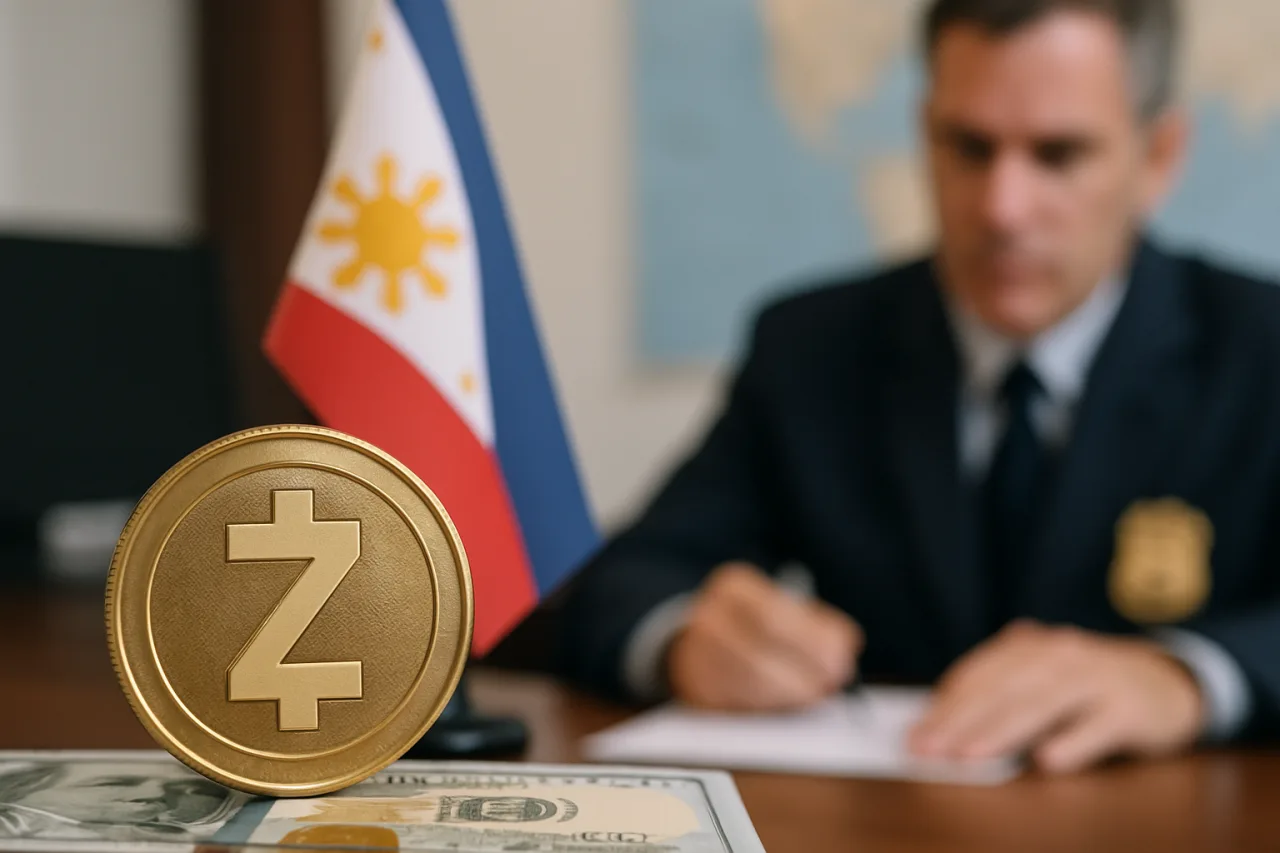
- The regulatory line is sharpening simultaneously: Europe’s AML rules already delisted privacy coins, Japan and South Korea restrict them, and the Philippines’ BSP prohibits VASPs from listing or supporting anonymity-enhanced virtual assets outright.
- Practical read for Filipino holders: owning ZEC is legal for individuals; getting pesos onto and off of it through licensed PH channels is effectively blocked — its utility here is portfolio exposure through general exchanges, not payment or cash-out utility.
What privacy coins are — and why they returned
Privacy coins are cryptocurrencies engineered so transaction parties and amounts are mathematically concealed on the public chain: Zcash uses zk-SNARK zero-knowledge proofs to encrypt sender, receiver, and amount in shielded pools while still proving the transaction is valid; Monero (XMR) obscures sender, receiver, and amount with stealth addresses, ring signatures, and ring confidential transactions by default; older or partial mechanisms (Dash’s mixer history, Firo’s Lelantus, Secret Network’s computation privacy) round out the category. Their promise is simple and old: cash-grade discretion, on a ledger.
Why the 2026 return? Three currents converged. First, price: ZEC’s 2026 run took its market cap to roughly $19–20 billion and back into the top-10 asset rankings — a level it last occupied around 2018–2019, turning the revival from a niche-trade story into a market-wide one. Second, the security narrative went mainstream: as AI systems demonstrate they can find exploits, correlate leaked databases, and profile on-chain activity at scale, and as quantum-horizon timelines harden, “privacy as a defensive layer” stopped sounding paranoid and started sounding prudent — the same AI-anxiety wave that pushed institutions toward quantum-safe planning pushed security-minded readers toward the one asset class whose entire design brief is unlinkability.
Third, technical credibility: Zcash’s roadmap work (shielded-by-default wallets, post-quantum proof systems) gave the thesis a concrete engineering calendar rather than pure hype. The market read all three at once.
The ZEC numbers, verified
Current verified figures for this analysis: ZEC trades around $1,200 (CoinGecko live check), rank #10 by market cap, with a 30-day gain of roughly +6–7 percent on top of the 2026 run that produced the top-10 re-entry. The 2026 peak territory saw prices several times the year’s opening levels before the current consolidation — this remains an extremely volatile asset, and every number here should be read knowing ZEC’s history includes an over-90 percent drawdown era after its 2016–2018 boom cycle.
The distinction matters for a story about “privacy revival”: this is a top-10 market-cap asset that is simultaneously an experiment in decade-long crypto-economic security engineering — with a holder base that includes both privacy believers and momentum traders, which is exactly why the volatility cuts both ways.
The 2026 revival also corrected an old imbalance: for years, privacy-coin trading was dominated by XMR, while ZEC’s shielded pool sat mostly unused. This cycle, Zcash’s shielded-pool share of activity and its wallet-level shielding adoption both climbed — the “financial privacy as default” argument moved from whitepaper to product behavior, which is the metric long-time watchers treat as the real revival signal, beyond price.
The AI and quantum thesis, in plain language
Zcash’s 2026 security roadmap makes three arguments worth restating plainly. First, AI as the adversary: machine-scale correlation of blockchain analytics, leaked metadata, exchange KYC leaks, and network-level monitoring can deanonymize users of superficially pseudonymous chains — today, at scale. A chain with zero-knowledge shielding removes the surface those systems feed on, which is whyDecrypt’s framing (Zcash “planning to hide your keys from AI and quantum attacks”) resonated beyond crypto media. Second, quantum as the horizon: public-key cryptography underpinning most chains (ECDSA signatures) faces theoretical breakage once sufficiently large fault-tolerant quantum machines exist — mainstream projections put that in the 2030s at the earliest; chains that migrate to post-quantum signature schemes early hold their value better through that transition.
Zcash’s successor-work plan — Post-Quantum (PQ) signature integration on a staged calendar — is among the most concrete in the industry. Third, the combination: shielded transactions plus quantum-resistant signatures equals “the private store of value that survives the adversary upgrade cycle” — the pitch in exactly one sentence.
The honest caveat belongs in the same paragraph: none of this protects a user whose keys are phished, whose seed phrase is photographed, or whose purchase channel is compromised — hardware-supply and operational security remain the first defense (a lesson the same week’s wallet-implant disclosures hammered home, and the self-custody ritual in our crypto security guide covers end to end), and privacy-tech is a shield for the chain, not the human.
The market-structure footnote behind the revival: ZEC’s top-10 re-entry is also a lesson in how narratives rotate capital. The same week ZEC consolidated around the $1,200 line, Bitcoin sat near $83,600 with total market capitalization near $2.8 trillion — meaning one privacy asset now carries roughly 0.7 percent of all crypto value, a concentration of flows into a category that was left for delisted dead barely two years ago. Momentum traders read strength; contrarians read crowding. Both should read the regulatory ledger in the next section, because the constraint that actually prices privacy coins is not technical — it is the licensed-market access line, and that line has been hardening, not softening, through the entire revival.
Why regulators moved against privacy coins first
The regulatory map is the counterweight, and it is not subtle. The EU’s AML package ended anonymous-provider support for privacy coins in the transition window. Japan banned exchanges from listing them years ago; South Korea barred them; FATF guidance treats anonymity-enhanced virtual assets as higher-risk instruments; exchange delistings (OKX and several others across 2024–2025) followed. And in the Philippines, the BSP’s 2026 token-listing guidelines for VASPs (Circular M-2026-023) prohibit licensed exchanges from listing or supporting privacy virtual assets outright.
The logic is consistent: a chain whose selling point is untraceability is structurally at odds with AML/CFT obligations — the same FATF logic that produced the Travel Rule now produces privacy-coin exclusion by default, and BSP transposed it directly. That is why the practical read below splits “legal to hold” from “impossible to cash out.”
What it means for Filipino holders — the honest version
Three practical layers. Ownership layer: nothing in Philippine law prohibits an individual from holding privacy coins — the prohibition binds licensed service providers, not private wallets — the full rule map is in the BSP crypto crackdown guide. Access layer: PH-licensed exchanges cannot list ZEC/XMR for you — meaning fiat-on ramps for privacy coins effectively do not exist here, and buying means offshore venues (with their own compliance trade-offs) through channels outside the licensed local set. Utility layer: even if held, ZEC cannot be spent, transferred, or cashed out through any BSP-licensed channel — so for an OFW-family use case (remittance, savings, payments), a privacy coin is strictly worse than the regulated stablecoin and peso rails the corridor already runs.
The rational Filipino exposure is portfolio-layered: a small speculative allocation held in self-custody, sized for the risk profile of an asset that can and did lose more than 90 percent of its value in its history, with no illusions about local utility. The stablecoin remittance story and the privacy-coin story are, in practical terms, parallel tracks that do not merge.
The portfolio logic (and the volatility tax)
For readers who take speculative exposure anyway: position-size it like the volatility it is, not like the narrative. ZEC’s 7-year cycle included drawdowns past 90 percent, and the 2026 revival is being driven in part by momentum flows that reverse hard — the current consolidation after the $1,000+ run (30-day gain modest, single-day swings sometimes −9 percent or more) is a live demonstration. Anyone buying the “AI and quantum hedge” narrative should price the drawdown into the position size, hold in self-custody with the same discipline cold-storage buyers use anywhere, and treat exchange-held privacy coins as the least private version of the asset (exchange KYC links your identity to your holdings — the entry-point paradox of privacy assets).
No leverage, no borrow-to-buy, and never funds you need on a deadline: those rules bind tighter on a story-driven asset than anywhere else.
What to watch next
Dated triggers: Zcash’s post-quantum integration milestones (watch the Zcash development calls and roadmap updates through late 2026 and 2027); shielded-pool adoption metrics and the cross-chain privacy-protocol launches (watch whether XMR and ZEC flows compete or diverge); any BSP statement or supervisory move on anonymity-enhanced virtual assets (the prohibition is in force — the watch is for enforcement actions or a review); and the exchange-coverage line: whether any major PH-relevant exchange petitions for relisting or whether delisting pressure extends further globally. And the market structure question: whether ZEC holds its top-10 cap rank through a full quarter rather than a rally month — the revival thesis says yes; volatility’s record says prove it.
Financial disclaimer
This analysis is for general information only and is not financial, investment or legal advice. Crypto assets — privacy coins especially — are extremely volatile and may lose most or all of their value. Regulatory landscapes shift; nothing here is a recommendation to buy, sell or hold any asset. Do your own research and consult a licensed adviser before financial decisions. WorldNgayon is not liable for actions taken on the basis of this content.
FAQ
What are privacy coins?
Cryptocurrencies with built-in technology to conceal transaction parties and amounts: Zcash encrypts transaction details with zero-knowledge proofs in its shielded pool, Monero obscures sender, receiver and amounts by default. Their design promise is cash-like discretion on a public ledger.
Why is Zcash (ZEC) valuable in 2026?
Three drivers: a 2026 price run that put it back in the top 10 assets by market cap for the first time in roughly seven years, a security narrative that reframes privacy as defense against AI-scale analysis and the quantum horizon, and a concrete technical roadmap toward shielded-by-default wallets and post-quantum signatures. All three are real — as is the volatility.
Are privacy coins legal in the Philippines?
Legal for individuals to hold; not legal for licensed exchanges to offer — the BSP’s 2026 VASP token-listing guidelines prohibit anonymity-enhanced virtual assets from being listed or supported by VASPs. Practically, there is no licensed PH on-ramp or cash-out for them.
Can a privacy coin protect me from scams or theft?
No — chain-level privacy protects transaction data, not user behavior. Phishing, seed-phrase theft, and compromised devices defeat any chain’s privacy tech. Operational security and verified custody always come first.
Are privacy coins a hedge against quantum computing?
Partially. Zcash’s roadmap includes post-quantum signature integration — a hedge in engineering progress. But quantum risk applies to all public-key crypto, and migration is a whole-industry challenge; treat “quantum-proof” claims as staged engineering, not achieved state.
What is the difference between Zcash and Monero privacy?
Design philosophy: Zcash offers two pools — transparent and shielded — and users choose; Monero is private by default, with no transparent option at all. Zcash’s approach gives exchanges and auditors cleaner views (which helped listing compliance) but history showed users mostly didn’t bother shielding — which the 2026 product push is changing. Monero’s default privacy made it the darknet-liquidity coin and the delisting target; ZEC’s optional model made it the regulated-listing survivor. The revival rewards both designs differently.
Does Zcash have a supply cap?
Yes — 21 million ZEC, mirroring Bitcoin’s cap, with the same four-year halving schedule governing issuance. The 2026 price revival ran alongside the November 2024 halving cycle’s supply-tightening narrative — scarcity math plus a privacy-utility story is exactly the combination long-term holders cite; it is also why dilution from new issuance keeps shrinking each cycle.
Should OFW families use privacy coins for remittances?
No. Privacy coins cannot be cashed out through licensed PH channels, and their volatility versus the peso is exactly what remittance money cannot absorb. The regulated stablecoin and peso rails remain the corridor’s practical tools; privacy coins are a niche portfolio exposure at most.