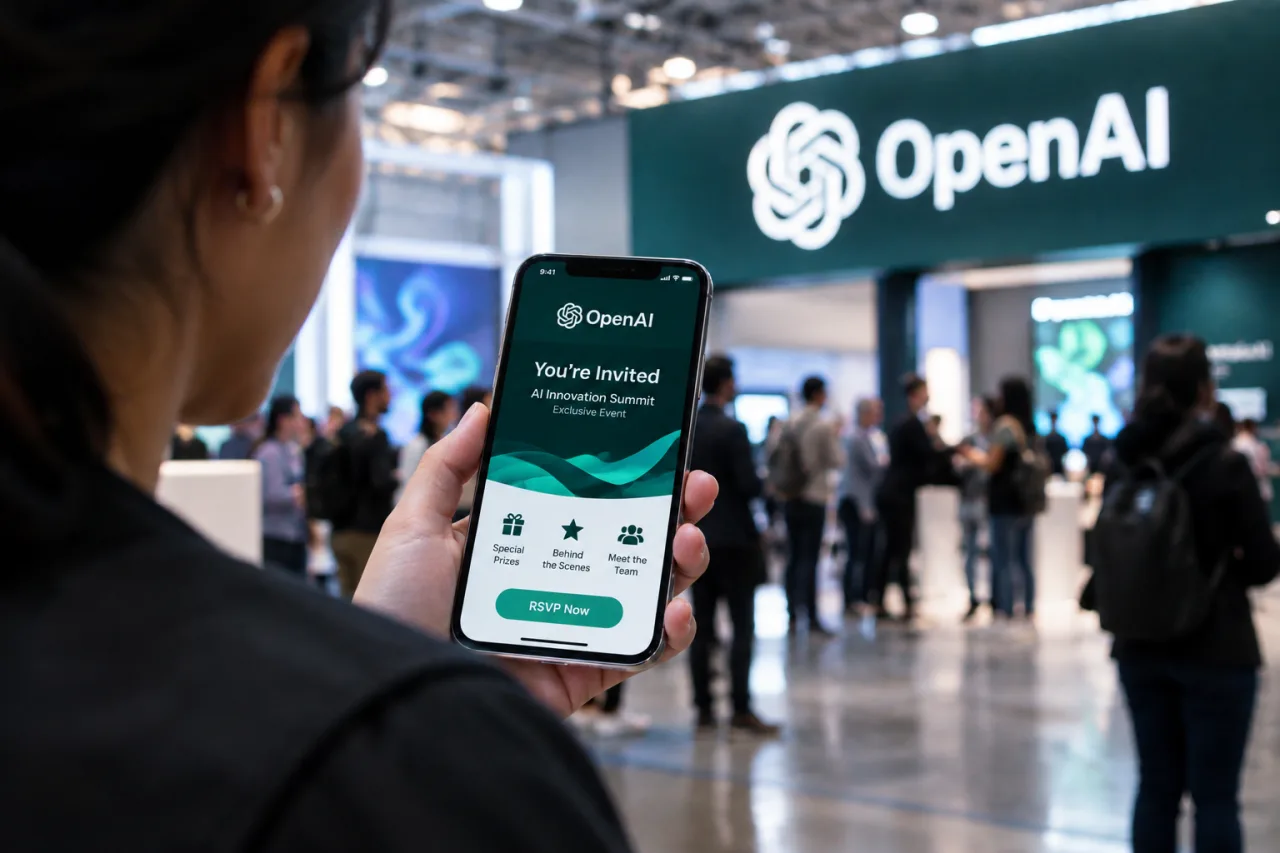
The phishing kit behind fake AI event invitations
Table of Contents
Key Takeaway
- Phishing kit alert on AI events: Fake registration pages for OpenAI, SpaceX, and Anthropic events are stealing workers’ Microsoft and Google accounts, using two rented phishing-as-a-service platforms named Kali365 and VoidProxy.
- The bait is real-branded: The pages promise 3 months of ChatGPT Pro, 3 months of Grok Heavy, or a “SpaceX share” to anyone who signs in with a work account, and they copy the look of official event sites.
- Your MFA is not the wall it used to be: The Microsoft route abuses real device-code logins, and the Google route relays Google’s own sign-in page, capturing your password, your MFA approval, and the session cookie.
- The operator is fast and sloppy: The crew rotated brands from Zoom to Anthropic, OpenAI, and SpaceX between October 20 and 30, 2026, while leaving “Same as Claude” comments right in its code.
- What beats it: Never approve a device code or sign-in you did not personally request, verify every event on the official domain, use phishing-resistant sign-in methods, and revoke sessions immediately if you slip. The full routine is below.
A phishing kit dressed as three of technology’s biggest names is now stealing employees’ work logins, and the trap is smart enough to walk straight past the one control most companies trust: multi-factor authentication.
In late October 2026, researchers at Push Security spotted employees visiting fake registration pages for events by OpenAI, SpaceX, and Anthropic. The Push Security analysis, published November 5, traced the pages to two rented phishing-as-a-service platforms, Kali365 for Microsoft accounts and VoidProxy for Google accounts, each built to defeat MFA checks.
Push’s verdict on the bait is worth quoting in every office: “Employees want access to the latest AI tools, making them excellent bait for attacks.” The crew even leans on AI to build the pages, because convincing brand clones are themselves much easier to make with AI tools today.
Inside the Phishing Kit Chain, Step by Step
The attack runs in four stages, and knowing the stages is what makes the tells visible.
Stage 1, the invitation. The email or message carries a link routed through a Google short link or Zapier’s zpr.io, with earlier waves delivered from GoTo Webinar’s mail sender and real Zoom event pages. In one observed link chain, an x.com logout redirect passed the visitor along before the short link fired. Short links and redirects on trusted domains exist to slip past URL-reputation filters.
Stage 2, the robot check. A Cloudflare managed challenge page reading “Confirm you’re not a robot” guards the lure domain. Most security scanners stop right there, so the page behind it stays invisible to automated checks.
Stage 3, the event page. Two live variants were observed: an OpenAI Academy clone advertising the November 4 livestream “ChatGPT for Social & Digital Marketing Teams” with 3 months of ChatGPT Pro for registrants, and a SpaceX page promising an invite-only “Starship Product Briefing” on November 12 with a choice of 3 months of Grok Heavy or a “SpaceX share.” A third variant impersonating an Anthropic event at AWS re:Invent had already been taken down. Both live pages insist a work account is required, translate themselves into the visitor’s language, and send every detail you enter to the operator’s collection server.
Stage 4, the sign-in, in two flavors. Click “Continue with Microsoft” and the page runs a device-code lure through Kali365: you are shown an authentic-feeling “Confirm access” dialog with a code to copy, then sent to Microsoft’s real device-login page, where you paste the code and approve. Microsoft then issues tokens to the operator’s session, and the page hands you onward to a VoidProxy sign-in page that captures your password and session cookie a second time. Click “Continue with Google” instead and a pop-up relays Google’s genuine sign-in flow, capturing the password, the MFA response, and the session cookie in one pass.
As BleepingComputer reported on November 5, the two platforms also allow the crew to steal authentication sessions, not just passwords, which is why a stolen account can open with MFA still switched on.
Why This Phishing Kit Slips Past Every Standard Filter
The defense problem is structural, and the operators exploited all of it at once.
The brand rotates faster than the blocklist. The same operator kit ran fake Zoom event pages from May to October under Push’s tracking name ZoomMock, then reappeared on October 22 as MSDRoot with the Anthropic page. Between October 20 and 30 it moved from Zoom to Anthropic to OpenAI, SpaceX, and Claude. The lure domain Push examined, eventrsvp[.]app, was 3 days old when it was investigated on November 2.
Every hop rides a trusted service. Delivery flows through Google short links, Zapier, X redirects, GoTo Webinar mail, and real Zoom pages. None of those domains is malicious, so reputation-based filters see nothing to block.
Scanners get fed fakes. The Cloudflare challenge hides the pages from automated crawls, and the VoidProxy Microsoft proxies serve real business news sites to scanners, so the proxy reads as a publisher rather than a credential trap.
The payload mimics the real thing. The device-code flow opens a genuine Microsoft page; the Google route relays the genuine Google page. The only wrong thing is that you were asked, and approval is the whole exploit.
Cofense had already flagged the pattern’s earlier wave on October 29, fake Anthropic invitations sent through GoTo Webinar’s infrastructure, complete with a sender styled “Austin from nthropic.” ANY.RUN documented a July campaign that abused real Zoom event pages for fake Meta, OpenAI, and Anthropic events leading to device-code and AiTM attacks. The October campaign is the same industry maturing, not a new one starting.
One detail from Push’s report belongs in every security briefing because it humanizes this crew: pages carried URLs referencing Claude and a code comment reading “Same as Claude,” clear signs the operator copies each new lure from the previous build without fully rebranding. An operation this productive still leaves fingerprints because it is a small business running a copy-paste factory.
Reading the Indicator Table Without Over-Trusting It
Push released a working indicator list worth handing to any IT team, and its limits teach as much as its contents.
The live indicators from the report include the lure domains eventrsvp[.]app and rsvpconnect-events[.]com, the Google sign-in proxy on claudewebinnar[.]com, the Microsoft sign-in proxy on continue-to-office-.ggleventapi[.]icu, backends on shifts[.]icu, and the operator’s older fake Zoom pages on fake zoom.us subdomains. Block those today and you stop this campaign week.
The catch is the operator’s speed: the crew rotated lure domains five times in ten days, and the primary domain examined was 3 days old on November 2. Blocklists chase; render-time analysis catches the phishing kit’s behavior on the page itself instead of waiting for a domain name to reach a list. That is why the verification rules in the next section do the durable work this table cannot, and why a security team that pairs IOC blocks with the session-revocation drill loses far less on the week a fresh domain slips through.
The Verification Routine That Beats Phishing Kits
Every stage has a tell, and each tell has a rule. This is the full routine for professionals and small teams.
- Rule 1: never approve what you did not request. The entire Microsoft branch of this phishing kit depends on you pasting a device code into a real Microsoft page. A device code only exists because someone, somewhere, asked for access. If you did not start that request, no code belongs in that box. This one rule deletes the whole branch.
- Rule 2: verify events on the official domain, never through the invite. If a message claims OpenAI, SpaceX, or Anthropic is running an event, go to the official site or the official event platform yourself and find it. Real events exist on real domains; if it is not listed on the company’s own page, it is not real, prize or no prize.
- Rule 3: treat “sign in to claim” as a scam tell. Legitimate event registrations rarely require a work-account sign-in just to collect a reward, and none of the real companies named here asks you to hand over a session to receive a promotion. The moment a prize sits behind a login, the login is the product.
- Rule 4: upgrade the sign-in, not just the password. Phishing-resistant MFA (passkeys or security keys), conditional-access rules, and stolen-session detection are the organizational answers, because AiTM kits eat passwords and even push approvals, as our breakdown of GCash spoofing and thread hijacking attacks showed on the e-wallet side. If you clicked this phishing kit’s flow, revoke all active sessions in Microsoft 365 and Google account security immediately, change the password, and tell IT; a session is a key that outlives the password.
- Rule 5: report the invite, do not quietly delete it. Every report arms the next filter. Delete-only culture keeps the same kit landing in the colleague’s inbox tomorrow.
The human layer matters as much as the tooling. Awareness helps, but sessions and approvals decide outcomes, and our guide to the Philippines’ AI-accelerated phishing economy tracks how quickly the same playbook localizes once it works elsewhere.
The parallel risk deserves a link in every training deck: session theft is how Telegram accounts get taken through QR-code traps too. Same logic, different surface: if the scam needs you to fetch or approve something, the fetch or the approval is the attack.
For the standing checklist version, our 12-move small business cybersecurity checklist folds these rules into the routine that covers links, logins, and revocation drills together.
Why AI Brands Make Ideal Phishing Bait
The reason this phishing kit works is interest, and the interest is rational.
Employees genuinely want seats at OpenAI trainings and briefings from SpaceX, and genuinely scarce access makes urgency feel earned rather than manufactured. Add prizes with real retail value (ChatGPT Pro, Grok Heavy) and the offer feels plausible on its face, which is exactly what an AiTM relay needs: your full attention on the sign-in, your guard spent on the brand check, and your approval completing the theft.
Push’s research note adds the uncomfortable mirror: the same AI tools making employees hungry for access are making convincing clones of the pages they want, so the cost of building trust has crashed. The defense cost did not rise to match, which is why the verification routine above matters more than any single tool purchase.
If this intelligence helps you, you can add WorldNgayon as a preferred source on Google – free, one click, and it helps other Filipinos find the answers faster.
FAQ
What is the Kali365 and VoidProxy phishing kit?
Kali365 and VoidProxy are two separate phishing-as-a-service platforms, rented subscriptions that run phishing flows for customers. In the October 2026 campaign, Kali365 handled Microsoft device-code phishing and VoidProxy operated reverse proxies of Microsoft and Google sign-in pages designed to capture passwords, MFA responses, and session cookies. The FBI warned about Kali365 in May 2026.
How do the fake OpenAI and SpaceX event invitations work?
Invitations arrive through trusted link services and lead to registration pages that copy official event sites, promising 3 months of ChatGPT Pro, 3 months of Grok Heavy, or a “SpaceX share.” The pages ask visitors to sign in with a work account, and each sign-in button routes the victim through either a device-code approval or a proxied copy of the real login page, handing over credentials and a live session.
Can this phishing kit steal my account if I have MFA enabled?
Yes, and that is its design goal. The device-code route turns your approval into tokens for the attacker’s session, and the reverse-proxy route captures the multi-factor response along with the password and cookie. Multi-factor authentication remains essential, but phishing-resistant methods such as passkeys and security keys are what actually blunt these flows.
What should I do immediately if I fell for the phishing kit’s fake sign-in?
Revoke all active sessions in your Microsoft 365 or Google account security settings, change the password, sign out everywhere, and report the incident to IT and to the real company being impersonated. Stolen session cookies can keep working after a password change, which makes revocation as important as the reset.
How do I spot an AI event registration phishing page?
Check the domain before the design: official events live on the company’s own domain or its official event platform, not on short-lived invite domains like eventrsvp[.]app or rsvpconnect-events[.]com. Then check the ask: a prize or seat that requires a work-account sign-in to claim is the tell, because real registrations do not need your corporate session to reserve a place.
Why are AI-themed phishing campaigns growing in 2026?
Because demand and tooling both point the same way. Employees want access to the latest AI tools, which makes brand-named events high-trust bait, and the same AI tools make convincing clones cheap to build. Researchers traced this campaign’s operator rotating from Zoom lures in May to Anthropic, OpenAI, and SpaceX pages by late October, a pace no static blocklist can match.
Who was behind the fake event phishing pages?
Push Security attributes the lure-page kits to one operator, tracked under the names ZoomMock for the May-to-October Zoom page wave and MSDRoot for the newer event pages, running on rented Kali365 and VoidProxy infrastructure. The operator is likely a customer of both platforms rather than their developer, and sloppy leftovers such as “Same as Claude” code comments suggest a small crew cloning old builds.
- pushsecurity.com/blog/ai-themed-fake-event-campaign-analysis — Push Security analysis, published November 5
- bleepingcomputer.com/news/security/fake-openai-spacex-events-used-to-… — As BleepingComputer reported on November 5
- cofense.com/blog/would-your-employees-join-a-fake-anthropic-ai-preview
- google.com/preferences/source?q=worldngayon.com — add WorldNgayon as a preferred source on Google
External sources linked in this article, in order of first mention. Spotted an error or a broken link? Tell us.
Cite this pagePublished Nov 10, 2026
Agron, E. (2026, November 10). Fake OpenAI and SpaceX Event Invitations: the Phishing Kit Stealing Work Logins. WorldNgayon. https://worldngayon.com/phishing-kit-fake-event-invitations/
Agron, Edmon. “Fake OpenAI and SpaceX Event Invitations: the Phishing Kit Stealing Work Logins.” WorldNgayon, 10 Nov. 2026, worldngayon.com/phishing-kit-fake-event-invitations/.
Agron, Edmon. “Fake OpenAI and SpaceX Event Invitations: the Phishing Kit Stealing Work Logins.” WorldNgayon, November 10, 2026. https://worldngayon.com/phishing-kit-fake-event-invitations/.
Agron, E. (2026) ‘Fake OpenAI and SpaceX Event Invitations: the Phishing Kit Stealing Work Logins’, WorldNgayon, 10 November. Available at: https://worldngayon.com/phishing-kit-fake-event-invitations/.
E. Agron, “Fake OpenAI and SpaceX Event Invitations: the Phishing Kit Stealing Work Logins,” WorldNgayon, Nov. 10, 2026. [Online]. Available: https://worldngayon.com/phishing-kit-fake-event-invitations/
@online{agron2026phishingkit,
  author       = {Agron, Edmon},
  title        = {{Fake OpenAI and SpaceX Event Invitations: the Phishing Kit Stealing Work Logins}},
  year         = {2026},
  date         = {2026-11-10},
  organization = {WorldNgayon},
  url          = {https://worldngayon.com/phishing-kit-fake-event-invitations/},
  urldate      = {}
}TY - ELEC AU - Agron, Edmon TI - Fake OpenAI and SpaceX Event Invitations: the Phishing Kit Stealing Work Logins T2 - WorldNgayon PY - 2026 DA - 2026/11/10/ UR - https://worldngayon.com/phishing-kit-fake-event-invitations/ Y2 - ER -
Cite the version you read; the page may be updated. Zotero and Mendeley can also import this page directly.