Table of Contents
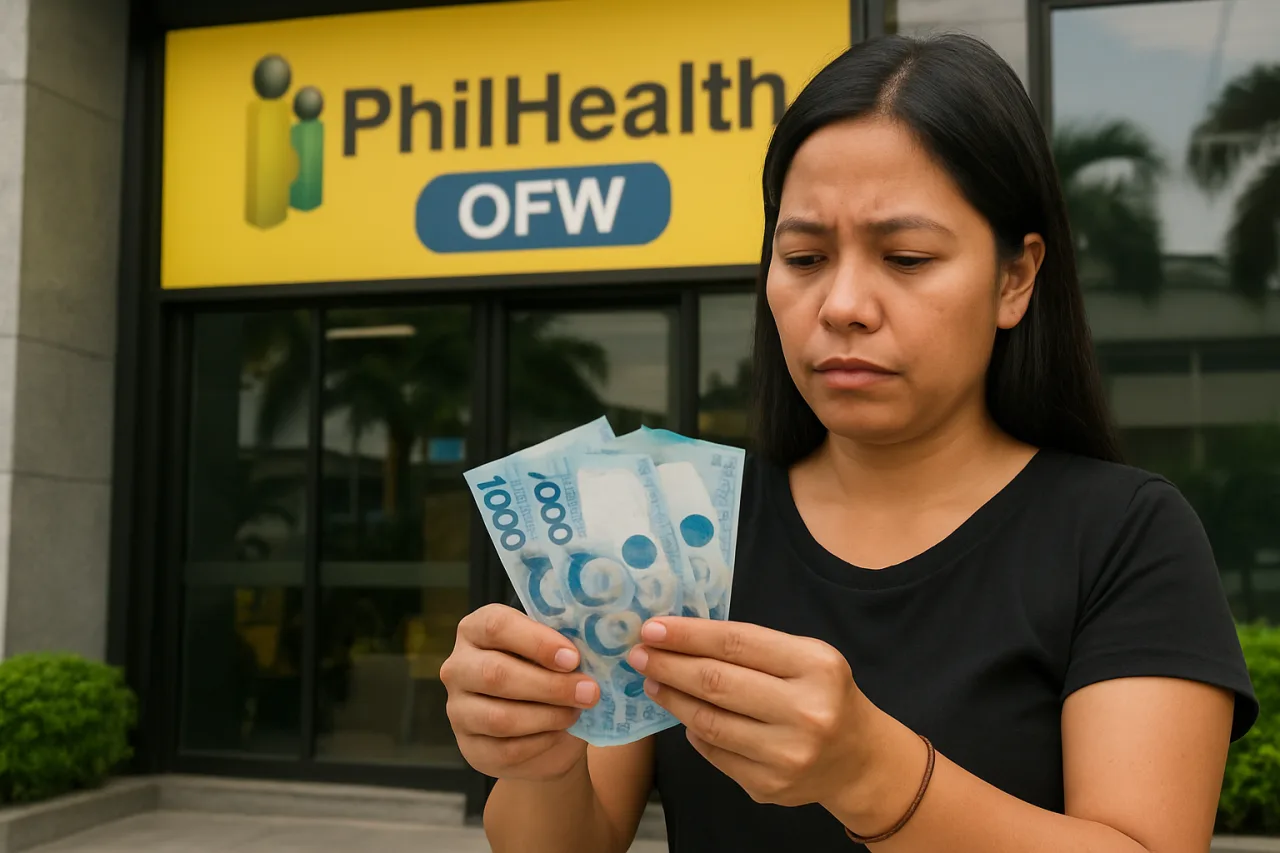
PhilHealth OFW contribution is mandatory for every Overseas Filipino Worker and Filipino professional abroad — and in 2026, the rate stays at 5 percent of monthly income, with a floor of ₱10,000 and a ceiling of ₱100,000. For OFWs, this means a minimum annual premium of ₱6,000 and a maximum of ₱60,000. Yet 67 Filipinos searched Google for “ofw philhealth contribution 2026” in the last 28 days and found no clear answer from worldngayon.com. This guide fills that gap: what OFWs owe, how to pay from abroad, what benefits you get, and whether the contribution is truly mandatory or voluntary.
Key Takeaway
- 📊 2026 PhilHealth rate remains 5%: The premium contribution rate for 2026 stayed at 5 percent of monthly basic income, with a salary floor of ₱10,000 and a ceiling of ₱100,000 — meaning ₱500 to ₱5,000 per month.
- 💳 OFWs pay a minimum ₱6,000 annually: The minimum annual PhilHealth OFW contribution is ₱6,000 (5 percent of ₱10,000 × 12 months), with a maximum of ₱60,000 for those earning ₱100,000+ monthly.
- 🌏 Pay from abroad via PhilHealth Member Portal: OFWs can pay contributions online through the PhilHealth Member Portal, generate a Statement of Premium Account (SPA), and remit via accredited banks or payment centers.
- 🏥 Benefits include dialysis, maternity, and hospitalization: PhilHealth covers ₱6,350 per dialysis session (up to 156 sessions), maternity packages, pneumonia, and expanded case rates — even for OFWs returning to the Philippines.
- ⚖️ Universal Health Care Act makes PhilHealth mandatory for OFWs: Under RA 11223, all Filipinos including OFWs are classified as direct contributors — but enforcement for land-based OFWs remains voluntary in practice.
The 2026 PhilHealth Contribution Rate
The Philippine Health Insurance Corporation (PhilHealth) confirmed in May 2026 that the premium contribution rate would remain at 5 percent of a member’s monthly basic income for 2026, in line with the Universal Health Care (UHC) Act provisions. The rate has stayed at 5 percent since 2024, with no increase applied for 2026, according to BusinessMirror reporting and the Philippine Information Agency (PIA).
For employed members, the 5 percent premium is split equally between employer and employee — each contributing 2.5 percent. For OFWs, self-employed professionals, and voluntary members classified as direct contributors, the full 5 percent is paid by the member.
The contribution is calculated based on a salary floor of ₱10,000 and a ceiling of ₱100,000. This means:
- Minimum monthly contribution: ₱500 (5 percent of ₱10,000)
- Maximum monthly contribution: ₱5,000 (5 percent of ₱100,000)
- Minimum annual contribution for OFWs: ₱6,000 (₱500 × 12)
- Maximum annual contribution for OFWs: ₱60,000 (₱5,000 × 12)
For Filipino professionals earning above ₱100,000 per month — whether working as engineers in Saudi Arabia, nurses in Canada, or software developers in Singapore — the contribution is capped at ₱5,000 monthly. You never pay more than ₱60,000 per year, regardless of income.
Is PhilHealth OFW Contribution Mandatory or Voluntary?
The answer depends on which law you look at — and which enforcement mechanism applies.
Under the Universal Health Care Act (Republic Act No. 11223), signed into law in 2019, all Filipino citizens are automatically enrolled in PhilHealth. OFWs are classified as “direct contributors,” meaning they are legally required to pay their PhilHealth OFW contribution. The law mandates that all Filipinos — including those working abroad — contribute to the national health insurance system.
However, in practice, enforcement for land-based OFWs is limited. The Philippine Overseas Employment Administration (POEA) and the Department of Migrant Workers (DMW) have historically required PhilHealth membership as part of overseas employment documentation, but the Supreme Court issued a temporary restraining order in 2020 on mandatory PhilHealth OFW contribution collection pending a challenge to the legality of the mandate. For sea-based OFWs, contributions are deducted monthly by their manning agencies. For land-based OFWs, payment remains largely voluntary in practice, though the legal mandate exists.
For Filipino professionals working abroad who are not classified as OFWs — such as those who migrated permanently, hold permanent residency, or work on local contracts in their host countries — PhilHealth OFW contribution is technically mandatory under the UHC Act but practically voluntary, as PhilHealth has no enforcement mechanism outside Philippine jurisdiction.
How to Pay PhilHealth OFW Contribution From Abroad
Before paying, check the cheapest ways to send remittance so your payment arrives without unnecessary fees. Paying your PhilHealth OFW contribution from abroad is now possible entirely online. Here is the step-by-step process:
If you need to send money home first, compare remittance fees to minimize costs. Step 1: Register or update your PhilHealth membership. If you are not yet a PhilHealth member, register at the nearest Philippine Consulate or through the PhilHealth Member Portal at member.philhealth.gov.ph. If you are already a member, ensure your membership category is updated to “Overseas Filipino Worker.”
Step 2: Log in to the PhilHealth Member Portal. Access the portal at member.philhealth.gov.ph using your PhilHealth Identification Number (PIN) and password. If you do not have an account, create one using your PIN and registered email address.
Step 3: Generate a Statement of Premium Account (SPA). Navigate to the premium payment section and generate an SPA for the period you want to pay. You can pay for a full year in advance — this is recommended for OFWs to avoid monthly transactions.
Step 4: Choose your payment method. PhilHealth accepts payments through these channels. You can also pay your SSS contribution online through similar digital channels:
- Accredited banks: BDO, BPI, Metrobank, Land Bank, and Development Bank of the Philippines (DBP) accept PhilHealth payments at their Philippine branches or through online banking.
- Payment centers: Bayad Center, SM Business Centers, and 7-Eleven CLiQQ accept PhilHealth payments in the Philippines.
- Overseas remittance: Some OFW remittance partners (including iRemit and PNB Europe) accept PhilHealth payments for OFWs who cannot access Philippine payment channels.
- Representative payment: A family member or representative in the Philippines can pay your PhilHealth OFW contribution at any PhilHealth office or accredited payment center on your behalf, using your PIN and SPA.
Step 5: Keep your receipt. PhilHealth payment receipts serve as proof of contribution. Keep digital copies for your records, as you may need them when claiming benefits or processing OWWA and DMW requirements.
What Benefits Does PhilHealth Cover for OFWs?
The PhilHealth OFW contribution entitles you to the same benefit packages as domestic members. PhilHealth has expanded its coverage significantly in 2026:
1. Hemodialysis: PhilHealth now covers ₱6,350 per dialysis session for up to 156 sessions annually, providing members with financial support of up to ₱990,600 each year. This is one of the most significant expansions, as kidney disease disproportionately affects Filipino workers.
2. Maternity care: The maternity package covers normal delivery, cesarean section, and prenatal care. The benefit amount depends on the facility type and case rate schedule.
3. Hospitalization: PhilHealth covers case-rate packages for common conditions including pneumonia, dengue, asthma, hypertension, and diabetes. The removal of the “single period of confinement” rule in 2026 means members can now claim benefits for repeated hospitalizations within the same calendar year.
4. Expanded case rates: PhilHealth has doubled several benefit packages in 2026, according to Vice President Walter Bacareza. The state insurer has also committed to paying hospitals within the 60-day mandate under the law, improving the claims experience for members.
For OFWs, these benefits apply when you return to the Philippines and use PhilHealth-accredited hospitals and facilities. PhilHealth does not cover medical expenses incurred abroad, except in specific cases involving sea-based OFWs through arrangements with manning agencies.
PhilHealth OFW Contribution vs. Other Government Contributions
For Filipino professionals abroad, PhilHealth is one of several government-mandated contributions. Here is how it compares:
| Contribution | 2026 Rate | OFW Minimum/Year | Voluntary? | Benefits |
|---|---|---|---|---|
| PhilHealth | 5% of income | ₱6,000 | Legally mandatory, practically voluntary | Health insurance (hospital, dialysis, maternity) |
| SSS (voluntary) | ₱2,400-₱4,200/mo | ₱28,800 | Voluntary | Retirement, disability, maternity, death |
| Pag-IBIG MP2 | ₱100-₱5,000/mo | ₱1,200 | Voluntary | Savings (5-7% dividend yield, 5-year lock) |
| OWWA membership | ₱920-₱1,610 | ₱920-₱1,610 | Mandatory for OFW docs | Repatriation, AKAP cash, scholarship |
For OFWs weighing which contributions to prioritize, PhilHealth provides health insurance coverage for when you return to the Philippines. SSS provides retirement and disability benefits. Pag-IBIG MP2 is a voluntary savings program with dividend returns. OWWA provides OFW-specific protections including repatriation and emergency cash assistance.
What Happens If You Don’t Pay PhilHealth OFW Contribution?
If you stop paying your PhilHealth OFW contribution, your membership becomes inactive. You will not be able to claim benefits until you pay at least three months of contributions within a six-month period before the month of availment. There are no penalties for late payment, but you lose access to benefits during the gap.
For OFWs processing departure documents, an active PhilHealth membership may be required by the DMW or POEA depending on your employment contract and host country. Check with your recruitment agency before departure.
Common Mistakes OFWs Make With PhilHealth
Many Filipino professionals abroad make avoidable mistakes with their PhilHealth OFW contribution that cost them money and benefits. Understanding these common errors can save you thousands of pesos and ensure continuous coverage:
Mistake 1: Not registering as an OFW member. Many OFWs assume their previous employed-member status carries over. It does not. When you move abroad, you must update your membership category to “Overseas Filipino Worker” to ensure your contributions are properly credited and your benefits are accessible when you return.
Mistake 2: Paying the wrong amount. Some OFWs pay the minimum ₱500 monthly without realizing that the contribution should be based on their actual monthly income. If you earn ₱50,000 per month, your PhilHealth OFW contribution should be ₱2,500 monthly (5 percent of ₱50,000), not the ₱500 minimum. Underpaying means reduced benefits when you claim.
Mistake 3: Letting membership lapse for years. OFWs who stop paying for years must pay at least three months of contributions within a six-month period before they can claim any benefits. If you plan to retire in the Philippines, letting your PhilHealth lapse means you will need to pay catch-up contributions before you can use your benefits — potentially costing ₱18,000 or more in back payments.
Mistake 4: Not keeping payment records. PhilHealth payment receipts are your proof of contribution. Without them, you may face delays when claiming benefits. OFWs should keep digital copies of all payment receipts — photograph them, save PDFs, and store them in cloud storage accessible from anywhere.
Mistake 5: Assuming PhilHealth covers overseas medical bills. PhilHealth does not cover medical expenses incurred abroad, except in limited cases for sea-based OFWs. OFWs who get sick or injured overseas must rely on their host country health insurance, employer-provided coverage, or personal health insurance. PhilHealth benefits only apply at accredited facilities in the Philippines.
Frequently Asked Questions
How much is the PhilHealth OFW contribution for 2026?
The PhilHealth OFW contribution for 2026 is 5 percent of your monthly income, with a salary floor of ₱10,000 and a ceiling of ₱100,000. This means a minimum of ₱500 per month (₱6,000 per year) and a maximum of ₱5,000 per month (₱60,000 per year). The rate has remained at 5 percent since 2024.
Is PhilHealth mandatory for OFWs in 2026?
Under the Universal Health Care Act (RA 11223), all Filipinos including OFWs are classified as direct contributors and are legally required to pay PhilHealth. However, a Supreme Court temporary restraining order in 2020 limited enforcement for land-based OFWs. In practice, land-based OFWs can pay voluntarily, while sea-based OFWs have contributions deducted by their manning agencies.
How can OFWs pay PhilHealth from abroad?
OFWs can pay PhilHealth contributions from abroad through the PhilHealth Member Portal (member.philhealth.gov.ph). Generate a Statement of Premium Account (SPA), then pay through accredited banks (BDO, BPI, Metrobank), payment centers (Bayad Center, SM), overseas remittance partners, or have a family representative pay in the Philippines using your PIN and SPA.
What PhilHealth benefits can OFWs claim?
OFWs can claim the same PhilHealth benefits as domestic members, including hemodialysis (₱6,350 per session, up to 156 sessions annually), maternity care, hospitalization for case-rate conditions, and expanded benefit packages. Benefits are claimed at PhilHealth-accredited facilities in the Philippines. PhilHealth does not cover medical expenses incurred abroad.
Can I skip PhilHealth and just use my host country’s health insurance?
Many OFWs rely on host country health insurance. However, PhilHealth coverage applies when you return to the Philippines — for retirement, family visits, or medical tourism. If you plan to retire in the Philippines, maintaining PhilHealth ensures continuous coverage. The minimum ₱6,000 annual contribution is a relatively low cost for health insurance access in the Philippines.
Does PhilHealth cover medical expenses abroad?
No. PhilHealth generally does not cover medical expenses incurred outside the Philippines, except in specific cases for sea-based OFWs through arrangements with manning agencies. For land-based OFWs, PhilHealth benefits apply when using PhilHealth-accredited facilities in the Philippines.
Sources
PhilHealth Official Circular 2026; Philippine Information Agency (PIA); BusinessMirror “PhilHealth to keep current member contribution rates” (May 2026); IncomeTaxCalculator.ph PhilHealth Contribution Table 2026; Globe Telecom blog on PhilHealth contributions; Universal Health Care Act (RA 11223); Philippine News Agency; PhilHealth Member Portal (member.philhealth.gov.ph); Department of Migrant Workers (DMW).
Disclaimer: This article provides information about PhilHealth contributions and benefits for OFWs and Filipino professionals abroad. It is not legal or financial advice. For specific questions about your PhilHealth membership, contact PhilHealth directly at their official channels or visit the nearest Philippine Consulate.