Table of Contents
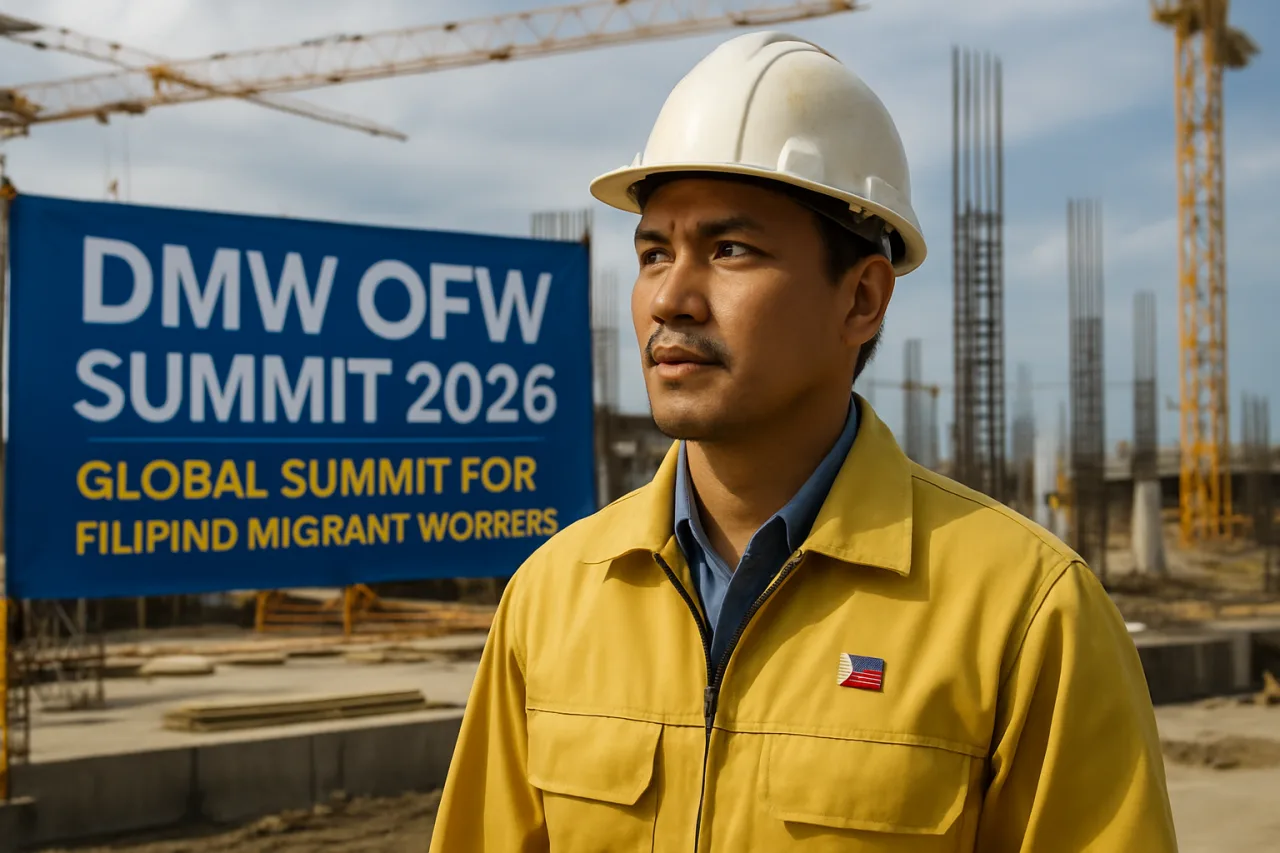
DMW OFW Summit 2026 — the first-ever Overseas Filipino Workers Global Summit — was launched by the Department of Migrant Workers on June 7, 2026, at the Quezon City M.I.C.E. Center. The summit highlights OFWs as partners in nation-building, offering reintegration, legal, enterprise development, and livelihood assistance through the National Reintegration Network (NRN).
Key Takeaway
- 🎯 First-ever DMW OFW Summit launched June 7, 2026 on National Migrant Workers’ Day: The Department of Migrant Workers partnered with the Quezon City Government to host the summit at the QC M.I.C.E. Center, highlighting OFWs as partners in nation-building and sustainable development.
- 📊 55.6% of returning OFWs need livelihood assistance; 25.5% are seeking local employment: The DMW OFW Summit addresses these needs through the National Reintegration Network (NRN), which connects OFWs to 25 government agencies for reintegration support.
- 💼 The summit offers reintegration, legal assistance, enterprise development, and livelihood programs: DMW provides reintegration and legal assistance; DTI provides enterprise development; other NRN members offer livelihood and skills training.
- 🔧 DMW expanded reintegration support amid Middle East crisis: The Marcos government rallied 25 agencies to support OFW reintegration from Middle East disruptions, redirecting workers to local employment, overseas redeployment, or entrepreneurship.
- ⏱️ The DMW OFW Summit signals a shift from treating OFWs as exports to treating them as partners: This is the first time the Philippine government has hosted a summit specifically dedicated to OFWs as nation-building partners, not just labor exports.
The DMW OFW Summit represents a historic shift in how the Philippine government treats overseas Filipino workers. For decades, OFWs have been called “mga bagong bayani” (modern heroes) — but the rhetoric has not always matched the reality of reintegration support. The first-ever DMW OFW Summit, launched on June 7, 2026, at the Quezon City M.I.C.E. Center, changes that by bringing together 25 government agencies to offer concrete programs and services.
The Department of Migrant Workers (DMW), in partnership with the Quezon City Government, launched the DMW OFW Summit in celebration of National Migrant Workers’ Day. The summit highlights the vital role of OFWs in shaping inclusive economic growth and sustainable development for the country — and seeks to strengthen partnerships, improve coordination, and reaffirm the country’s commitment to protecting migrant workers.
For OFWs, their families, and the broader Philippine economy, the DMW OFW Summit matters because it transforms reintegration from a slogan into a system. This article maps what the summit offers, who benefits, and how OFWs can access the programs.
The Numbers: DMW OFW Summit 2026
| Metric | Figure | Source | Significance |
|---|---|---|---|
| Summit date | June 7, 2026 | DMW | National Migrant Workers’ Day |
| Venue | QC M.I.C.E. Center | DMW | Quezon City Hall Compound |
| Government agencies | 25 | DMW / PNA | Whole-of-government approach |
| OFWs needing livelihood assistance | 55.6% | DMW data | More than half of returning OFWs |
| OFWs seeking local employment | 25.5% | DMW data | Quarter need job placement |
| NRN member organizations | Multiple | DMW | National Reintegration Network |
What the DMW OFW Summit Offers
| Program | Providing Agency | What It Offers OFWs |
|---|---|---|
| Reintegration assistance | DMW | Comprehensive reintegration support; case management; referral to other agencies |
| Legal assistance | DMW | Legal counsel for labor disputes; contract issues; illegal recruitment cases |
| Enterprise development | DTI (Department of Trade and Industry) | Business registration; entrepreneurship training; market access; MSME support |
| Livelihood assistance | NRN members | Skills training; livelihood starter kits; financial assistance for small businesses |
| Local employment | DOLE / PESO | Job matching; skills certification; local placement services |
| Overseas redeployment | DMW / POEA | Alternative overseas placement; skills upgrading for new markets |
The National Reintegration Network (NRN)
The DMW OFW Summit is powered by the National Reintegration Network (NRN) — a multi-agency framework that connects returning OFWs to the services they need. The NRN includes:
| NRN Member | Role in OFW Reintegration |
|---|---|
| DMW | Lead agency; reintegration and legal assistance |
| DTI | Enterprise development; business registration; MSME support |
| DOLE | Local employment; labor market information |
| TESDA | Skills training; competency certification |
| OWWA | Welfare programs; education benefits; livelihood loans |
| DSWD | Social protection; emergency assistance |
| Land Bank / DBP | Financing for OFW businesses; reintegration loans |
| Others (25 total) | Housing, health, education, and other support services |
The Middle East Crisis Context
The DMW OFW Summit takes on additional urgency amid Middle East disruptions that have displaced Filipino workers. The Philippine News Agency reported on June 1, 2026 that the DMW continues to expand its reintegration programs, redirecting OFWs affected by the Middle East crisis to local employment, overseas redeployment, or entrepreneurship pathways.
The Marcos government rallied 25 agencies to support OFW reintegration — a whole-of-government response that the DMW OFW Summit showcases. The summit is not just a celebration; it is a practical response to a real crisis affecting thousands of Filipino workers abroad.
The Three Reintegration Pathways
The DMW OFW Summit promotes three pathways for returning OFWs:
| Pathway | What It Offers | Who It’s For |
|---|---|---|
| Local employment | Job matching; skills certification; local placement | OFWs wanting to stay in the Philippines (25.5%) |
| Overseas redeployment | Alternative overseas placement; new market access | OFWs wanting to work abroad again in different markets |
| Livelihood/entrepreneurship | Business training; financing; livelihood starter kits | OFWs wanting to start businesses (55.6% need this) |
How OFWs Can Access DMW Summit Programs
| Step | Action | Where to Go |
|---|---|---|
| 1 | Contact DMW | DMW Central Office, Mandaluyong City; or DMW regional offices |
| 2 | Register with NRN | Through DMW; provides access to all 25 member agencies |
| 3 | Choose pathway | Local employment, overseas redeployment, or entrepreneurship |
| 4 | Access services | Skills training (TESDA); business registration (DTI); financing (Land Bank/DBP) |
| 5 | Follow-up support | DMW case management; ongoing NRN support |
The Digital Connection: How Technology Supports Reintegration
The DMW OFW Summit and reintegration programs increasingly leverage digital tools. The DMW has organized dialogues with recruitment agencies and continues to modernize its systems. For OFWs who have access to remote work opportunities, AI jobs, and digital wallets for receiving benefits, technology is creating new reintegration pathways that didn’t exist before.
For OFWs considering entrepreneurship, the startup ecosystem and fintech lending platforms offer alternatives to traditional bank financing. Digital business registration through DTI, e-commerce platforms for market access, and digital payment systems (GCash, Maya, QR Ph) make it easier than ever for returning OFWs to start and run a business in the Philippines.
The Measurement Challenge: Tracking Reintegration Success
The DMW OFW Summit represents a significant step forward in OFW reintegration policy, but measuring its success will require sustained effort beyond the event itself. The DMW has collected data showing that 55.6% of returning OFWs need livelihood assistance and 25.5% seek local employment — but these figures represent demand, not outcomes. The real test will be whether the summit’s programs actually move OFWs from needing assistance to achieving self-sufficiency.
Measuring reintegration success is inherently complex. Unlike deployment metrics — which track the number of OFWs sent abroad — reintegration outcomes span multiple dimensions: employment status, income level, business sustainability, mental health, family stability, and community integration. The DMW will need to develop a comprehensive tracking system that follows OFWs not just through the initial reintegration process but for years afterward to understand whether the programs are working.
The 25-agency NRN framework provides a natural data collection network. Each agency that touches an OFW — DMW for case management, DTI for business registration, TESDA for skills certification, Land Bank for financing — generates records that could be integrated into a unified reintegration tracking system. If the DMW OFW Summit leads to better data integration across these agencies, it will have created a lasting institutional legacy beyond the event itself.
The Future of OFW Reintegration Beyond 2026
The DMW OFW Summit is the first of what DMW intends to be an ongoing series of engagements with the OFW community. The summit’s success will likely determine whether it becomes an annual event — and more importantly, whether the whole-of-government approach to reintegration becomes institutionalized or remains a one-time initiative driven by the Middle East crisis.
The Middle East context is critical. The DMW expanded reintegration programs because Middle East disruptions displaced Filipino workers — but the need for reintegration support extends beyond any single crisis. OFWs return to the Philippines for many reasons: contract completion, economic downturns in host countries, family emergencies, health issues, and career transitions. The DMW OFW Summit framework needs to be flexible enough to serve all returning OFWs, not just those displaced by geopolitical events.
For OFWs considering entrepreneurship as a reintegration pathway, the Philippine startup ecosystem offers new possibilities that didn’t exist for previous generations of returning workers. Digital business registration through DTI, e-commerce platforms for market access, digital payment systems for transactions, and fintech lending platforms for financing all reduce the barriers to starting a business. The HB 7912 financial assistance proposal, if enacted, could provide bridge income while returning OFWs build their businesses.
The Role of Local Government in OFW Reintegration
The DMW OFW Summit was co-hosted with the Quezon City Government, and this partnership model reflects an important truth: OFW reintegration is not just a national government function. Local government units play a critical role in supporting returning OFWs, from providing local employment opportunities through PESO offices to facilitating business registration through local DTI offices. The summit’s partnership with Quezon City — which has one of the largest OFW populations in the country — demonstrates how local governments can serve as implementation partners for national reintegration programs.
For the NRN to function effectively, coordination between national agencies and local governments must be strengthened. Returning OFWs need services at the community level — job placement, business support, social services, and mental health resources. The DMW OFW Summit framework provides the national-level coordination, but the success of reintegration ultimately depends on how well these programs are delivered in the communities where OFWs actually live.
FAQ: DMW OFW Summit 2026
What is the DMW OFW Summit?
The DMW OFW Summit is the first-ever Overseas Filipino Workers Global Summit, launched by the Department of Migrant Workers on June 7, 2026, at the Quezon City M.I.C.E. Center. It highlights OFWs as partners in nation-building and offers reintegration, legal, enterprise, and livelihood assistance.
When and where was the DMW OFW Summit held?
The summit was held on June 7, 2026 — National Migrant Workers’ Day — at the Quezon City M.I.C.E. Center in the Quezon City Hall Compound. It was organized in partnership with the Quezon City Government.
What programs does the DMW OFW Summit offer?
The summit offers reintegration assistance (DMW), legal assistance (DMW), enterprise development (DTI), livelihood assistance (NRN members), local employment (DOLE/PESO), and overseas redeployment (DMW/POEA) through 25 government agencies.
What is the National Reintegration Network (NRN)?
The NRN is a multi-agency framework led by DMW that connects returning OFWs to the services they need. It includes 25 government agencies providing housing, health, education, skills training, financing, and other support services.
What percentage of returning OFWs need livelihood assistance?
According to DMW data, 55.6% of returning OFWs need livelihood assistance and 25.5% are seeking local employment. The DMW OFW Summit addresses these needs through the NRN’s comprehensive support programs.
How does the DMW OFW Summit connect to the Middle East crisis?
The DMW has expanded reintegration programs amid Middle East disruptions that displaced Filipino workers. The Marcos government rallied 25 agencies to support OFW reintegration — providing local employment, overseas redeployment, or entrepreneurship pathways.
What are the three reintegration pathways for returning OFWs?
The three pathways are: (1) local employment through job matching and skills certification, (2) overseas redeployment to alternative markets, and (3) livelihood or entrepreneurship through business training, financing, and starter kits.
How can OFWs access DMW Summit programs?
OFWs can contact the DMW Central Office in Mandaluyong City or DMW regional offices, register with the National Reintegration Network (NRN), choose their preferred pathway, and access services from the 25 member agencies including TESDA, DTI, Land Bank, and DBP.
How does technology support OFW reintegration?
Technology creates new reintegration pathways: remote work and AI jobs for local employment, digital wallets for receiving benefits, fintech lending for business financing, e-commerce platforms for market access, and digital payment systems (GCash, Maya, QR Ph) for business operations.
Why is the DMW OFW Summit considered historic?
It is the first time the Philippine government has hosted a summit specifically dedicated to OFWs as nation-building partners rather than just labor exports. The 25-agency whole-of-government approach transforms reintegration from a slogan into a coordinated system.
This article is based on DMW official announcements, Philippine News Agency (PNA) reporting (June 1, 2026), DMW news releases, and Quezon City Government partnership documentation. Program details are as announced and may evolve as implementation progresses.