Table of Contents
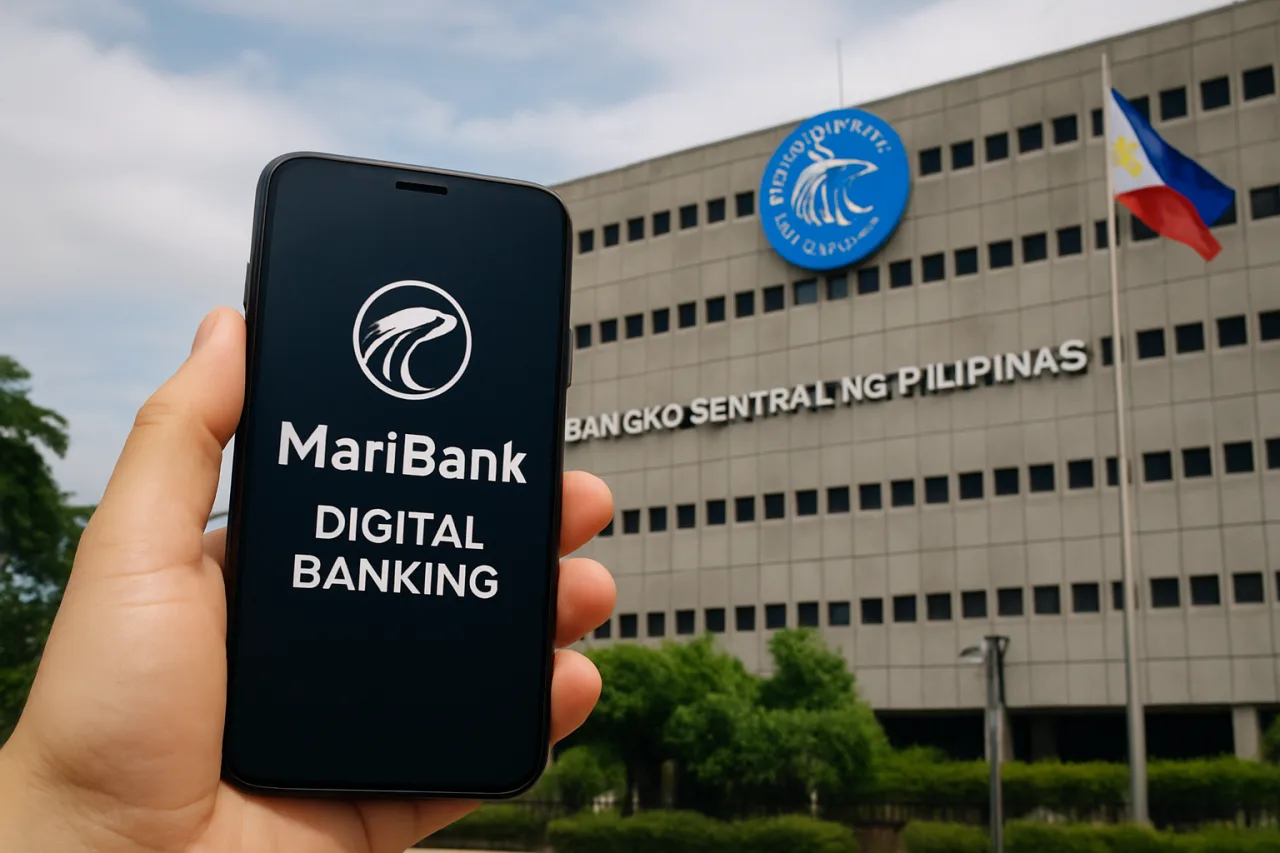
MariBank digital banking officially became the Philippines’ seventh digital bank on July 23, 2026, after the Bangko Sentral ng Pilipinas (BSP) granted it a full digital banking license through Circular Letter No. 2026-035. The upgrade reclassifies MariBank from a rural bank to a digital bank, placing it alongside GoTyme, Tonik, Maya Bank, UNO Digital Bank, UnionDigital Bank, and Overseas Filipino Bank. For Filipino professionals and depositors, MariBank digital banking represents a new option for digital-first banking — and only three digital banking licenses remain available out of the BSP’s cap of 10.
Key Takeaway
- 🏦 MariBank is the 7th digital bank in the Philippines: BSP approved the license upgrade on July 8, 2026, via Circular Letter No. 2026-035, with SEC amended articles approved June 16 and operations commencing July 18.
- 📋 Only 3 digital bank licenses remain: BSP capped digital bank licenses at 10. With MariBank as the seventh, three slots are still available for future applicants.
- 💰 Deposits insured up to PHP 1 million: MariBank deposits remain insured by the Philippine Deposit Insurance Corporation (PDIC) — no change from its rural bank status.
- 🌐 No customer action required: MariBank confirmed the reclassification is seamless for existing customers. Accounts, balances, and features remain unchanged.
- 🏆 Forbes World’s Best Banks 2026: MariBank was recently named the top bank in the Philippines in Forbes’ 2026 World’s Best Banks list — before the digital license upgrade.
What Is MariBank and Who Owns It?
MariBank Philippines, Inc. is the Philippine banking arm of Singapore-based MariBank, a mobile digital bank that has been operating in the Philippines under a rural banking license. The bank built its customer base through a mobile-first approach — no physical branches, no passbooks, no minimum balance requirements — positioning itself as a bank designed for smartphone-native Filipino professionals, freelancers, and gig workers.
The transition from rural bank to digital bank means MariBank can now offer a broader range of financial products under BSP’s digital banking framework, including higher deposit limits, expanded lending capacity, and integration with the national digital payments infrastructure. The bank’s core mission, according to President Siew Ghee Kung Lim, remains unchanged: “Our goal has always been to build a bank that actually works for Filipinos by being simple, reliable, and rewarding.”
The BSP Digital Banking License Timeline
The MariBank digital banking license approval followed a multi-step regulatory process tracked through official BSP records:
- Q1 2026: The BSP Monetary Board approved MariBank’s request to upgrade from a rural bank to a digital bank.
- June 16, 2026: The Securities and Exchange Commission (SEC) approved MariBank’s amended articles of incorporation and by-laws for the digital banking license.
- July 8, 2026: BSP Governor issued the official certificate of authority to operate as a digital bank.
- July 18, 2026: MariBank officially commenced digital banking operations.
- July 22, 2026: BSP published Circular Letter No. 2026-035 formalizing the reclassification.
- July 23, 2026: MariBank publicly announced the license upgrade.
All 7 Philippine Digital Banks Compared
With MariBank’s addition, the Philippines now has seven licensed digital banks. Here is the complete list as of July 2026:
| # | Bank | Backer / Parent | Focus |
|---|---|---|---|
| 1 | Tonik Digital Bank | Tonik (Singapore) | Neobank, retail deposits |
| 2 | UNO Digital Bank | UnionBank + STT GDC | Digital-first banking |
| 3 | UnionDigital Bank | Union Bank of the Philippines | Embedded finance, lending |
| 4 | GoTyme Bank | Globe Telecom + Tyme Group | Retail, rewards, mass market |
| 5 | Maya Bank | Maya (PLDT/Voyager) | Payments + banking super app |
| 6 | Overseas Filipino Bank | Land Bank of the Philippines | OFW remittance and services |
| 7 | MariBank Philippines | MariBank (Singapore) | Mobile-first, rewards banking |
Sources: BSP Circular Letter No. 2026-035; PhilStar (July 23, 2026); Manila Bulletin (July 23, 2026); BSP official digital bank registry.
What This Means for Filipino Professionals
For Filipino professionals — whether in Manila, Cebu, Davao, or working remotely from Singapore, Dubai, or Toronto — MariBank’s digital banking license means more competition in the digital banking sector, which translates to better products, higher deposit rates, and lower fees. The BSP designed the digital banking framework to increase financial inclusion and competition, and each new licensed bank intensifies that pressure on incumbents.
Specifically, MariBank digital banking brings three specific implications for Filipino depositors and professionals:
1. More options for fee-free banking. Digital banks in the Philippines typically offer zero-maintenance fees, no minimum balance requirements, and higher interest rates on savings than traditional banks. MariBank’s entry adds another competitor in this space.
2. Enhanced deposit insurance. Despite the license upgrade, MariBank deposits remain insured by the PDIC for up to PHP 1 million per depositor. The reclassification does not affect deposit insurance coverage.
3. Expanded digital lending. As a full digital bank, MariBank can now offer a broader range of lending products — personal loans, salary loans, and SME financing — using digital underwriting and alternative credit scoring methods.
BSP Deputy Governor Mamerto Tangonan’s Endorsement
BSP Deputy Governor Mamerto Tangonan, who heads the central bank’s payments and currency management sector, publicly endorsed MariBank’s upgrade. “I am confident that MariBank will deliver an even stronger value proposition — driving innovation and competition while benefiting both consumers and the broader banking industry,” Tangonan said in a statement reported by the Manila Bulletin.
Tangonan noted that MariBank was an early adopter of the BSP’s digital payments agenda, signaling that the bank’s digital banking license was earned through demonstrated capability in the digital payments ecosystem rather than purely regulatory approval.
Three Digital Banking Licenses Remaining
The BSP capped the number of digital banking licenses at 10 to prevent market saturation while encouraging competition. With MariBank as the seventh, three licenses remain available. Industry analysts expect the remaining slots to attract applications from foreign fintech firms, regional banks, and technology companies seeking to enter the Philippine digital banking market.
The three remaining licenses represent a closing window. Once all 10 are issued, the only path to entering the Philippine digital banking market will be acquiring an existing licensed bank — a significantly more expensive and complex process than applying for a new license.
How MariBank Compares to Traditional Philippine Banks
The MariBank digital banking license positions it against not only other digital banks but also the traditional banking giants that dominate the Philippine financial sector. BDO, BPI, Metrobank, and Security Bank collectively hold the majority of Philippine deposit market share. However, MariBank digital banking competes on a different axis: no physical branches, no minimum balance, no maintenance fees, and a mobile experience designed for the smartphone-native professional.
For Filipino professionals who already maintain accounts with traditional banks, the question is not whether to switch but whether to add a digital bank account for specific use cases. MariBank digital banking is best suited for:
- High-yield savings: Digital banks typically offer 4-6 percent annual interest on savings accounts, compared to 0.1-0.25 percent at traditional banks. For a Filipino professional with PHP 100,000 in savings, the difference is PHP 4,000-6,000 per year versus PHP 100-250.
- Fee-free transfers: MariBank digital banking, like other digital banks, offers free internal transfers and low-cost external transfers — eliminating the PHP 15-50 per transaction fees common at traditional banks.
- Freelancer and gig worker accounts: Self-employed Filipino professionals who may not have payslips or regular income documentation can open MariBank digital banking accounts without the employment verification requirements that traditional banks impose.
- Overseas Filipino professionals: The mobile-first model allows Filipino professionals abroad to manage accounts through the app, subject to BSP cross-border regulations.
The Forbes World’s Best Banks Distinction
MariBank was recently named the top bank in the Philippines in Forbes’ 2026 World’s Best Banks list, a recognition that preceded its digital banking license upgrade. The Forbes ranking is based on customer surveys evaluating trust, digital experience, customer service, and financial advice. MariBank digital banking achieved this ranking while still operating under a rural banking license — meaning its customer experience was already outperforming larger traditional banks before the digital upgrade.
This distinction matters for Filipino professionals choosing a digital bank. The Forbes recognition signals that MariBank digital banking has already built a customer satisfaction foundation that exceeds its license category. The digital banking upgrade now gives it the regulatory framework to match its customer experience with expanded product offerings.
The Philippine Digital Banking Race: What Comes Next
With seven digital banks now licensed and three slots remaining, the Philippine digital banking landscape is entering its most competitive phase. The BSP designed the 10-license cap to create a controlled competitive environment — enough players to drive innovation, but not so many that the market fragments into unsustainable business models.
For Filipino professionals, this competition means continued improvement in digital banking products. Each new digital bank forces incumbents to improve their digital offerings, reduce fees, and increase interest rates to retain customers. The MariBank digital banking license, coming as the seventh, intensifies this competitive pressure precisely as the market matures.
The three remaining licenses are expected to attract applications from regional Asian fintech firms, Japanese or Korean banks seeking Philippine market entry, and potentially large technology companies that want to embed banking services into their platforms. Industry observers expect all 10 licenses to be issued by end of 2026 or early 2027, closing the window for new digital bank entrants.
For Filipino professionals evaluating which digital bank to use, the decision should be based on three factors: deposit insurance (all BSP-licensed digital banks have PDIC coverage up to PHP 1 million), digital experience (app reliability, features, user interface), and interest rates (which vary by bank and change over time). MariBank digital banking, backed by its Forbes recognition and Singapore technology infrastructure, positions itself as a strong contender on all three.
What Filipino Depositors Should Watch For
While MariBank digital banking brings new options, Filipino professionals should evaluate any digital bank with the same diligence they apply to traditional banks. Key considerations include: the bank’s capital adequacy ratio (published quarterly by BSP), customer service responsiveness (critical for digital-only banks with no branch visits), app stability across different devices and network conditions, and the transparency of fee schedules and interest rate terms. MariBank’s Forbes recognition and BSP regulatory supervision provide baseline confidence, but depositors should always verify that PDIC insurance is active and monitor BSP advisories for any regulatory actions.
Frequently Asked Questions
What is MariBank’s digital banking license status?
MariBank officially received its digital banking license from the BSP on July 8, 2026, formalized through Circular Letter No. 2026-035 on July 22, 2026. It is the seventh digital bank licensed in the Philippines, transitioning from a rural banking license to a full digital bank license.
Is my money safe with MariBank?
Yes. MariBank deposits are insured by the Philippine Deposit Insurance Corporation (PDIC) for up to PHP 1 million per depositor. The bank remains under BSP supervision after the license upgrade. The reclassification from rural bank to digital bank does not affect deposit insurance coverage.
Do existing MariBank customers need to do anything?
No. MariBank confirmed that the transition is seamless for existing customers. No action is required. Account numbers, balances, features, and app access remain unchanged. The license upgrade affects the bank’s regulatory category, not customer accounts.
How many digital banks are there in the Philippines in 2026?
As of July 2026, there are 7 licensed digital banks in the Philippines: Tonik, UNO Digital Bank, UnionDigital Bank, GoTyme, Maya Bank, Overseas Filipino Bank, and MariBank. The BSP has capped the total at 10, meaning 3 licenses remain available.
Can OFWs and Filipino professionals abroad use MariBank?
MariBank operates as a mobile digital bank, which means Filipino professionals abroad can potentially open and manage accounts through the mobile app, subject to BSP regulations on cross-border account opening. Check the MariBank app or website for specific eligibility requirements for overseas applicants.
What makes MariBank different from other digital banks?
MariBank was named the top bank in the Philippines in Forbes’ 2026 World’s Best Banks list, distinguishing it from competitors. Its mobile-first approach with rewards banking and no minimum balance requirements targets smartphone-native Filipino professionals and freelancers. The Singapore backing provides international fintech expertise and capital.
Sources
PhilStar (July 23, 2026); Manila Bulletin (July 23, 2026); BSP Circular Letter No. 2026-035; Rappler (July 23, 2026); Inquirer Business (July 23, 2026); ABS-CBN News (July 23, 2026); MariBank Philippines official statement.