Table of Contents
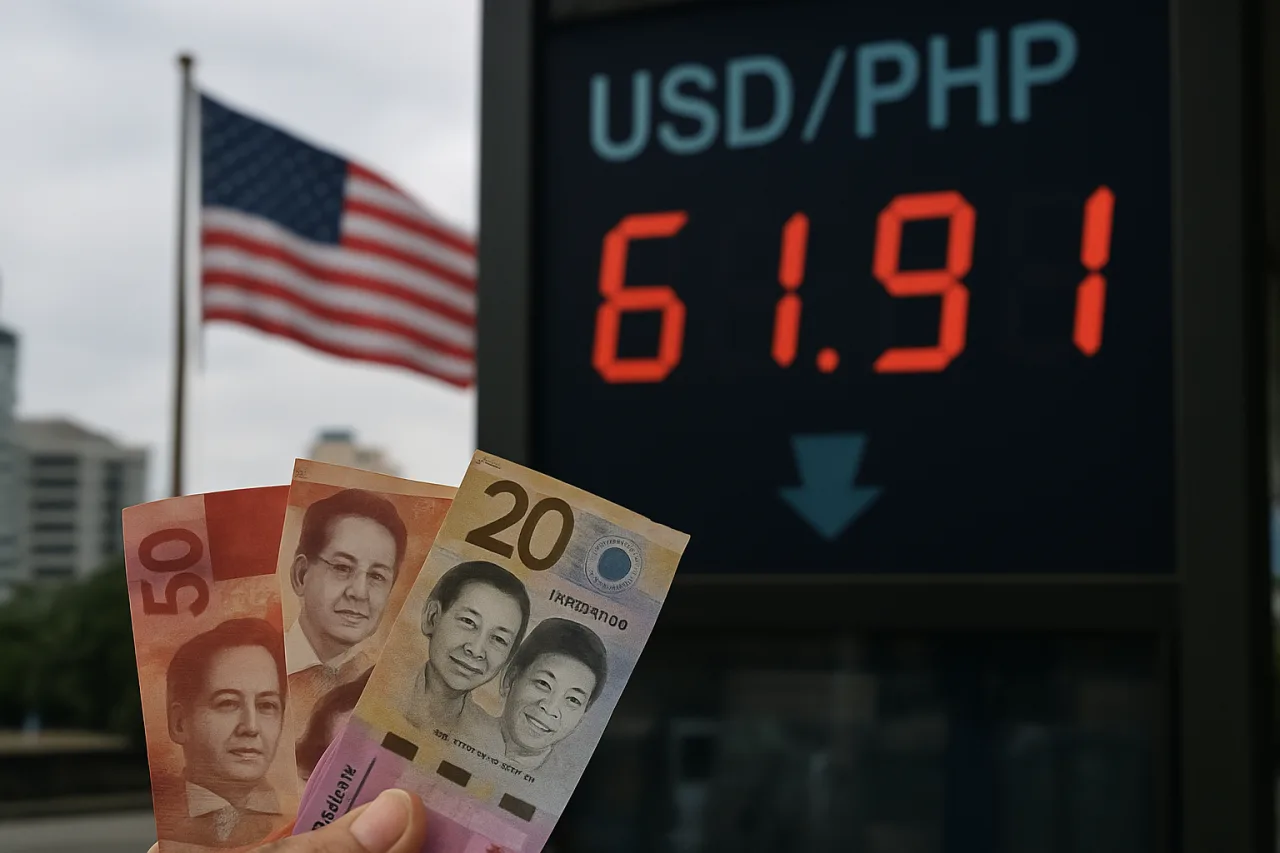
Peso record low — the Philippine peso has lost nearly 5% against the US dollar in 2026, sliding from ₱58.78 in December 2025 to a record low approaching ₱62 per dollar in August. Before you exchange your pesos, move your savings, or panic about your purchasing power, you need to understand what is driving this decline and what it actually means for your money.
Key Takeaway
- 📉 Near ₱62 Per Dollar: The peso record low of 61.847 was set on July 24, 2026, surpassing the previous record of 61.75 from May — and analysts at SMUFG and MUFG see ₱62 as the next key level
- 🔥 Oil Above $100: Brent crude surged above $100 per barrel due to the Iran-Middle East conflict, hitting oil-importing countries like the Philippines hardest
- 🏦 BSP Rate at 4.75%: The Bangko Sentral ng Pilipinas raised rates by 50 basis points since April to combat inflation, but allows the peso to seek its own level
- 💸 Winners and Losers: OFW families benefit (more pesos per dollar remitted), but import costs rise, foreign debt gets more expensive, and inflation pressure intensifies
- 📊 BMI Forecast: BMI Research expects the peso to trade between 61 and 63 per dollar through 2026 — one of Asia’s weakest-performing currencies
Before you exchange your pesos for dollars, before you move your savings into a foreign currency account, before you decide that the Philippine economy is collapsing — read this. The peso record low is real, and it is affecting your money right now. But the story beneath the headline is more nuanced than “the peso is crashing.” Understanding why the peso is falling, who wins and who loses, and what actions actually make sense for your financial situation is the difference between a smart response and a panicked one.
The peso closed at 61.847 against the US dollar on July 24, 2026, according to Bloomberg data reported by BusinessWorld, surpassing the previous record low of 61.75 set on May 18. By August, the Inquirer reported the peso “sinks to new record low, nears P62/$1” — with BMI Research forecasting a trading range of 61 to 63 for the remainder of 2026. The currency has lost approximately 5% of its value since the start of the year, making it one of Asia’s worst-performing currencies in 2026. This connects directly to the Philippine GDP slowdown we analyzed — a weaker currency, slowing growth, and rising inflation are all symptoms of the same structural pressure.
Why the Peso Is Falling — Three Forces
The peso record low is not caused by a single factor. Three distinct forces are pushing the currency down, and understanding each is essential for deciding what to do with your money.
The first force is the Middle East energy crisis. The escalation of the Iran conflict sent Brent crude oil back above $100 per barrel in July 2026. For the Philippines, which imports the vast majority of its energy, this is devastating. Every dollar increase in oil prices means more dollars flowing out of the country to pay for imported fuel, which increases the trade deficit and puts downward pressure on the peso. Jonathan Ravelas, senior adviser at Reyes Tacandong & Co., told the Philippine Daily Inquirer: “The peso fell after the greenback strengthened further on elevated crude oil prices as US and Iranian attacks escalated, renewing inflation concerns.” The oil-currency feedback loop is simple: higher oil prices → more dollar demand → weaker peso → higher import costs → higher inflation → more pressure on the peso.
The second force is broad dollar strength. When global geopolitical risk rises, investors flock to the US dollar as a safe haven. This strengthens the dollar against all emerging market currencies, not just the peso. But the Philippines is hit harder than regional peers because of its heavy reliance on energy imports and its elevated inflation. Jeff Ng, head of Asia macro strategy at Sumitomo Mitsui Banking Corp., said: “There is a chance for the peso to test the 62 level in the near term, due to a return of geopolitical risks, higher energy prices and broad dollar strength.” The peso is not falling in isolation — it is falling as part of a broader emerging market currency decline, but the Philippines’ specific vulnerabilities make the decline steeper.
The third force is the BSP’s policy stance. The Bangko Sentral ng Pilipinas raised its benchmark interest rate to 4.75% in July 2026 — a total of 50 basis points since April. Higher interest rates typically support a currency by attracting foreign capital. But Governor Eli Remolona has repeatedly stated that the central bank does not defend a particular exchange rate, preferring to let market forces determine the peso’s value while stepping in only to curb excessive volatility. This means the BSP is not aggressively defending the peso at any specific level — it is smoothing the decline, not reversing it. Jonathan Koh, an analyst at Standard Chartered Bank in Singapore, told Bloomberg: “The BSP is likely to focus on the speed and disorderliness of the move, rather than defend a specific level. Intervention will be targeted, rather than an attempt to reverse the broader market trend.”
Who Wins and Who Loses When the Peso Hits a Record Low
The peso record low is not a uniform disaster. It creates winners and losers, and understanding which side you are on determines what you should do.
The winners: OFW families and exporters. When the peso weakens against the dollar, every dollar sent home by an overseas Filipino worker converts into more pesos. A $1,000 remittance that converted to ₱58,780 in December 2025 now converts to approximately ₱61,850 — an extra ₱3,070 per $1,000, simply from currency movement. For the millions of Filipino families who depend on OFW remittances, the peso record low means greater household spending power. Exporters also benefit: a cheaper peso makes Philippine goods — from semiconductors to agricultural products — more competitive in international markets. This is why the export growth of 12.2% in Q2 2026, which we noted in our Balisacan economic shift analysis, is partly driven by currency effects.
The losers: importers, consumers, and dollar debtors. When the peso weakens, everything imported becomes more expensive. Fuel, food imports, electronics, machinery, raw materials for manufacturing — all cost more in peso terms. This is why the peso record low directly feeds inflation, which was already running at 5.0% in the first seven months of 2026, well above the government’s 3.0% target. Companies that borrowed in dollars face higher peso costs to service their debt. The government itself faces higher costs to repay foreign-currency obligations. And for ordinary Filipino consumers, the combination of a weaker peso and higher inflation means real purchasing power is falling — your ₱50,000 salary buys less today than it did eight months ago.
What You Should Actually Do With Your Money
Here is where the analysis becomes practical. The peso record low demands specific financial responses depending on your situation. There is no one-size-fits-all answer — but there are clear principles.
If you are an OFW or receive dollar income: The current exchange rate is favorable for you. When converting dollars to pesos, you are getting more pesos per dollar than at any point in Philippine history. Consider whether you need to convert all your dollars immediately or whether holding some in a dollar-denominated account makes sense, in case the peso weakens further. The BMI forecast of 61-63 suggests the peso could go either direction from here — locking in current rates for essential needs while holding some dollars for potential further weakening is a balanced approach.
If you are a Filipino professional earning in pesos: Your purchasing power is declining. The most important action is to ensure your income is growing faster than inflation. Inflation at 5% means a salary increase below 5% is effectively a pay cut. If you have savings in pesos, consider diversifying into dollar-denominated assets — a dollar savings account, US-dollar bonds, or international equity funds. Many Philippine banks offer dollar accounts with relatively low minimum balances. The point is not to abandon the peso but to reduce your exposure to a single currency that is actively declining. For investment strategies, our Philippine AI stocks investment guide covers companies that may benefit from peso depreciation — particularly export-oriented semiconductor firms.
If you are planning a major purchase or travel: The peso record low makes international travel and imported goods more expensive. If you are planning to travel abroad, expect higher costs for flights, accommodation, and spending money. If you are planning to buy imported electronics, vehicles, or equipment, prices are likely higher than they were at the start of the year. Consider whether the purchase can wait, or whether a locally manufactured alternative exists.
If you are an investor: The peso’s decline has mixed implications for Philippine equities. Export-oriented companies benefit from a weaker peso. Companies with significant dollar debt are hurt. Companies that import raw materials face higher costs. The PSEi has been languishing around the 6,000 level, as we noted in yesterday’s trend scan, reflecting the broader economic uncertainty. For investors with access to international markets, diversifying beyond Philippine equities into US or global index funds provides natural currency hedging — when the peso falls, your dollar-denominated investments gain value in peso terms.
The Deeper Question: Is This a Temporary Decline or a New Normal?
Here is the analytical tension that matters most for your financial decisions. Is the peso record low a temporary reaction to the Middle East crisis that will reverse when oil prices fall, or is it a structural shift reflecting deeper weaknesses in the Philippine economy?
The temporary case points to the oil price surge as the primary driver. If the Iran conflict de-escalates and Brent crude falls back below $80, the pressure on the peso would ease. BMI Research’s forecast of 61-63 for 2026 suggests the currency could stabilize in this range rather than continuing to decline indefinitely. The BSP’s rate hikes, while not aggressive, do provide some support.
The structural case points to deeper issues. The Philippines runs a persistent trade deficit — it imports more than it exports. The GDP slowdown to 2.3% in Q2 2026, with investment contracting for four straight quarters, signals an economy that is not generating enough domestic production to support its currency. The corruption scandal that froze public construction spending has damaged investor confidence. And the inflation rate of 5.0%, running well above target, means the BSP cannot cut rates to stimulate growth without risking further currency depreciation. This is the same structural vulnerability we identified in our OFW remittances analysis — the Philippine economy’s reliance on external inflows (remittances, exports) makes it particularly exposed to currency volatility.
The truth is likely between these two scenarios. The oil price surge is the immediate trigger, but the peso’s underlying weakness reflects structural factors that will not resolve quickly. The peso record low may not be the bottom — but it is also not the beginning of a freefall. It is a signal that the Philippine economy is adjusting to a new reality of higher energy costs, geopolitical risk, and domestic structural constraints.
What to Watch Next
Three signals will determine whether the peso stabilizes or continues to decline. First, the BSP’s next policy review on August 27, 2026 — will the central bank raise rates again to defend the currency, or hold steady to avoid deepening the economic slowdown? Second, the trajectory of oil prices — if Brent crude falls back below $90, the pressure on the peso would ease significantly. Third, the Iran conflict — any de-escalation would reduce safe-haven dollar demand and give emerging market currencies room to recover.
For now, the peso record low is a fact of financial life for every Filipino professional. The question is not whether the peso will recover — currencies always fluctuate. The question is whether you are positioned to weather the decline without making panicked decisions that cost you more than the currency movement itself. Understand the forces. Know which side you are on. Take measured, deliberate action. That is how a professional responds to a peso record low.
Frequently Asked Questions About the Peso Record Low
What is the Philippine peso’s record low against the US dollar?
The peso record low was set at 61.847 per US dollar on July 24, 2026, surpassing the previous record of 61.75 from May 18, 2026. By August, the peso was nearing the ₱62 level, with analysts at SMUFG and MUFG identifying 62 as the next key threshold.
Why is the Philippine peso falling in 2026?
Three main forces are driving the peso record low: the Middle East energy crisis sending Brent crude above $100 per barrel, broad US dollar strength from geopolitical risk, and the BSP’s policy of allowing market forces to determine the exchange rate rather than defending a specific level.
Is the peso record low good or bad for OFWs?
The peso record low is generally positive for OFWs and their families. A weaker peso means each dollar remitted converts into more pesos — a $1,000 remittance that yielded ₱58,780 in December 2025 now yields approximately ₱61,850, an increase of over ₱3,000 per $1,000 sent.
What is the BSP doing about the peso decline?
The Bangko Sentral ng Pilipinas raised its benchmark rate to 4.75% in July 2026, totaling 50 basis points since April. Governor Eli Remolona has stated the BSP does not defend a specific exchange rate but intervenes to curb excessive volatility. The BSP has sold dollars to smooth fluctuations but is not attempting to reverse the broader trend.
Will the peso hit ₱63 per dollar?
BMI Research forecasts the peso will trade between 61 and 63 per dollar through 2026. MUFG Bank has warned the peso could test the 62 level. Whether it reaches 63 depends on oil prices, the Iran conflict trajectory, and BSP policy decisions at the August 27 rate review.
How does the peso record low affect inflation?
A weaker peso makes imported goods — especially fuel, food, and raw materials — more expensive in peso terms. This directly feeds inflation, which was already running at 5.0% in the first seven months of 2026, well above the government’s 3.0% target. The peso record low and high inflation are mutually reinforcing.
Should I convert my pesos to dollars?
Whether to convert pesos to dollars depends on your individual financial situation. If you earn in pesos, diversifying some savings into dollar-denominated assets can hedge against further peso decline. If you receive dollar income, the current rate is favorable for conversion. Consider your time horizon, needs, and risk tolerance — and avoid making panicked decisions based on a single exchange rate movement.
How much has the peso depreciated in 2026?
The peso has lost approximately 5% against the US dollar in 2026, falling from ₱58.78 per dollar in December 2025 to near ₱62 in August 2026. This makes it one of Asia’s worst-performing currencies in 2026, according to Bloomberg data.
Sources: Bloomberg via BusinessWorld Online, “Philippine peso falls to fresh record low vs US dollar,” July 24, 2026 | Philippine Daily Inquirer, “Philippine Peso revisits record low on Mideast flare-up,” 2026 | BMI Research (Fitch Group) peso forecast | Bankers Association of the Philippines exchange rate data | BSP Governor Eli Remolona policy statements
This article is for informational purposes only and does not constitute financial or investment advice. Currency exchange decisions involve risk. Readers should consult a licensed financial advisor before making investment or currency exchange decisions based on exchange rate movements.