Table of Contents
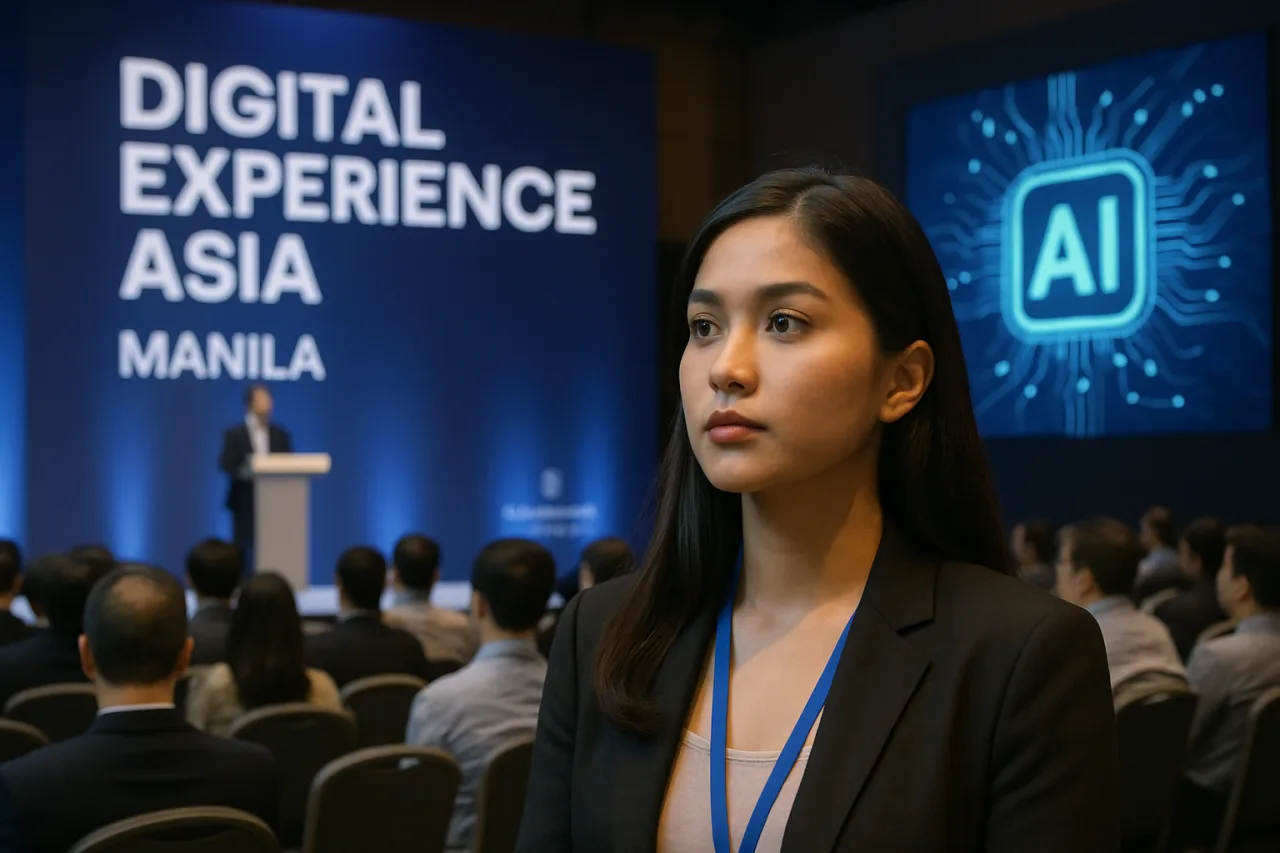
📱 THE BOARD — Thursday, October 1, 2026 → Events Intelligence: Digital Experience Asia Philippines (Nov 17): MARKETECH APAC brings its regional digital-CX conference to Shangri-La The Fort for the first PH edition — brand chiefs, mar-tech leaders, AI-for-CX practitioners · the artifact: the skill-price read — what agentic commerce and AI-discovery do to Filipino marketing careers and agency budgets in 2027, priced from the agenda class · kw: Digital Experience Asia
Related: The WorldNgayon Experience: What Running a Real Blog Has Taught Us
Key Takeaway
- 🗓️ The event’s shape: Digital Experience Asia: Philippines 2026 lands November 17, 2026 at Shangri-La The Fort, Taguig — MARKETECH APAC’s inaugural PH edition of its regional conference series, one day of keynotes, panels, and firesides for marketing, brand, and technology-experience leaders.
- 💰 The ticket band prices its buyer: conference passes run roughly ₱13,000-₱27,000 per seat — a corporate-budget instrument, not a student conference; the Filipino reader decision runs through employer sponsorship, not personal spend, and this piece supplies the sponsorship memo argument.
- 🤖 Why it matters beyond marketing: the conference’s home turf — AI-driven customer experience, omnichannel, mar-tech stacks — is where the agentic-commerce shift lands on Filipino jobs: the Adobe-class data shows organizations expect agentic AI to handle majorities of customer support within 18 months; the CX floor is where that transition gets priced locally.
- 📊 The career layer is the intelligence: for Filipino marketers, agency staff, and BPO CX professionals, the agenda previews which skills re-price in 2027 — AI-augmented campaign ops, CX-data fluency, GEO (being the answer AI engines cite) — and which roles face the squeeze the data also shows.
- 🧭 The watcher’s seat works here too: the agenda, speaker list, and post-event summaries extract most of the signal; the pass pays for teams that buy mar-tech or agencies that pitch to brand decision-makers — the routing table at the end sorts it.
Digital Experience Asia reaches Manila on November 17, 2026 — Shangri-La The Fort, one day, MARKETECH APAC’s first Philippine edition — and it earns its place in this register (episode #007) for one reason: customer experience is the business function where AI’s job impact is moving FASTEST, and this is the quarter’s only PH floor where that transition gets discussed at brand-budget altitude. The regional series markets itself as “the future of digital marketing” — keynotes, panel discussions, fireside chats, and curated networking for marketing leaders, brand decision-makers, agency professionals, and technology innovators across APAC — and the Philippine edition inherits that frame at the moment when two global data sets (the Adobe 2026 AI and Digital Trends survey of 3,000 CX executives; the IAB finding that AI ranks among shoppers’ most influential sources) have made AI-CX the boardroom’s noisiest agenda line. What follows is the intelligence product — not a conference review: what the DXA-class agenda signals for Filipino digital-marketing careers in 2027, where the ₱13K-27K ticket actually pays, and the watcher’s seat for everyone else (conference pricing and tiers are on the organizer’s page if those three conditions hold).
Related: The Future of Blogging: Changing, Not Disappearing — The Final Verdict
Digital Experience Asia Lands in Manila Framed by the Adobe Data
The context inside which Digital Experience Asia lands in Manila is unusually well-quantified for a marketing conference. The Adobe 2026 AI and Digital Trends research (3,000 executives and CX practitioners, 4,000 customers) puts numbers on the shift every DXA speaker will orbit: organizations expect agentic AI to handle about 78% of customer support, 70% of post-purchase support, and 69% of sales interactions within 18 months; 80% of executives believe next-generation CX must be personalized and anticipatory in real time; 60% say AI-powered service will define breakthrough CX by 2028-29. The customer side carries the counterweight that defines the opportunity: only 19% of customers WANT AI agents as their primary brand interaction (vs. 49% of organizations believing they will); only 21% would trust an agent with a difficult purchase decision (vs. 36% of organizations assuming so); a third of customers disengage on discovering content is AI-generated — and easy human escalation is the top trust requirement. The Philippine read: this market’s CX labor is enormous (the BPO/CX segment anchors the IT-BPM sector this site tracks) and its brands are digital-first by default — Shopee-class platforms and telco apps run the highest-volume service floors in ASEAN — which makes the organizations-expect vs. customers-comfort gap exactly the arbitrage local professionals will be hired to manage: the CX architect who can deploy AI without detonating the trust metrics becomes 2027’s scarcest local profile, and the DXA agenda previews who’s building that profile. For the BPO reader: every global brand represented at DXA-class events is a service-delivery client of the Philippine CX industry — the floor doubles as a demand read for where the offshore work transforms next.
Bottom Line: 78% agentic-CX expectations vs. 19% customer demand — the deploy-without-breaking-trust skill is 2027’s scarcest profile, and DXA previews who’s building it.
Digital Experience Asia Ticket Math Runs Through the Sponsor Memo
At ₱13,000-₱27,000 per seat, Digital Experience Asia is a corporate investment, and the personal-spend test fails at Filipino salary levels — so the honest path for the non-executive reader runs through the employer memo, and it has three lines that work. Line 1 — the cost comparison: a single seat equals roughly ONE agency pitch that our team would otherwise run blind on 2027 mar-tech pricing; the conference’s vendor floor and case studies re-price the tooling budget the company is already spending. Line 2 — the intelligence claim: the company’s 2027 CX roadmap (agentic support share, chat-first service tiers, AI-discovery readiness) gets benchmarked against the regional agenda in one sitting — the memo’s deliverable is a two-page brief FOR the manager, which flips the request from “training budget” to “buying you a report.” Line 3 — the team multiplier: MARKETECH’s published tiers run per-seat with group options — two people (one CX-operations, one brand/media) extract three times one person’s value because the sessions split and combine. For the reader group that should pay personally: the independent consultant and fractional CMO class — one brand decision-maker conversation converts at rates the seat cost never reaches, the same logic that gated the AI Revolution Summit’s vendor pass earlier in this register. And for the majority — marketers, content professionals, and BPO CX staff who won’t attend — the watcher’s seat extracts the career signal without the seat: the published speaker list (which brands send their CX chiefs vs. their marketing-ops layers is itself a budget signal), the agenda’s track names (GEO and agentic-commerce sessions appearing = the skills moving), and the post-event write-ups MARKETECH and its media circle publish. The AI.Smart drill’s pack-matching logic applies at desk level here: match the spend to the workflow that pays it.
Bottom Line: Employees route the ₱13-27K through a memo with a deliverable; consultants pay personally when a floor conversation converts; everyone else runs the watcher’s list — speaker picks, track names, follow-up briefs.
The 2027 Skill-Price Read — Five Moves for the Filipino Marketing Desk
The DXA-class agenda translates to five checkable career moves this quarter. Move 1 — GEO portfolio (the site’s home turf): AI engines already rank among shoppers’ top influences, and brands need the answer-engine-visibility discipline this site does daily — build one GEO case (structure, schema, citations) before November 17 and the conference vocabulary prices your work instead of educating you from zero. Move 2 — the CX-ops hybrid: the deploy-without-breaking-trust profile maps to concrete chops: journey analytics, escalation design, AI-agent disclosure patterns — a Filipino CX professional who shows one designed “AI-first-but-human-escalation” flow at interviews prices above the pure-chat floor. Move 3 — the mar-tech-stack literacy: the conference’s vendor row previews consolidation; learn the stack CATEGORIES (CDP, journey orchestration, conversational AI) rather than logo trivia — category fluency transfers across the vendor churn the Adobe data implies. Move 4 — the agency pivot: Philippine agencies’ 2027 retainers move from campaign production to AI-orchestration management — agency-side readers should convert one current retainer into an AI-CX pilot by year-end, because first-mover case studies are what the 2027 pitches sell. Move 5 — the BPO-side read: the same agentic-CX data that threatens tier-1 service roles creates the quality-and-escalation layer ABOVE them — the offshore professionals who move INTO that layer (QA of AI interactions, empathy-heavy exception handling) ride the transition instead of facing it; the HSBC-style BPO analysis on this site detailed the roles being rebuilt, and November 17 is where the rebuilding gets showcased by the brands driving it. Five moves, shared trait: they turn the conference from an event into a 2026-2027 career position — which is this register’s definition of worth.
Bottom Line: GEO case, CX-hybrid flow, stack-category fluency, agency AI-pilot, BPO escalator — five moves that make November 17 a career position instead of a day out.
Why a DXA-Class Floor Matters Specifically to Philippine CX Careers
Strip away the conference framing and Digital Experience Asia sits on top of the largest concentration of CX labor on the planet — the Philippine service economy — which is why its first Manila edition matters more than its APAC siblings. The structural read: roughly 1.9 million IT-BPM workers, a $40-billion-plus revenue base, and the world’s biggest brands running their customer-service floors through Manila and Cebu seats — every agentic-AI deployment a DXA speaker showcases lands FIRST on Philippine desks, because that’s where the interaction volume lives. The 2027 hiring surface follows three layers. The quality-and-escalation layer (the tier above the bots: AI-interaction QA, empathy-heavy exception handling, conversation design for the human-switch moments): the offshore professionals who re-skill into it capture the growing slice — the same rebuilt-roles logic our BPO coverage ran with the HSBC analysis. The conversation-design layer (writing the agent personas, guardrails, and disclosure flows that the Adobe trust data demands): the copywriter-to-conversation-designer conversion is this cycle’s best-paid local pivot, and it needs no coding — portfolio plus the disclosure-and-escalation vocabulary. The CX-analytics layer (journey metrics, containment rates, sentiment-of-abandonment): the analysts who speak containment-and-CSAT at brand-vocabulary altitude move into the vendor-side roles the conference’s sponsor row recruits. One more Philippine-specific note: consumer trust behaves differently here — the country’s social-commerce culture (TikTok-class selling, livestream trust) already treats conversational commerce as normal, which means Filipino CX professionals understand the trust mechanics of agent-mediated selling at cultural depth the global decks can’t teach; the DXA floor’s value for the local professional is watching global brands TRY to import what Philippine social commerce already invented. That’s the intelligence: the conference is the mirror where Manila’s biggest industry sees its own next three years.
Bottom Line: Three 2027 layers — quality-escalation, conversation design, CX analytics — all hiring ABOVE the automation line, all previewed on the DXA floor.
Frequently Asked Questions
When and where is Digital Experience Asia Philippines 2026?
November 17, 2026, at Shangri-La The Fort in Taguig, Metro Manila — one day of keynotes, panels, fireside chats, and networking, organized by MARKETECH APAC as the first Philippine edition of its regional digital-experience conference series.
How much are the tickets for Digital Experience Asia?
The organizer’s published price band runs roughly ₱13,000-₱27,000 per seat by tier, with group options available — treat any other figure as unverified and check the official MARKETECH APAC conference page before budgeting; registration includes sessions and networking breaks per the organizer’s FAQ.
Who should actually pay for a pass?
Brand-side CX and marketing-operations leaders, agency principals pitching mar-tech work, and independent consultants targeting brand decision-makers. For employed marketers without budget authority, the employer-sponsorship memo route (with a two-page intelligence deliverable) is the honest path; everyone else runs the watcher’s seat.
What topics will the conference cover?
The series’ frame: AI-driven customer experience, omnichannel and journey orchestration, mar-tech stacks, personalization at scale, and the agentic-commerce shift — the 2026 edition lands amid the global data showing organizations expecting agentic AI to absorb most customer-support interactions within 18 months.
What should Filipino BPO and CX professionals take from it?
The transition map: tier-1 service volume faces agentic absorption while the QA-of-AI and human-escalation layers expand above it — the professionals who move up into empathy-and-exception roles ride the change; the conference floor showcases the exact brands whose offshore CX demand this site tracks.
Financial Disclaimer: This article is for general information and education, not investment or financial advice. Ticket prices and event details change; verify with the organizer before purchasing. WorldNgayon.com is not a financial adviser and may hold affiliate relationships with tools or services mentioned.