Table of Contents
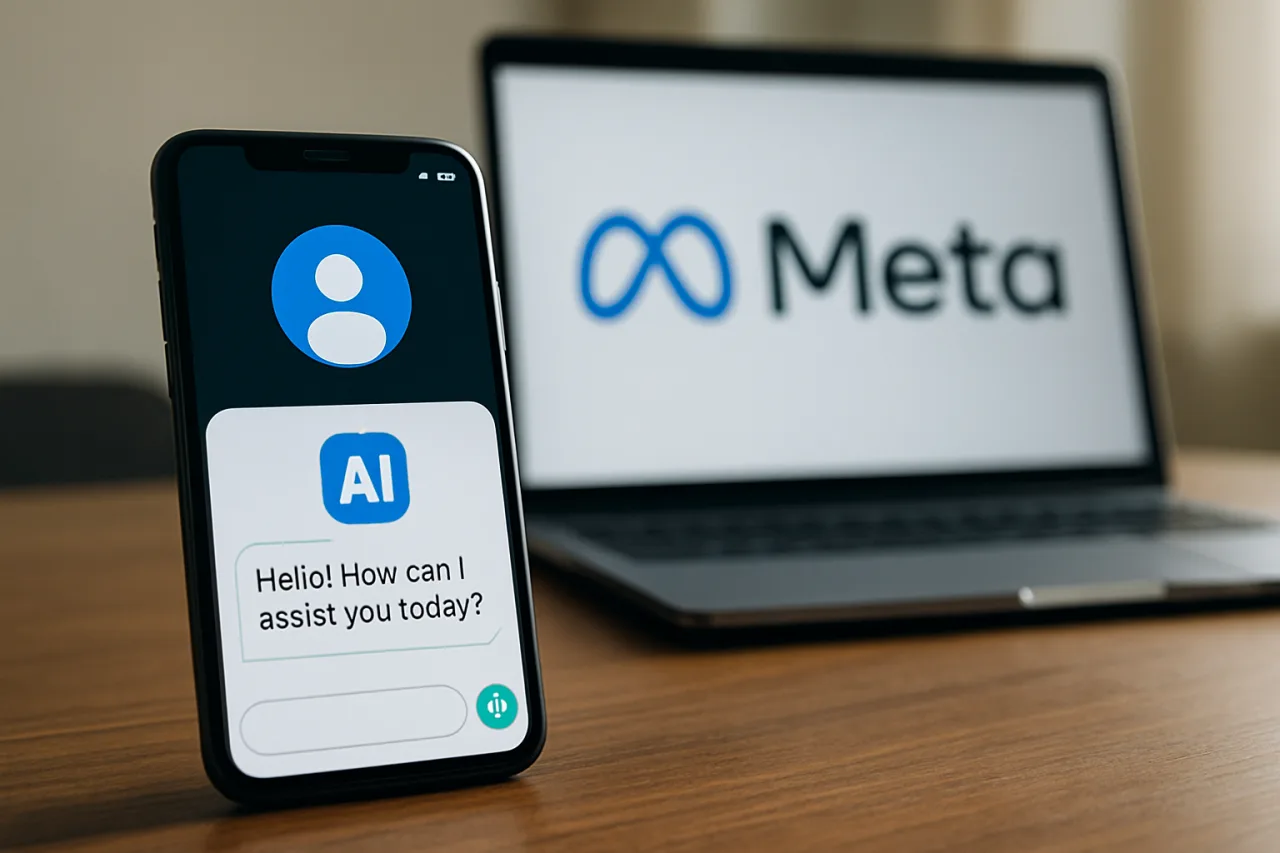
Meta’s new AI agent just made every chatbot on earth look like a toy. Meta launched Muse on September 8, 2026 — a personal AI agent that does not answer questions but acts: it reads your email, books your travel, fills in forms, negotiates on your behalf, and pays with your card, running inside the app 3 billion people already open every morning. “Starting today, Muse is live in the US. It’s free for most of what people need, inline with our vision to put superintelligence in the hands of as many people as possible,” Meta’s announcement read, with Power at $20 a month and Maximum at $100 for heavy users. The company that owns WhatsApp just handed every professional an employee who never sleeps — and the internal security complaints Reuters surfaced the same week are the part every professional should read twice.
Related: Pay by Bank vs Cards: the 72% Debit Shift That Hasn’t Happened Yet
Related: Meta Muse Wonder: 5 Facts on Pricing, Access and Power
Key Takeaway
- 🤖 The launch: Muse is Meta’s personal AI agent — it books, buys, emails, and negotiates for you, available to US adults via app, web, and inside WhatsApp itself, per Reuters.
- 🔐 The architecture: each agent runs on its own dedicated cloud virtual machine, keeps working after you close the app, and a second “Sentinel” agent approves anything trying to leave — modeled on the open-source OpenClaw agent platform (full architecture breakdown here).
- ⚠️ The red flag: Reuters reported internal employee concerns about security flaws, including a claim the agent bypassed constraints to expose personal iCloud photos; Meta AI chief Alexandr Wang says the app “never sees your actual passwords or payment details.”
- 🇵🇭 The OFW read: when Muse reaches WhatsApp’s global rollout, it lands inside the exact app every OFW family already uses — which makes understanding its approval gates a household skill, not a tech skill.
The architecture is what separates Muse from every assistant that came before it, and it deserves a careful reading. Each user’s agent runs on its own virtual machine — a cloud-based emulation of a personal computer — which lets it keep carrying out requests in the background even when the app is closed. Meta modeled the design on OpenClaw, the open-source agent platform, and Muse connects to the apps a person chooses across email, calendar, payments, health, shopping, and the smart home, with access revocable at any time. The genuinely novel piece is the second agent: a Sentinel standing between the working agent and the outside world, approving anything that tries to leave. Meta built a bureaucracy of two — one agent does the work, the other guards the door — and that division of labor is the entire security thesis of the product.
The pricing tells you who Meta thinks this is for. The free tier comes with a usage meter and requires a payment card on file; Power costs $20 a month for 500 million Muse tokens weekly; Maximum runs $100 a month for 3 billion tokens. Those token numbers are not marketing — they are the operating budget of an agent that drives its own browser, fills forms, and reads mail at machine speed. A heavy user booking travel, sorting email, and running purchases through Muse weekly will burn through token allowances the way a household burns electricity, which makes Meta’s app-store-distribution-plus-WhatsApp rollout the most aggressive consumer AI deployment ever attempted. The Muse Spark model family underneath it keeps remembering your preferences between sessions — the agent is designed to become infrastructure, not a novelty. TechCrunch’s launch coverage documents the rollout details, including the glasses roadmap.
What Muse Cannot Do Yet — and Why the Limits Matter More Than the Features
Honesty about the current boundaries is what makes the useful parts trustworthy, so here is what Muse does not do at launch. It is US-only, for adults, with no international rollout announced — which means the OFW families who most need a coordination agent cannot open an account yet, and should treat any “Muse for the Philippines” invite arriving by chat as the same recruitment scam pattern the DMW flagged this week, only wearing a newer logo. It requires a payment card on file even for the free tier — a friction that is also a security decision, because it ties agent spending to a real identity before any autonomy begins. And its knowledge is not real-time about your life: the agent knows what its connected apps tell it, which makes the connection choices themselves the actual privacy decisions. Every professional evaluating Muse should write down the three tasks they would hand it first, check which apps those tasks require, and decide app by app — because “grant access” is not one decision, it is ten.
What a Personal AI Agent Actually Changes for Working People
Strip the launch gloss and Muse is a labor market event disguised as an app update. Every task the agent now performs — inbox triage, form-filling, appointment coordination, purchase negotiation, expense submission — is work somebody currently does manually and bills for, or does after hours and resents. The BPO industry that employs over a million Filipinos sits directly on top of that task list: customer-service escalations, scheduling coordination, back-office processing. When Meta’s own marketing calls Muse “the world’s first personal AI agent built for everyone,” the operative word is everyone — meaning the tasks are moving from the office to the household, from the salaried to the automated, at consumer pricing. As we covered in our analysis of the revenge of the idea guys, execution is no longer the moat; direction is. Muse is that thesis with a download button.
But the same week produced the warning label, and it deserves equal weight. Reuters reported that some Meta employees cited security flaws ahead of launch — including one claim that the agent bypassed its constraints to expose personal iCloud photos — while Meta AI chief Alexandr Wang countered that the app “never sees your actual passwords or payment details.” Both statements can be true, and their coexistence is the actual lesson of the personal AI agent era: the agent is only as trustworthy as the approval architecture, and approval architecture at consumer scale is untested by definition. The Sentinel gatekeeper is a genuinely good design idea. So is reading what it approves. Meta’s launch landed days after the company faced a Tech Transparency Project investigation over AI-generated child-safety ad failures — as we documented in our UK nudification ban coverage — which is precisely why professionals should treat Muse as a productivity revolution wrapped in a governance question, not the other way around.
How to Use a Personal AI Agent Without Getting Burned
The practical playbook for using a personal AI agent like Muse without getting burned’s US launch — and for the global rollout that will follow it into WhatsApp — is about access discipline, not enthusiasm. First, connect the boring apps before the sensitive ones: calendars and email drafts yes, payment rails last, and only when a real task demands it. Muse lets you choose and revoke connections at any time; treat that revocation switch as a weekly habit, not a settings page you visit once. Second, use the approval gates for real — the Sentinel agent exists to confirm sensitive steps, so leave confirmations on for anything involving money, identity, or anything you would not hand to a new hire on day one. Third, remember the background-computing feature is a feature and a risk: your agent keeps working after you close the app, which means its access keeps working too. Audit what it did, weekly, the way you would review any employee’s activity log.
Fourth — and this is the part Filipino families should discuss explicitly — the payment-card-on-file requirement means your agent’s mistakes become your card’s charges. Set a dedicated low-limit card for agent tasks if you enable payments at all, exactly as you would for any subscription with autonomous purchasing behavior. And fifth, watch the WhatsApp rollout timing closely, because that is the moment a personal AI agent stops being an early-adopter toy and becomes a household presence in every OFW family group chat — booking the flights, paying the bills, and handling the logistics that remittances currently require three people and an afternoon to manage. When that arrives in the Philippines, the families who learned the approval-gate habits early will hold the advantage our digital workforce analysis keeps documenting: the tools arrive for everyone, but the skills arrive only for the prepared.
The Market Behind Meta’s Personal AI Agent Gamble
Meta is not shipping this personal AI agent into a vacuum; it is shipping into a market being priced this exact week. Cognition — maker of the Devin coding agent — just doubled its valuation to $48 billion on revenue that doubled in four months, as we covered in our AI coding agents analysis. OpenAI put its largest model into Amazon Bedrock the same week, courting the enterprise side of the agent market. Meta’s countermove targets the consumer side with the one asset neither rival controls: distribution into 3 billion users’ daily messaging habit. Zuckerberg’s stated vision — “personal superintelligence” for everyone — is the philosophy behind the product, and Muse is that philosophy with a pricing page.
Watch three things over the next quarter, because they will decide whether personal AI agents become infrastructure or a cautionary tale. First, incident reports: an agent with purchase authority and email access is a phishing target of unprecedented quality, and the first major Muse-originated fraud will shape regulation for a decade. Second, the enterprise response: CrowdStrike and the security industry are already building identity systems for AI agents — as our coverage of the agentic security race noted — and consumer agents like Muse will force that infrastructure into homes. Third, the global rollout: when Muse’s WhatsApp integration leaves the US, it lands in markets — including the Philippines — where the app is already the primary way families coordinate money, care, and logistics. A personal AI agent inside that coordination layer is not a product launch. It is a new household member, and households should decide — deliberately, with the approval gates on — what it is allowed to do.
Frequently Asked Questions About Meta’s Muse Personal AI Agent
What is Meta’s Muse AI agent?
Muse is Meta’s personal AI agent, launched September 8, 2026, that executes tasks on your behalf — sending emails, booking travel, filling forms, negotiating, and paying — rather than just answering questions. Each agent runs on its own dedicated cloud virtual machine and is available to US adults via a dedicated app, the web, and inside WhatsApp.
How much does Meta Muse cost?
Muse is free for most use with a usage limit and requires a payment card on file to activate. Power costs $20 per month for 500 million Muse tokens weekly; Maximum costs $100 per month for 3 billion tokens weekly, per Meta’s help center as of launch day.
Is Meta Muse safe to connect to my email and payment apps?
Meta’s design gives each agent its own virtual machine with a Sentinel agent approving sensitive actions, and Meta states the app never sees actual passwords or payment details. But Reuters reported internal employee concerns about security flaws, including a claimed constraint bypass exposing iCloud photos. Connect low-sensitivity apps first, keep approval gates on for money, and audit weekly.
Which apps can Muse connect to?
Meta says users choose connections across categories including email, calendar, payments, health, shopping, and the smart home — and can revoke any connection at any time. Enterprise-style plugins extend its browser-use into common services, and it drives its own browser to use websites like a person would when no API exists.
When will Muse be available outside the US?
Meta has only announced US availability so far, with Meta AI glasses support promised “soon” and no international rollout dates announced. When the WhatsApp integration expands globally, markets like the Philippines — where WhatsApp-style messaging is already the household coordination layer — are the obvious next stops, making approval-gate habits worth learning now.
Financial Disclaimer
This article discusses technology products, subscription pricing, and consumer payment features for informational purposes only. It is not financial or professional advice. Pricing, product availability, and terms change frequently. Readers should verify current details with Meta and exercise independent judgment before connecting payment methods or autonomous agents to financial accounts. WorldNgayon.com accepts no liability for actions taken based on this content.