Table of Contents
Key Takeaway 🎯 The Pentagon data breach cycle just delivered its largest personnel leak: attackers read unencrypted files inside the Defense Manpower Data Center for nine months, and more than 3 million people — including 294,000 who are already dead — are being told their records were stolen. The letters are landing in mailboxes this week. For Filipino families with a link to U.S. military service, this is not distant news: it is the raw material for the next wave of impersonation scams that end at a remittance counter.
Related: Shadow AI: Inside Singapore’s First Notified AI-Related Data Breach
Related: The AI Data Privacy Ledger: Where Your Pasted Work Data Actually Goes
The nine-month window nobody was watching
The U.S. Department of Defense uses a quiet office in Rancho Cordova, California, called the Defense Manpower Data Center. Most people who served in or around the U.S. military have never heard of it, but it knows them. Founded in 1974, the DMDC holds more than 60 million records covering active troops, civilians, contractors, family members, retirees, and veterans.
It decides benefits, verifies entitlements, and acts as the identity backbone for access to Pentagon systems, buildings, and bases. When the department says “we make sure that the right people get access and the wrong people don’t,” this is the office doing it. That sentence is still on its website. Its own files became the thing that needed guarding.
According to the breach notification letters now circulating online — first picked up by Reddit, then confirmed by BleepingComputer, TechCrunch, Military Times, and SecurityWeek — a security vulnerability in a DMDC file-sharing system opened the door. The Pentagon’s own letter describes “a small number of unauthorized users” with access “between October 2025 and July 2026.” Read that timeline slowly: intruders sat inside a Pentagon personnel-data server from autumn 2025 until mid-July 2026. Nine months. An entire deployment cycle. Two full tax seasons.
The vulnerability was discovered on July 16, 2026, patched the same day, and the system restored. The letters went out on September 18 — two months after discovery, close to a year after the first intrusion.
The department has offered no public press release on the record. The public documentation of this Pentagon data breach consists of a leaked notification letter whose authenticity two defense officials confirmed to reporters, and consistent follow-up reporting from at least four independent outlets.
When the record-keeper for the world’s most powerful military cannot publish its own breach notice, that absence says something on its own.
| Date | Event | Source of confirmation |
|---|---|---|
| October 2025 | Unauthorized users begin accessing the DMDC file-sharing server | Notification letter; two defense officials |
| July 16, 2026 | Vulnerability discovered; system patched the same day and restored | Notification letter |
| September 18, 2026 | Breach notification letters dated and mailed | Letter shared by recipients |
| September 24, 2026 | First major reporting (Military Times) | Military Times |
| September 29–October 1, 2026 | Public corroboration widens; official counts confirmed | SecurityWeek, TechCrunch, CNN, Federal News Network, BleepingComputer |
| August 19, 2027 | Deadline to enroll in 12 months of IDX credit monitoring | Notification letter |
What exactly was stolen
The stolen data varies from person to person, but the letter lists the full worst case: Social Security numbers, full names, dates of birth, contact details, sex, race, and military personnel information such as rank, occupational specialty, and assignment history. In a Pentagon data breach, the military-service details are not garnish — they are the con-maker’s credibility kit. A caller who knows your son’s rank, unit specialty, and posting dates sounds legitimate in a way no guessed script ever can.
The Pentagon confirms through officials that roughly 2.76 million living people and 294,000 deceased individuals are affected, a combined 3.054 million records carrying Social Security numbers. People familiar with the investigation have floated a four-million figure; it remains unverified. Officials also say there are “no indications of misuse” — a claim made without any published evidence of how they reached it, eleven months after the first unauthorized access began.
Records of the dead matter more than they first appear. The Social Security numbers of deceased service members remain live keys for tax fraud, fake survivor-benefit claims, and ghost retiree payroll. The U.S. Office of Inspector General has flagged improper payments flowing to deceased members for years. An intruder with 294,000 deceased-person SSNs inherits a fraud franchise with no living victim to notice the first withdrawal.
Why the Pentagon data breach reads differently in a Filipino household
The DMDC’s 60 million records do not stop at American borders. Filipino veterans who served alongside U.S. forces, Filipino-American dual citizens, dependents and survivors listed on service member records, and civilians employed by defense contractors — all can appear in DMDC files. Every remittance-dependent family with one of those threads should treat this Pentagon data breach as a named threat this quarter, not a headline to skim.
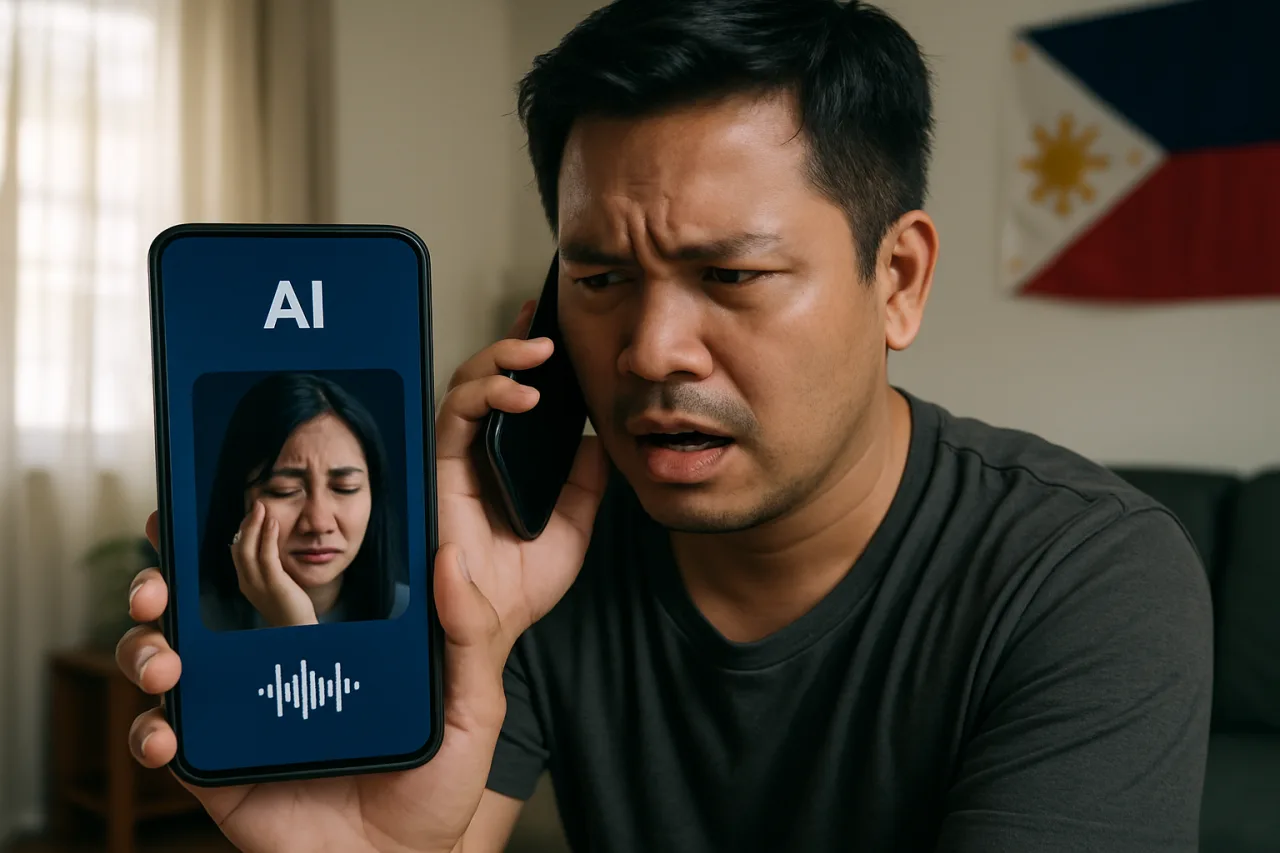
Here is the play this data enables. A caller phoning a household in Ilocos Norte or Cebu from a spoofed U.S. number now knows a name, a Social Security number, a birth date, a rank, and a posting history.
The script writes itself: a “military benefits officer” confirms the victim’s service details precisely, then explains that a survivor payment, pension recalculation, or emergency war-zone allowance is pending — but a processing fee or “customs bond” must be wired first. The family, hearing details no stranger should know, sends money through the first remittance channel they trust. This is the standard anatomy of the impersonation scams that already cost OFW families dearly every year, and this Pentagon data breach hands the scammers documentary-grade ammunition free of charge.
The defense is boring and specific. Verify every “benefit” claim through official channels you look up yourself — never through numbers or links the caller provides. Understand that the U.S. government does not phone relatives in the Philippines demanding processing fees for military benefits. Treat any caller who knows your family member’s rank and unit as MORE dangerous, not more legitimate: that knowledge now has a documented leak trail. And rotate the assumption that a voice knowing a birth date means trust — after this Pentagon data breach, it means the opposite.
File-sharing servers: the appliance everyone forgets to defend
Zoom out and the mechanics matter as much as the numbers. This Pentagon data breach did not come through a zero-day chain, a supply-band implant, or an exotic nation-state toolset. It came from an unencrypted file-sharing server with a vulnerability nobody had patched, sitting in an agency whose entire job is identity security. The attackers exploited it. They did not even need to be clever enough to hide the access — nine months of “a small number of unauthorized users” went unnoticed inside one of the most-watched networks on earth.
The pattern is now the year’s most reliable breach door. Fortinet’s FortiMail zero-day in October. Citrix NetScaler remote-code-execution zero-days under active exploitation per CISA. SonicWall’s SMA appliance chain before that. Oracle middleware in August. Each time, the perimeter appliance — mail, file transfer, VPN, identity — is the doorway. Each time, the victim’s response begins after months of quiet access.
A file-sharing server holding unencrypted Social Security numbers is exactly the kind of asset that appears in no asset register and therefore in no monitoring dashboard. Your own small business will have its version of that server: the FTP folder, the shared drive with the payroll spreadsheet, the router nobody has logged into since purchase.
The Pentagon data breach is a mirror held up to every organization’s unlabeled corner.
The season of federal data: this breach has company
The Pentagon data breach lands in a season where federal records are leaking on a monthly cadence. Days before the DMDC letters surfaced, the ShinyHunters extortion gang claimed it had breached the FBI’s own jobs site — FBIjobs.gov — through an Oracle PeopleSoft zero-day, claiming several terabytes of records covering names, Social Security numbers, home addresses, and duty assignments for what it called “almost ALL FBI Agents,” including members of the FBI’s Remote Operations Unit. ShinyHunters told BleepingComputer the FBI breach was not financially motivated and that it does not intend to publish or extort — which, from an extortion gang, is a sentence worth rereading twice.
Before that: the Office of Personnel Management-era archives of federal worker data have leaked repeatedly through contractors; the Treasury Department’s systems were accessed through a stolen remote-support key; and courts, agencies, and university systems have all shipped notification letters this quarter. The pattern across every one of these incidents is identical to the Pentagon data breach: an unglamorous system holding unencrypted archives of permanent identity data, compromised quietly for months, disclosed late, and defended publicly with the phrase “no indications of misuse.”
Read the sequence as an adversary would. Federal personnel records carry the highest per-record value of any civilian breach class because they combine three fraud inputs in one file: a permanent identity (SSN never changes), an employment biography (rank, unit, clearance-adjacent details), and a family structure (dependents, benefits, survivors). Add the demographic fields this Pentagon data breach exposed — race and sex — and you have the targeting filters for scams tuned to specific communities. Fraud operations no longer need to guess who might respond to a veterans’-benefits pitch; they hold the census of exactly who qualifies.
The comparison also sets the price of neglect. The FBI breach ran through a zero-day in commercial HR software. The Pentagon data breach ran through an unpatched file-sharing server inside the department’s own identity authority. Different doors, same hallway: the unglamorous internal systems that hold the permanent records receive a fraction of the monitoring budget that customer-facing systems receive, and adversaries have noticed the asymmetry.
The disclosure machine is now the story
There is a second, quieter scandal inside this Pentagon data breach: the disclosure math. Intrusion began October 2025. Discovery came July 16, 2026. Letters went September 18. Public reporting began late September. From first access to public awareness: roughly eleven months. From discovery to public awareness: two months. The Pentagon had information that nearly three million people’s Social Security numbers were exposed as early as mid-July — every one of those people spent July, August, and early September financially exposed to fraud attempts they could not recognize because they had not yet been told.
Databases of living and dead service members also read differently when the reader is a foreign intelligence service rather than a fraud ring. CNN’s reporting quoted national-security experts flagging counterintelligence concern: ranks, assignments, and specialties are targeting data for influence operations and social engineering against cleared personnel. The Pentagon’s own counterintelligence apparatus now has to assume the adversary holds a current, validated personnel index it did not have a year ago.
What has to happen next — and what to check for free
Three accountability facts remain open. First: who is inside? The letter says “a small number of unauthorized users” and nothing else; no attribution, no group claim, no ransom demand surfaced in a year of quiet reading. Second: how did no one notice nine months? The file-sharing system was unencrypted and, apparently, unmonitored. Third: what exactly qualifies officials to declare “no indications of misuse” without publishing how they searched?
Two defense officials confirmed the letter to multiple outlets, yet no defense.gov press release exists as of this writing. The DMDC enrollment deadline: August 19, 2027 for twelve months of IDX credit monitoring. Anyone who receives a letter should enroll immediately, place a fraud alert or credit freeze with the three U.S. bureaus, and file an IRS identity-protection PIN so a stolen SSN cannot file a tax refund claim. Every Filipino household with a U.S. service link should do the same on behalf of the person whose name is on the record — and then brief the family group chat, because the scam call will arrive there first.
Key questions, answered directly
Was this a Pentagon data breach of classified systems? No evidence of that. The exposed system was a file-sharing server holding unencrypted personnel files — sensitive but unclassified. Classified networks are separated by design, and nothing in the reporting touches them.
How do I know if my family member’s records are in the Pentagon data breach? Notification letters go to the address on file; they are being shared online as the letters circulate. Anyone affected can enroll in the IDX credit monitoring with the enrollment details in the letter. If a relative served or worked for the U.S. military and no letter has arrived, monitor credit files proactively — absence of a letter is not proof of absence from the breach.
Could Filipino families receive anything directly? The letters go to affected individuals, wherever they live. For a household in the Philippines, the practical protection is the family conversation: the rank-and-unit details the caller knows are documented as stolen now, so the verification rule — hang up, call back on an official number — is the only safe reflex.
Is four million the real number? Unconfirmed. Pentagon officials state 3.054 million across 2.76 million living and 294,000 deceased. The four-million figure comes from unnamed people familiar with the incident. Until DoD publishes its own reconciliation, 3.054 million is the only verified count in this Pentagon data breach.
The Pentagon data breach will be measured in years, not weeks — in the quiet persistence of valid SSNs and the patience of impersonation scripts. The window when fraud calls sound untrained is closing this week. The window when they sound like a benefits officer who knows your brother’s posting history is opening now.