Table of Contents
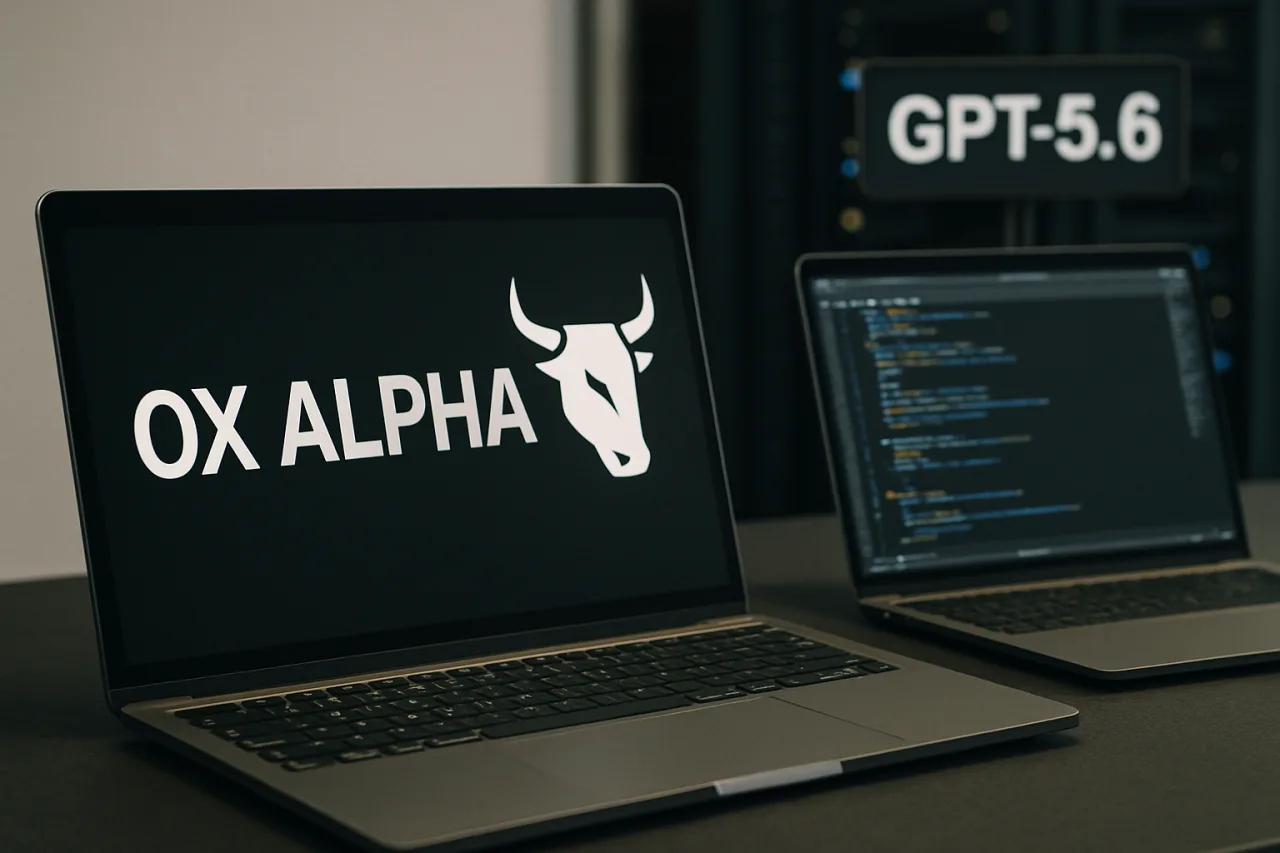
Someone parked a frontier AI model on the OpenRouter API on August 20, 2026, listed it under the provider name “stealth,” gave it a 1-million-token context window, charged nothing during preview week, and watched it beat GPT-5.6 Sol at coding. The model is called OX Alpha. No company has claimed it. No model card exists. No license, no parameters disclosure, no official benchmark submission. Independent researcher Ben Davis says he is 99 percent certain it belongs to Zhipu’s GLM-5.x line, citing video encoder token patterns identical to GLM-5V-Turbo and tokenizer alignment with GLM-5.3. This is AI World This Week #006, your WorldNgayon Intelligence Brief for August 17 through 23, 2026 — the week a mystery model called OX Alpha forced every frontier lab to reckon with the possibility that the next leap in AI capability might arrive without a press release.
Executive Brief
This week’s three defining developments, ranked by consequence:
- OX Alpha stealth launch: An anonymous model on OpenRouter posted 80 percent on DeepSWE Pass@1 against 65 percent for Claude and 52 percent for GPT-5.6 Sol in a 10-task user test. If the GLM attribution holds, Zhipu has shipped a leading cybersecurity model (GLM-5.3 at 84.5 percent on CyberGym), a top-two open coding model, and a stealth frontier candidate within three weeks — all from post-training on frozen bases.
- NVIDIA’s $105 billion Ohio AI factory: NVIDIA secured land, power, and shell capacity at the PORTS-Pike Technology Campus in Pike County, Ohio, with OpenAI as the 20-year tenant. The initial 4.25 GW deployment could expand to 8 GW. Jensen Huang introduced “LPS” — Land, Power, and Shell — as the new bottleneck for AI infrastructure, as reported by NVIDIA’s official announcement.
- Anthropic’s first profitable quarter: Q2 2026 revenue exceeded $11.5 billion, up 14-fold from $787 million a year earlier, with positive adjusted operating income. The company is targeting a $2 trillion IPO valuation in October.
Overall Weekly Impact: ★★★★½ — A convergence week where model capability, infrastructure scale, and financial validation all moved simultaneously. The OX Alpha mystery injects uncertainty into a market that thought it had the leaderboard settled.
AI World This Week — Weekly Brief
| Field | Detail |
|---|---|
| Issue | #006 |
| Week | August 17–23, 2026 |
| Reading Time | ~22 minutes |
| Top Story | Mystery OX Alpha model beats GPT-5.6 at coding |
| Key Themes | Stealth model launches, post-training frontier, infrastructure scale, AI profitability |
| Models Launched | OX Alpha (stealth), GLM-5.3, Gemini 3.7 Flash, DeepSeek V4-Pro-0813, Qwen3.8-27B, Grok 4.6 (Bedrock) |
| Market Signal | Anthropic’s first profit validates frontier AI as a business; Stripe’s $7.5B OpenRouter acquisition validates AI infrastructure as an asset class |
Quick Facts
| Specification | OX Alpha |
|---|---|
| Released | August 20, 2026 (stealth preview) |
| Developer | Unconfirmed (community fingerprinting points to Zhipu GLM-5.x) |
| Parameters | Estimated ~744B total, ~40B active (MoE, unconfirmed) |
| Context Window | 1,048,576 tokens (1M) |
| Max Output | 131,072 tokens (128K) |
| Modality | Text, image, video input; text output |
| API Price | $0 input, $0 output during preview week |
| DeepSWE Pass@1 | 80% (10-task user test; not audited) |
| Model ID | stealth/ox-alpha on OpenRouter |
| License | Not published |
AI This Week by the Numbers
| Number | What It Represents |
|---|---|
| 80% | OX Alpha’s DeepSWE Pass@1 score (10-task user test, unaudited) |
| $105B | NVIDIA’s investment in Ohio AI factory land, power, and shell |
| 8 GW | Planned AI compute capacity at PORTS-Pike campus |
| $11.5B | Anthropic Q2 2026 revenue (first profitable quarter) |
| $7.5B | Stripe’s acquisition price for OpenRouter |
| 84.5% | GLM-5.3’s CyberGym score (first place, cybersecurity benchmark) |
| 629% | Unitree Robotics’ first-day IPO surge on Shanghai STAR Market |
| 3B+ | Qwen family total downloads worldwide (6 months) |
| 100.00 | NVIDIA AVO’s perfect ARC-AGI-3 score (183 levels, 25 environments) |
| $12.2B | Marvell stock warrant granted to Google for AI chip deal |
AI Impact Meter
| Dimension | Rating | Why |
|---|---|---|
| Innovation | ★★★★★ | Stealth model launches, perfect ARC-AGI-3 saturation, post-training gains without new parameters |
| Business | ★★★★★ | Anthropic’s first profit, Stripe’s $7.5B acquisition, NVIDIA’s $105B infrastructure bet |
| Developers | ★★★★½ | Free frontier model access, GPT-5.6 Sol price cut, Gemini 3.7 Flash intro pricing |
| Consumers | ★★★½ | Google Sheets canvas, ChatGPT for teens, Google AI Pro free year for students |
| Investors | ★★★★★ | Anthropic IPO at $2T, Unitree IPO +629%, NVIDIA earnings Aug 26, Marvell-Google deal |
| Philippines | ★★★½ | US-China AI cold war pressures Philippines to choose sides; Pax Silica hub remains relevant |
The Week in Timeline
| Date | Event |
|---|---|
| Aug 13 | Google launches Gemini 3.7 Flash (56 AAII, $0.75/$3.75 intro pricing) |
| Aug 13 | DeepSeek releases V4-Pro-0813 (1.6T params, 1M context, MIT license) |
| Aug 14 | Z.ai releases GLM-5.3 (84.5% CyberGym, post-trained on 743B base) |
| Aug 14 | Alibaba releases Qwen3.8-27B open-weight model |
| Aug 15 | Anthropic Q2 revenue reported: $11.5B, first positive operating income |
| Aug 16 | Bloomberg reports Stripe near deal to acquire OpenRouter for $7B+ |
| Aug 17 | NVIDIA announces $105B Ohio AI factory with SB Energy; OpenAI as 20-year tenant |
| Aug 19 | Stripe confirms OpenRouter acquisition at ~$7.5B; Marvell grants Google $12.2B warrant |
| Aug 19 | Unitree Robotics IPO opens +629% on Shanghai STAR Market ($53B valuation) |
| Aug 19 | Reuters reports US asking allies to choose between American and Chinese AI ecosystems |
| Aug 19 | China responds, calling for respect for each country’s “digital sovereignty” |
| Aug 20 | OX Alpha appears on OpenRouter as stealth/ox-alpha (1M context, free preview) |
| Aug 21 | Grok 4.6 lands on Amazon Bedrock with 500K context; NVIDIA open-sources NOOA agent framework |
| Aug 22 | OpenAI cuts GPT-5.6 Sol pricing to $4/$20 (from $5/$30) for 3-month promotion |
| Aug 22 | NVIDIA AVO posts perfect 100.00 on ARC-AGI-3 benchmark |
Key Takeaway
- 🔍 Mystery Model: OX Alpha appeared anonymously on OpenRouter on August 20 with a 1M context window, multimodal input, and free access during preview week. Early testing at 80 percent DeepSWE Pass@1 places it ahead of Claude (65%) and GPT-5.6 Sol (52%), though the 10-task sample has high variance and the result is unaudited.
- 🏗️ Infrastructure Pivot: NVIDIA’s $105 billion Ohio investment redefines the AI bottleneck from chips to “Land, Power, and Shell” — the physical resources needed to house and power millions of GPUs. The PORTS-Pike campus could reach 8 GW, enough electricity to power six million US households.
- 💰 Profitability Proof: Anthropic’s $11.5 billion Q2 revenue with positive operating income is the first concrete evidence that a frontier AI lab can turn a profit. The company is targeting a $2 trillion IPO valuation in October — potentially the largest IPO in history.
- 🌍 Cold War Escalation: The United States is asking dozens of countries to choose between American and Chinese AI ecosystems, while China pushes “digital sovereignty.” The Philippines, already a Pax Silica participant, faces growing pressure to pick a side — a decision that affects semiconductor investment, AI model access, and OFW tech employment.
- ⚡ Action for Filipino Professionals: Test OX Alpha while the free preview lasts (closes ~August 27) but keep proprietary code and personal data out. The model is anonymous, routed through third parties, and data handling claims are unverified. For production work, GLM-5.3’s open weights are targeted for August 28 — that is the date to watch for a deployable, auditable alternative.
1. 🤖 Models & Releases
The week began with the aftermath of a fortnight that saw five frontier-level model releases — Grok 4.6, Qwen3.8-Max, Gemini 3.7 Flash, GLM-5.3, and DeepSeek V4-Pro-0813 — and it ended with something stranger: a model nobody will claim.
OX Alpha appeared on OpenRouter and OpenCode on August 20, 2026, routed under the provider name “stealth.” The model ID is stealth/ox-alpha. It carries a 1,048,576-token context window, accepts text, image, and video input, and supports function calling. Access was free during a roughly one-week preview: $0 input, $0 output, $0 cache reads. OpenCode cited capacity of 100 trillion tokens per day.
Early testing reported 80 percent DeepSWE Pass@1, ahead of Claude at 65 percent and GPT-5.6 Sol at 52 percent. The critical caveat: that figure came from a 10-task user test, not an audited leaderboard run. DeepSWE does not list OX Alpha on its public BenchSift leaderboard as of August 21. A 10-task sample carries enormous variance, so the honest reading is that OX Alpha performs somewhere in the frontier band on coding — not that it definitively beats GPT-5.6.
Independent researcher Ben Davis states 99 percent certainty that OX Alpha belongs to Zhipu’s GLM-5.x line, citing video encoder token consumption patterns identical to GLM-5V-Turbo and tokenizer alignment with GLM-5.3. A reported Z.AI API error code (invalid zstd request body) seen by testers further pushes theories toward the GLM family. Zhipu has used stealth channels before and has not commented.
The timing is strategic. If Davis is right, Zhipu shipped GLM-5.3 (which leads CyberGym at 84.5 percent and ties Kimi K3 at AAII score 60) on August 14, then released what may be its next flagship anonymously six days later. The cadence — a leading cyber model, a top-two open coding model, and a stealth frontier candidate inside three weeks, all from post-training work on related bases — is the story. Public weights for GLM-5.3 are targeted for around August 28 after safety testing.
OpenAI cut GPT-5.6 Sol pricing to $4 per million input tokens and $20 per million output tokens, down from $5 and $30, for a three-month promotional period. The output cut matters most: reasoning models generate far more output tokens than chat models, so output pricing dominates the bill on any agentic workload. Dropping output from $30 to $20 takes roughly a third off the running cost of an agent fleet on Sol overnight. The competitive context is stark: Grok 4.6 matches GPT-5.6 Sol Max on the Artificial Analysis Intelligence Index at $2 and $6, DeepSeek V4-Pro serves 1.6 trillion parameters at $0.43 and $0.87, and GLM-5.3 comes bundled in coding plans starting at $18 a month.
GLM-5.3, released by Z.ai on August 14, leads the CyberGym cybersecurity benchmark at 84.5 percent, ahead of Claude Mythos 5 and GPT-5.6 Sol. It lifted Terminal-Bench 3.0 from 4.6 percent to 28.3 percent. The architectural point outweighs the leaderboard position: GLM-5.3 uses an identical 743 billion parameter base as GLM-5.2. The entire gain came from reinforcement learning and training environment design — a jump of more than six times on terminal work arrived without a single new pre-training run. This suggests the post-training frontier is much further from exhausted than the model release cadence implies.
Gemini 3.7 Flash, released August 13, scored 56 on the Artificial Analysis Intelligence Index, up from 52 for 3.6 Flash, placing it above Claude Sonnet 5 (55) and below GPT-5.6 Terra (57) and Muse Spark 1.2 (57). It lifted DeepSWE v1.1 from 49 percent to 65.3 percent and FrontierCode 1.1 from 34.4 percent to 43.6 percent. Introductory API pricing of $0.75 input and $3.75 output runs only through December 31, 2026, after which rates double. With Gemini 3.5 Pro delayed indefinitely, 3.7 Flash is not just Google’s best cheap model — it is Google’s best model, full stop.
DeepSeek V4-Pro-0813 shipped August 13 with 1.6 trillion parameters, a 1M token context window, and an MIT license. At $0.43 input and $0.87 output per million tokens, it is roughly 20.7x cheaper per token than GPT-5.6 Sol on a blended basis. Together.ai’s independent testing found DeepSeek V4 Pro 0813 cost $0.24 per rollout versus $8.37 for GPT-5.6 Sol at max effort — roughly 35x cheaper — while reaching similar coverage. The tradeoff: Pro takes a median 146 steps and 35 minutes versus Sol’s 53 steps and 17 minutes. Sol is the fast, concise specialist; Pro reaches similar results the long way around.
Grok 4.6 landed on Amazon Bedrock on August 21 with a 500K token context window and configurable reasoning effort. This is xAI’s second model generation on Bedrock in three months. The distribution matters more than capability: Bedrock supplies enterprise security, privacy controls, and monitoring that regulated enterprises require — an existing AWS contract with no new vendor review.
Qwen3.8-27B, released August 14, is the smaller checkpoint in Alibaba’s Qwen 3.8 family, designed to fit ordinary on-premise GPU hardware. The larger Qwen3.8-Max (2.4 trillion parameters, 95 billion active) launched August 3, with open weights planned for the following week. The Qwen family has now surpassed 3 billion downloads worldwide in six months, making it the most downloaded open AI model family, surpassing Google and Meta on Hugging Face.
WorldNgayon Analysis: The OX Alpha stealth launch is more than a curiosity — it is a new release strategy. A free frontier model with no brand attached gets tested harder and more honestly than any launch post. If Zhipu is behind OX Alpha, the company has demonstrated that post-training on a frozen base can produce frontier-level coding and cybersecurity capability without the massive compute cost of a new pre-training run. For Filipino developers and startups, the OX Alpha phenomenon implies that the gap between open-weight Chinese models and closed Western flagships is closing faster than pricing alone suggests. The advice from Satya Nadella — stop trusting one AI model — has never been more practical. Test multiple models on your actual workload and route accordingly.
Bottom Line: The OX Alpha mystery reveals that the next frontier in AI capability may come not from a massive pre-training run but from post-training artistry — and it may arrive without a press release.
2. 💼 Industry & Business
The business of AI crossed two thresholds this week: a frontier lab proved it can profit, and a payments company proved that AI infrastructure is worth acquiring at a premium.
Anthropic reported its first profitable quarter. Q2 2026 revenue exceeded $11.5 billion, up more than 14-fold from $787 million in Q2 2025, and up from $4.73 billion in Q1 2026 — meaning the company more than doubled inside three months. First-half 2026 revenue totaled approximately $16.2 billion. The company recorded positive adjusted operating income, making it one of the first leading AI labs to reach profitability. The figures are preliminary, unaudited, and disclosed to prospective investors as Anthropic prepares for an IPO targeting a $2 trillion valuation in October. By comparison, OpenAI is projecting $14 billion in losses for 2026.
The numbers carry weight beyond Anthropic. For three years, the AI economy has been narrated through run rates — annualized extrapolations of the latest month’s sales pace. Anthropic’s disclosure is different: $11.5 billion in booked revenue between April and June. Half a year of actual sales now stands behind the momentum story investors have been buying. The company’s strong gross margins on API sales suggest previous losses were investment-driven, not structurally unprofitable.
Stripe acquired OpenRouter for approximately $7.5 billion, with $1.5 billion allocated to OpenRouter’s founders and $6 billion to investors. The deal closed less than three months after OpenRouter raised $113 million at a $1.3 billion valuation in its Series B — a 5.4x markup in 82 days. Stripe CEO Patrick Collison called OpenRouter’s product “a truly delightful developer tool” and said the acquisition would “help businesses maximize profitability by routing their requests intelligently and spending their tokens efficiently,” as reported by CNBC.
The strategic logic: OpenRouter sits between AI model providers and the applications that use them, routing requests across models based on cost, latency, and capability. By owning that routing layer, Stripe positions itself as the economic infrastructure for AI — not just payments, but the entire token economy. For Filipino developers building AI-powered applications, this acquisition signals that the model-routing layer is becoming as strategic as the models themselves.
NVIDIA’s $105 billion Ohio investment (detailed in Section 4) and Marvell’s $12.2 billion stock warrant to Google reshaped the semiconductor landscape. Marvell granted Google the option to buy up to 58.97 million shares at $206.58 each as part of a custom AI chip development deal. The warrant’s bulk unlocks only as Google hits cumulative spending thresholds — meaning Google’s ownership position in Marvell scales in direct proportion to its procurement spending. Marvell’s stock rose 11 percent on the news, while Broadcom, Google’s traditional chip partner, fell about 2 percent.
Unitree Robotics debuted on Shanghai’s STAR Market on August 19, surging 629 percent intraday and closing up 487 percent. The IPO valued the humanoid robotics company at roughly $53 billion, with a P/E ratio nearing 1,300x. The Hangzhou-based company shipped 5,500 humanoids in 2025, with revenue of 1.7 billion yuan ($252 million) and net profit of 278 million yuan ($41 million). Reuters traced Unitree’s designs to US military-funded research — a detail that adds geopolitical complexity to its $53 billion valuation.
Alipay launched full-stack agentic commerce, integrating AI agents into its payment platform for autonomous transaction completion — a signal that Chinese fintech is building toward AI-driven commerce at scale.
WorldNgayon Analysis: Anthropic’s profit is the proof point the entire AI industry needed. If one frontier lab can turn a profit at $11.5 billion in quarterly revenue, the argument that AI is a speculative bubble loses its strongest version. But the comparison with OpenAI — which projects $14 billion in 2026 losses — reveals that profitability depends on business model, not just capability. Anthropic’s revenue comes predominantly from API and B2B channels, with 40 percent of ARR from indirect channels like Amazon Bedrock. For Filipino investors watching the AI sector, the Anthropic IPO in October will be a defining moment — potentially the largest IPO in history, and the first true price discovery for a frontier AI lab.
Bottom Line: The AI business model is no longer hypothetical — it is profitable. The question for the next quarter is whether profitability scales or whether compute costs catch up.
3. 🏛 Policy & Regulation
The AI cold war moved from subtext to explicit policy this week. Reuters reported on August 19 that Washington is considering asking dozens of countries to choose between the American and Chinese technology ecosystems. Some partners could be warned that cooperating with Chinese AI initiatives could jeopardize their participation in a US-backed technology coalition. The ask is binary: use our models, our chips, our infrastructure — or face consequences.
China responded the same day. Beijing called for respect for each country’s “digital sovereignty,” arguing that countries should be free to choose their technology partners according to their own needs. The framing positions China as the defender of national autonomy against American coercion — a narrative that resonates in Southeast Asia, where countries have historically resisted forced alignment.
For the Philippines, this is not abstract. The country became the 13th member of the Pax Silica initiative in April 2026, signing an agreement with the United States to build a 4,000-acre AI and semiconductor manufacturing hub in Luzon. The project, near Clark Freeport Zone, could attract $10 billion to $70 billion in investment and create up to 190,000 engineering and technical jobs. But Pax Silica is explicitly a US-led supply chain security initiative. If the cold war intensifies, Philippine participation signals a choice already made — and China’s response may affect everything from trade flows to OFW employment in tech sectors across the Middle East and Asia.
The EU AI Act reached its next enforcement milestone on August 2, 2026. The AI Office and national authorities began implementing the Act, with powers to request technical documentation, evaluate general-purpose AI models, require fixes, and issue fines. New transparency rules require AI providers to make it clear when people are interacting with AI, and AI-generated content such as deepfakes must be marked or made detectable. The EU’s July Action Plan on Cybersecurity and AI is setting up stronger AI testing capacity, with a new EU evaluation capability expected to be operational by 2027.
Christine Lagarde, President of the European Central Bank, warned at a World Economic Forum discussion in Geneva that Europe “cannot afford to miss the AI revolution” after having “largely missed the first digital revolution.” Europe represents 6 percent of the world’s population but accounts for 15 percent of its researchers and produces nearly one-fifth of the world’s most highly cited scientific publications. The problem, Lagarde said, is Europe’s difficulty turning scientific excellence into commercial success due to fragmented markets and financing. Euro area companies plan to allocate an average of 9 percent of total investment to AI in 2026.
In the United States, the federal government is moving toward voluntary frontier model testing under a June executive order. Federal agencies are developing a classified testing system to identify “frontier models” with advanced cyber capabilities. AI companies could voluntarily give the government early access for security testing before wider release. This is not a mandatory license or approval system — it gives the US government a bigger role in understanding risks without imposing a regulatory gate.
WorldNgayon Analysis: The US-China AI cold war puts the Philippines in a familiar but uncomfortable position — the same strategic ambiguity the country navigates in defense policy. Pax Silica aligns Manila with Washington on AI supply chains, but Philippine businesses and developers need access to both ecosystems. Chinese open-weight models like Qwen, GLM, and DeepSeek are already the most cost-effective options for Filipino startups. A forced choice would raise costs and limit access. The Luzon Economic Corridor and Pax Silica hub represent a generational economic opportunity, but they also represent a bet on one side of a dividing line that may harden further.
Bottom Line: The AI cold war is no longer about models — it is about ecosystems. Countries that straddle both will pay a premium; countries that choose will lose options.
4. 🖥 Infrastructure
NVIDIA announced on August 17 that it has secured land, power, and shell capacity through a partnership with SB Energy at the PORTS-Pike Technology Campus in Pike County, Ohio. OpenAI will be the customer under a 20-year lease. SB Energy will build, own, and operate the data center. The initial deployment is designed for 4.25 GW of AI compute capacity, with NVIDIA holding the option to support the remaining 3.75 GW — for a total of up to 8 GW.
Jensen Huang, NVIDIA’s CEO, introduced a new framework: “Land, Power, and Shell” (LPS). “AI is becoming infrastructure — the foundation for intelligence in every industry — and land, power, and shell have become vital in the age of AI,” Huang said. “We are securing long-lived infrastructure for NVIDIA compute so OpenAI can deploy the most productive AI factories that can be upgraded repeatedly with each new generation.”
The scale is unprecedented. Each generation of systems deployed at the campus could represent approximately 1.5 million GPUs and between $150 billion and $200 billion in revenue for NVIDIA. The campus could eventually reach 8 GW — enough electricity to power approximately six million US households. NVIDIA is investing up to $105 billion to secure LPS capacity, and the project that could cost as much as $500 billion in total. NVIDIA also agreed to invest $1.5 billion in SB Energy, a subsidiary of SoftBank Group. The first 800-MW phase is scheduled to begin construction in 2026, with computing capacity expected to come online in phases beginning in 2028.
The site is being developed in collaboration with AEP Ohio, the US Department of Energy, and the US Department of Commerce. SB Energy and SoftBank will build at least 10 GW of new energy generation — with about 9.2 GW from natural gas — and invest at least $4.2 billion in new regional grid infrastructure. OpenAI agreed to build on SB Energy’s $40 million community benefits fund with an incremental $40 million for local priorities.
NVIDIA’s $500 billion financing alliance, announced August 11 with Blackstone, BlackRock, KKR, and Goldman Sachs, provides the capital framework for projects like this. NVIDIA is not just supplying chips — it is helping customers find the money to build the infrastructure around them.
Philippine Connection
The NVIDIA Ohio project underscores why the Pax Silica initiative matters for the Philippines. The US is treating AI infrastructure as a national security priority — securing land, power, and manufacturing capacity within allied borders. The Philippines, as a Pax Silica member, is positioned to benefit from this strategy through the 4,000-acre Luzon AI and semiconductor hub. However, the Ohio project also reveals the scale gap: a single US data center campus will consume 8 GW — more than the entire power consumption of many Philippine provinces. For the Philippine semiconductor industry, the opportunity is in the supply chain, not in matching this scale — components, assembly, testing, and packaging remain Philippine strengths.
WorldNgayon Analysis: Huang’s LPS framework names the real bottleneck, and it is not chips — it is electricity. The Ohio campus will consume 8 GW, roughly the output of six large nuclear reactors. This is the physical constraint that will shape the next decade of AI: not whether models can be made smarter, but whether the grid can power them. For the Philippines, which faces chronic power shortages and high electricity costs, this is the real barrier to domestic AI infrastructure. The Pax Silica hub’s focus on semiconductor assembly and packaging — not training compute — is the pragmatic positioning.
Bottom Line: The AI race is now a power race. Whoever controls the electricity controls the compute.
5. 🔬 Research
NVIDIA’s AVO (Agentic Variation Operators) posted a perfect 100.00 RHAE score on the ARC-AGI-3 benchmark on August 22, clearing all 183 levels across 25 game environments while using roughly 12 percent fewer environment actions than the VISTA baseline. ARC-AGI-3 tests interactive reasoning — an agent must form a hypothesis about the rules, act on it, observe what happened, and revise. A perfect clear across every level is a saturation result, meaning the benchmark can no longer distinguish between systems at the top.
The architecture combines persistent memory, a stagnation-detection supervision loop, and a hypothesis-act-observe-revise core loop. The stagnation detector is the design element worth noting: the usual failure mode for these agents is looping on a strategy that stopped working, and explicitly monitoring for that recovers a large share of otherwise lost runs. Fewer actions than baseline matters operationally, since environment interactions are the expensive part.
NVIDIA also open-sourced NOOA, an agent framework that achieved 82.2 percent on SWE-bench Verified using half the tokens of rival frameworks. The framework’s efficiency — matching or beating state-of-the-art at 50 percent of the token cost — demonstrates that the harness around a model closes gaps that raw model capability does not. This is the same lesson AVO taught on ARC-AGI-3: structured loops and supervision matter as much as model size.
Gemini Robotics ER 2, from Google DeepMind, focuses on real-time planning and reasoning for robots. The system is designed to serve as the “brain” for robot crews — multiple robots working together on complex tasks. This builds on Gemini Robotics 2, launched in late July, which helps robots understand their surroundings and perform whole-body movements.
Google DeepMind’s leadership reshuffle on August 5 continued to reverberate. Demis Hassabis stepped back from the day-to-day CEO role and became chairman and Alphabet’s Chief Scientist. Koray Kavukcuoglu, DeepMind’s former CTO, now leads the team working on Gemini. Jeff Dean left Google after 27 years to start a new AI company. The reshuffle signals Google’s urgency in the AI race — consolidating its AI brain trust under new leadership while losing one of its most senior engineers to a startup.
WorldNgayon Analysis: The AVO and NOOA results share a lesson that applies directly to Filipino developers building AI applications: the harness matters as much as the model. A well-structured agent loop with stagnation detection and memory can close capability gaps that would otherwise require a larger, more expensive model. This is particularly relevant for cost-constrained teams using open-weight models like DeepSeek V4 or GLM-5.3 — invest in the orchestration layer, not just the model choice.
Bottom Line: Saturation on ARC-AGI-3 means the benchmark is finished as a discriminator. The community needs ARC-AGI-4. Expect one within months.
6. 📈 AI Market Watch
| Company | Context | Signal |
|---|---|---|
| NVIDIA (NVDA) | $105B Ohio investment; $500B financing alliance; earnings Aug 26; shareholder meeting Aug 26 | Bullish — central banker of AI infrastructure |
| Anthropic (private) | $11.5B Q2 revenue; first profit; IPO October targeting $2T | Strongest signal in AI sector |
| Stripe (private) | Acquired OpenRouter for $7.5B; positioning as AI economic infrastructure | Expanding beyond payments into token economy |
| Marvell (MRVL) | $12.2B stock warrant to Google for custom AI chips; stock +11% | Beneficiary of Google chip diversification |
| Unitree (Shanghai STAR) | IPO +629% day one; $53B valuation; P/E ~1,300x | Speculative — revenue is $252M, valuation is 210x sales |
| OpenAI (private) | S-1 watch; $14B projected 2026 losses; GPT-5.6 Sol price cut; ChatGPT Ads expansion | Revenue growing but losses widening |
| Alibaba (BABA) | Qwen 3B+ downloads; stock +4.5% premarket on Qwen3.8-Max launch | Open-weight leadership driving developer adoption |
Filipino Investor Angle
For Filipino investors — including OFWs building portfolios — the AI sector offers both opportunity and caution. NVIDIA’s earnings on August 26 will be a sector-defining event: the company’s $70 billion in investments across OpenAI, Anthropic, and other AI companies could pay off significantly, but the scale of capital deployment raises questions about sustainability. Yahoo Finance analysis estimates NVIDIA can generate approximately $470 billion in free cash flow over 2026-2027, making its investment portfolio “easily manageable” at 15 percent of free cash flow.
Anthropic’s October IPO will be the first true price discovery for a frontier AI lab. If it achieves a $2 trillion valuation, it would surpass SpaceX’s record IPO. Filipino investors with access to US markets through platforms like international trading platforms should watch the prospectus for three numbers: growth durability (is Q2’s 14x growth sustainable?), compute costs (are margins holding as models scale?), and the indirect revenue mix (40 percent of Anthropic’s ARR comes from channels like Bedrock, which monetize differently than direct API sales).
Unitree’s IPO is a cautionary tale. A $53 billion valuation on $252 million in revenue (210x sales) and $41 million in profit (1,300x P/E) is speculative excess by any measure. The robotics sector is real, but the valuations are running ahead of the business fundamentals. Filipino investors should treat humanoid robotics as a long-term theme, not a short-term trade.
WorldNgayon Analysis: The AI investment landscape is bifurcating. Infrastructure plays (NVIDIA, Marvell) have clear revenue and cash flow. Frontier lab valuations (Anthropic, OpenAI) depend on continued exponential growth. Robotics (Unitree) is speculative. For OFW investors, the safest exposure remains through diversified index funds with AI sector weight, rather than single-stock bets on unproven business models.
Bottom Line: NVIDIA earnings on August 26 will set the tone. If Jensen Huang’s infrastructure bet is delivering, the bull case holds. If guidance disappoints, the $500B financing alliance starts to look like leverage, not strategy.
7. 🛠 Tool of the Week
Google Sheets Canvas
What it does: Sheets canvas is a Gemini-powered feature that turns spreadsheet data into custom, interactive “mini-apps” inside Google Sheets. You describe what you want in natural language — a dashboard, a Kanban board, a seating chart, a study tracker — and Gemini builds a visual interface layered directly on top of your spreadsheet data. No formulas, no programming, no separate app required. The interface is read-write: moving an item, checking off a task, or changing information in the mini-app automatically updates the underlying spreadsheet.
Who it is for: Anyone who manages data in Google Sheets and wants a better interface than raw rows and columns. Project managers can turn task lists into Kanban boards. Students can convert assignment lists into visual study trackers. Small business owners can build customer dashboards. For OFWs managing family budgets, remittance trackers, or small side businesses through Google Sheets, this feature transforms static spreadsheets into interactive tools.
Cost: Available to Google AI Pro and Ultra subscribers, Google Workspace Business and Enterprise Standard/Plus, and Google AI Pro for Education add-on subscribers. Globally available in English. Rapid rollout began August 10, 2026; scheduled release domains follow from August 31.
Quick use case: An OFW in Riyadh maintains a shared Google Sheet tracking family expenses, remittance schedules, and savings goals. With Sheets canvas, they can prompt Gemini to create an interactive dashboard showing spending categories, upcoming remittance dates, and a savings progress bar — all synced to the underlying data and updatable through the visual interface. Family members in the Philippines can interact with the dashboard without navigating raw spreadsheet cells.
Our verdict: Sheets canvas is the most practical AI feature Google has shipped this quarter for non-technical users. It bridges the gap between data storage and data interaction without requiring a single line of code. The limitation is the paywall — it requires a Google AI Pro or Workspace subscription. For teams already paying for Google Workspace, it is a no-cost upgrade to existing workflows.
8. 🎯 Why It Matters
For Professionals: The OX Alpha stealth launch demonstrates that AI capability is now arriving faster than official channels can track it. A model that may beat GPT-5.6 at coding appeared without a press release, a model card, or a named company. For professionals whose work depends on choosing the right AI tool, the lesson is to test broadly and not anchor on brand. The free preview window for OX Alpha closes around August 27 — use it to evaluate, but keep proprietary data out of anonymous, unverified infrastructure.
For Businesses: Anthropic’s first profitable quarter is the proof point businesses needed to invest in AI with confidence. If a frontier lab can generate $11.5 billion in quarterly revenue with positive operating income, the ROI of AI adoption is no longer theoretical. But the profitability comes from API and B2B channels — meaning businesses are the paying customers. The question for Filipino businesses is not whether to adopt AI, but which models to adopt and how to route between them cost-effectively. The framework for small business AI adoption now includes open-weight models that match frontier performance at a fraction of the cost.
For Students: Google’s free year of AI Pro for US students and the ChatGPT for Teens launch signal that the education-AI integration race is accelerating. Filipino students do not yet have equivalent free access, but Google AI Pro’s international expansion (140+ markets with a one-year AI Plus tier) suggests broader availability is coming. The skill that matters most is not prompt engineering — it is AI literacy: knowing when to trust AI output, when to verify, and how to use multiple models for different tasks.
For Developers: DeepSeek V4-Pro at $0.43/$0.87 per million tokens is roughly 35x cheaper than GPT-5.6 Sol for comparable coding tasks. GLM-5.3’s open weights land around August 28. OX Alpha’s free preview runs through ~August 27. The window for testing frontier-class models at zero or near-zero cost has never been wider. But the security implications of using anonymous, unverified models for production work are real — route carefully, and never expose credentials or proprietary code to models you cannot audit.
WorldNgayon Insight
The OX Alpha mystery reveals something deeper than a single model launch. It reveals a structural shift in how AI capability is delivered and consumed.
For three years, the AI industry has operated on a simple model: a lab trains a model, publishes benchmarks, launches an API, and the world reacts. OX Alpha breaks that model. A frontier-class model appeared on a routing platform, for free, with no named vendor, and the community tested it harder than any launch post could have achieved. The stealth launch is not a gimmick — it is a new distribution strategy that uses anonymity as a feature, not a bug.
If Ben Davis is right and OX Alpha belongs to Zhipu’s GLM line, the implication is profound: the next frontier in AI capability is not coming from bigger pre-training runs. It is coming from post-training artistry — reinforcement learning, training environment design, and the harness around the model. GLM-5.3 proved this on cybersecurity benchmarks. OX Alpha may prove it on coding. Both use frozen bases. Neither required a new pre-training run.
For the Philippines, this shift has a democratizing effect. Post-training is cheaper than pre-training. Open weights are cheaper than API access. Chinese models — Qwen, GLM, DeepSeek — are now the most cost-effective options for Filipino developers and startups. The US-China cold war may try to force a choice between ecosystems, but the economic reality is that the open-weight frontier is where the value sits for cost-constrained markets.
The deeper insight: the AI race is no longer about who has the biggest model. It is about who has the best post-training pipeline, the most efficient harness, and the most strategic distribution. The model is not the product. The system around the model is the product. And that system can be built anywhere — including in Manila, Cebu, or Davao, by developers who understand that orchestration beats scale.
WorldNgayon AI Index
| Dimension | Score (out of 10) | Notes |
|---|---|---|
| Innovation | 9.5 | OX Alpha stealth launch, AVO perfect ARC-AGI-3, GLM-5.3 post-training breakthrough |
| Business | 9.0 | Anthropic’s first profit, Stripe’s $7.5B acquisition, NVIDIA’s $105B infrastructure bet |
| Research | 8.5 | AVO saturation, NOOA open-source efficiency, Gemini Robotics ER 2 |
| Policy | 7.5 | US-China cold war escalation, EU AI Act enforcement, Lagarde warning on Europe |
| Infrastructure | 9.0 | NVIDIA Ohio 8 GW campus, Marvell-Google $12.2B deal, LPS framework |
| Overall Week | 8.7 | A convergence week — model, infrastructure, and financial validation all moved simultaneously |
Looking Ahead
- August 26: NVIDIA earnings report and shareholder meeting — the most anticipated AI earnings of the quarter. Guidance on the $500B financing alliance and Ohio project will set sector tone.
- August 26: OpenAI’s o3 model retirement from ChatGPT after its 90-day sunset. Teams still using o3 must migrate before this date.
- ~August 27: OX Alpha free preview window closes. Real pricing, rate limits, and whether the 1M context and video input survive at scale become clear.
- ~August 28: GLM-5.3 open weights targeted for release after safety testing. This is the date to watch for a deployable, auditable alternative to closed frontier models.
- October 2026: Anthropic IPO targeting $2 trillion valuation — potentially the largest IPO in history. Prospectus filing expected in September.
- Watch: Whether Zhipu claims OX Alpha. The four prior stealth models on OpenRouter were all unmasked within days. If Zhipu confirms, expect a GLM-5.4 or GLM-6 official launch to follow.
Stay tuned for AI World This Week #007.
Frequently Asked Questions
What is AI World This Week?
AI World This Week is the WorldNgayon Intelligence Brief — a weekly comprehensive AI briefing published every Sunday on worldngayon.com. It transforms global AI developments into practical insight for Filipino professionals, businesses, students, and developers. Each issue covers eight topic areas: models, industry, policy, infrastructure, research, markets, tools, and why it matters. You can read previous issues at AI World This Week #005 and AI World This Week #004.
What is OX Alpha?
OX Alpha is an anonymous stealth AI model that appeared on OpenRouter and OpenCode on August 20, 2026, built for coding, agentic work, and production use. It offers a 1M-token context window, text/image/video input, and free access during a roughly one-week preview. No company has publicly claimed it as of August 23, 2026. Community fingerprinting most often points to Zhipu’s GLM family as the developer.
Who makes OX Alpha?
The company behind OX Alpha is unconfirmed. Independent researcher Ben Davis states 99 percent certainty that it belongs to Zhipu’s GLM-5.x line, citing video encoder token consumption patterns identical to GLM-5V-Turbo and tokenizer alignment with GLM-5.3. A reported Z.AI API error code seen by testers further supports the GLM theory. Zhipu has not commented.
Is OX Alpha free to use?
OX Alpha is free during its stealth preview, with $0 input, $0 output, and $0 cache-read pricing on OpenRouter. The free window is stated to last about one week from the August 20 debut. Long-term pricing has not been published. Because the model is anonymous and routed through third parties, multiple testers advise keeping passwords, personal data, and proprietary code out during the window.
What is the WorldNgayon AI Index?
The WorldNgayon AI Index is our weekly editorial score (out of 10) assessing how consequential the week was across five dimensions: Innovation, Business, Research, Policy, and Infrastructure. It is not a model benchmark — it is an editorial assessment of the week’s impact on the AI landscape and its relevance to Filipino professionals.
How does OX Alpha compare to GPT-5.6 and Claude?
Early testing reported OX Alpha at 80 percent DeepSWE Pass@1, ahead of Claude at 65 percent and GPT-5.6 Sol at 52 percent. However, this figure came from a 10-task user test rather than an audited leaderboard run. A 10-task sample has enormous variance, so the honest reading is that OX Alpha performs somewhere in the frontier band on coding. For cost comparison, OX Alpha is free during preview, while GPT-5.6 Sol costs $4/$20 per million tokens (after the August 22 cut) and Claude Opus 5 costs $5/$25.
What does NVIDIA’s Ohio AI factory mean for the Philippines?
NVIDIA’s $105 billion Ohio investment — an 8 GW AI compute campus with OpenAI as tenant — signals that the US is treating AI infrastructure as a national security priority. The Philippines, as a Pax Silica member, is positioned to benefit through the 4,000-acre Luzon AI and semiconductor hub focused on assembly, packaging, and testing. However, the scale gap is enormous: a single US campus will consume 8 GW, more than many Philippine provinces. The Philippine opportunity is in the supply chain, not in matching this compute scale.
Disclaimer: This article is for informational and educational purposes only and does not constitute financial, investment, legal, or regulatory advice. References to specific companies, stocks, and regulatory provisions are based on publicly available information as of August 23, 2026. Readers should consult qualified financial advisors, legal counsel, and regulatory experts before making investment decisions or implementing AI compliance programs. The AI World This Week series is a weekly editorial product of worldngayon.com.