Table of Contents
Table of Contents
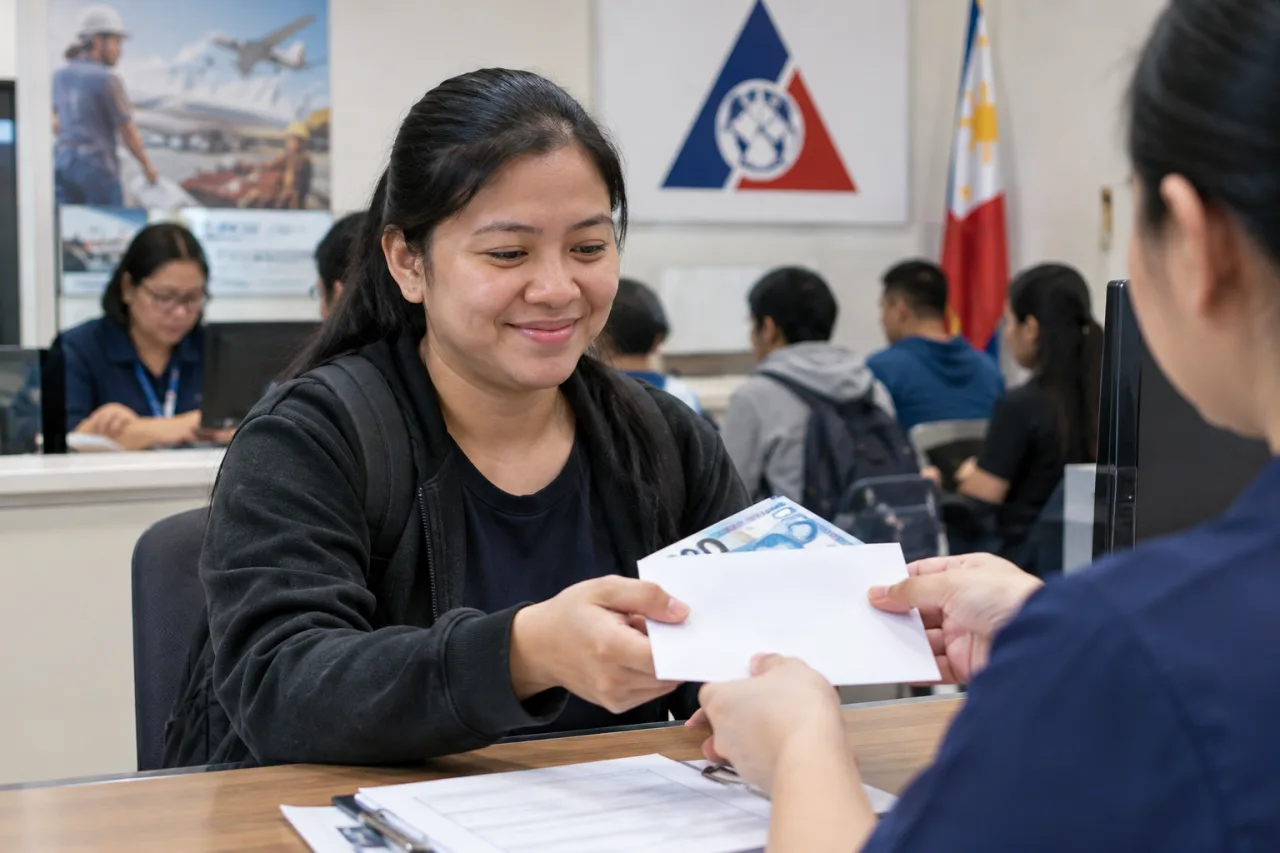
OWWA cash assistance for OFWs in 2026 is a live, moving benefits lane: the Bohol earthquake relief announced this October paid ₱5,000 per affected family of active members, the calamity-claims portal is running, and the Welfare Assistance Program keeps five separate doors open for members who fall outside the regular benefit lines. The searcher asking the OWWA cash assistance question for 2026 usually wants one of two things — which program fits a specific misfortune, or how much and how fast — and this guide answers both in order: the five WAP classes, the adjacent programs that look like cash assistance but run on different rules, the documentary kit, the two application routes, and the timeline realities our reading of the official Citizen’s Charter shows. Ask what OWWA cash assistance pays and you get a range, not a number — that is the agency’s design, not an accident. One caution up front: benefit amounts get revised by OWWA board resolutions, so the figures here are the verified shape of the programs, and the current peso values belong at the counter.
The Welfare Assistance Program is the catch-all cash-relief line for members whose situation falls outside the regular social benefits — and it runs whether you are active or lapsed, onsite or already home. Its five doors, from the official program description:
1. Calamity assistance. For members and families hit by natural disasters and human-induced crises — super typhoons, earthquakes, flooding, political unrest. This is the door with its own online claims portal for disaster events, and the Bohol earthquake response this October is the live proof: ₱5,000 cash relief per affected family of an active member, announced through the official embassy advisory (the Seoul embassy notice is public), with the standard family rule that one OFW family claims once per event even when both spouses are members.
2. Bereavement assistance. For families of members who die from accidents or crimes — the cases that fall outside the regular death-and-burial benefit. The claimant is typically the spouse, a child of legal age, or — if the member was single — parents or an unmarried sibling of legal age, with the expense-proof rule that whoever paid burial costs claims first, with any excess divided among claimant families.
3. Disability assistance. For members injured as victims of crimes or accidents, filed with the medical certificate from the attending physician or hospital, the claim form, a government ID, and an ID photo.
4. Medical assistance. For illnesses not covered under the separate MEDPlus program — the safety net beneath the bigger medical line.
5. Relief assistance for displaced workers. For members laid off en masse by economic, political, or health crises abroad — the door that answered the mass-displacement waves of recent years.
Across all five, the claimant kit repeats: the accomplished OWWA claim form, one 2×2 ID photo, proof of identity, and the circumstance-specific papers — death certificate from the local registrar or PSA for bereavement, medical certificates for disability and medical, and for tribal-culture claimants a joint affidavit of two disinterested persons in place of civil documents.
DOLE-AKAP. The Abot Kamay ang Pagtulong program paid a one-time ₱10,000 (or $200 for onsite claims) to displaced OFWs at the height of the pandemic displacement — the largest known single amount in this family, but tied to that crisis window and its own DOLE rules rather than a standing 2026 entitlement. Treat any current AKAP claim as a check-first: the program’s status changes with displacement events, and applications historically ran through DOLE and OWWA channels with five-to-fifteen-working-day processing (the program’s rules are summarized in public legal commentary).
Balik Pinas, Balik Hanapbuhay (BPBH). The livelihood-support package for returning member-OFWs in the current Citizen’s Charter — cash assistance with a personal undertaking that the money funds livelihood activities, filed with membership records and proof of repatriation. It is the correct door when the need is a restart, not a relief payment.
The regular social benefits. Death-and-burial and disability benefits with fixed schedules, MEDPlus for covered illnesses, and the education grants — EDSP scholarship support up to ₱60,000 per school year for qualified dependents, the OFW Dependent Scholarship Program at ₱20,000 per school year — live on separate claim tracks with their own rules, which is exactly why misfiled applications bounce: a calamity claim filed under bereavement rules waits twice.
Relief windows reward the families that move in the first two days. Hour 0–6: confirm the event class and the claim window — the handling embassy or consular post publishes its advisory first (the Bohol pattern above is the template), the OWWA portal opens with a form keyed to the event, and the regional offices activate their intake. Hour 6–24: assemble the kit — claim form, 2×2 photo, valid government ID, proof of address in the affected area if required, and the circumstance document (for calamity cases, proof that the family residence sits inside the declared affected area). Photograph every page before submission; portals reject blurry uploads silently. Hour 24–48: file, record the reference number, and — critically — register the claim with a family decision-maker as the single point of contact, because the one-claim-per-family rule means duplicated family filings create review friction exactly when speed matters.
The same playbook inverts cleanly for the non-event classes. A bereavement claim starts with the civil registry, not OWWA: secure the PSA-forwarded death certificate first, then file, because the certificate is the claim’s spine and the office will not advance without it. A medical-outside-MEDPlus claim lives or dies on the hospital paperwork from the attending physician. Match the first hour to the document that gates the claim, and the rest of the sequence follows.
Membership status interacts with the cash-assistance doors more subtly than most guides admit. Active members sit best: every door opens, and disaster windows that cap on active status (like the Bohol relief) include them. Lapsed members still reach several WAP classes — the program’s own description covers “active or non-active” members — but event-specific windows can choose to restrict to active, so renewing before the need is cheapest insurance. Families as claimants inherit the door when the member cannot file, with the legal-age and relationship rules above. The one combination nobody warns about: an OFW family with two active members claims event relief once per family, not twice — plan the paperwork accordingly, because the office will anyway.
The renewal mechanics are brief and worth memorizing: the ₱25 OWWA contribution attaches to every contract processed through DMW/POEA counters, OWWA offices, or overseas posts, and the OFW e-Card carries the status. Ten seconds at the counter per contract is what keeps the whole benefits ladder — cash assistance included — reachable at the worst possible moment.
Route 1 — online. Disaster-class relief runs its own claims portal (the calamity-assistance site live at calamity.owwa.gov.ph), where the claimant files directly with passport details, contact information, and the document uploads. This is the fastest route when an event is declared, because the portal opens and closes per relief window.
Route 2 — in person. OWWA regional offices and welfare liaison offices in the Philippines, or the Philippine embassy or consulate and POLO posts abroad for onsite members — the route for bereavement, disability, medical, and displaced-worker claims and for any calamity window without an active online form. Foreign postings publish their own advisories per event, exactly like the Seoul embassy’s Bohol notice, so the country post is the correct first contact for onsite claims.
The process on the inside, per the official Citizen’s Charter: the Regional Operations case officer evaluates the claim, and qualified cases are endorsed for cash disbursement by the servicing office. Practical translation: completeness at filing decides speed — the single most common delay is a missing circumstance document, which restarts review rather than pausing it.
WAP’s doors accept active and non-active members for several classes, but the amounts and some windows differ by status — the Bohol relief, for example, was explicitly for active members. Membership is renewed with the ₱25 OWWA contribution paid per contract processing (at DMW/POEA counters, OWWA offices, or abroad through posts). The OWWA cash assistance eligibility rides on membership: the status also gates the bigger benefits — the full membership-and-benefits guide walks that ladder, and the complete OWWA benefits guide lists every program on the board, while families planning education claims should start at the updated scholarship guide — and our free OFW toolkit keeps the document checklist in reach.
Published processing expectations for this family of claims run in working-day terms — the pandemic-era AKAP batches moved in five to fifteen working days by official statement, and the disaster-portal claims are batched per declared event window. In practice, three things decide your speed: the completeness of the documentary kit, the claim window (disaster relief opens per event and closes per event), and whether the claim class matches your circumstance. A calamity claim filed as bereavement does not wait — it bounces.
The cash-relief line OWWA pays to members and their families through the Welfare Assistance Program — five classes: calamity, bereavement, disability, medical (outside MEDPlus), and displaced-worker relief — plus the adjacent DOLE-AKAP displacement aid and the Balik Pinas Balik Hanapbuhay livelihood package for returnees.
The verified recent figures: ₱5,000 per affected family of active members for the October 2026 Bohol earthquake relief, and the historical ₱10,000 (or $200 onsite) for the pandemic AKAP displacement window. The standing WAP amounts are set by OWWA per circumstance and program year — confirm the current figure at your OWWA regional office, official portal, or the handling embassy post before budgeting.
Two routes: the online claims portal for declared disaster relief (calamity.owwa.gov.ph when the window is open), and in-person filing at OWWA regional or liaison offices in the Philippines or the Philippine embassy, consulate, or POLO post abroad — with the claim form, ID photo, government ID, and the circumstance document set described above.
OWWA member-OFWs and their qualified beneficiaries — spouse, children of legal age, parents, or (for single members) unmarried siblings of legal age — under the five WAP circumstances. Several classes accept lapsed members; some windows (like the Bohol relief) required active membership, so status checks go first.
Working-day scale when the kit is complete — the official processing examples run five to fifteen working days — with disaster-relief windows batched per declared event. The completeness of documents at first filing is the single biggest speed factor; an incomplete claim restarts rather than pauses.
Every peso figure in this guide is either tied to a named event (Bohol: ₱5,000 per family), a dated window (AKAP: ₱10,000, pandemic-era), or a published scholarship schedule — and the standing WAP amounts are deliberately not quoted as fixed numbers, because OWWA revisits them by resolution and posting a stale figure is how families budget wrong. Verify the current amount at the OWWA contact center, the regional office, or the official portal before you file. This guide is informational and is not affiliated with OWWA; programs and rules can change without notice.
OWWA cash assistance in 2026 is a five-door system hiding behind one acronym: calamity, bereavement, disability, medical-outside-MEDPlus, and displaced-worker relief — with AKAP and Balik Pinas Balik Hanapbuhay as the adjacent doors for displacement and restart. The pipeline is demonstrably moving this year, the claims portal runs per event, and the documentary kit is stable and short. That is the honest shape of OWWA cash assistance in 2026: match your misfortune to the right door, file the complete kit, verify the current amount at the counter — and the cash side of the OWWA membership does exactly what the agency promises. File early, file complete, and let the member card do its job — that is the entire OWWA cash assistance playbook for 2026, and it works the same whether you are in Riyadh, Hong Kong, or back home in Bohol.
External sources linked in this article, in order of first mention. Spotted an error or a broken link? Tell us.
Agron, E. (2026, October 28). OWWA Cash Assistance for OFWs in 2026: the Five Programs, Who Qualifies, and How to Apply. WorldNgayon. https://worldngayon.com/owwa-cash-assistance-2026/
Agron, Edmon. “OWWA Cash Assistance for OFWs in 2026: the Five Programs, Who Qualifies, and How to Apply.” WorldNgayon, 28 Oct. 2026, worldngayon.com/owwa-cash-assistance-2026/.
Agron, Edmon. “OWWA Cash Assistance for OFWs in 2026: the Five Programs, Who Qualifies, and How to Apply.” WorldNgayon, October 28, 2026. https://worldngayon.com/owwa-cash-assistance-2026/.
Agron, E. (2026) ‘OWWA Cash Assistance for OFWs in 2026: the Five Programs, Who Qualifies, and How to Apply’, WorldNgayon, 28 October. Available at: https://worldngayon.com/owwa-cash-assistance-2026/.
E. Agron, “OWWA Cash Assistance for OFWs in 2026: the Five Programs, Who Qualifies, and How to Apply,” WorldNgayon, Oct. 28, 2026. [Online]. Available: https://worldngayon.com/owwa-cash-assistance-2026/
@online{agron2026owwacash,
  author       = {Agron, Edmon},
  title        = {{OWWA Cash Assistance for OFWs in 2026: the Five Programs, Who Qualifies, and How to Apply}},
  year         = {2026},
  date         = {2026-10-28},
  organization = {WorldNgayon},
  url          = {https://worldngayon.com/owwa-cash-assistance-2026/},
  urldate      = {}
}TY - ELEC AU - Agron, Edmon TI - OWWA Cash Assistance for OFWs in 2026: the Five Programs, Who Qualifies, and How to Apply T2 - WorldNgayon PY - 2026 DA - 2026/10/28/ UR - https://worldngayon.com/owwa-cash-assistance-2026/ Y2 - ER -
Cite the version you read; the page may be updated. Zotero and Mendeley can also import this page directly.