Key Takeaway
- 🎯 Gift card scams follow one law: gift cards are for gifts, never payments — the FTC states plainly that no government agency, bank, utility, or real company will ever demand payment in gift cards.
- ⏱️ Freeze beats refund: if you already read a card number and PIN to a scammer, the first move is reporting to that card company immediately — some balances can be frozen or refunded, and speed decides how much survives.
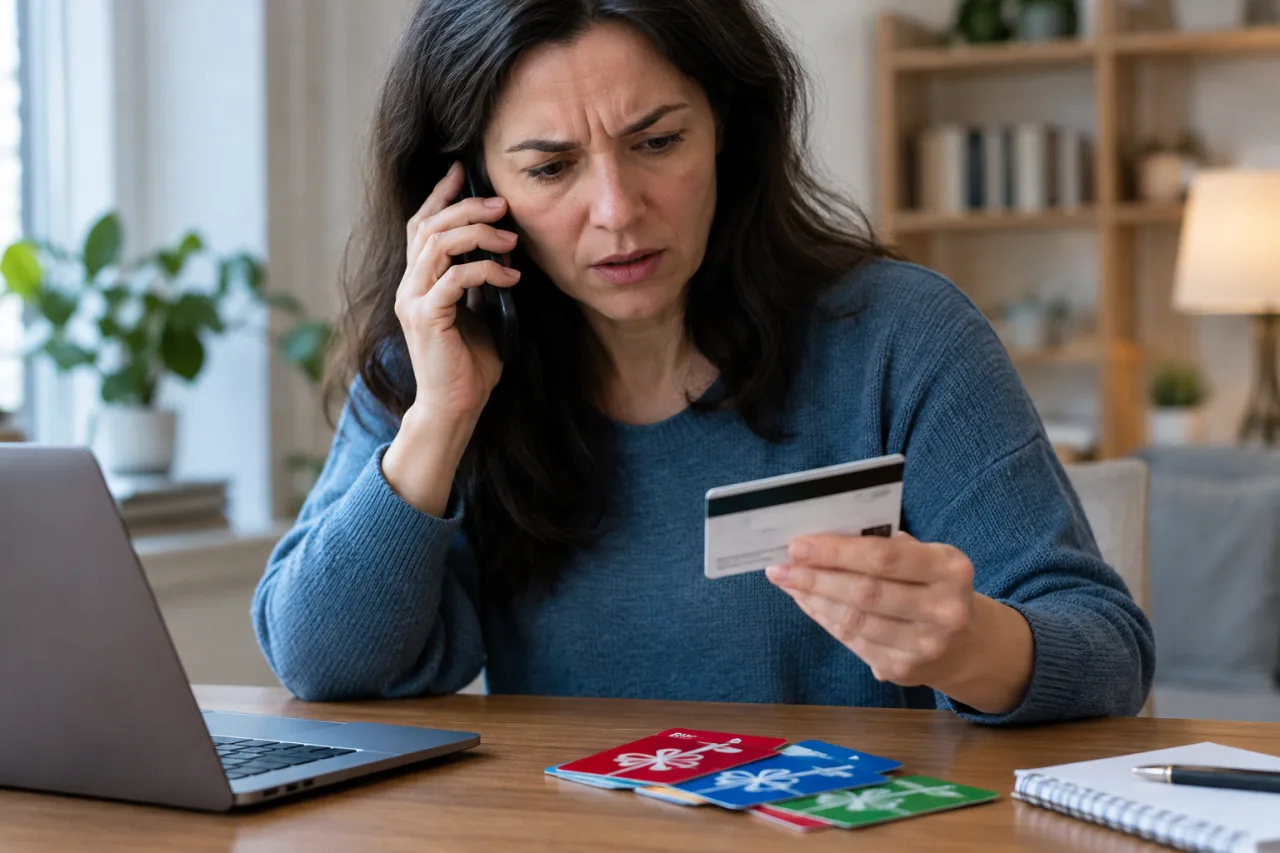
- 📞 The stay-on-the-phone move is the fingerprint: scammers keep you talking while you shop, coach you to buy at specific stores, and tell you the cashier is “part of the process” — trained retail staff are told to spot exactly this pattern.
- 🧾 The rack itself carries risk: tampered packaging and drained cards — thieves record numbers and PINs on store racks before any buyer arrives; AARP’s survey found over a quarter of consumers have received a zero-value gift card.
- 🆘 The emergency variant rides cloned voices: “a relative” calls — sounding like themselves via AI voice cloning — begging for gift cards before anyone can be reached; the code word beats it cold.
Table of Contents
Gift card scams survive every fraud-awareness campaign because the mechanic is perfect for criminals: the cards convert to cash-like codes, redemption completes in minutes, and no bank reverses a code the victim recited over the phone — the same irreversible-payment logic that powers the pig butchering scam machine. The FTC’s dedicated guide maps the whole machine — the pressure scripts, the store instructions, the numbers-and-PIN harvest — and documents which card companies now freeze balances and refund scam victims. This playbook decodes every script variant, lists the freeze-first-hour moves in order, carries the verified issuer contact lanes, and closes with the buying habits that keep the cards you gift safe from rack tampering.
Gift Card Scams: The Four Scripts That Run Everywhere
- The government script. “IRS,” “Social Security,” or a local agency demands a fine or back-tax — by gift card, today. The FTC’s rule is absolute on gift card scams: real agencies never demand immediate payment in gift cards, and they never threaten arrest to collect a balance.
- The tech-support script. A pop-up or call claims your computer is “infected” or your account “under investigation” — Microsoft or Apple or Geek Squad — and the fix requires gift cards plus remote access. Gift card scams run their tech-support variant on trust in a brand logo; real support sells fixes, never gift cards.
- The family-emergency script. A relative texts or calls in trouble — bail, hospital, stranded abroad — and gift cards beat “the bank’s watchlist.” When the voice is cloned (the FTC documents voice cloning inside these scripts), only the call-back and the family code word separate real from fake.
- The refund-or-reward script. (The newest face of gift card scams online:) The “overpayment refund,” the “prize unlock,” the “mystery shopper fee” — every variant reduces to one direction: you buy cards and read the numbers back. Retailer-side variants (the fake marketplace seller demanding gift card “verification”) fold into the same machine.
How the Scam Pulls the Numbers Off the Card
The endpoint is always the same pair: the card number and the PIN — the scratch-off strip code. The FTC’s documentation of the script mechanics lists the tells in order: urgency (“pay right away or something terrible happens”), secrecy (“don’t tell anyone, don’t talk to the cashier”), channel discipline (“stay on the phone while you shop,” sometimes with instructions to split purchases across stores so no single cashier notices), and the final harvest — read the numbers aloud, or photograph both sides of the card. Redemption follows within minutes: the balance is spent or resold before the call ends, which is why the response plan for gift card scams below is a freeze plan. One more tell belongs on the list: a second request. “The first payment didn’t go through — buy another” is the scripted follow-up; it is the hallmark of gift card scams, and it is the moment the gift card scam confirms itself.
Gift Card Scams: What To Do After You Paid
- Call the card company first — not the bank, not the police line first. Freeze logic runs counter to instinct; the issuer’s fraud line is the only desk that can freeze a card balance. This is the freeze order for gift card scams: Report immediately and ask for a freeze on the remaining balance; the FTC lists dedicated scam lines per issuer, some answered 24/7, and explicitly says report no matter how long ago it happened.
- Ask for the refund. Several issuers now refund documented scam losses in part or full — the FTC’s own guide recommends asking in every case. Keep the physical card and store receipt; both are the evidence the issuer wants.
- File the reports. ReportFraud.ftc.gov for the US record; large losses also go to IC3 and local police. The complaint record builds the enforcement cases that pressure issuers to freeze faster — reported gift card scams move the whole lane, — every report feeds that lane.
- Preserve the trail. Screenshots of the chat or call log, the numbers you sent, the store and time of purchase. The issuer’s fraud team and any bank dispute downstream both run on this trail.
- If the card is still in your hands: do not scratch further. The freeze request rides the card identity — an untouched card with a receipt is the strongest freeze case in gift card scams. An unscratched, receipt-backed card with a documented report is the strongest freeze-and-refund position.
The Issuer Contact Lane (Verify Before You Call)
The FTC’s guide carries the issuer scam-report list; the numbers below are the majors it documents — and the discipline is to verify the number on the card’s back or the issuer’s own site before dialing, never a number the caller gave you. Amazon (1-888-280-4331), Apple/iTunes (1-800-275-2273 — say “gift card” for a live agent and ask whether the balance was spent or can be frozen), American Express (1-877-297-4438). For brands not on the list, the card’s own packaging and issuer website carry the fraud contact; if an issuer stonewalls, the FTC report stands as the record. The Amazon help page adds the variant detail worth knowing: claim codes and photos of the physical card are what scammers request — never send either.
Before You Buy: The Tamper Check That Saves the Gift
- Buy from the issuer or a trusted register. The safest card for gifts comes from the issuing business itself; Online resellers and “digital gift card specialists” carry the elevated fraud rate — AARP’s experts recommend buying directly from the issuing business.
- Inspect the packaging. Protective stickers intact, PIN cover flat and unscratched, no wrinkles under the tamper layer — DHS guidance flags a wrinkled or missing cover as the rack-tamper signature.
- Check the balance before leaving the store. A drained card (number pre-recorded, balance swept on activation) reads zero at the register — the check at purchase is the only moment a refund is trivial.
- Keep the receipt — photograph card and receipt together. Issuer fraud desks freeze gift card scams on this pairing alone; The pairing is what an issuer’s fraud team wants when a freeze or refund is filed.
- Scan at the register, every card. Bulk holiday buyers: AARP’s advice is to have each card scanned — activation at the register closes the rack-tamper window.
The Family Firewall in One Rule
Every emergency script — agency, support, or cloned-voice relative — collapses against one standing family rule: nobody in the family will ever ask you to pay them in gift cards, and any such request verifies by call-back before anything moves — the habit stack from our scam-checker guide does the same in chat. Add the code word from our voice-cloning family plan and the rule becomes testable in ten seconds. For OFW and remittance families, add the customs-fee variant — the newest of gift card scams targeting remittance families — to the same conversation — the “clearance fee” text that demands card codes folds into the remittance scam lane, and the defense is identical: fees pay by traceable transfer or they are fraud.
Frequently Asked Questions
Gift Card Scams — Can I Get My Money Back?
Sometimes, and only through fast reporting: call the card company’s fraud line immediately after the loss, keep the card and receipt, and ask for a freeze plus a refund — several issuers refund documented scam losses, per the FTC’s guidance which recommends asking in every case. File the ReportFraud and (for large losses) IC3 reports the same day; the paper trail is what every freeze and dispute runs on.
A “friend” asked for gift cards in an emergency — they sounded exactly like a family member. How do I check?
Hang up and call the person on the number you already have — the FTC’s family-emergency guidance says verify before anything moves, because voice cloning now powers these scripts. Run the family code word; a real relative knows it, a cloned voice cannot. And remember the standing rule: emergencies can be verified in minutes; gift card codes, once spoken, are gone.
Which gift card brands are most abused in scams?
Scammers follow the biggest retail footprints — the FTC’s documentation names Google Play, Apple, Amazon, Target, and Steam among the commonly demanded brands in gift card scams. The brand matters less than the ask: any demand for payment in gift cards is itself the scam, whatever the logo.
Why do scammers insist I stay on the phone while I buy?
Because trained cashiers are the pattern’s failure point: US retail staff are coached to interrupt exactly this purchase, and the freetech guidance documents the “don’t tell the cashier what it’s for” instruction as standard in the script. The coaching call exists to defeat the cashier, not to help you.
Gift card scams vs regular fraud — why do banks not reverse the codes?
Gift cards redeem by code, not by account: whoever holds the number and PIN can spend the balance in minutes through the issuer’s own checkout, with no card-holder name attached — the freetech guidance describes redemption completing before the victim hangs up. That anonymity plus speed is why prevention (never share the codes) and fast issuer reporting are the only real levers, and it is what keeps gift card scams attractive two decades into prepaid fraud.
I bought a card from a store rack and it had zero balance — what happened?
Rack tampering: thieves record numbers and PINs on display racks, then drain balances after a buyer activates the card. AARP’s survey found more than a quarter of consumers have received or given a dead card. The register-side fixes (check balance before leaving, scan every card) and the issuer contact from the receipt resolve it — the freeze clock starts when the balance was swept, so report fast.
Financial Disclaimer
This article provides general consumer-protection guidance and does not constitute financial or legal advice. Issuer policies, phone lines, and refund programs change over time; verify contact numbers and procedures against the FTC guide and each issuer’s official site before acting. The author and publisher disclaim any liability for decisions based on this information.