Table of Contents
Key Takeaway
- ⚡ The quote: OpenAI CEO Sam Altman told the G20 Innovation Ministerial in Chapel Hill on September 2, 2026 that AI is becoming “essential as electricity” for future growth — and that adopting it is “nonnegotiable.”
- 📜 The consensus: 19 nations and the EU signed a closing statement built on six pillars, including AI intellectual property policy and skilled technical workforce development.
- 🏗️ The numbers: Elon Musk predicted AI will expand the global economy by 20-30% and put over a billion humanoid robots to work within a decade.
- 🔑 The move: Governments are treating AI as infrastructure — professionals who build verified AI skills this cycle will price that shift correctly.
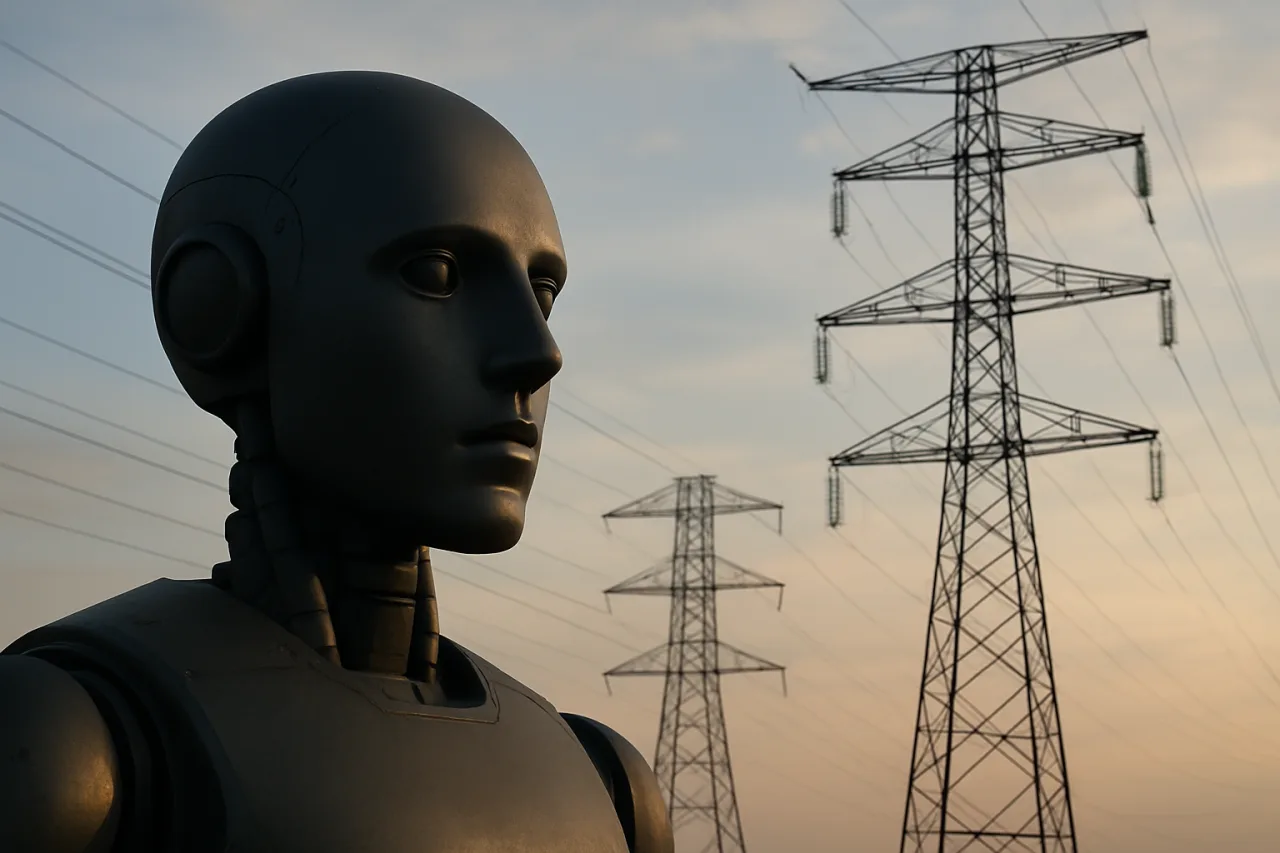
Essential as electricity — that is the comparison — essential as electricity — that OpenAI CEO Sam Altman chose for artificial intelligence when he addressed the G20 Innovation Ministerial in Chapel Hill, North Carolina, on September 2, 2026, telling gathered ministers from the world’s largest economies that AI is on the same path as power generation: a general-purpose input that every future economy will simply require. In remarks carried by Reuters and captured on video by Al Jazeera and USA Today, Altman argued that AI adoption is “nonnegotiable” for countries that intend to grow, and pressed the case for building more data centers to serve that demand.
The setting made the sentence heavier than a typical conference quote. The two-day Ministerial, hosted by the U.S. Department of Commerce and the White House Office of Science and Technology Policy, gathered representatives of the G20’s largest economies — including China, India, Germany, Japan, Saudi Arabia, and the United Kingdom — with tech chiefs from OpenAI, NVIDIA, Anthropic, Meta, Tesla, and Palantir seated across from the people who will regulate them. When the meeting closed, the ministers did something rare: they signed a consensus statement. For professionals everywhere, the question is no longer whether AI becomes critical infrastructure, but who is building the skills to work on it — and that question has a deadline now.
What Altman Actually Said at the G20
Altman’s electricity framing was not a throwaway metaphor; it was an infrastructure argument. A power plant is not valuable because electricity is exciting — it is valuable because everything else in the economy runs through it. Altman’s claim, delivered at the G20 Innovation Ministerial and reported by Reuters the same day, is that AI is completing the same transition: from a productivity tool that improves specific tasks to a general input that nations will measure and plan for the way they measure energy capacity today. His “nonnegotiable” line went further, framing adoption as a competitive requirement rather than a policy choice.
He was not alone on that stage. NVIDIA founder and CEO Jensen Huang pushed for AI infrastructure investment in every country, according to CNBC’s live coverage of the Ministerial, and Anthropic co-founder Tom Brown joined a fireside chat with Commerce Secretary Howard Lutnick — the same session block that hosted Altman and Palantir CEO Alex Karp. The presence of all four companies at a G20 ministerial, in a week when Huang publicly declared “AGI has arrived,” signals how directly the industry’s timeline has collided with the government’s policy calendar.
The G20 Consensus Statement, Explained
The most under-reported document of the week is the closing statement itself. At the Ministerial’s conclusion, G20 ministers released a consensus declaration recognizing that “emerging technologies have the potential to unlock prosperity, enhance productivity, and expand opportunity for all our peoples” — language that commits no one to much on its own, but the structure around it does. The statement articulates shared principles across six pillars:
- Pro-innovation policy frameworks — regulators signaling that rules will encourage, not just restrict
- Technology for opportunity and prosperity — diffusion of AI benefits beyond the wealthiest economies
- Skilled technical workforce development — the pillar that most directly touches workers
- Intellectual property policies for artificial intelligence — a live wound since the copyright lawsuits began
- AI for standards and standards for AI — technical interoperability between nations
- Industrial innovation and investment in supply chains — chips, energy, and the physical layer
Ministers also reached consensus on the Carolina Principles for Emerging Technologies, which call on countries to invest in foundational research, strengthen commercialization pathways, and enable trusted technology adoption. Two ancillary deliverables — the AI Prosperity Objectives and an AI Prosperity Compact — extend technical workforce development across G20 nations. Commerce Secretary Howard Lutnick called consensus “no small feat,” and he is right: getting China, the United States, and the EU to sign one innovation sentence is the quiet story here.
Musk’s 30% Economy and the Data Center Fight
The Ministerial’s other headline came from Elon Musk, who appeared virtually on Tuesday’s session. “AI will probably increase the global economy by 20% to 30%,” Musk told the gathered ministers, adding that within ten years he expects more than a billion humanoid robots in the world. On regulation, he urged governments to “make things default legal, not default illegal,” comparing startups to saplings that get crowded out when policy feeds only the large existing trees in the forest.
The data center question — the fight brewing in every country that hosts compute — got its own defense from White House AI policy figure David Sacks, who argued that “data centers, if done right, they bring electricity costs down, not up, because the AI companies will generate net new power generation.” That claim is now the industry’s core talking point in local siting battles, and it is contestable: utility commissions in several U.S. states are studying exactly that question. President Trump, for his part, posted on Truth Social that any locale stonewalling data center construction must “want to end up being backwards and poor.” We have covered the $265 million the AI industry is spending to win America’s midterm argument over data centers — the G20 version of that fight just went global.
| G20 Voice | Claim | What It Signals |
|---|---|---|
| Sam Altman (OpenAI) | AI is becoming essential as electricity; adoption is nonnegotiable | AI as national infrastructure, not a discretionary tech purchase |
| Elon Musk (Tesla/SpaceX) | AI adds 20-30% to global GDP; 1 billion humanoid robots in 10 years | Physical AI and automation outpacing white-collar framing |
| Jensen Huang (NVIDIA) | AI infrastructure investment for every country | Sovereign AI buildouts — national compute as policy |
| David Sacks (White House) | Data centers can lower electricity costs if done right | Industry answer to the fastest-growing local backlash |
Why the “Essential as Electricity” Comparison Matters
Metaphors do policy work, and the electricity comparison was chosen precisely. Electricity stopped being a technology story a century ago and became a measurement — capacity, price, reliability — that appears in every economic development plan. When a G20 member treats AI the same way, three things follow: national AI capacity becomes a statistic ministries publish, energy policy and AI policy merge into one agenda, and countries without compute must import intelligence the way they import fuel. Huang’s push for “AI infrastructure in every country” is the commercial version of the same idea — sovereign AI is the product the industry now sells to governments.
For the Philippines and Southeast Asia, the comparison lands with particular force. The region’s strength has been people, not compute — and as we wrote after Manila hosted ASEAN’s AI reckoning this month, the gap between regional talent and regional infrastructure is the strategic question of the decade. A G20 consensus that legitimizes sovereign AI investment raises the stakes for ASEAN governments deciding whether to build compute capacity or remain pure consumers of it.
There is also a timing lesson inside the electricity analogy that most coverage missed. Electrical grids took decades to standardize because the hard part was never the generator — it was the wiring, the metering, the rate rules, and the workforce that connected every building to the system. AI is entering that same wiring phase, which is why a ministerial about innovation spent its second day on intellectual property policy, technical standards, and skills instead of model demos. The companies and countries that dominate the wiring phase are rarely the ones that invented the generator. They are the ones who showed up for the boring committee work while everyone else was still watching the spark.
What Professionals Should Do With This Now
The workforce development pillar is where the statement stops being diplomatic text and starts being a career signal. Governments that signed it have committed, in principle, to building skilled technical workforces for AI — which means public retraining budgets, university partnerships, and credential programs are coming in every G20 capital. The professionals who benefit first from those programs will be the ones already positioned to absorb them: people who can demonstrate working AI fluency, not certificates about awareness.
The practical version of that positioning is boring and effective. Learn to direct and verify AI systems on real tasks, as we showed in our hands-on guide to setting up an AI bot for real work — the value is not in using a chatbot, it is in owning the workflow where automation actually happens. Track the energy-and-compute angle of AI in your own country, because the jobs in the electricity phase of AI are grid, data center, and integration jobs — many of them local, all of them contractual. The same pattern held during the BPO boom two decades ago: the durable careers went to people who learned the client’s workflow, not just the software. And for OFW families, the signal is doubled — host countries like Saudi Arabia, the UAE, and Japan were all in that G20 room signing the same six pillars, which means the AI retraining budgets your next contract market will offer are being drafted right now. And treat every “essential infrastructure” claim the way this publication treats all VIP claims: verify what it means, then position before the crowd does. Even Huang’s own words about AI and jobs point the same direction: the technology arrives on infrastructure timelines, and so do the careers built on it.
Frequently Asked Questions About Altman’s G20 Remarks
What exactly did Sam Altman say at the G20?
Speaking at the G20 Innovation Ministerial in Chapel Hill, North Carolina on September 2, 2026, the OpenAI CEO said AI is becoming essential as electricity for future growth, and argued that AI adoption is nonnegotiable for economies that intend to remain competitive. He also pressed for more data center construction, and his remarks were carried by Reuters and captured on video by Al Jazeera and USA Today.
What did the G20 actually agree to?
The ministers released a consensus statement built on six pillars: pro-innovation policy frameworks, technology for opportunity and prosperity, skilled technical workforce development, intellectual property policies for AI, AI for standards and standards for AI, and industrial innovation with supply chain investment. They also adopted the Carolina Principles for Emerging Technologies plus two workforce-focused deliverables, the AI Prosperity Objectives and the AI Prosperity Compact.
Which countries signed the G20 Innovation Ministerial statement?
Representatives from 19 nations and the African Union and European Union participated, including the United States, China, India, Germany, Japan, Saudi Arabia, Brazil, Canada, Australia, South Korea, Indonesia, and the United Kingdom. Consensus across that group — particularly between the U.S. and China — is what makes the statement notable.
Is AI really comparable to electricity?
The comparison is an argument about infrastructure, not a technical equivalence. Electricity became a general-purpose input that every economy measures and plans for; Altman’s claim is that AI is completing that same transition. The G20’s own statement — treating AI within industrial policy, supply chains, and workforce planning — suggests the governments in the room found the essential-as-electricity framing useful enough to act on.
What does this mean for workers outside the tech industry?
Infrastructure transitions create work long before they create headlines: grid buildouts, data center construction, integration and verification roles, and retraining programs funded under the workforce development pillar. Professionals in any industry can position for the AI electricity phase by building verified skills in directing AI systems on real tasks — the roles closest to where the money is being spent.
How is this different from previous AI summits?
Most earlier AI gatherings produced principles — this one produced structure. The Chapel Hill statement attaches AI to the machinery of industrial policy: supply chains, intellectual property regimes, technical standards bodies, and named workforce deliverables like the AI Prosperity Compact. Previous summit declarations asked governments to be responsible; this one asks them to build procurement pipelines and retraining programs. The difference between a principles document and a policy framework is that the second one has budget lines attached to it — which is why professionals should treat the six pillars as a forecast of where public money will move next.
Did the G20 discuss AI safety or job displacement?
The public statement emphasized innovation, prosperity, and workforce development rather than safety mandates or displacement warnings. Critics noted the absence of binding safety language; industry representatives, including White House AI policy figure David Sacks, argued companies are behaving responsibly without over-regulation. The gap between those positions will define the next ministerial.
Sources: Reuters via News & Observer, September 2, 2026; CNBC G20 live coverage, September 2, 2026; White House G20 Innovation Ministerial consensus statement, September 2026; Al Jazeera and USA Today event video.