Table of Contents
Key Takeaway
- 🗳️ The War Chest: The AI data center backlash has triggered a $265 million midterm spending blitz — the leading industry spend of the 2026 cycle, per a Wall Street Journal analysis.
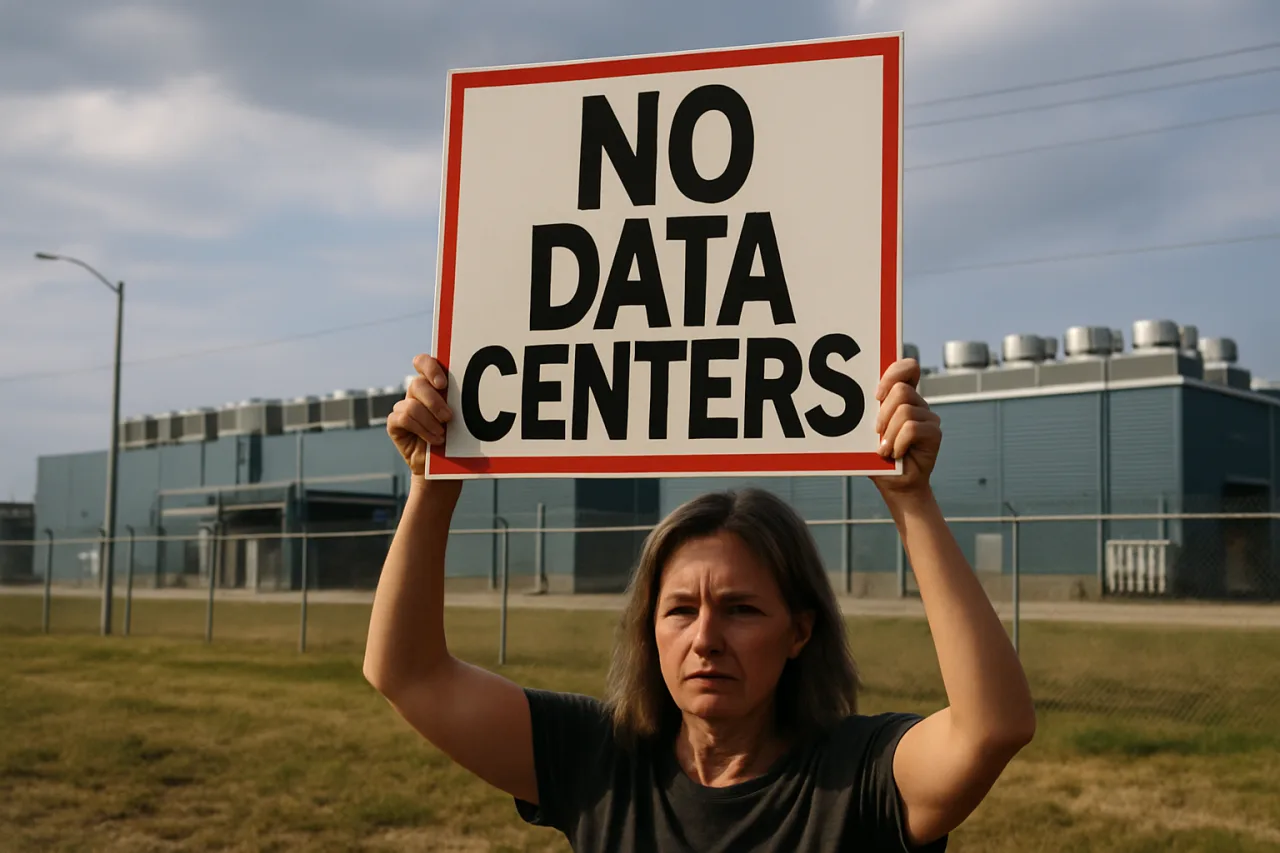
- 🏭 The Trigger: Just 20% of Americans support new data center construction, New York has issued the first statewide moratorium, and the industry’s $27 million intervention in a NY primary failed anyway.
- 💰 The Names: Andreessen Horowitz gave $50 million; OpenAI president Greg Brockman and his wife Anna gave $25 million combined; Anthropic moved at least $40 million through a dark-money nonprofit.
- 🗣️ The Quote: President Trump told data-center opponents they will “end up being backwards and poor” — and told everyone else “let Data Reign.”
- 🌏 The Export: Every seat of compute America rejects migrates to Asia — and the AI data center backlash is already repricing where the next trillion dollars of infrastructure lands.
The AI data center backlash has entered its political phase: the industry has stopped trying to win the public over and started trying to win the election instead. Roughly $265 million has flowed from AI companies into super PACs and political groups for the 2026 midterms — the leading industry spending of the cycle, according to a Wall Street Journal analysis cited by The Independent on September 5, 2026. The reason the money arrived now is printed on every local ballot fight: Americans keep rejecting AI data centers, and the industry has concluded that the resistance is a political problem requiring a political solution. The backlash, in other words, just acquired a counterweight with a quarter-billion-dollar balance sheet.
The interpretation this piece defends: this is not ordinary lobbying inflation. It is an admission — visible in the spending pattern itself — that the industry’s most serious constraint is no longer compute, capital, or models. It is permission. And permission, in a democracy, is purchased either by persuasion or by politics. The industry chose politics.
The Money Map Behind the AI Data Center Backlash Fight
Follow the ledger and the strategy becomes legible. The super PAC Leading the Future has raised $140 million, per Reuters, with plans to fund pro-AI candidates of both parties — $50 million of it from Andreessen Horowitz, plus $25 million combined from OpenAI president Greg Brockman and his wife Anna, documented in Federal Election Commission filings. Anthropic, the Claude-maker that markets itself on caution, has reportedly donated at least $40 million through Public First Action, a dark-money nonprofit holding a $100 million war chest. Elon Musk’s super PAC carries a similar pile. Meta is linked to PACs with tens of millions ready to deploy.
OpenAI, for its part, pointed to a June statement noting the company has not donated to candidates or funded PACs — while confirming the Brockmans’ support for Leading the Future was “in a personal capacity, not on behalf of the company.” That distinction, corporate versus personal, is precisely the seam this new money moves through: the company keeps its brand clean while its president moves eight figures. Brendan Glavin, director of insights at the transparency group OpenSecrets, told The Independent that newer companies like Anthropic and OpenAI are making their first substantial political jump this cycle — and that “Crypto did this in 2024… Now you’re seeing it repeated and AI has taken on the same playbook.”
The disclosure record behind these figures is public money, public data: the FEC’s receipts database documents the Leading the Future contributions directly, and the OpenSecrets tracker aggregates the full flow of corporate political money in the cycle. Reading the filings yourself is the difference between reporting the story and consuming the spin.
Why the AI Data Center Backlash Scarred the Industry
The spending is a response to a series of losses the industry did not expect to suffer. An Economist/YouGov poll found just 14% of Democrats and 31% of Republicans think new data centers are good for America. New York issued the country’s first statewide moratorium on large data center construction in July — a one-year freeze that will outlive the midterms. In New York’s 12th District, the industry’s $27 million push failed to save its preferred candidate in the Democratic primary. The Independent quoted one expert’s summary of the lesson: “The moral of the story is, trying to bypass communities in developing these data centers is not working, and they’re going to take it to the polls.”
The physical scale explains the temperature. The five biggest hyperscalers — Amazon, Microsoft, Google, Meta, and Oracle — are projected to spend more than $560 billion on AI infrastructure this year; July construction was up about 60% year over year; Goldman Sachs expects US data center power demand to double by 2027. Two-thirds of data centers built since 2022 sit in areas of high water stress. Those numbers once read as triumph. In a midterm season, they read as targets — and the backlash has made them so. The AI data center backlash is, at bottom, a fight over whether those numbers land in your neighborhood, on your grid, and on your water table — which is why it produces referendum-level emotion rather than normal Not-In-My-Backyard grumbling.
The President Picked a Side in the AI Data Center Backlash
President Trump entered the fight personally, writing on Truth Social: “The only reason that communities throughout the U.S.A. should not want Data Centers is if they want to end up being backwards and poor. If they want to be successful and rich, with far lower taxes and jobs all over the place, let Data Reign.” He called the facilities a “Golden Goose” and accused critics of being in the pocket of China — reportedly after seeing polling that showed Americans largely oppose data centers. Commerce Secretary Howard Lutnick added the administration’s most contested claim: data centers “don’t use water,” contradicting widely available evidence and his own earlier comments that the facilities “suck” water.
That posture — polling against the president, and the president for the buildout anyway — is what makes the $265 million so consequential. The spending is not trying to move Trump, whose administration already rolled back regulations and corralled companies onto a voluntary Ratepayer Protection Pledge. It is aimed at the Congress that will be seated in January: the votes that approve transmission lines, water rights, zoning overrides, and the next generation of permits. Money that cannot move the top of the ticket moves the districts.
The Second-Order Effect the AI Data Center Backlash Will Export
The fight is American, but the consequences are not staying American. Compute is global infrastructure: when US siting stalls, hyperscalers relocate capacity to jurisdictions that say yes — Malaysia, Thailand, the UAE, Saudi Arabia — and the Philippines’ own data-center ambitions compete inside the same migration. A hardened American backlash is, perversely, a growth subsidy for Southeast Asian buildout, and Filipino investors already have a listed way to own a piece of that buildout. The same economics our coverage tracked in the race to build Philippine AI infrastructure — who pays, who profits — now includes a new variable: American political risk exported as Asian construction.
For professionals in Manila, Riyadh, and Singapore, the practical read is about power prices and siting politics arriving on their own doorsteps with the same playbook the US is now rehearsing: local opposition, water disputes, and the moment when “jobs” stops being an adequate answer for a substation. The American midterm is the preview; the Pacific is the matinee. And the professionals tracking how AI infrastructure reshapes Philippine electricity economics — see the fight over AI in schools for a model of how AI policy fights travel — know that political battles over compute arrive the same way the technology does: imported first, regulated later.
Will $265 Million Buy What Persuasion Could Not?
The honest answer is that nobody knows — and the industry’s own early returns argue for humility. The NY-12 loss happened with the money already flowing. Corporate spending records were already broken before AI’s checks cleared. And the opposition the money must beat is not a rival ad campaign; it is a lived local experience of construction traffic, water anxiety, and power-bill fear — which is the hardest kind of opinion to dislodge, because it is formed by proximity rather than persuasion. The Council on Foreign Relations’ Chris McGuire put the stakes in one line: “The window for thoughtful, proactive policy is open now, but it will not last forever. AI capabilities are compounding, as is public frustration. AI will force itself onto the political agenda in 2028.”
What the money does guarantee is that 2028 will arrive with the question already priced. Every presidential candidate will need a data-center position, a power-price position, and an AI-jobs position — because a quarter of a billion dollars just bought the issue a permanent place on the American ballot. The AI data center backlash wanted a fight; the industry has agreed to one, in the only arena where the public still holds the pen. And whether that pen writes moratoriums or permits, the decision will be made by voters whose local experience — not the industry’s advertising — will have formed their answer.
There is a final lesson in the sequence, and it belongs to every market watching this fight from outside. The AI data center backlash did not begin with an ideology or a politician; it began with arithmetic — a substation, a water table, a power bill — that ordinary people could verify against their own lives. No amount of national advertising could out-argue a resident reading their monthly electric bill. That is the standard against which the $265 million will be judged, in America this November and in every market the buildout touches next: if the industry’s promises and the community’s bills disagree, the bills win. Governments and investors across Asia would do well to price that asymmetry in before the trucks arrive, because the AI data center backlash is not an American quirk. It is what happens anywhere a trillion-dollar buildout meets a neighborhood’s math.
Frequently Asked Questions About the AI Data Center Backlash
How much is the AI industry spending on the 2026 midterms?
AI companies have pledged approximately $265 million to super PACs and political groups in the 2026 elections, per a Wall Street Journal analysis cited by The Independent on September 5, 2026 — making AI the leading industry spender of the cycle alongside crypto and betting companies.
Why are AI companies spending on politics now?
Public opposition to data centers has hardened: only about 20% of Americans support new construction, New York issued the first statewide moratorium in July, and the industry’s $27 million intervention in a New York primary failed. The spending treats that backlash as a political problem to be solved at the ballot box.
Who are the biggest donors?
The super PAC Leading the Future has raised $140 million, including $50 million from Andreessen Horowitz and $25 million combined from OpenAI president Greg Brockman and his wife Anna, per FEC filings. Anthropic has reportedly given at least $40 million through Public First Action, a dark-money nonprofit with a $100 million war chest.
What did Trump say about data centers?
On Truth Social, Trump wrote that communities opposing data centers “want to end up being backwards and poor,” and urged supporters: “If they want to be successful and rich, with far lower taxes and jobs all over the place, let Data Reign.” He has called the facilities a “Golden Goose” despite polling showing most Americans oppose new construction.
Does this political spending affect the Philippines or Southeast Asia?
Indirectly, yes. If US siting politics slow American data center construction, hyperscale capacity migrates to friendlier Asian jurisdictions — accelerating the same Philippine buildout tracked in data-center REIT listings and national AI infrastructure plans, while importing the same local disputes over power and water.
Is the data center backlash working?
It has already produced the first statewide moratorium (New York), failed a $27 million industry intervention in one primary, and driven the industry to treat siting as an electoral issue. Whether $265 million can outspend proximity-based local opposition is the open question the November midterms will answer.
Financial Disclaimer
This article is for general information only and is not financial, investment, or political advice. Political spending figures reflect reporting and disclosure filings as of September 2026 and may change. Consult qualified professionals before making investment decisions related to data center or AI infrastructure assets.
Sources: The Independent (September 5, 2026), citing Wall Street Journal analysis, Reuters, FEC filings, and the Economist/YouGov poll; OpenSecrets commentary; Council on Foreign Relations.