Table of Contents
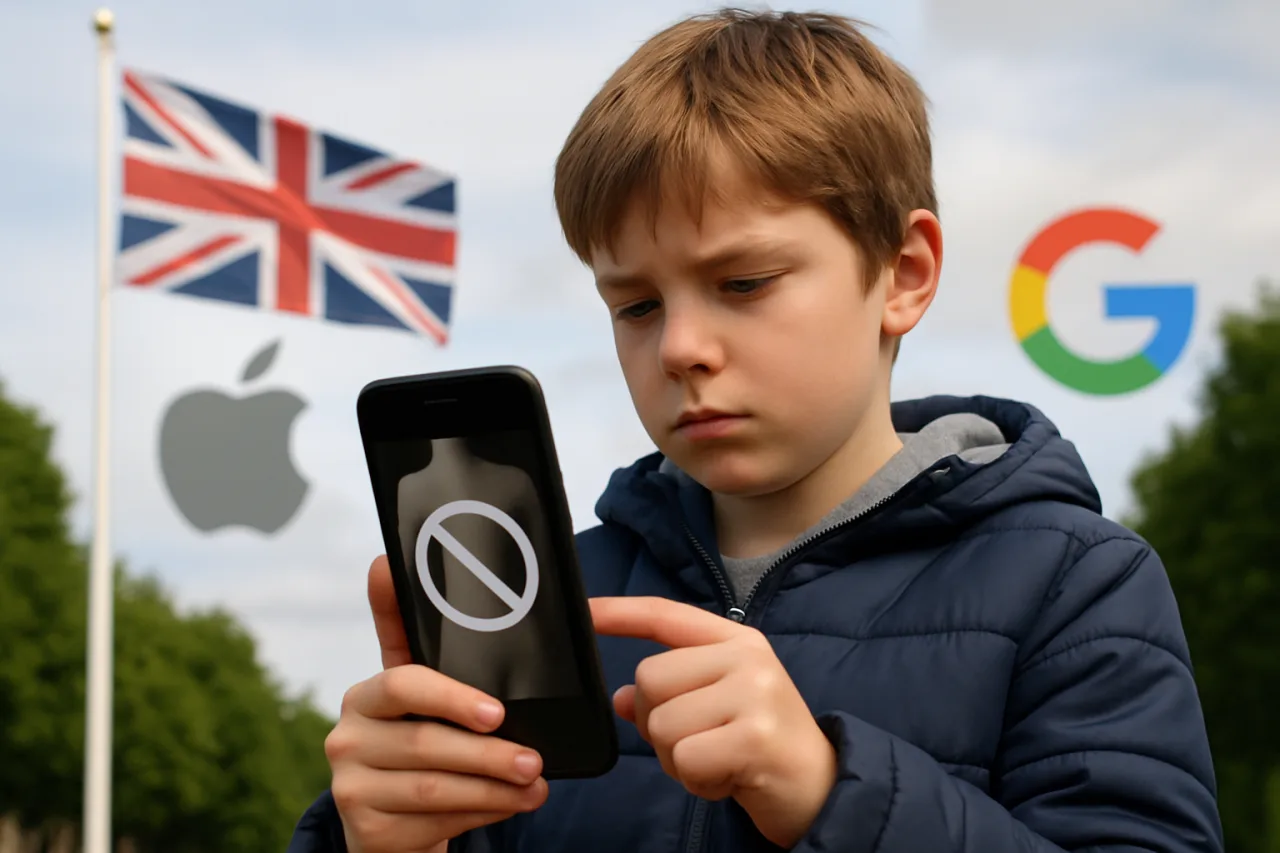
UK AI nudification law is coming for the phone in your child’s pocket, and for once the technology companies cannot talk their way out of it. Britain’s Culture Secretary Lisa Nandy told the House of Commons on Tuesday, September 9, 2026, that the government will legislate to force Apple and Google to stop children from taking, sharing, or viewing nude images — including the output of AI “nudify” apps — on their phones and tablets. For every parent who has watched generative AI turn classmates’ photos into weapons, this is the strongest state intervention yet: the operating system itself is being conscripted into child protection, with fines and even criminal liability for tech executives named as the backstop.
Related: Scamcheck.ph Spots the Scam Before It Reaches Your Wallet
Key Takeaway
- 🇬🇧 The move: Culture Secretary Lisa Nandy announced in the Commons on September 9 that the UK will legislate to require Apple and Google to block nude images on children’s devices — with fines and “criminal liability for tech bosses” named as a last resort.
- ⏱️ The clock: Apple and Google were given a three-month ultimatum in June 2026 to build on-device detection; September’s announcement converts that ultimatum into legislation, per Bloomberg.
- 📊 Why it’s urgent: 91% of 2024 UK child sexual abuse reports contained self-generated content — children photographing themselves under pressure — which is precisely what on-device blocking is designed to interrupt.
- 🛡️ What parents can do today: Apple and Google both ship free parental controls that already screen for nude photos; the UK plan makes that protection mandatory and universal rather than optional. Setup steps below.
The announcement, reported by Bloomberg on September 9, lands three months after Nandy’s department gave Apple and Google a June ultimatum: build on-device nude-image detection or face regulation. Apple’s own Communication Safety feature already scans photos on the device itself — the images never leave the handset — and blurs or warns before a nude image is viewed, saved, or shared. Google operates comparable Family Link protections on Android. What Britain is now doing is converting a voluntary, opt-in parental control into a legal obligation enforced against two of the most valuable companies on Earth, with Nandy telling MPs that fines and personal criminal liability for executives are “a last resort” if the companies do not comply. By attaching the UK AI nudification ban to the operating system rather than to any single app, Parliament has chosen the one checkpoint neither company can route around.
The context explains the timing. Nandy’s statement came the same day as a Tech Transparency Project investigation, reported by Engadget and Wired, found that Meta reviewed, approved, and monetized more than 50 paid ads containing AI-generated child sexual abuse material across Facebook, Instagram, Threads, and Messenger between November 2025 and August 2026 — several of which linked directly to nudify apps. TTP Director Katie Paul’s line to Wired was damnable in its simplicity: “These ads made no effort to mask the images or hide what they were promoting… these are ads that were reviewed, approved, and allowed to run by Meta, never encountering interference while the company collected the ad dollars.” Meta told Wired that the majority of the ads had minimal reach and many were disabled before the investigation was shared, and that it removed over 36 million pieces of child sexual exploitation content last year. Regulators read that sentence the same way regulators always read it — as evidence the voluntary system failed. It is the backdrop that makes the UK AI nudification ban feel less like policy and more like triage.
What the UK AI Nudification Ban Actually Requires
Under the planned law, the platform you use matters less than the device in the child’s hand. Apple and Google would be legally required to ensure their operating systems block the taking, sharing, and viewing of nude images by children on phones and tablets — explicitly including AI-generated nudification output, not just real photographs. The enforcement ladder runs from fines up to personal criminal liability for tech bosses, positioned as the backstop rather than the opening move. The UK AI nudification ban thus shifts the burden from platforms to operating systems: workarounds that live in a browser or a sideloaded app cannot escape it the way content-moderation rules do; the OS itself becomes the checkpoint. That design decision is what separates the UK AI nudification ban from every moderation regime that preceded it — content rules can be evaded, an operating-system checkpoint cannot.
Design-wise, this is the first law of its kind to target AI-generated nudity at the operating-system layer, and that choice is deliberate. App-store removals and platform moderation have demonstrably failed — Meta’s ad review approved the very images the UK now wants blocked — so Britain is moving the enforcement point upstream, to the two companies that control every app’s front door. The legislative details will be fought over for months: privacy groups will litigate the scanning mechanics, Apple and Google will negotiate thresholds and appeal paths, and civil-liberties organizations will challenge the scope. But the direction is now law-in-waiting, and the June ultimatum’s three-month clock makes the timing explicit. Expect the first compliance deadlines inside 2027.
The Nudify App Economy the UK Wants to Kill
The market being targeted is older than most parents think. Nudify apps — tools that generate fake nudes from ordinary photos of real people, almost always women and girls — proliferated through 2024 and 2025, promoted through sponsored posts on the very social networks that now host ads for them. The New York AI-for-kids ban and China’s AI-school mandate we covered earlier this month sit on the same fault line: children’s exposure to generative AI is now a regulated domain in multiple jurisdictions, each choosing different weapons. The UK’s version targets the device; the Meta ads investigation shows why regulation-by-moderation collapsed. If you want a single image of the failure, it is this: a paid advertisement for a tool that strips children’s clothes off — reviewed, approved, and billed by one of the world’s largest companies — ran for months while the platforms told parents the problem was under control.
For OFW parents the stakes are brutally concrete, because the distance is the vulnerability. A mother in Riyadh or a father in Dubai supervises a child’s phone use across time zones, often on a hand-me-down phone configured once at departure — or never. On-device protections are exactly the mechanism that works without a parent’s physical presence, which is why the UK AI nudification ban matters well beyond Britain’s borders: the same Apple and Google controls it forces into default are available today, free, to any family that switches them on. The law makes them universal in one country; nothing stops a Filipino family in Manila or Riyadh from using them tonight. Distance already tests every OFW household; an unconfigured phone in a child’s hands turns that distance into an open door, and the UK’s move is, at its core, an argument for closing that door at the device level rather than hoping an app review board gets it right. Families who want the wider risk picture — from scam messages to the fake captcha attacks spreading through messaging apps — should treat this week’s protections walkthrough as the baseline, then add the child-specific settings above on top.
How to Turn On the Protections Tonight
You do not need to wait for Parliament. Both platforms already ship the core features the UK wants to mandate, and enabling them takes minutes.
iPhone — Communication Safety: In Settings, open Screen Time, tap your child’s name under Family, select Communication Safety, and toggle it on. The device then detects nude photos in Messages and FaceTime — the images are analyzed on the device and never uploaded — blurring them and showing the child a warning with an option to get help. Add Communication Safety to Shared iCloud Photos and AirDrops. While you are there, enable Content & Privacy Restrictions in Screen Time to block explicit websites and age-restrict app downloads.
Android — Family Link: Install Google Family Link, link your child’s account, and turn on SafeSearch enforcement, Google Play age restrictions, and website filtering. On the child’s device, enable Google Play’s built-in protections and review app permissions weekly. For teens with their own accounts, Google’s age-appropriate settings center lets them keep autonomy while you retain the nude-image protections and purchase approvals.
For both platforms: Update the OS first — detection features improve with every release. Then have the conversation: children bypass tools they do not understand, but respect tools that are explained. Tell them the phone is watching for nude images not to spy on them but so that no one — including an AI app — can turn their photo into something they never made. That sentence, repeated calmly, does more than any setting. And once the UK AI nudification ban takes effect, the families who practiced these settings early will already be ahead of the mandate: same features, same steps, no learning curve when compliance arrives.
The Privacy Fight the Law Will Trigger
The UK plan walks straight into the hardest tension in tech policy: scanning for harm versus scanning at all. Apple’s own engineers resisted client-side scanning for years precisely because a system that can detect bad images is a system that could be turned to other purposes; the same on-device classifier that blocks CSAM could, in principle, be repurposed by an authoritarian government. Privacy advocates will challenge the law on exactly those grounds, and the debate will be serious because the stakes on both sides are real — child safety on one side, the encryption and on-device-privacy architecture of the entire consumer internet on the other. Apple and Google’s compliance choices over the next year will effectively set the global default, since both companies sell the same phones worldwide; whatever they build for Britain becomes the template for every other regulator watching, including the EU, Australia, and the Philippines’ own Data Privacy Act ecosystem.
Expect the arguments to run through 2027 and beyond, but note the direction of travel: regulators worldwide have stopped asking platforms to moderate harder and started telling OS makers to build protection into the hardware-software layer itself. Nandy’s formulation — fines and criminal liability for tech bosses as the last resort — is the strongest language any major economy has yet used against the companies that make children’s phones. However the legal challenges resolve, the UK AI nudification ban marks the moment child safety moved from the app layer to the operating system, and every parent, teacher, and school IT administrator now lives in the world that shift creates. The companies that build the phones have been told, in law, that the default is no longer optional — and the rest of the world’s regulators, watching from Manila to Brussels, will not be far behind.
Frequently Asked Questions About the UK AI Nudification Ban
What is the UK AI nudification ban?
It is the UK government’s plan, announced by Culture Secretary Lisa Nandy on September 9, 2026, to legislate that Apple and Google must block children from taking, sharing, or viewing nude images on phones and tablets — explicitly covering AI-generated nudify-app output. Enforcement ranges from fines to criminal liability for executives as a last resort.
Does the ban cover AI-generated nude images, not just real photos?
Yes. Bloomberg’s reporting on the announcement explicitly includes AI-generated nudification-app output within the material devices must block. That is the point of the law: AI apps turn ordinary photos into fake nudes, and the OS-level blocking is designed to intercept both real and fabricated imagery.
When do Apple and Google have to comply?
The companies received a three-month ultimatum in June 2026 to build on-device detection; the September announcement converts that into legislation. Compliance deadlines will follow the legislative process — expect the first enforceable requirements during 2027.
Can parents use these protections before the law passes?
Yes, today. Apple’s Communication Safety (in Screen Time) and Google’s Family Link both screen for nude images on the device, blur them before viewing, and give children an escape route to a trusted adult. Both are free, both run on-device, and both work whether or not a parent is in the room — which is exactly why the UK wants them mandatory.
What about Meta’s role in the nudify-app economy?
The same week, a Tech Transparency Project investigation found Meta reviewed, approved, and monetized 50+ ads containing AI-generated CSAM between November 2025 and August 2026, several linking to nudify apps. Meta says most had minimal reach and many were disabled before the report; regulators read the episode as proof voluntary moderation fails, which is the political fuel behind the OS-level law.