Table of Contents
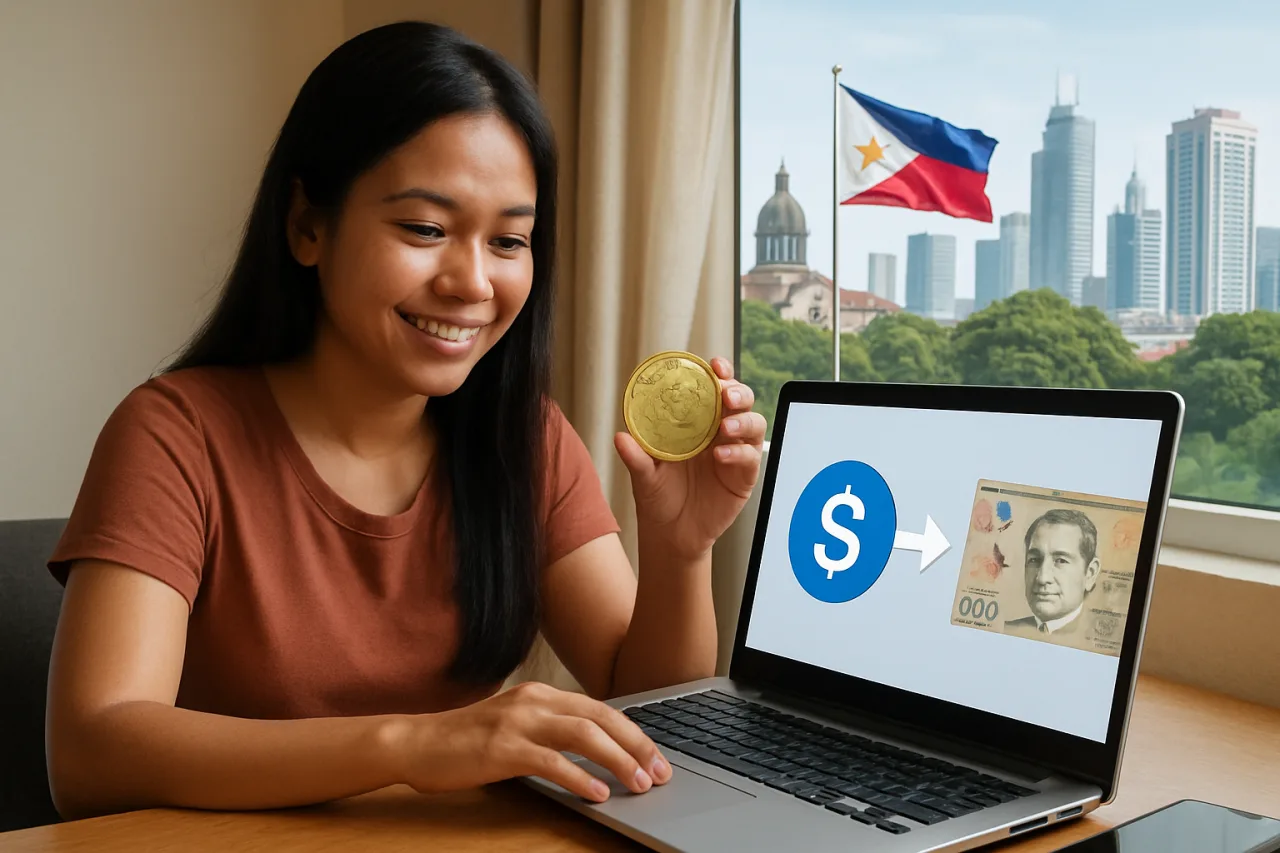
The Philippines ranks ninth globally in cryptocurrency adoption, according to the Chainalysis 2025 Global Crypto Adoption Index, but the more interesting story is not about speculation. It is about payroll. In November 2025, the Philippine Digital Asset Exchange (PDAX) partnered with global Web3 payroll provider Toku to enable Filipino remote workers to receive their salaries in stablecoins — digital tokens pegged to the US dollar — and convert them instantly into Philippine pesos through local bank accounts and e-wallets. The stablecoin salary Philippines pipeline is no longer theoretical. It is live infrastructure, and it is reshaping how Filipino professionals get paid by global companies.
This matters because the traditional cross-border payment system extracts a hidden tax from every Filipino remote worker. International wire transfers take three to five business days. Remittance services charge 3% to 8% in fees. Currency conversion spreads add another 1% to 2%. A Filipino developer earning $3,000 monthly from a US-based client can lose $150 to $300 in fees and waiting costs every single month. The PDAX-Toku partnership eliminates that friction by routing salaries through stablecoins — tokens like USDC, USDG, and RLUSD that maintain a 1:1 peg with the US dollar — and converting them to pesos via InstaPay or PESONet, the same domestic payment rails that processed 693 million transactions in March 2026 alone.
How the Stablecoin Salary Philippines Pipeline Works
The mechanics are straightforward, but the infrastructure behind them is not. Toku manages the global token-based payroll system on the employer side. A company — typically a Web3 firm, a crypto protocol, a DAO, or a remote-first technology company — holds stablecoins on its balance sheet. Instead of converting those tokens to fiat and routing them through SWIFT, the employer sends stablecoins directly to Toku’s platform. Toku handles tax compliance, benefits administration, and the legal framework for paying contractors and employees across 100+ countries.
On the Filipino worker’s side, PDAX receives the stablecoins and converts them into Philippine pesos through its regulated cash-out infrastructure. The pesos are then distributed directly to the worker’s local bank account or mobile wallet — GCash, GrabPay, Maya, or any InstaPay- or PESONet-connected account. Ken O’Friel, CEO of Toku, explained the logic: “Crypto companies already hold stablecoins on their balance sheets. Now they can use those same assets to pay contributors in the Philippines. Our partnership with PDAX makes stablecoin payroll local and seamless.”
Nichel Gaba, CEO and President of PDAX, framed the partnership in broader terms: “This helps open up better, faster financial access for Filipino professionals working with global companies.” PDAX is not an unregulated startup. It holds a Virtual Asset Service Provider (VASP) license from the Bangko Sentral ng Pilipinas (BSP), one of only 10 active VASPs regulated by the central bank as of October 2025. The exchange also offers government securities trading, making it a hybrid platform that bridges traditional finance and digital assets.
Why Stablecoin Salary Adoption Is Accelerating Now
Three forces are converging to make stablecoin salary Philippines a viable payment channel in 2026. The first is regulatory clarity. The BSP has regulated 10 VASPs under its 2021 virtual currency exchange framework, and in June 2026, it issued a layered token-listing framework that sets six rules for crypto listings by Philippine exchanges. This gives employers and workers a regulated on-ramp and off-ramp for stablecoin transactions — something missing in many emerging markets where crypto payroll remains a legal gray zone.
The second force is digital payment infrastructure. The Philippines’ domestic payment rails have undergone a transformation that makes stablecoin-to-peso conversion almost instantaneous. InstaPay, the country’s 24/7 real-time payment rail for low-value transactions, saw its monthly transaction volume explode from 99.4 million in March 2024 to 693 million in March 2026 — a nearly sevenfold increase in two years. PESONet, the electronic batch clearing system for larger sums, reached a record 11.05 million transactions in March 2026, with total value rising to PHP 1,415.46 billion. When PDAX converts stablecoins to pesos, it routes them through these same rails, meaning a worker can receive their USDC salary and have pesos in their GCash wallet within minutes.
The third force is the growth of the remote work economy itself. The Philippines has become one of the world’s largest hubs for remote knowledge workers, particularly in IT, customer support, content moderation, and increasingly, AI training and data annotation. The remittance economy that has sustained the Philippines for decades — $40 billion annually from overseas Filipino workers — is being complemented by a new stream: digital labor exports. Workers no longer need to physically leave the country to earn foreign currency. They need an internet connection and a way to receive payments. Stablecoin salary infrastructure addresses the second need, and the BSP’s VASP directory lists 10 regulated exchanges that can serve as the cash-out rail.
What the Numbers Miss — The Human Case for Stablecoin Salary Philippines
The macro-level data tells us the Philippines ranks ninth in global crypto adoption and has 12.79 million projected crypto users by 2026. But the number that matters to a Filipino freelance developer earning $2,500 per month from a San Francisco-based startup is simpler: how much money do I lose to the banking system every month?
Consider a realistic scenario. A remote worker in Cebu earns $2,500 monthly. Using a traditional international wire transfer, the employer pays a $35 SWIFT fee. The receiving bank in the Philippines charges a $5 to $10 inbound fee. Currency conversion spreads take another $25 to $50. The total cost: $65 to $95 per month, or $780 to $1,140 per year. The transfer takes three to five business days, meaning the worker’s money is inaccessible for nearly a week each month.
With the stablecoin salary Philippines pipeline, the employer sends USDC to Toku. Toku routes it to PDAX. PDAX converts it to pesos and sends it via InstaPay to the worker’s bank account or e-wallet. The total cost: a small conversion fee on PDAX (typically 0.5% to 1%, or $12.50 to $25 on a $2,500 salary) and zero wire transfer fees. The transfer settles in minutes, not days. The annual savings: $540 to $840 — money that stays in the worker’s pocket.
Now multiply that across the estimated 1.5 million Filipino digital freelancers and remote workers registered on platforms like Upwork, OnlineJobs.ph, and Toptal. Even if only 10% adopt the stablecoin salary Philippines model, the aggregate annual savings would exceed $80 million. That is $80 million that currently flows to banks and remittance companies, redirected to Filipino households.
The Second-Order Effect on Philippine Fintech
The PDAX-Toku partnership is not happening in isolation. It is part of a broader fintech ecosystem that has matured significantly. The Philippines Fintech Report 2026, published on July 28, 2026, tracks 370 active fintech companies in the country. Payments remains the largest category with 146 firms, followed by lending with 72, remittance with 31, and e-wallets with 30. The digital banking sector has grown to PHP 119.5 billion in combined deposits across six licensed banks — now seven, with MariBank’s transition to a digital banking license in July 2026.
Stablecoin payroll sits at the intersection of three of these categories: payments, remittance, and cryptocurrency. It competes with traditional remittance channels — Western Union, Wise, Xoom — but it also complements them. The BPI stablecoin remittance pilot announced in July 2026 targets a different segment: OFWs sending money home. The PDAX-Toku partnership targets remote workers receiving salaries from abroad. Together, they represent a shift in how cross-border money flows into the Philippines — from physical remittance corridors to digital token rails.
Mynt, the parent company of GCash, is preparing what could be the largest stock market listing in Philippine history, with reports suggesting a $1.5 billion raise at an $8 billion valuation. The fact that the Philippines’ dominant e-wallet platform is heading toward an IPO signals that digital finance has moved from experimental to foundational. Stablecoin payroll is the next layer on top of that foundation.
What Could Slow Stablecoin Salary Philippines Adoption
The stablecoin salary Philippines pipeline faces real obstacles. First, adoption is concentrated among Web3-native companies — crypto protocols, DAOs, and blockchain startups. Traditional employers, including the IT-BPM sector that employs over 1.7 million Filipinos, have not adopted stablecoin payroll. The technology is proven, but the trust is not yet there for mainstream employers.
Second, regulatory uncertainty persists. The BSP’s VASP framework regulates exchanges like PDAX, but it does not explicitly address whether receiving a salary in stablecoins constitutes a taxable event, how it should be reported to the Bureau of Internal Revenue (BIR), or whether employer obligations under Philippine labor law extend to stablecoin-denominated compensation. Workers receiving stablecoin salaries should consult tax professionals about their reporting obligations.
Third, stablecoin risk is real. While USDC is backed by reserves audited by major accounting firms, the broader stablecoin market has experienced failures. In 2023, the collapse of algorithmic stablecoins demonstrated that not all dollar-pegged tokens are equal. Workers who hold stablecoins rather than immediately converting to pesos carry counterparty risk — the risk that the token’s issuer cannot honor the peg. The PDAX-Toku integration mitigates this by enabling instant conversion, but workers who choose to hold their stablecoins expose themselves to that risk.
Fourth, cryptocurrency regulation in the Philippines continues to evolve. The BSP’s June 2026 token-listing framework added new compliance requirements for exchanges. The SEC has been tightening digital lending practices and lifting its platform ban for new online lending platforms. Regulatory changes could affect how stablecoin payroll operates, particularly if the government classifies it as a remittance activity subject to additional licensing.
What Filipino Professionals Should Watch
The stablecoin salary Philippines infrastructure is live, but it is early. Three signals will indicate whether it is moving from niche to mainstream. The first is employer adoption beyond Web3. If traditional technology companies — SaaS firms, digital agencies, BPO companies — begin offering stablecoin salary options, the pipeline moves from experimental to standard.
The second signal is BSP regulatory guidance specifically addressing stablecoin payroll. The central bank has been progressive on digital finance — lowering digital payment fees in June 2026, expanding the digital bank licensing cap to 10, and pushing for government transaction digitalization with the World Bank. A formal circular on stablecoin compensation would provide the legal certainty that mainstream employers need.
The third signal is the expansion of supported tokens. The PDAX-Toku integration currently supports USDC, USDG, and RLUSD. If it expands to include other major stablecoins — Tether (USDT), PayPal USD (PYUSD), or central bank digital currencies (CBDCs) — the addressable market grows significantly. The BSP’s digital banking sector, now with seven licensed banks and three slots remaining, provides the distribution network. The combination of regulated exchanges, digital banks, and stablecoin payroll infrastructure creates a parallel financial system that could eventually rival traditional banking for cross-border payments.
For Filipino professionals working with global companies — whether as employees, contractors, or freelancers — the practical advice is to register with a BSP-licensed VASP like PDAX, understand the tax implications of stablecoin income, and evaluate whether the fee savings and settlement speed justify the added complexity. The infrastructure is ready. The question is whether the market is.
Frequently Asked Questions About Stablecoin Salary Philippines
What is stablecoin salary and how does it work in the Philippines?
Stablecoin salary is a payment method where employers pay workers in stablecoins — cryptocurrency tokens pegged to a stable asset like the US dollar. In the Philippines, the PDAX-Toku partnership enables this by having Toku manage the global payroll on the employer side, while PDAX converts the stablecoins to Philippine pesos and distributes them to local bank accounts or e-wallets via InstaPay or PESONet. The stablecoin salary Philippines pipeline is one of the first regulated implementations of crypto payroll in Southeast Asia.
Which stablecoins can Filipino workers receive as salary?
The PDAX-Toku integration supports USDC (Circle’s USD Coin), USDG, and RLUSD. Workers can convert these to pesos upon receipt. The supported token list may expand as the partnership matures and as the BSP’s token-listing framework evolves.
Is receiving a stablecoin salary legal in the Philippines?
Yes, receiving cryptocurrency including stablecoins is legal in the Philippines. PDAX operates under a BSP-issued VASP license. However, workers should consult tax professionals about how stablecoin income should be reported to the Bureau of Internal Revenue (BIR), as specific guidance on stablecoin payroll taxation is still developing.
How much money can I save with stablecoin salary compared to traditional wire transfers?
A Filipino remote worker earning $2,500 monthly can save approximately $540 to $840 annually by switching from traditional international wire transfers to stablecoin salary. The savings come from eliminating SWIFT fees ($35 per transfer), inbound bank charges ($5-$10), and currency conversion spreads (1-2%). Stablecoin conversions through PDAX typically cost 0.5% to 1%.
How fast is stablecoin salary compared to traditional bank transfers?
Stablecoin salary settles in minutes. Toku sends the stablecoin to PDAX, which converts it to pesos and distributes via InstaPay or PESONet — the same rails that process real-time payments in the Philippines. Traditional international wire transfers take three to five business days through the SWIFT network.
Can I receive stablecoin salary in GCash or Maya?
Yes. PDAX distributes converted pesos to any InstaPay- or PESONet-connected account, which includes GCash, Maya, GrabPay, and all major Philippine bank accounts. The worker receives pesos, not stablecoins, in their e-wallet — the conversion happens on the PDAX side.
What are the risks of holding stablecoins instead of converting to pesos?
Workers who hold stablecoins rather than immediately converting carry counterparty risk — the risk that the token’s issuer cannot maintain the dollar peg. While major stablecoins like USDC are backed by audited reserves, the broader stablecoin market has experienced failures. The PDAX-Toku integration enables instant conversion to pesos, which eliminates this risk for workers who convert upon receipt.
Disclaimer: This article is for informational purposes only and does not constitute financial or investment advice. Cryptocurrency investments carry risk, and readers should consult qualified financial advisors before making decisions about stablecoin transactions. References to specific platforms (PDAX, Toku) are based on publicly available information as of July 2026.