Table of Contents
Key Takeaway
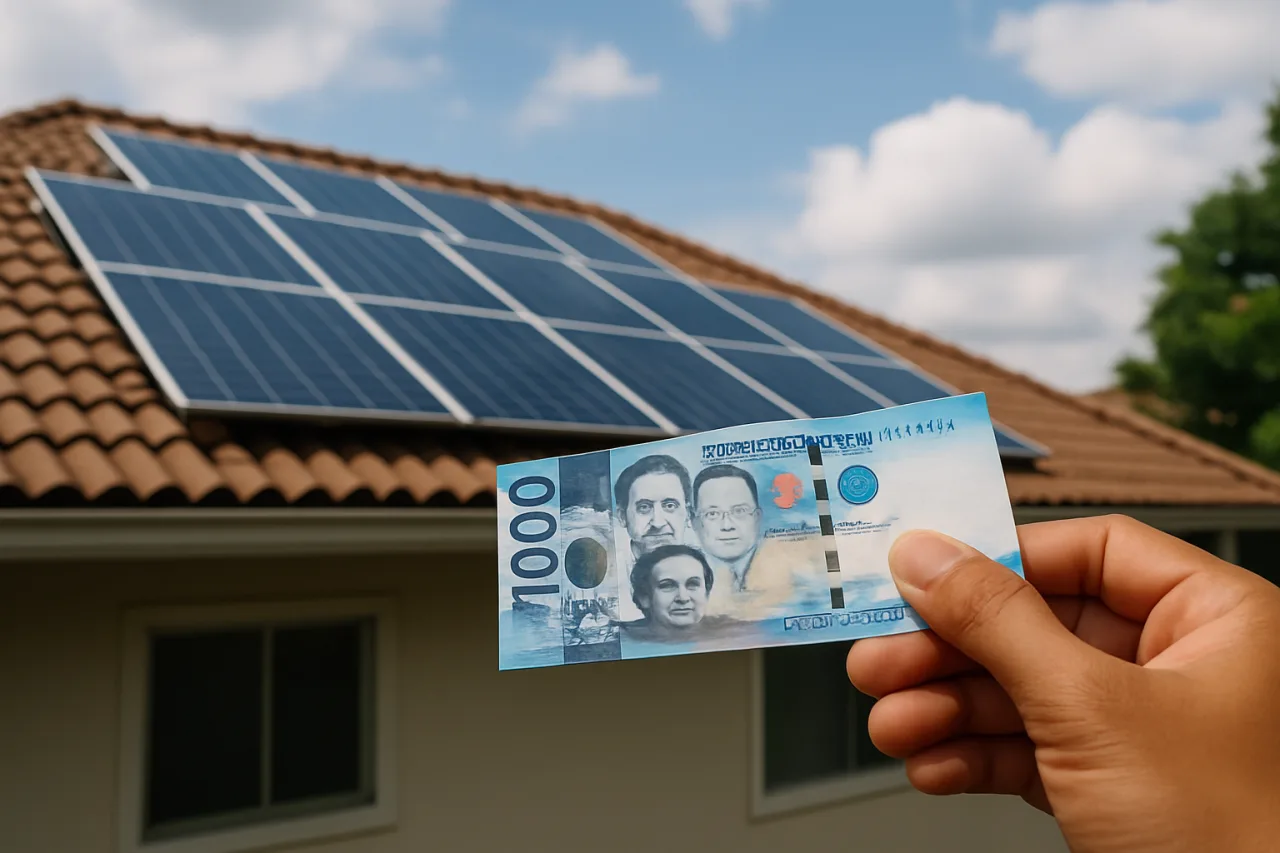
- ☀️ The program: The SSS is preparing an Energy Sustainability Loan — up to ₱400,000 per member for residential solar panels, backed by an initial ₱40 billion fund for at least 100,000 members.
- 📅 The timeline: SSS President Robert Joseph de Claro said guidelines are targeted for release by December 2026, with rollout in the first half of 2027.
- 🔌 The context: Residential solar systems in the Philippines typically run ₱150,000 to ₱350,000 for 3-5 kW setups — so the loan ceiling covers a properly sized home installation.
- 🧮 The catch: The interest rate and repayment terms have not been announced yet — the smart move is to prepare now and compare the SSS terms against cash and installment pricing before signing anything.
The SSS solar loan announced this week could put a ₱400,000 rooftop solar system within reach of 100,000 Filipino workers — and it arrives at the exact moment household electricity bills have become one of the most punishing line items in the family budget. Speaking at the pension fund’s 69th founding anniversary press conference on Tuesday, SSS President and CEO Robert Joseph de Claro said about ₱40 billion will be earmarked for the proposed Energy Sustainability Loan Program, which lets qualified members finance residential solar panel systems. “At ₱400,000 per member… that would be about a hundred thousand members,” de Claro said. Guidelines are targeted for December 2026, with rollout in the first or second quarter of 2027. For millions of SSS members watching their Meralco bills climb, the announcement raises one very practical question: does borrowing for sunshine actually pay for itself? The math below gives the honest answer — and the honest answer starts with what SSS has not yet told us.
What the SSS Solar Loan Program Announces — and What It Doesn’t
The confirmed facts are simple and significant. The Social Security System plans to roll out the Energy Sustainability Loan Program within the first semester of 2027, financed by an initial ₱40 billion allocation supporting at least 100,000 members at up to ₱400,000 each. The loan is restricted in purpose: “We want to make sure that the loan to be provided would be used by members to actually purchase solar panels for their homes,” de Claro said. The SSS is also studying whether the loaned amount could serve as a down payment for an electric vehicle — a sign the fund sees energy transition financing as a product line, not a one-off. Guidelines are due by December 2026, which means the repayment table every applicant will actually sign — interest rate, term, monthly amortization — does not exist publicly yet.
That missing interest rate is the single most important number in this story, and no coverage should pretend otherwise. What is known comes from the program’s own framing: repayment spread over four to seven years, per initial reports, with de Claro describing the design goal as a program that is “sustainable” and “addresses the needs of our members.” For comparison, the parallel program for government employees — the GSIS Ginhawa Solar Energy Loan — charges 5% annual interest on up to ₱500,000 payable over five years through salary deduction, per the GSIS official program page. If the SSS lands anywhere near that range, the loan undercuts most consumer financing available for home improvements today. If it lands higher, the math changes. The correct posture for members is neither hype nor dismissal — it is preparation.
Preparation also means reading the demand signal correctly. SSS loan windows historically open with a surge: when the fund’s emergency loan window opened recently, the ₱20,000 headline drew so many applications that the fine print — contribution requirements, eligibility windows, processing queues — became the real story, as we detailed in our breakdown of the emergency loan’s actual rules. A subsidized solar loan with a ₱40 billion pot will likely attract the same first-week rush, and the members who win that race will be the ones who already have their documents, contribution records, and roof assessments ready. This is one of the few government programs where being ready in December is worth more than being interested in June.
The Math: What Solar Costs and What It Saves
The loan ceiling only makes sense against real system prices. Current Philippine market pricing for residential grid-tied solar runs wide but consistent: a 1.6 kWp system starts around ₱108,000, a 3.2 kWp system around ₱183,000, and a 5.6 kWp system around ₱270,000, according to installer Solaric’s published pricing; full-service European-standard packages for households with ₱5,000 to ₱11,000 monthly bills range from roughly ₱310,000 to ₱610,000. Independent guides peg typical 3-5 kW residential installations at ₱150,000 to ₱350,000. In other words, ₱400,000 is not a marketing number — it covers a serious, properly installed home system with room for quality components.
| System size | Typical installed cost (2026) | Household bill profile |
|---|---|---|
| 1.6 kWp grid-tied | from ~₱108,000 | ~₱12,000/month bills |
| 3.2 kWp grid-tied | from ~₱183,000 | ~₱15,000/month bills |
| 5.6 kWp grid-tied | from ~₱270,000 | ~₱20,000/month bills |
| Full-service packages (₱5-11k bills) | ₱310,000 – ₱610,000 | ₱5,000-₱12,000 monthly savings |
Savings follow the same honest range. Packages marketed by established installers project monthly savings of ₱5,000 to ₱12,000 for households that consume most electricity during daylight hours. Take the middle of that range — ₱8,000 a month, or ₱96,000 a year — and a ₱310,000 system pays for itself in roughly three to four years, while panels carry expected lifespans of 10 to 15 years or more. That is the optimistic case, and it is a real one. The cautious case matters just as much: a household that is out during the day, with a small ₱4,000 bill, will save far less because a grid-tied system earns its keep by offsetting daytime consumption. The SSS solar loan is not free money — it is leverage on a bill you are already paying, and leverage only works if the bill is big enough.
Who Should Consider the SSS Solar Loan — and Who Should Wait
Profile one: the high-bill household. If your electricity bill runs ₱10,000 or more and your roof gets unobstructed sun, the economics are already favorable at today’s installer pricing — and a low-interest SSS solar loan converts a painful monthly bill into a fixed, finishing payment. This is the member the program is built for.
Profile two: the OFW family building a home. Remittance-built houses in the Philippines increasingly get sized for air conditioning and appliances the earners themselves rarely enjoy. A solar-ready roof installed during construction costs a fraction of a retrofit, and the loan gives a structured way to fund it through the family’s SSS membership rather than a consumer installment plan. For families also weighing the program’s possible EV downpayment feature, one loan covering both energy assets would be a genuine first in the local market.
Profile three — wait before signing: members with low daytime consumption, shaded roofs, or condos without roof rights. For these households, the honest math says the panels may never out-earn their cost, no matter how attractive the interest rate. And for everyone: the December 2026 guidelines are the contract that matters. Until the actual rate, fees, and eligibility rules are published, any installment plan signed today is a decision made without the market’s newest competitor — one that could undercut it by several percentage points a year.
How to Prepare for the SSS Solar Loan Rollout
Preparation today is what converts the 2027 rollout into an approved loan instead of a wish list:
- Audit your consumption now. Pull twelve months of bills and find your daytime baseline. Solar savings are a function of when you use power, not just how much — this single number decides whether the loan makes sense for you.
- Get your roof assessed early. Orientation, shading, and structural capacity determine system size before any financing discussion. Installers do free or cheap assessments; collect two or three.
- Keep your SSS contributions steady. Loan eligibility under SSS programs historically depends on posted contributions. Members with active, consistent records are positioned for the first wave; the guidelines will define the exact rule, but a dormant account helps no one.
- Study the GSIS precedent. The GSIS Ginhawa Solar Energy Loan — 5% annual, up to ₱500,000, five years — is the closest existing template for how government financing prices home solar. Use its amortization structure to rehearse your own numbers.
- Watch for the December guidelines, then compare three ways. When SSS publishes terms, compare the loan against (a) cash purchase, (b) installer financing, and (c) doing nothing. The SSS solar loan should win on total cost of energy — not on monthly payment comfort, which is how bad energy deals get signed.
The bigger picture is worth naming too: rooftop solar in the Philippines has been compounding quietly for two years, as high bills and cheap panels push households into what analysts have called a rooftop revolution — and the pressure keeps building from the other side, with transmission charges on electricity bills rising double digits and grid alerts becoming seasonal routine, a squeeze we covered in our analysis of the NGCP transmission charge increase. The SSS solar loan is the government officially joining that current, with a balance sheet behind it. When a ₱40 billion fund starts competing for the same rooftops, panel prices, installer quality, and financing terms all move in the member’s favor. Waiting for the terms is not passivity — it is the strategy. Members can track official announcements through the Social Security System’s official website, where the final guidelines will be published before any rollout begins.
Frequently Asked Questions About the SSS Solar Loan
What is the SSS solar loan?
The SSS solar loan is the working name for the Social Security System’s proposed Energy Sustainability Loan Program, which will let qualified members borrow up to ₱400,000 to install residential solar panel systems. The program is funded by an initial ₱40 billion allocation designed to support at least 100,000 members, with guidelines targeted for December 2026 and rollout in the first half of 2027.
How much can I borrow under the SSS solar loan?
Up to ₱400,000 per member, according to SSS President and CEO Robert Joseph de Claro. He noted that at ₱400,000 per member, the initial ₱40 billion fund covers about a hundred thousand members. The loan must be used to actually purchase solar panels for the member’s home.
When does the SSS solar loan start?
SSS targets release of program guidelines by December 2026, with rollout in the first or second quarter of 2027 — within the first semester. Applications are not open yet; members should watch for the official guidelines rather than offers from intermediaries, which historically appear around new SSS programs.
What interest rate will the SSS solar loan charge?
Not yet announced — this is the key missing number. For comparison, the parallel GSIS Ginhawa Solar Energy Loan for government employees charges 5% annual interest on up to ₱500,000 over five years. The SSS rate will be published with the December 2026 guidelines, and it is the figure that decides whether the loan beats cash or installer financing.
Is a ₱400,000 solar system worth it?
It depends on your daytime consumption and roof. A 3-5 kW residential system costs roughly ₱150,000-₱350,000 installed, and households with ₱10,000+ monthly bills and good sun exposure commonly recover system costs in three to five years through savings of ₱5,000-₱12,000 a month. Low-bill or shaded households should run their own numbers first — the payback shrinks with the bill.
Do OFWs qualify for the SSS solar loan?
Overseas Filipino workers who maintain voluntary or flexible SSS membership are members of the fund, and the loan program is open to qualified members. Final eligibility rules arrive with the December 2026 guidelines — OFW members should keep contributions active and monitor official SSS channels for the qualification requirements.
Financial Disclaimer: This article is for informational and educational purposes only and does not constitute financial, investment, or tax advice. Loan terms described are based on announcements current as of September 2026 and are subject to the final SSS guidelines; readers should verify details with the Social Security System and consult qualified professionals before making financial decisions.