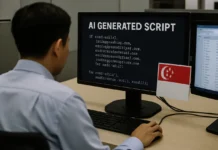
By the time this article is scheduled, a single day’s byline on this site will have carried seventeen new pieces — market watches, crypto ledgers, an oil tape, an AI keynote breakdown, a scam-aftermath briefing, and how-to guides — each scored and rewritten to a 90+ SEO bar before it went live. That output runs on what we call the solo blogger stack — and for the first time, this is the full disclosure of what it is, what it costs, and where it breaks.
Key Takeaway
- 📦 The stack is five layers: WordPress on shared hosting, one persistent AI agent framework, an image render pipeline, a scoring bridge that enforces quality, and a distribution layer — assembled for under ₱1,000/month at intro pricing.
- 🤖 The agents are staff, not magic: two persistent agents with memory do research, drafting, fact-checking, and publishing — but a human still decides slates, approves numbers, and catches what machines miss.
- 💸 The real cost ledger: hosting from $2.99/month intro (renewing near $10.99), free open-source agent software, and model API tokens as the main variable bill.
- 🧱 Breakage is normal: firewalls, render queues, and stale caches broke things this week — every incident got a written fix, which is the part no vendor demo shows you.
What the Solo Blogger Stack Actually Is
A solo blogger stack is the complete set of software, hardware, and process that lets one person run a publishing operation that used to require five. It is not an AI writing tool bolted onto WordPress — those existed for years and they produce the sludge that now floods every search result. The difference between a tool and a stack is memory and enforcement. A tool drafts text when you ask. A stack remembers your editorial standards, scores its own work against them, refuses to publish below the bar, renders its own images, updates its own series hubs, and reports back with receipts.
The industry is converging on this idea from three directions at once. Nieman Journalism Lab’s year-end essay by Nikita Roy argued that 2026 is when newsrooms rebuild themselves “for the AI era” as information engines rather than content factories — teams formed around maintaining living, structured knowledge instead of daily story volume. A widely shared Medium account of a one-person newsroom publishing four pieces a week described a five-agent setup doing research, drafting, and repurposing with an editorial pipeline. And corporate playbook sites now treat a one-person newsroom cadence — one update a week, batch-created in slow periods — as a standard strategy. Against that shelf, the claim of this disclosure is narrower and stronger: not a theory of the workflow, but the audited bills, tool names, failure modes, and daily ledger of a stack that publishes roughly ten to fifteen pieces a day on a rotating set of franchises.
The Stack, Layer by Layer
Each layer below is one we actually run. The honest version includes a paid host, free open-source agent software, free government and platform integrations, and one variable cost — model inference — that scales with output.
| Layer | Role in production | What we run | Cost (as of October 9, 2026) |
|---|---|---|---|
| Foundation | CMS + hosting + cache | WordPress on Hostinger shared hosting, LiteSpeed cache | $2.99/mo intro (48–mo term), renews ~$10.99/mo |
| Agent core | Research, drafting, publishing, memory | Hermes Agent — open source, MIT license, runs on our own server | Software free; model tokens are the variable |
| Image layer | Every featured image, generated and keyword-alt’d | An internal render pipeline we call P2, backed by image models | Included in our model spend |
| Quality gate | Keyword, structure, freshness, disclosure checks | Our custom scoring bridge enforcing a 90+ bar before publish | Free (self-built) |
| Distribution | Search, AI engines, social handover | Google Search Console, Bing IndexNow-style pings, sitemap discipline, broadcast list | Free |
The agent core is the layer people ask about. Hermes Agent is built by Nous Research and shipped as open source under an MIT license — installable on a server you control, connectable to messaging surfaces, with persistent memory and a self-improving skill library. Coverage of the project notes it crossed 214,000 GitHub stars within six months, making it the fastest-growing open-source agent framework of 2026. What that architecture gives a one-person newsroom is specifically the persistence: the agent does not forget the editorial bible between sessions, re-derives its own checklists after each incident, and holds the whole site’s structure in memory. Our own setup runs two specialized agents in parallel lanes — one as the primary production writer and one as an independent reviewer and fact-checker — mirroring how a two-desk newsroom splits writer and copy editor.
How the Solo Blogger Stack Runs a Publishing Day
A solo blogger stack that actually moves has one more layer most sites never write about — this one. The day starts with a trend scan against the four standing pillars (money and markets, cybersecurity, AI, and the worldwide investment watch) plus our parked Build & Earn franchise. Candidates pass a uniqueness gate: every slug and sibling-title search runs against the site’s own inventory first, because the one thing a quality operation cannot afford is cannibalizing itself. Surviving topics go to a title ledger — five candidates drafted before any prose exists, scored for hooks and search intent. Then the drafting pipeline moves in one flow: research extracts from primary sources, the draft assembles with a keyword map (verbatim phrase woven to roughly 0.5–0.7% density across headings, intro, and FAQ), the image job queues while the next article’s research begins, and each piece closes with the two-readback rule — the quality score must hold at the bar on two consecutive scans before publish, then the live page itself is fetched to verify the headline, featured image, and metadata that a scoresheet can fake but a real fetch cannot.
On a strong day this cycle turns out a piece roughly every 45–60 minutes from first search to live verification. The bottleneck is never the writing. It is the render queue and the fact-check lane — and that is by design, because the expensive errors in this business are not typos; they are wrong numbers with our name on them. This week the fact-check lane killed a false viral ETF-inflow claim (a “$21.99 billion day” that did not survive second-sourcing) and corrected a hurricane’s production share from 15% to 25% before a single word went live. The system treats those kills as wins. A solo blogger stack that publishes unverified numbers is just a plagiarism machine with extra steps.
The Cost Ledger in Pesos and Dollars
Here are the real numbers, converted at the October tape (₱62.84 to the dollar). The foundation is the cheapest line: shared hosting promos run from $2.99 per month on long intro terms and renew near $10.99 per month (₱691) at standard rates — a spread every buyer should see BEFORE the invoice does. The agent software layer is $0, permanently, because open source. The variable bill is model usage: token costs for writing, research extraction, and image generation scale with output. A publishing day of 15–20 pieces, with image renders, lands the total stack bill between roughly ₱2,000 and ₱6,000 a month depending on model choice and how aggressive the production calendar is. That’s the honest middle estimate for this configuration — a solo version running a third of the output would pay a fraction of the model line only.
Two structural notes on cost. First, the renewal cliff is the single most misunderstood line item in starting-budget math — the promo is real and the standard rate is also real, and the ₱691 monthly renewal still prices below every local co-working desk. Second, inference prices deflate relentlessly: Google Cloud’s own 2026 report pegged a 98% per-token price decline since 2024 across served models, which is why our model bill per article has fallen this year even as output multiplied. The stack’s cost curve runs the direction productivity does — down and to the right.
The Human Layer: Where Automation Stops
The uncomfortable part of every agent pitch is where the machine ends. In this stack, a human — the editor the byline belongs to — owns four irreversible decisions. He approves the slate (a trend watch never publishes without a human saying yes). He settles contested numbers: when two sources disagree on market data, the final call is made at a desk, not in a tab. He owns the corrections law: an error found after publish is patched within hours with a visible note, because the alternative — silent edits — is how publications lose the trust that makes everything else work. And he sets the ethics guardrails in writing: affiliate links must be disclosed, sponsored placements labeled, and no fabricated statistic ever passes the bar regardless of how good the score looks. Google’s own rate guidance this month said it plainly: content produced largely by AI with little human oversight demonstrates “little to no effort.” Our counter is the reverse reading — the agent does the labor, and the human does the judgment, in quantities a scoresheet can measure.
What Broke in the Solo Blogger Stack This Week (and the Fixes Baked In)
Any tooling disclosure that doesn’t list breakage is marketing. The receipts: a server firewall began returning 403s to unauthenticated API traffic, so the publishing pipeline now sends full browser-grade headers on every call. An image render job lagged past its waiting window and the pipeline held a draft rather than publishing an unillustrated piece — the image-availability rule now pre-reserves the media slot so the draft can attach the moment the render lands. A caching layer flattened a revised page back to an older version on first fetch, so every verification fetch now cache-busts and re-reads. And a stale clone of a publish script briefly printed an old headline into our logs, which is why every batch write is now verified by independent readback instead of trusting the script’s own banner. None of this is exotic. It is the actual texture of running software that publishes without a human keystroke per word — and each fix became a permanent rule the agents now carry in memory.
A Replication Blueprint for the Filipino Solo Operator
The stack replicates for any solo publisher willing to do it in the right order. The blueprint, in sequence:
- Register the business name. Online through the DTI’s BNRS system — barangay scope ₱200, city/municipality ₱500, national ₱2,000, each plus ₱30 documentary stamp tax; pay by GCash, PayMaya, or card within 7 days. This is the cheapest possible legal foundation for a peso-earning site.
- Stand up the foundation. A shared hosting plan with a real domain; configure WordPress, a caching plugin, and SSL before writing a word. Budget the renewal rate, not the promo, in your plan.
- Deploy the agent layer. Install an open-source, memory-capable agent on your own hardware or a small server, wire it to your messaging, and give it a written editorial bible — audience, standards, banned phrases, hook doctrine. The bible is what turns a chatbot into staff.
- Build the quality gate before scaling. Define a published score you refuse to ship below (ours is on quality, not quantity — every piece at 90+), then enforce it mechanically so it doesn’t depend on mood.
- Start with one franchise, not fifteen. A daily-format series (a watch, a ledger, a prompt series) teaches the pipeline faster than a newsroom of one-shot pieces. Scale output only after the fact-check lane has caught its first real error — that’s how you know the system, not luck, is producing quality.
For the money math around this — what the first year costs in pesos, and how long the first earnings usually take — see the cost-to-start breakdown and the first-peso timeline. The strategic frame behind these moves is laid out in the economics review of what blogging actually became, the practical AI-era model, and the graded agent-tool ledger for the tool classes themselves.
The Verdict for 2026
The solo blogger stack is not a productivity trick; it is an ownership position. One operator who owns the CMS, the hosting, the agent memory, the quality gate, and the distribution relationships owns a production function that no algorithm update can revoke — because the assets live on his side of the table, not on a rented platform. The failure modes are real but documented, the costs are in the open, and the human judgment layer is what makes it publishable at all. Ten years ago “one-person newsroom” was a vanity phrase. In 2026, with an open-source agent layer and a defensible quality bar, it is an operating company of one — and the economics now favor the operator who ships with receipts.
FAQ
How much does a solo blogger stack cost per month?
Our configuration runs from roughly ₱2,000–₱6,000 monthly (hosting from $2.99/mo intro on long terms, free open-source agent software, and model tokens as the variable). A starter version at one-third the output can run far cheaper; the main cost is your time budget at the quality-bar level you set.
Is an AI agent allowed to publish on Google?
The question isn’t the agent; it’s the oversight. Google’s rates reward content with effort, originality, and accuracy. Our pipeline scores every piece against a 90+ bar, fact-checks claims to primary sources, and holds drafts when the checks fail. Published with human editorial governance, agentic production is treated like any other newsroom automation.
Can I build a solo blogger stack without knowing how to code?
You can today reach perhaps 70% with one-click installs, a managed WordPress setup, and no-code agent surfaces. But the differentiating 30% (quality gates, cache verification, publish-readbacks) is where some comfort with light configuration pays — or where hiring one freelance setup session once makes sense.
What is the difference between the solo blogger stack and just using AI writing tools?
A tool drafts when you ask and forgets everything; a stack remembers your standards between sessions, enforces checks before publish, renders images, corrects its own process after failures, and handles metadata and distribution. Think of a hammer versus a workshop: the tool is inside the stack, but the stack is the system with memory and governance.
Does this stack work for a niche outside tech and finance?
The solo blogger stack’s layers generalize to any niche that has an editorial standard and a source hierarchy. What doesn’t generalize: our specific franchises and keyword map. Write your own bible, pick one daily franchise you can own in your niche, and calibrate the quality gate to your niche’s bar.
Financial Disclaimer
This article describes the tooling and operations of this publication for educational purposes and is not an offer, investment advice, or earnings guarantee. Tool prices and peso conversions are as of October 9, 2026 (at the ₱62.84/dollar tape) and can change at any time; verify current pricing with each provider before purchase. The Hostinger hosting link within this article is an affiliate/referral link — if you purchase through it, this site may earn a commission at no additional cost to you, and the placement is labeled per our editorial disclosure standard. No result described here — output volume, scores, or costs — should be read as a promise of earnings; publish quality and traffic outcomes depend on your own execution and market factors outside anyone’s control.