Key Takeaway
- 🛡️ The claim: The Qilin ransomware group listed the Philippine Ports Authority (PPA) on its dark-web leak site on September 5, 2026, claiming it stole internal data.
- ✅ The official verdict: DICT’s NCERT, verifying jointly with PPA staff, found no ransomware activity or system compromise — it called the report a false positive.
- 🚨 The real incidents: Unauthorized access hit the DMW website, and a DOLE web page was defaced — both services were taken offline, hardened, and restored by September 8.
- 🔒 Your move: The PPA ransomware record suggests a password field may exist in stolen data — change any PPA portal password now and stop reusing passwords everywhere.
- ⚓ Watch this space: A leak-site listing without published proof is a pressure tactic; the burden of proof stays on the attackers — but monitoring should continue.
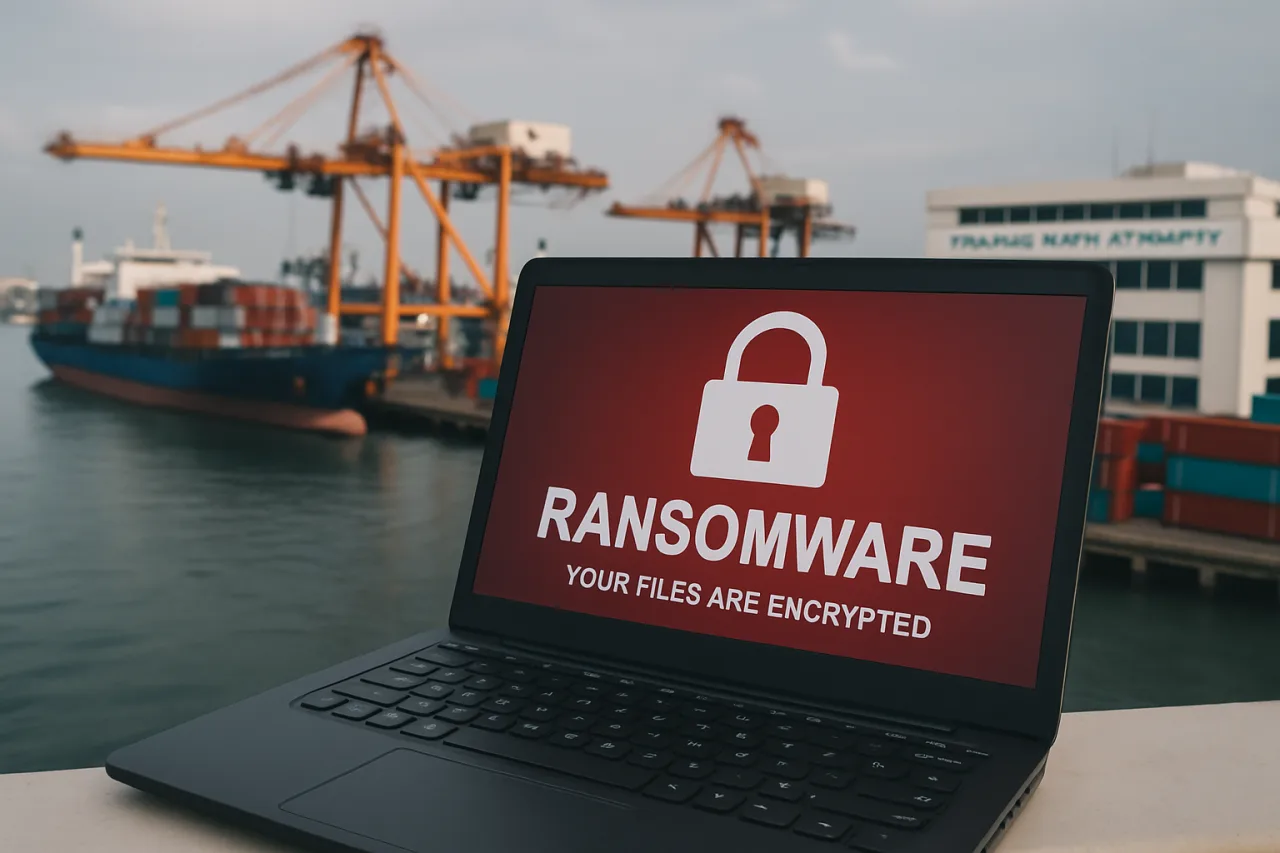
PPA ransomware became a national talking point in a single weekend: on September 5, 2026, the Qilin ransomware group — one of the most active ransomware-as-a-service operations in the world — added the Philippine Ports Authority to its dark-web victim list, claiming it had stolen internal data from the agency that runs the country’s seaports. Three days later, the PPA ransomware story the Department of Information and Communications Technology (DICT) said its verification found no evidence of any attack at all. Between those two statements sits the real PPA ransomware story — a genuinely important one for every Filipino who ships a balikbayan box, books a cargo slot, or depends on port systems that must never go dark.
This PPA ransomware timeline separates what is claimed from what is verified, reconstructs the government’s response hour by hour, and translates the incident into practical steps — because even a false positive is a rehearsal for the day the alarm is real.
The PPA Ransomware Claim: What Qilin Posted on September 5
The PPA ransomware listing appeared on Friday, September 5, 2026, when the Qilin group published an entry naming the Philippine Ports Authority on its leak-onion site — the public board where ransomware crews list organizations they claim to have breached. The listing carried the group’s standard framing: PPA was “compromised,” internal data was “stolen,” and a countdown would presumably begin if no ransom was negotiated.
Related: Chinese Port Giant ZPMC Caught in a 38-Company Ransom Threat
Related: The Gentlemen Ransomware: Winning the Ultimate 90/10 Firewall Deal
Threat-intelligence monitors — SOCRadar’s data-breach tracker, Ransomware.live’s victim index, and Philippine dark-web watchers like Deep Web Konek — picked up the entry the same day. Word moved fast through shipping and BPO circles: the agency that manages the country’s seaports was on a ransomware list.
But here is the crucial detail that most reposts missed: the Qilin entry, as documented by trackers, named no count of affected individuals and no specific categories of data. The listing indicated a password field was present in the claimed trove, but disclosed nothing about how it was stored — hashed, encrypted, or plaintext. That absence matters. When a ransomware crew names no data types, the honest reading is that the proof hasn’t been shown — only the claim.
And PPA itself, as of the days that followed, had not publicly confirmed the claim, any data theft, or any contact with the group.
The PPA Ransomware Verdict: What DICT Verified on September 8
On Tuesday, September 8, the DICT Cybersecurity Bureau — through its National Computer Emergency Response Team (NCERT) — settled the question with an unusually specific statement. Joint verification with PPA personnel, it said, found no ransomware activity and no system compromise within the agency’s infrastructure. The reported ransomware attack on PPA was a false positive, and the verification included PPA’s own personnel — not a remote brush-off.
That word choice — false positive — is the heart of the PPA ransomware verdict. In incident-response language, a false positive means an alert or external claim triggered an investigation, and the investigation found nothing. It is not a denial issued before looking. NCERT’s statement describes a process: alerting, joint inspection with the agency’s own admins, and a conclusion that no compromise existed on PPA systems.
The statement, however, was not a blanket “all clear” for the government’s attack surface. It landed in the middle of a week when two other agencies had just been hit — and DICT’s own incident notes describe the response in operational detail.
The DMW and DOLE Incidents: The Real Attacks That Same Week
While the PPA ransomware claim was being disproven, two other government web services were genuinely under attack:
Department of Migrant Workers (DMW). NCERT detected unauthorized access to the DMW website — the digital front door for millions of OFWs who process contracts, OEC exemptions, and overseas employment records. DICT activated emergency protocols, deployed on-site technical response teams, implemented access-control hardening, and isolated affected systems to contain the intrusion while forensics traced how it happened.
Department of Labor and Employment (DOLE). Attackers defaced a DOLE web page — unauthorized changes to content on the agency’s web host. DICT notified DOLE’s IT administrators; the agency isolated the affected system, strengthened access controls, and began its own examination. Initial checks found no evidence that sensitive databases or personally identifiable information were compromised.
Both web services were temporarily taken offline — the standard precautionary move, ensuring no residual threat survives before the public can reach the sites again. By September 8, the Department of Migrant Workers and Department of Labor and Employment web services had been restored. For OFWs, the practical effect was downtime, not data loss — as far as official statements go.
Put the three incidents side by side and the week tells a sharper story than any single headline: one claim was false, two attacks were real, and the same national response machinery handled all three at once.
Who Is Qilin — and Why a Leak-Site Listing Matters Even Without Proof
Qilin (also tracked as Agenda) is a ransomware-as-a-service operation that emerged in 2022 and has become one of the most prolific leak-site publishers in the world. Its playbook is pressure: list a victim, name a countdown, and let the reputational threat do the extorting — sometimes before any encryption happens, and sometimes listing organizations whose data the crew hopes to obtain.
That last part is the uncomfortable truth behind the PPA listing. A leak-site entry is an attackers’ claim, not a finding. Groups have listed organizations before without producing evidence; others have listed targets after stealing data without deploying encryption at all — the ” extortion-without-encryption” model that has become the industry norm. The listing itself, however, is rarely meaningless: crews typically list organizations they have at least touched, even when the stolen payload disappoints them.
For a port authority, the stakes of a PPA ransomware claim alone are real. Ports are economic chokepoints — cargo scheduling, berth management, customs interfaces, and terminal operating systems all run on networked software. The 2026 attack that halted container operations at Malaysia’s Tanjung Pelepas port, one of Southeast Asia’s largest transshipment hubs, showed the region exactly what a successful port ransomware attack looks like: days of controlled shutdown and recovery. The joint FBI-CISA ransomware guide exists for precisely this class of threat.
So the honest reading of the PPA week: a serious group made a claim; the government’s verification says the claim didn’t hold. Both things are true at once — and both belong in the same story. For context on how attacks have escalated domestically, see our coverage of the Philippine ransomware surge.
How the PH Government Response Actually Worked
Strip away the drama, and the PPA/DMW/DOLE week is the clearest public view yet of how the Philippines’ national cyber response machinery functions under pressure. Four moves are worth noting — because they’re the same four moves any organization, public or private, should be able to execute:
1. Verify jointly, not unilaterally. NCERT didn’t take PPA’s word for “we’re fine,” and it didn’t take Qilin’s word for “we’re in.” It ran joint verification with PPA’s own personnel — the single most reliable way to separate a real intrusion from a false positive.
2. Take services offline deliberately. DMW and DOLE web services went dark by choice, not because attackers forced them. Precautionary isolation trades short-term availability for long-term integrity — the correct trade when an intrusion vector is still unknown.
3. Harden before restoring. Access controls were tightened, affected systems were isolated, and the sites returned only after hardening. Restoration without remediation just re-opens the door.
4. Communicate the verdict with specifics. DICT’s statement named the systems checked, the finding (no compromise), and the separate incidents that were real — a transparency standard that builds credibility precisely when rumors are running hot.
This is the playbook readers should demand from every agency and employer: the first 72 hours after a breach decide whether an incident stays an incident or becomes a disaster. And the week’s events land on top of a broader trend already documented by the National Privacy Commission, whose incident reports have doubled year over year.
What Filipino Businesses and OFWs Should Do Now
A false positive is not a pass. If Qilin’s crew did harvest credentials from some PPA-adjacent service — which the password-field reference hints at — those credentials may still circulate. Here is the short, practical list:
For agencies and shipping companies: assume leak-site listings are reconnaissance until proven otherwise. The PPA response — joint verification, service isolation, hardening — is the template. If your organization appears on a leak site and you cannot demonstrate otherwise, treat it as an active incident. Our 12-step cybersecurity checklist is the baseline.
For OFWs and port users: if you hold any account on a PPA-related portal — cargo booking, SeafarerRecord interfaces, port-community systems — change that password now, and change it anywhere you’ve reused it. Enable app-based two-factor authentication, not SMS. And for the DMW network claim that surfaced the same week, the dedicated checklist lives in the DMW data breach OFW protection guide. Watch for phishing that references this incident: the 7 red flags of phishing emails apply doubly when a scary headline is circulating, because attackers exploit fear with fake “PPA breach alert” emails.
For anyone shipping through Philippine ports: the practical risk from this incident remains low — DICT’s verification found no compromise, and port operations were never disrupted. The larger lesson is continuity: the region has just seen what a successful port attack does, at Tanjung Pelepas. Organizations that move cargo should revisit their own exposure via supply-chain cyber risk planning, because ports sit at the center of every logistics chain.
For everyone: bookmark the habit, not the headline. When a ransomware group names a Filipino institution, verify through official channels — DICT’s Cybersecurity Bureau and NCERT statements, the agency’s own pages — before forwarding anything. Panic is the second payload of every ransomware attack.
The Bigger Picture: PH Ports as Cyber Targets
Why would a ransomware crew claim the Philippine Ports Authority at all? Three reasons, all structural:
Ports are high-pressure targets. Downtime at a port costs money by the hour, which makes ransom demands credible. The sector sits inside every government’s critical-infrastructure list, and attackers know the political pressure multiplies the financial one.
Government systems are visible from outside. Leak-site listings function as advertising for ransomware affiliates. Naming a national port authority signals to other crews — and to buyers in the data markets — that the group is operating in Philippine government networks, true or not.
The region is in an active ransomware wave. Japan logged a record 123 ransomware cases in the first half of 2026; Malaysia’s biggest port lost days of operations in the same season; Philippine agencies absorbed the DMW and DOLE incidents within the same week. Regional tempo matters: when the neighborhood burns, every address gets scanned harder. Understanding the domestic surge in context is no longer optional for Filipino IT teams.
The PPA ransomware episode, resolved as a false positive, still leaves the country with a clean scorecard and a rehearsal behind it. The next listing may not be false — and the response that worked this week is the one that will matter then.
Frequently Asked Questions
Was the PPA ransomware attack real?
No compromise was found. DICT’s NCERT, verifying jointly with PPA personnel, found no ransomware activity or system compromise, and called the report a false positive.
What did Qilin claim?
On September 5, 2026, Qilin listed PPA on its dark-web leak site, claiming it stole internal data. The entry named no affected individuals and no specific data categories, and PPA has not confirmed the claim.
Which government sites were really attacked that week?
The Department of Migrant Workers website suffered unauthorized access, and a Department of Labor and Employment web page was defaced. Both services were taken offline, hardened, and restored by September 8.
Did any OFW or personal data leak in the DMW incident?
Initial checks found no evidence that sensitive databases or personally identifiable information were compromised, per DICT’s statement. Investigations continued as the sites were restored.
Should I change my PPA or port-related passwords?
Yes. Qilin’s record references a password field of unknown storage quality. Treat any PPA portal password as potentially exposed, change it, and stop reusing passwords across services.
What is a “false positive” in ransomware reporting?
It means an alert or external claim triggered an investigation, and the investigation found no actual compromise — the alarm was real, the intrusion wasn’t.
Is it safe to ship cargo through Philippine ports now?
Yes — port operations were never disrupted, and the government’s verification found no compromise. The regional context (Tanjung Pelepas, record ransomware waves) is a reason for organizational preparedness, not public panic.
Financial Disclaimer: This article is for general information only and does not constitute financial, legal, or professional advice. Cybersecurity guidance reflects the situation as reported on September 12, 2026; verify current advisories with official government sources before acting.