Table of Contents
Key Takeaway
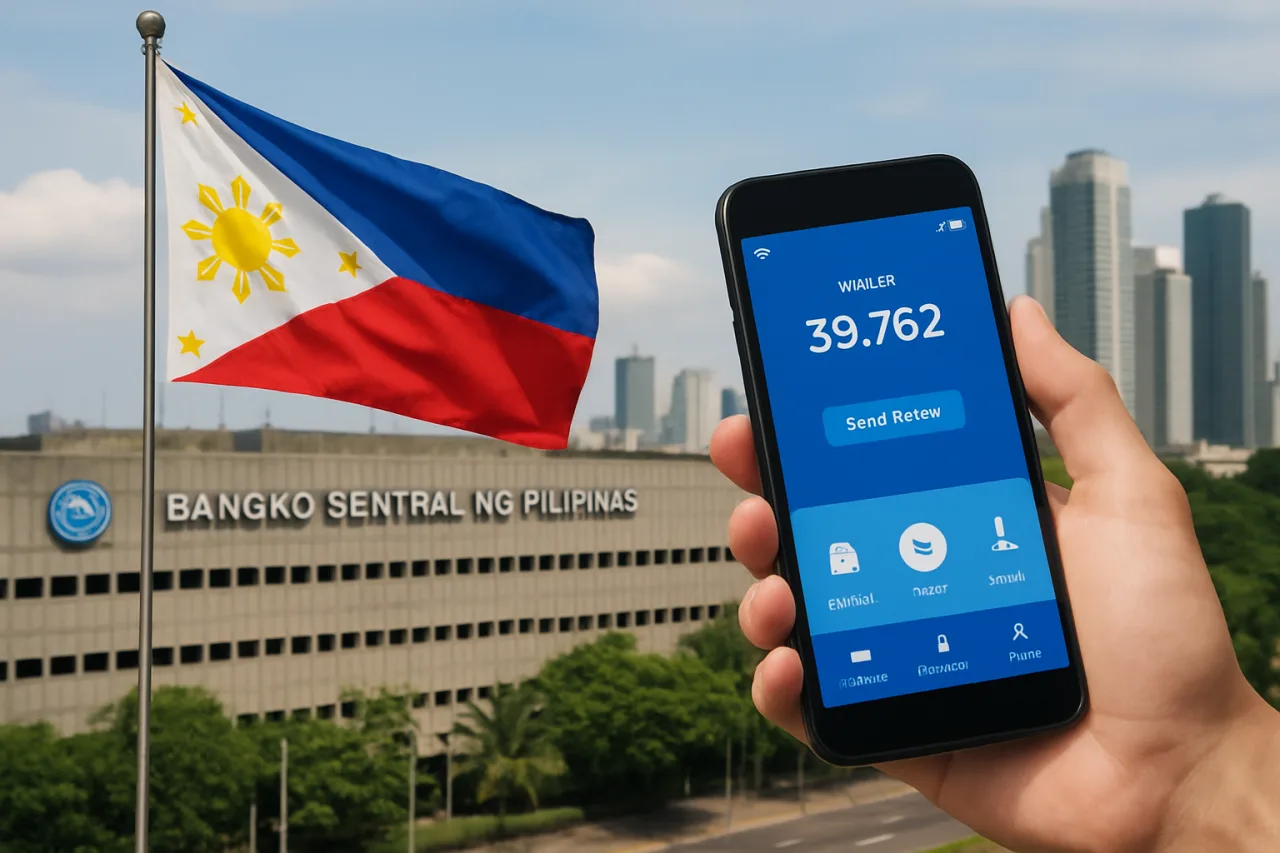
- 💰 Historic Milestone: Philippines remittances reached $39.6 billion for the first time in 2025 and continue growing through 2026, according to the Bangko Sentral ng Pilipinas, cementing the country as one of the world’s largest remittance recipients.
- 📱 Digital Transformation: Approximately 50 percent of Filipino adults now hold a formal financial account, up sharply from previous years, driven by e-wallets like GCash and Maya and real-time payment rails InstaPay and PESONet.
- 🏦 Fintech Ecosystem: The Philippines hosts more than 300 fintech companies, and platforms are embedding savings, insurance, and investment products directly into the remittance journey — turning money transfers into gateways for long-term wealth building.
- ⚖️ Regulatory Foundation: The BSP’s Open Finance Framework, Open Finance for PERA pilot, and Project Agila wholesale CBDC initiative are building the infrastructure that makes Philippines remittances faster, cheaper, and more investment-ready.
- 🎯 Action Item: Filipino professionals and OFW families should evaluate whether their remittance channel also offers investment, savings, and insurance options — every peso saved on fees is another peso available for building financial resilience.
Philippines remittances have entered a historic new phase. For the first time, the Bangko Sentral ng Pilipinas (BSP) confirmed that personal remittances reached $39.6 billion during 2025, and the flow continues to grow into 2026. This is not merely a number on a balance sheet. Philippines remittances fund education, healthcare, housing, and small businesses across the archipelago, and the way that money moves is changing fundamentally. What was once a cash-and-counter transaction is becoming a digital, investment-ready pathway that could redefine financial inclusion for millions of Filipino families.
Related: Free Financial Training for OFWs 2026: OWWA, TESDA, BSP
Related: Philippines Keeps Tier 1 in the US Anti-Trafficking Report
The shift matters for every Filipino professional, whether working in Manila’s BPO sector, deployed as an engineer in Saudi Arabia, or building a tech career in Singapore. Philippines remittances represent roughly a tenth of national economic output, and the infrastructure carrying that money is being rebuilt in real time. Understanding where this transition is heading — and how to benefit from it — is essential financial literacy for 2026.
The $39.6 Billion Milestone: Philippines Remittances Cross Historic Threshold
The BSP’s confirmation that personal remittances reached $39.6 billion in 2025 places the Philippines among the top remittance-receiving nations on earth. According to the International Monetary Fund’s April 2026 World Economic Outlook, the Philippines is projected to record a nominal gross domestic product of approximately $512.2 billion this year, with GDP per capita reaching above $4,400. Philippines remittances, in this context, represent a substantial share of national income — money that flows from millions of Overseas Filipino Workers across the Middle East, Europe, North America, and Asia back to families and communities at home.
This milestone did not happen by accident. The resilience of overseas workers, sustained demand for Filipino talent globally, and the progressive modernization of cross-border payment channels all contributed. But the more significant story is not the size of the number — it is what happens to the money after it arrives. Historically, Philippines remittances were consumed: spent on daily needs, school fees, medical bills, and household expenses. The digital transition now underway is creating pathways to convert a portion of that consumption into savings, investment, and long-term financial resilience.
The Fintech Times, in a July 2026 analysis of the Philippine digital finance landscape, noted that “reducing the cost of international money transfers has a direct impact on financial inclusion. Every peso saved on transaction fees is another peso available for education, healthcare, housing or investment.” This is the core insight driving the evolution of Philippines remittances from a transfer service into a financial services gateway.
How Digital Payments Are Reshaping Philippines Remittances
According to the BSP’s latest Financial Inclusion Survey, approximately 50 percent of Filipino adults now own a formal financial account — a significant increase from just a few years ago. Smartphones, simplified digital onboarding, and e-wallets have been central to this transformation. The country’s real-time payment infrastructure, powered by InstaPay and PESONet, has become an essential part of everyday commerce, enabling instant peer-to-peer transfers, payroll, merchant payments, and government disbursements.
This matters for Philippines remittances because the last mile of a cross-border transfer is often the most expensive and least transparent. When remittance money arrived as cash, recipients had to physically collect it, transport it, and find a way to spend or save it. With digital accounts now the norm for most Filipino adults, remittance funds can land directly in an e-wallet or bank account — instantly available for spending, saving, or investing without the friction and risk of cash handling.
The practical impact is measurable. A remittance that once required a trip to a pawnshop or money transfer outlet, a queue, and a wad of bills can now arrive in seconds via InstaPay or a digital wallet. For OFW families in provincial areas, where the nearest remittance outlet might be hours away, this is not just convenience — it is financial access. And with the account ownership rate reaching 50 percent, the digital rails are reaching the communities that need them most.
You can read more about the broader remittance economy in WorldNgayon’s coverage of the remittance economy in the Philippines, which examines how OFW money shapes local markets.
From Cash to Investment: The Fintech Super App Revolution
The Philippines is now home to more than 300 fintech companies, spanning payments, digital banking, lending, wealth management, insurtech, and embedded finance. The most visible transformation is the rise of financial super apps — platforms like GCash and Maya that have evolved far beyond their original payment functions into comprehensive financial ecosystems offering savings, investments, insurance, and credit.
This evolution is directly relevant to Philippines remittances. When a remittance lands in a super app rather than a cash pickup counter, the recipient is immediately presented with options that did not exist a decade ago: invest a portion in a money market fund, buy micro-insurance for as little as ₱50, build a savings goal, or purchase government securities through a digital treasury platform. The remittance journey, once a dead end at cash collection, now opens into a menu of financial products designed to convert transfer income into lasting wealth.
Tonik has established itself as one of Southeast Asia’s pioneering digital banks, while companies such as Salmon, UNO Digital Bank, and BillEase continue expanding access to responsible consumer finance and buy-now-pay-later solutions. Rather than replacing incumbent banks, fintech firms are increasingly collaborating with traditional financial institutions — combining regulatory expertise with digital innovation to reach previously underserved customers. BDO Unibank, Metrobank, and the Bank of the Philippine Islands operate alongside these digital-first providers, creating a competitive landscape that benefits consumers through lower fees and better service.
The strategic implication for Filipino professionals is clear: the remittance platform you choose is no longer just a transfer mechanism. It is increasingly a financial services hub. Selecting a platform that offers investment, savings, and insurance alongside transfers means that Philippines remittances can work harder for the family, not just arrive and disappear.
The BSP Regulatory Architecture: Building the Digital Backbone
The Bangko Sentral ng Pilipinas has established itself as one of Asia’s most innovative central banks. Its long-term digital finance strategy has centered on expanding financial inclusion while encouraging innovation through proportionate regulation — a balance that has made the Philippines a regional leader in fintech development.
A key pillar is the Open Finance Framework, which enables financial institutions to securely share customer data — with customer consent — to improve competition and encourage the development of personalised financial products. During 2025 and into 2026, the BSP expanded its Open Finance for PERA pilot, allowing participating banks and fintechs to digitally onboard customers into the country’s Personal Equity and Retirement Account programme. This matters for Philippines remittances because it connects remittance recipients directly to long-term retirement savings products through the same digital channels they already use for transfers.
The BSP is also progressing Project Agila, its wholesale central bank digital currency (wCBDC) initiative. Rather than creating a retail digital peso, the project focuses on improving interbank settlements, securities transactions, and wholesale payments through tokenisation and distributed ledger technologies. While this operates behind the scenes, faster and cheaper interbank settlement ultimately reduces the cost of moving money — including Philippines remittances — across the financial system.
For Filipino professionals, the regulatory direction is favorable. The BSP’s approach means that the digital infrastructure supporting Philippines remittances is being built with consumer protection, competition, and inclusion in mind. The BSP official website provides ongoing updates on these initiatives, and readers can explore WorldNgayon’s analysis of stablecoin remittance innovations for a deeper look at how blockchain technology is entering the remittance space.
What This Means for OFW Families: The Hidden Cost of Cash
For the millions of Overseas Filipino Workers who send money home every month, the transition from cash to digital Philippines remittances carries real, quantifiable benefits. The World Bank has long tracked remittance costs globally, and the data consistently shows that digital channels are cheaper than cash-based ones. When the average cost of sending $200 to the Philippines through traditional channels can consume 3 to 7 percent of the transfer value, shifting to digital rails can save a family hundreds of dollars per year — money that compounds when redirected into savings or investment.
But the deeper value is not just in fee savings. It is in what becomes possible when remittance money arrives in a digital account rather than as cash. A domestic helper in Hong Kong who sends ₱20,000 home monthly can, through a super app, direct a portion automatically into a savings fund, purchase health insurance for her parents, or invest in a government bond — all from the same screen she uses to send the transfer. This is the transformation that makes Philippines remittances a foundation for wealth building, not just consumption.
The challenge is awareness. Many OFW families still default to the channels they have always used — cash pickup at a pawnshop or money transfer outlet — because they are familiar, even when a digital alternative is faster, cheaper, and more secure. The gap between what the infrastructure offers and what families actually use represents the single biggest opportunity in Philippines remittances today. For OFW benefits and support systems, WorldNgayon’s OWWA benefits guide for 2026 complements this financial planning perspective.
Remittance Channels Compared: Cash vs Digital
Choosing the right channel for Philippines remittances can save families thousands of pesos per year. The table below summarizes the key differences between traditional cash-based remittance and the emerging digital-investment hybrid model:
| Feature | Cash Pickup (Traditional) | Digital Wallet (GCash, Maya) | Digital Bank (Tonik, UNO) |
|---|---|---|---|
| Average fee ($200 transfer) | 4-7% of transfer value | 1-3% of transfer value | 0.5-2% of transfer value |
| Speed to recipient | Minutes to hours (pickup) | Instant (InstaPay/PESONet) | Instant (real-time rails) |
| Post-transfer options | Cash only — no investment path | Savings, insurance, micro-investing | Savings, bonds, wealth management |
| Rural accessibility | Limited by outlet location | Smartphone + signal required | Smartphone + internet required |
| Security risk | Cash loss, theft, fraud | Account protection, PIN, biometrics | PDIC insurance up to ₱500,000 |
| Investment integration | None | Mutual funds, government securities | Time deposits, unit investment trusts |
The pattern is clear: digital channels are not only cheaper and faster, they unlock financial products that cash simply cannot offer. For Filipino families receiving Philippines remittances, the choice of channel is increasingly a choice about long-term financial strategy.
How Filipino Professionals Can Capitalize on the Digital Remittance Shift
For Filipino professionals — whether working domestically or abroad — the transformation of Philippines remittances creates actionable opportunities. The first step is auditing your current remittance channel. If you or your family still relies on cash pickup, calculate the annual fee cost and compare it against digital alternatives. The difference, invested consistently over years, can fund a child’s education, build a retirement nest egg, or establish an emergency fund.
The second step is exploring investment integration. Super apps like GCash now offer GInvest, which allows users to invest in mutual funds starting at ₱50. Maya offers Maya Savings with daily interest. Tonik provides time deposit products with competitive rates. If your remittance platform offers any of these, the friction between receiving money and investing it drops to nearly zero — a few taps on the same screen.
The third step is understanding the regulatory protections in place. Digital banks in the Philippines are covered by the Philippine Deposit Insurance Corporation (PDIC) for up to ₱500,000 per depositor. The BSP’s Open Finance Framework gives consumers control over their financial data, and the institution’s proportionate regulation approach means innovation continues while consumer safeguards are maintained. These are not abstract policy points — they are the structural reasons Philippines remittances can be trusted to flow through digital channels.
Finally, consider the long-term horizon. Project Agila and the Open Finance for PERA initiative are building infrastructure that will make Philippines remittances even more efficient and investment-ready in the coming years. Filipino professionals who establish digital financial habits now will be positioned to benefit as these systems mature.
Frequently Asked Questions About Philippines Remittances
How much did Philippines remittances reach in 2025?
According to the Bangko Sentral ng Pilipinas, personal remittances reached $39.6 billion for the first time in 2025 and continue to grow through 2026. This places the Philippines among the world’s largest remittance-receiving nations, reflecting the resilience of millions of Overseas Filipino Workers globally.
What percentage of Filipino adults have a bank or financial account?
The BSP’s latest Financial Inclusion Survey reports that approximately 50 percent of Filipino adults now own a formal financial account, a significant increase driven by smartphone adoption, simplified digital onboarding, and the growth of e-wallets like GCash and Maya. This is the foundation enabling digital Philippines remittances to replace cash.
What are InstaPay and PESONet and why do they matter for remittances?
InstaPay and PESONet are the Philippines’ real-time and electronic payment rails managed under the BSP framework. InstaPay enables instant peer-to-peer transfers up to ₱50,000 per transaction, while PESONet handles larger batch electronic transfers. Together, they allow remittance funds to move instantly within the Philippine financial system, eliminating the need for cash pickup and reducing transaction costs.
How does Project Agila affect Philippines remittances?
Project Agila is the BSP’s wholesale central bank digital currency (wCBDC) initiative. It focuses on improving interbank settlements, securities transactions, and wholesale payments through tokenisation and distributed ledger technology. While it operates between banks rather than directly with consumers, faster and cheaper interbank settlement reduces the underlying cost of moving money — including Philippines remittances — across the financial system.
Can I invest remittance money directly from an e-wallet?
Yes. Platforms like GCash offer GInvest, which allows users to invest in mutual funds starting at ₱50. Maya offers savings products with daily interest. Digital banks like Tonik provide time deposits and unit investment trust funds. These integrations mean that Philippines remittances arriving in a digital account can be invested in minutes, without opening a separate brokerage or visiting a bank branch.
Are digital remittance channels safe for OFW families?
Digital banks in the Philippines are regulated by the BSP and covered by PDIC insurance up to ₱500,000 per depositor. E-wallets use account protection, PIN authenti
… [OUTPUT TRUNCATED – 18,988 chars omitted out of 68,915 total] …
g innovation through proportionate regulation — a balance that has made the Philippines a regional leader in fintech development.
A key pillar is the Open Finance Framework, which enables financial institutions to securely share customer data — with customer consent — to improve competition and encourage the development of personalised financial products. During 2025 and into 2026, the BSP expanded its Open Finance for PERA pilot, allowing participating banks and fintechs to digitally onboard customers into the country’s Personal Equity and Retirement Account programme. This matters for Philippines remittances because it connects remittance recipients directly to long-term retirement savings products through the same digital channels they already use for transfers.
The BSP is also progressing Project Agila, its wholesale central bank digital currency (wCBDC) initiative. Rather than creating a retail digital peso, the project focuses on improving interbank settlements, securities transactions, and wholesale payments through tokenisation and distributed ledger technologies. While this operates behind the scenes, faster and cheaper interbank settlement ultimately reduces the cost of moving money — including Philippines remittances — across the financial system.
For Filipino professionals, the regulatory direction is favorable. The BSP’s approach means that the digital infrastructure supporting Philippines remittances is being built with consumer protection, competition, and inclusion in mind. The BSP official website provides ongoing updates on these initiatives, and readers can explore WorldNgayon’s analysis of stablecoin remittance innovations for a deeper look at how blockchain technology is entering the remittance space.
What This Means for OFW Families: The Hidden Cost of Cash
For the millions of Overseas Filipino Workers who send money home every month, the transition from cash to digital Philippines remittances carries real, quantifiable benefits. The World Bank has long tracked remittance costs globally, and the data consistently shows that digital channels are cheaper than cash-based ones. When the average cost of sending $200 to the Philippines through traditional channels can consume 3 to 7 percent of the transfer value, shifting to digital rails can save a family hundreds of dollars per year — money that compounds when redirected into savings or investment.
But the deeper value is not just in fee savings. It is in what becomes possible when remittance money arrives in a digital account rather than as cash. A domestic helper in Hong Kong who sends ₱20,000 home monthly can, through a super app, direct a portion automatically into a savings fund, purchase health insurance for her parents, or invest in a government bond — all from the same screen she uses to send the transfer. This is the transformation that makes Philippines remittances a foundation for wealth building, not just consumption.
The challenge is awareness. Many OFW families still default to the channels they have always used — cash pickup at a pawnshop or money transfer outlet — because they are familiar, even when a digital alternative is faster, cheaper, and more secure. The gap between what the infrastructure offers and what families actually use represents the single biggest opportunity in Philippines remittances today. For OFW benefits and support systems, WorldNgayon’s OWWA benefits guide for 2026 complements this financial planning perspective.
Remittance Channels Compared: Cash vs Digital
Choosing the right channel for Philippines remittances can save families thousands of pesos per year. The table below summarizes the key differences between traditional cash-based remittance and the emerging digital-investment hybrid model:
| Feature | Cash Pickup (Traditional) | Digital Wallet (GCash, Maya) | Digital Bank (Tonik, UNO) |
|---|---|---|---|
| Average fee ($200 transfer) | 4-7% of transfer value | 1-3% of transfer value | 0.5-2% of transfer value |
| Speed to recipient | Minutes to hours (pickup) | Instant (InstaPay/PESONet) | Instant (real-time rails) |
| Post-transfer options | Cash only — no investment path | Savings, insurance, micro-investing | Savings, bonds, wealth management |
| Rural accessibility | Limited by outlet location | Smartphone + signal required | Smartphone + internet required |
| Security risk | Cash loss, theft, fraud | Account protection, PIN, biometrics | PDIC insurance up to ₱500,000 |
| Investment integration | None | Mutual funds, government securities | Time deposits, unit investment trusts |
The pattern is clear: digital channels are not only cheaper and faster, they unlock financial products that cash simply cannot offer. For Filipino families receiving Philippines remittances, the choice of channel is increasingly a choice about long-term financial strategy.
How Filipino Professionals Can Capitalize on the Digital Remittance Shift
For Filipino professionals — whether working domestically or abroad — the transformation of Philippines remittances creates actionable opportunities. The first step is auditing your current remittance channel. If you or your family still relies on cash pickup, calculate the annual fee cost and compare it against digital alternatives. The difference, invested consistently over years, can fund a child’s education, build a retirement nest egg, or establish an emergency fund.
The second step is exploring investment integration. Super apps like GCash now offer GInvest, which allows users to invest in mutual funds starting at ₱50. Maya offers Maya Savings with daily interest. Tonik provides time deposit products with competitive rates. If your remittance platform offers any of these, the friction between receiving money and investing it drops to nearly zero — a few taps on the same screen.
The third step is understanding the regulatory protections in place. Digital banks in the Philippines are covered by the Philippine Deposit Insurance Corporation (PDIC) for up to ₱500,000 per depositor. The BSP’s Open Finance Framework gives consumers control over their financial data, and the institution’s proportionate regulation approach means innovation continues while consumer safeguards are maintained. These are not abstract policy points — they are the structural reasons Philippines remittances can be trusted to flow through digital channels.
Finally, consider the long-term horizon. Project Agila and the Open Finance for PERA initiative are building infrastructure that will make Philippines remittances even more efficient and investment-ready in the coming years. Filipino professionals who establish digital financial habits now will be positioned to benefit as these systems mature.
Frequently Asked Questions About Philippines Remittances
How much did Philippines remittances reach in 2025?
According to the Bangko Sentral ng Pilipinas, personal remittances reached $39.6 billion for the first time in 2025 and continue to grow through 2026. This places the Philippines among the world’s largest remittance-receiving nations, reflecting the resilience of millions of Overseas Filipino Workers globally.
What percentage of Filipino adults have a bank or financial account?
The BSP’s latest Financial Inclusion Survey reports that approximately 50 percent of Filipino adults now own a formal financial account, a significant increase driven by smartphone adoption, simplified digital onboarding, and the growth of e-wallets like GCash and Maya. This is the foundation enabling digital Philippines remittances to replace cash.
What are InstaPay and PESONet and why do they matter for remittances?
InstaPay and PESONet are the Philippines’ real-time and electronic payment rails managed under the BSP framework. InstaPay enables instant peer-to-peer transfers up to ₱50,000 per transaction, while PESONet handles larger batch electronic transfers. Together, they allow remittance funds to move instantly within the Philippine financial system, eliminating the need for cash pickup and reducing transaction costs.
How does Project Agila affect Philippines remittances?
Project Agila is the BSP’s wholesale central bank digital currency (wCBDC) initiative. It focuses on improving interbank settlements, securities transactions, and wholesale payments through tokenisation and distributed ledger technology. While it operates between banks rather than directly with consumers, faster and cheaper interbank settlement reduces the underlying cost of moving money — including Philippines remittances — across the financial system.
Can I invest remittance money directly from an e-wallet?
Yes. Platforms like GCash offer GInvest, which allows users to invest in mutual funds starting at ₱50. Maya offers savings products with daily interest. Digital banks like Tonik provide time deposits and unit investment trust funds. These integrations mean that Philippines remittances arriving in a digital account can be invested in minutes, without opening a separate brokerage or visiting a bank branch.
Are digital remittance channels safe for OFW families?
Digital banks in the Philippines are regulated by the BSP and covered by PDIC insurance up to ₱500,000 per depositor. E-wallets use account protection, PIN authentication, and biometric security. While no system is risk-free, digital channels eliminate the physical risks of cash handling — theft, loss, and fraud at pickup locations — and provide transaction records that cash cannot.
How much can a family save by switching from cash to digital remittance?
The exact savings depend on the corridor and provider, but World Bank remittance price data consistently shows digital channels are cheaper than cash-based ones. On a $200 transfer, the difference can be 2 to 4 percentage points in fees. For a family receiving $500 monthly, that can amount to $120 to $240 per year in fee savings alone — before counting the investment returns possible when those savings are redirected into a digital fund.
What is the Open Finance Framework and how does it help remittance recipients?
The BSP’s Open Finance Framework enables financial institutions to securely share customer data — with customer consent — to improve competition and encourage personalised financial products. The Open Finance for PERA pilot connects remittance users to the Personal Equity and Retirement Account programme, meaning Philippines remittances can flow into long-term retirement savings through the same digital channels used for transfers.
Philippines Remittances and the Future of Financial Inclusion
The transformation of Philippines remittances is not a finished story — it is an ongoing process with significant room to grow. While 50 percent account ownership is a milestone, it still leaves more than a third of Filipino adults outside the formal financial system. The BSP’s continued investment in digital rails, the expansion of super apps into rural areas, and the progressive lowering of investment minimums all point toward a future where Philippines remittances are not just received but activated — put to work building savings, credit histories, and investment portfolios from the moment they arrive.
The Philippines has moved beyond simply digitising payments. Its fintech ecosystem is increasingly creating an integrated financial landscape where remittances, digital identity, banking, savings, and investments reinforce one another. For a country whose economy has long been supported by its global workforce, fintech represents far more than technological innovation. By lowering remittance costs, expanding financial access, and encouraging long-term wealth creation, the Philippines is demonstrating how digital finance can deliver inclusive economic development — and Philippines remittances are at the center of that transformation.
The professionals who understand this shift earliest will be the ones who benefit most. Whether you are an OFW sending money home, a family member receiving it, or an investor watching the fintech sector, the message is the same: Philippines remittances are no longer just about moving money. They are about building financial futures.
Financial Disclaimer: This article is for informational and educational purposes only and does not constitute financial, investment, or legal advice. Remittance costs, investment product features, and regulatory details change frequently. Always verify current fees, terms, and product availability with your chosen provider and consult a licensed financial advisor before making investment decisions. References to specific platforms (GCash, Maya, Tonik, BDO, Metrobank, BPI) are for illustration and do not constitute endorsement. Investments carry risk, including possible loss of principal.