Table of Contents
Key Takeaway
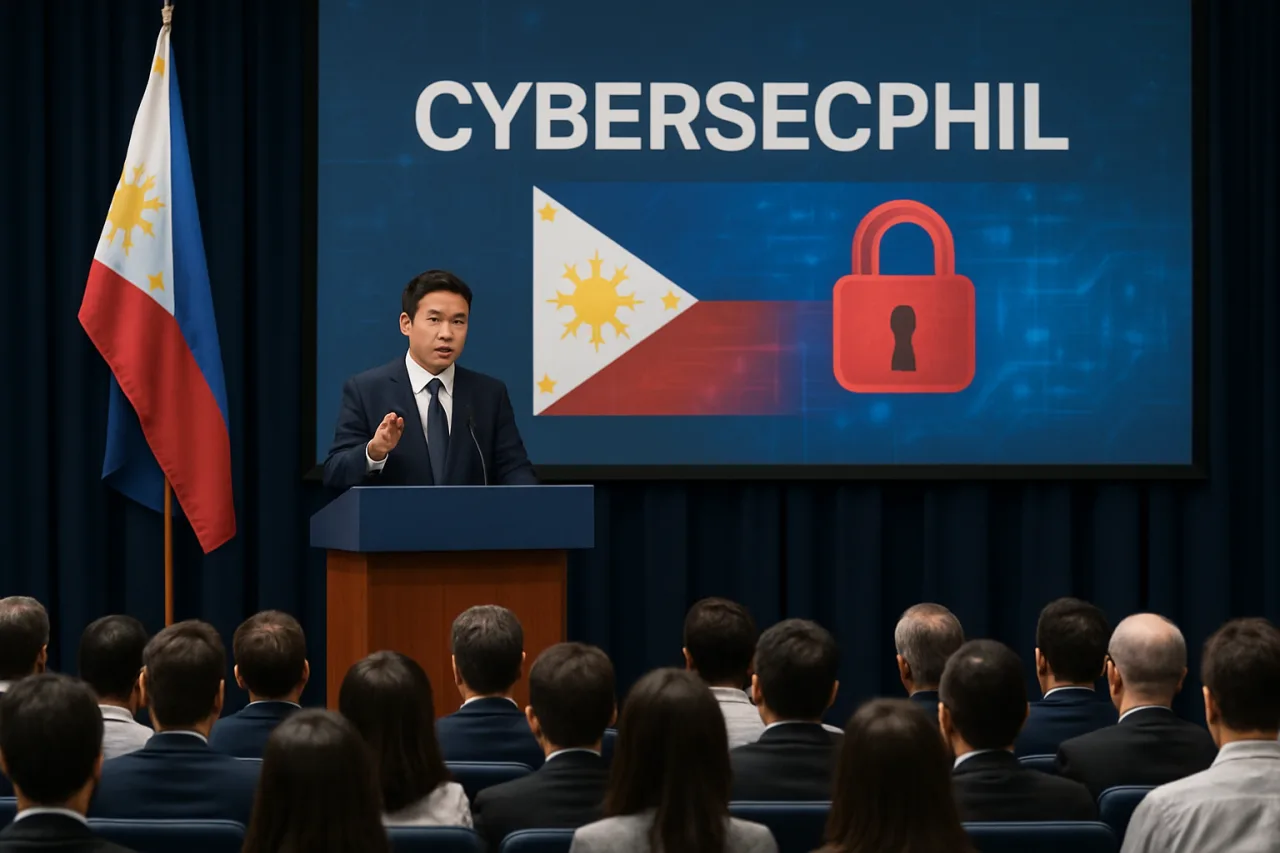
- 🛡️ What It Is: The CyberSecPhil Conference 2026 (CSP2026) is the Philippines’ premier security event, gathering 400+ senior security experts, 40+ speakers, and 20+ exhibitors in Manila on February 4-5, 2026, under the theme “Security that Accelerates Innovation.”
- 🎯 Key Themes: AI-powered cyber threats, operational technology security, national cybercrime governance, the human firewall, and enterprise cloud security dominate the agenda, with the Armed Forces of the Philippines and CICC delivering keynote addresses.
- 📊 Threat Context: The conference arrives amid a surge in Philippine cyber incidents, with Viettel Cyber Security reporting 16,619 phishing attacks, 255 data breaches, and 19.2 million compromised credentials in the first half of 2026 alone.
- 💡 Who Attends: CISOs from RCBC, PNB, SM Investments, GCash, AboitizPower, and JG Summit join regulators from CICC, NICTP, and NADPOP, making it the most concentrated gathering of Philippine security decision-makers.
- ⚡ Why It Matters: For Filipino professionals, the CyberSecPhil Conference signals where the industry is heading — AI defense, OT protection, and human-centric security are no longer optional, and the skills discussed here define career opportunities for 2026 and beyond.
The CyberSecPhil Conference 2026 arrives at a critical moment for Philippine cybersecurity. As AI-driven fraud escalates and threat actors exploit mobile platforms with increasing sophistication, over 400 senior security professionals will convene in Manila to confront the challenges reshaping digital defense. From the Armed Forces of the Philippines to the Cybercrime Investigation and Coordinating Center, the nation’s top security voices are aligning around a single message: security must accelerate innovation, not obstruct it.
What Is the CyberSecPhil Conference 2026?
The CyberSecPhil Conference 2026, also known as CSP2026, is a two-day premier security event held on February 4-5, 2026, in Manila, Philippines. Organized under the theme “Security that Accelerates Innovation,” the event brings together security professionals from financial institutions, retail, IT, healthcare, public sector, and enterprise businesses for in-depth discussions on the most pressing cybersecurity challenges facing the country. The official conference website at cybersecasia.org/csph2026 provides the complete agenda, speaker list, and sponsorship details.
The event features over 40 distinguished speakers and panelists, with an expected attendance of more than 400 senior security experts. An exhibition area hosting approximately 20 exhibitors showcases the latest technologies and innovations in the global security industry, from AI-enhanced endpoint protection to data sanitization platforms. Registration for the CyberSecPhil Conference closed early, reflecting the high demand among Philippine security professionals for actionable threat intelligence and peer networking.
The 2025 edition of the CyberSecPhil Conference, held at Fairmont Makati, gathered 400+ attendees, 40+ speakers, 20+ sponsors and exhibitors, and delivered 20+ sessions. The 2026 iteration builds on that foundation with an expanded agenda that directly addresses AI-powered threats, operational technology vulnerabilities, and the evolving role of the CISO in enterprise governance.
The Philippine Threat Landscape in 2026
The timing of the CyberSecPhil Conference could not be more urgent. Viettel Cyber Security reported 16,619 phishing attacks, 255 data breaches, and 21 ransomware incidents in the Philippines during the first half of 2026, with more than 19.2 million compromised credentials exposed. The data, published in July 2026, confirms that Philippine organizations face an escalating wave of AI-driven fraud that traditional defenses are struggling to contain.
The threat landscape has shifted fundamentally. Security researchers have documented “extortion bots” that use AI to negotiate ransom payments automatically, removing the human negotiation phase entirely. A 2026 survey found that 100% of examined Philippine organizations experienced at least one attempted cyber attack, underscoring that no sector is immune. The National Privacy Commission reported that cybersecurity incidents doubled, placing Filipino professionals and consumers directly in the crosshairs of increasingly automated and intelligent threat actors.
Against this backdrop, the CyberSecPhil Conference serves as both a threat intelligence briefing and a strategic planning forum. The sessions are designed not merely to inform but to equip security leaders with the frameworks, tools, and peer connections needed to defend Philippine digital infrastructure under accelerating attack conditions.
AI-Powered Threats: Day 1 Highlights at the CyberSecPhil Conference
Day 1 of the CyberSecPhil Conference opens with a keynote address from Colonel Francel Margareth Padilla, Spokesperson of the Armed Forces of the Philippines, titled “Resilience for Innovation: Building a Secure and Innovative Digital Nation.” The military perspective is significant — it signals that Philippine national security leadership now treats cybersecurity as a defense priority, not merely an IT concern. Colonel Padilla’s presence at the CyberSecPhil Conference reflects the government’s growing recognition that digital threats are national security threats.
The morning sessions immediately address the mobile threat frontier. Chris Roeckl, Chief Product Officer at Appdome, and Yoav Keissar, Software Engineering Group Manager, present “The Philippines Mobile Economy Is Under Attack: How to Use AI to Protect Against Trojans, Social Engineering Scams and Account Takeover Attacks.” With mobile banking and digital wallets deeply embedded in Filipino daily life, this session directly addresses the attack surface that touches nearly every consumer in the country.
David Bochsler, Vice President APJ at KnowBe4, follows with “Security as a Human Problem, Not a Technical One: Transforming Risk Management in Asia’s Evolving Cyber Landscape.” This framing — that security failures are fundamentally human failures — sets the tone for a recurring theme throughout the CyberSecPhil Conference: technology alone cannot solve cybersecurity. The human element, from boardroom awareness to employee training, remains the weakest link in most organizations.
A standout panel discussion, “A CISO’s Strategic Roadmap for Enterprise AI Security Governance, Policy, and Oversight,” brings together CISOs from Appdome, St. Luke’s Medical Center, UnionDigital Bank, and Asia United Bank. Moderated by EY’s Maez De Guzman, the panel addresses a question every Filipino enterprise faces: how to adopt AI aggressively without creating unmanageable security risk. The CyberSecPhil Conference positions this as the central governance challenge of 2026.
Afternoon sessions at the CyberSecPhil Conference shift to operational technology and offensive security. Jack Loh from TXOne Networks presents “Crisis of Convergence: Operation Resiliency against OT Threat,” addressing the growing risk to industrial control systems. Jovi Lin from Pentera follows with “The Art of Cybersecurity Warfare: Lessons Sun Tzu Would Teach Today’s CISO,” applying classical strategy to modern threat hunting. The day closes with a cloud security panel featuring CISOs from RCBC, JG Summit Holdings, DSWD, and AboitizPower — a cross-section of Philippine enterprise security leadership rarely assembled in a single room.
National Cybercrime Governance: Day 2 at the CyberSecPhil Conference
Atty. Paraiso’s keynote at the conference signals a shift in how Philippine authorities approach cybercrime — not merely as reactive investigation but as proactive governance. The CICC has been actively expanding its reach in 2026, with developments documented on the official CICC website. Robert Paguia, Chief of the International Cooperation on Cybercrime Division at CICC, also participates in a Day 1 panel on data integrity, reinforcing the agency’s presence across both days of the event.
The Day 2 afternoon at the CyberSecPhil Conference features a fireside chat on “Modernizing Industrial Cybersecurity: Securing OT, IoT, and Smart Infrastructure for the Next Wave of Innovation.” Panelists from Energy Development Corporation, Maynilad Water Services, and AboitizPower represent the critical infrastructure sectors most vulnerable to OT attacks. As Philippine utilities and energy companies digitize, the convergence of IT and OT creates new attack vectors that traditional security teams are not equipped to handle. The CyberSecPhil Conference gives these operators a platform to share hard-won lessons.
A closing panel, “Strengthening Human Response and Decision-Making During High-Impact Cyber Incidents,” moderated by CREST’s Cel Mantua, features CISOs from Philippine National Bank, Maybank Philippines, City Savings Bank, Asian Development Bank, and GCash. The focus on crisis response — not prevention — reflects a mature understanding that breaches are inevitable and that the quality of response determines organizational survival. This session alone makes the CyberSecPhil Conference essential viewing for any security professional building an incident response capability.
The Human Firewall: Why Security Is a People Problem
One of the most striking patterns across the CyberSecPhil Conference agenda is the persistent emphasis on human risk. KnowBe4, the world’s largest security awareness training platform and a Diamond sponsor of the event, frames its entire message around the premise that technology cannot compensate for untrained employees. Daniel Aguilar, Country Director at Mimecast, delivers a dedicated session titled “Safeguarding the Missing Layer: Human Risk,” making the case that the gap between security tools and human behavior is where most breaches actually occur.
A Day 2 panel, “The Human Firewall: Shaping Cybersecurity Culture and Talent for Sustainable Defense,” moderated by KPMG Philippines’ Gilbert Trinchera, brings together CISOs from PETNET, SM Investments, and NICTP board member Dr. Mary Joy Abueg. The panel addresses the talent shortage that plagues Philippine cybersecurity — the same gap that makes SOC analyst careers among the fastest-growing paths in the country. Building a human firewall means investing in people, not just platforms.
For Filipino professionals, this focus on the human firewall is both a warning and an opportunity. The CyberSecPhil Conference makes clear that organizations desperately need security-aware employees at every level, not just in the IT department. Security awareness training, incident response drills, and culture-building are becoming core competencies that distinguish resilient organizations from vulnerable ones. Professionals who develop these skills will find themselves in high demand as Philippine enterprises operationalize the frameworks discussed at the CyberSecPhil Conference.
Operational Technology Security: The Next Frontier
The CyberSecPhil Conference dedicates significant agenda space to operational technology security, reflecting a global shift in threat focus. As manufacturing, energy, and utilities digitize their operations, the boundary between corporate IT and industrial control systems dissolves. Attackers who once targeted office networks now probe power grids, water treatment plants, and manufacturing lines — systems where a breach can cause physical harm, not just data loss.
Jack Loh of TXOne Networks addresses this directly in his session on OT resilience. The Philippine energy sector is particularly exposed, with AboitizPower, Energy Development Corporation, and Maynilad Water Services all represented at the CyberSecPhil Conference. These organizations operate critical infrastructure that millions of Filipinos depend on daily, and their security leaders are actively building OT-specific defense strategies that go beyond traditional IT security tools.
The fireside chat on industrial cybersecurity at the CyberSecPhil Conference highlights a critical knowledge gap: most Philippine security teams are IT-trained, not OT-trained. The convergence of IT and OT requires new skill sets, new monitoring tools, and new incident response protocols. For Filipino engineers and IT professionals looking to specialize, OT security represents one of the highest-demand niches in the cybersecurity field — a point the CyberSecPhil Conference agenda makes implicitly through its emphasis on industrial defense.
Compliance and Data Protection at the CyberSecPhil Conference
Data privacy compliance receives dedicated attention at the CyberSecPhil Conference. Dr. Mary Joy Abueg, who serves as both CIO and Data Privacy Director at Palawan State University and sits on the Board of Trustees of the National ICT Confederation of the Philippines, delivers a session titled “Guard Bytes, Dodge Fines, Lock in Compliance: DPA Essentials for Every Organization.” The Data Privacy Act of 2012 remains the Philippines’ foundational privacy law, and the NPC has intensified enforcement in 2026 as cybersecurity incidents surge.
Sam Jacoba, President of the National Association of Data Protection Officers of the Philippines (NADPOP), is among the esteemed speakers at the CyberSecPhil Conference. NADPOP’s involvement signals that data protection officers — a role mandated by the Data Privacy Act for many organizations — are gaining institutional recognition as a professional community. For Filipino professionals, the DPO career path is increasingly viable, with the CyberSecPhil Conference providing both networking and continuing education opportunities.
The compliance sessions at the CyberSecPhil Conference also address the intersection of AI and data protection. Cyril Villanueva of Forcepoint presents “AI without Regret: How to Secure Data While Scaling AI Adoption,” tackling the tension between AI innovation and privacy obligation. As Philippine enterprises deploy generative AI tools, they must ensure that customer data, employee records, and proprietary information are not inadvertently exposed through AI pipelines. The CyberSecPhil Conference positions this as a board-level concern, not merely a technical one.
What the CyberSecPhil Conference Means for Filipino Professionals
For Filipino technology professionals, the CyberSecPhil Conference is more than an industry event — it is a career compass. The themes dominating the agenda, from AI threat defense to OT security to human-centric risk management, directly map to the skills that Philippine employers will prioritize in 2026 and beyond. Security professionals who understand AI-powered attack vectors, who can bridge IT and OT environments, and who can translate technical risk into business language will find themselves at the center of organizational strategy.
The conference also highlights the growing professionalization of Philippine cybersecurity. Organizations like NICTP, NADPOP, CREST, and CyberGuardiansPH are building the institutional infrastructure that supports career development, certification pathways, and peer networks. The presence of these organizations at the CyberSecPhil Conference signals that Philippine cybersecurity is maturing from an ad-hoc function into a structured profession with recognized standards and career trajectories.
For professionals who cannot attend the CyberSecPhil Conference in person, the agenda itself serves as a roadmap for self-directed learning. The topics, speakers, and panel discussions identify exactly which skills, certifications, and knowledge areas are in demand. A cybersecurity checklist for remote workers provides a practical starting point, while the conference themes point toward advanced specializations that command premium salaries in the Philippine market.
The vendor ecosystem at the CyberSecPhil Conference also reveals career opportunities on the solutions side. Companies like Sophos, KnowBe4, Broadcom, Netskope, Mimecast, Forcepoint, Pentera, Blackpanda, and ManageEngine are actively building Philippine teams to serve the growing demand for managed security services. Sales engineers, solution architects, and implementation consultants who understand both the technology and the Philippine regulatory landscape are in short supply — a gap the CyberSecPhil Conference indirectly highlights through its sponsor and exhibitor roster.
Frequently Asked Questions
What is the CyberSecPhil Conference 2026?
The CyberSecPhil Conference 2026 (CSP2026) is the Philippines’ premier cybersecurity event, held February 4-5, 2026, in Manila. It gathers 400+ senior security experts, 40+ speakers, and 20+ exhibitors to discuss AI-powered threats, operational technology security, national cybercrime governance, and enterprise security strategy under the theme “Security that Accelerates Innovation.”
Who are the keynote speakers at the CyberSecPhil Conference 2026?
The keynote speakers are Colonel Francel Margareth Padilla, Spokesperson of the Armed Forces of the Philippines, who addresses “Resilience for Innovation: Building a Secure and Innovative Digital Nation,” and Atty. Renato “Aboy” A. Paraiso, Acting Executive Director of the CICC, who speaks on “Strengthening National Cybercrime Governance to Enable Secure Innovation.”
What are the main topics covered at the CyberSecPhil Conference 2026?
The CyberSecPhil Conference covers AI-powered mobile threats, enterprise AI security governance, operational technology resilience, cloud security strategies, human risk management, data privacy compliance, incident response, industrial cybersecurity, and the role of the CISO in modern enterprise defense. The agenda spans two full days with dedicated panels for each theme.
How many security professionals attend the CyberSecPhil Conference?
The CyberSecPhil Conference 2026 expects more than 400 senior security experts, with 70% of attendees at the C-level executive tier (CISO, CTO, CIO, VP of IT). The 2025 edition drew 400+ attendees, 40+ speakers, and 20+ sponsors, establishing the event as the largest gathering of Philippine security decision-makers.
Which Philippine organizations participate in the CyberSecPhil Conference 2026?
Participating organizations include the Armed Forces of the Philippines, CICC, National ICT Confederation of the Philippines, NADPOP, and CISOs from RCBC, Philippine National Bank, SM Investments, GCash, AboitizPower, JG Summit Holdings, UnionDigital Bank, Maybank Philippines, City Savings Bank, GSIS, Asian Development Bank, Maynilad Water Services, and Energy Development Corporation.
Why is the CyberSecPhil Conference important for Filipino cybersecurity professionals?
The CyberSecPhil Conference provides threat intelligence, peer networking, and career direction for Filipino security professionals. The agenda themes — AI defense, OT security, human risk, and compliance — directly map to the skills that Philippine employers prioritize. The event also connects professionals with certification bodies like CREST and professional associations like NICTP and NADPOP.
What is the theme of the CyberSecPhil Conference 2026?
The theme is “Security that Accelerates Innovation.” This reflects the conference’s positioning of cybersecurity not as a barrier to digital transformation but as an enabler. The agenda emphasizes that organizations can adopt AI, cloud, and IoT technologies safely only when security is built into the innovation process from the start.
How does the CyberSecPhil Conference address AI-powered cyber threats?
The CyberSecPhil Conference features dedicated sessions on AI-powered mobile attacks, AI security governance, securing data while scaling AI adoption, and using AI for cyber intelligence. Appdome, Broadcom, Forcepoint, and Netskope all present AI-focused sessions, while CISO panels address the governance frameworks needed to manage AI risk at the enterprise level.
Disclaimer
This article is for informational purposes only and does not constitute professional cybersecurity advice. While every effort has been made to verify the details of the CyberSecPhil Conference 2026 and the broader Philippine threat landscape, readers should consult certified cybersecurity professionals and official sources for specific guidance on protecting their organizations. The threat landscape evolves rapidly, and defensive measures should be tailored to individual organizational needs.