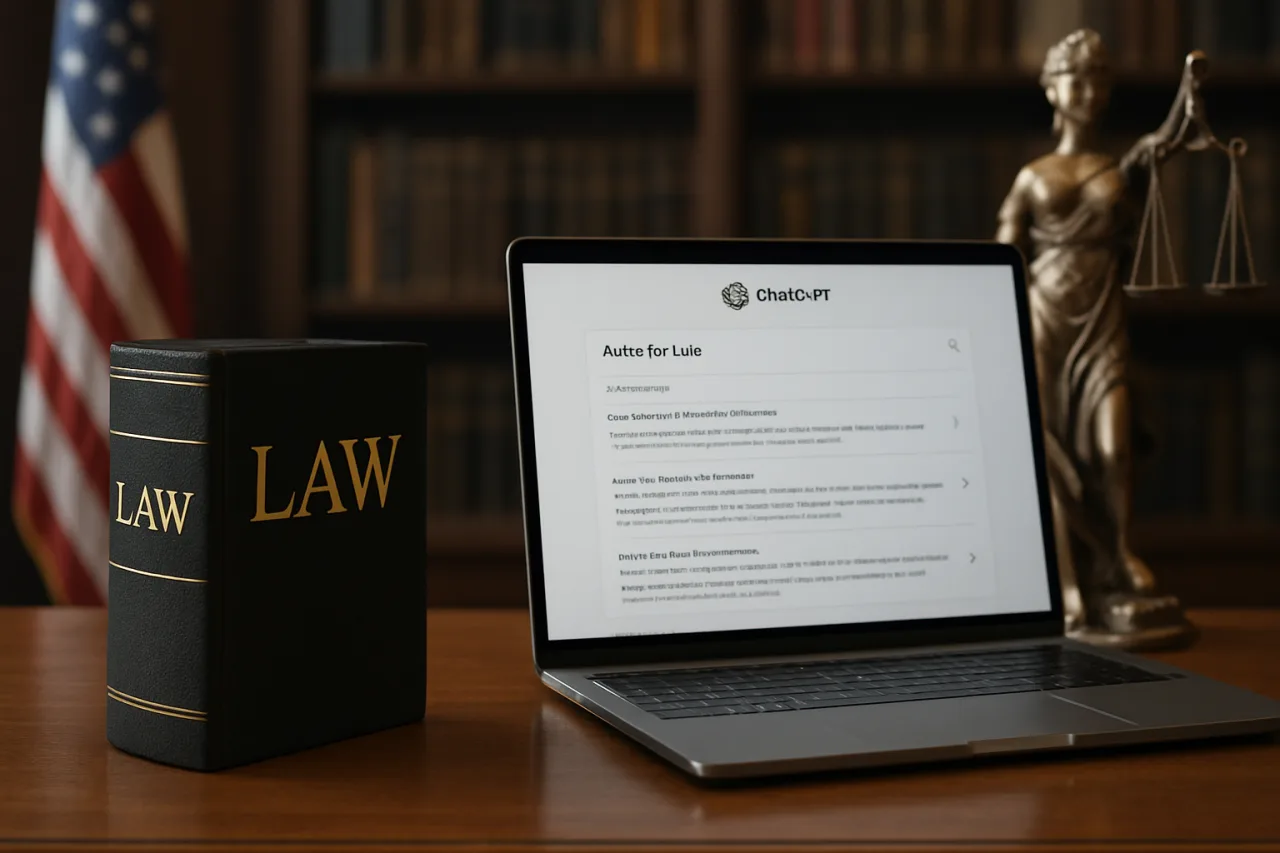
Key Takeaway
- ⚖️ Astra for Law is OpenAI’s legal-industry foundation, launched September 17, 2026: GPT-6 Astra configured with a legal search index, legal-analysis instructions, and the controls law firms demand — the closest thing yet to an AI law firm inside ChatGPT.
- 📚 Its research index spans 230+ million URLs of U.S. case law, statutes, and regulations (99.9% of published precedential U.S. case law via Free Law Project’s CourtListener), with sources added daily.
- 🧪 On Vals AI’s Legal Research Bench, Astra for Law passed 54.0% vs 38.7% for plain GPT-6 with web search — a 40% relative jump — and found 24% more on-point cases.
- 🔌 26 partner plugins (Thomson Reuters, iManage, Clio, Relativity, Intapp, DeepJudge, Harvey, Legora) plus 9 community plugins and 47 adaptable skills; ChatGPT for Word went GA the same day.
- 🔒 Legal-grade controls: a Trusted Access Program with Zero Data Retention, exclusion from human review by default, and governance co-designed with Latham & Watkins — early adopters include Sullivan & Cromwell, Ropes & Gray, Cooley, and Wachtell.
Table of Contents
The AI industry just picked its next vertical, and it is the one profession that has spent five hundred years building its own language, its own precedents, and its own immune system against shortcuts. On September 17, 2026, OpenAI launched Astra for Law — its most powerful model, GPT-6 Astra, rebuilt as a legal instrument: wired into an index of U.S. case law the size of a national library, taught to distinguish a court’s holding from its dicta, and locked down with confidentiality controls that law-firm ethics partners can actually sign off on. Within a week, four of the most prestigious firms in America were building production tools on top of it. This is not a chatbot selling legal advice; it is the infrastructure layer of an AI law firm — and Filipino lawyers, legal-process outsourcing teams, and law-tech builders need to understand it now, because the U.S. deployment cycle is the pilot everyone else will copy — just as our eGovAI coverage tracks the same wave on the government side.
What Exactly Launched: the Pieces of Astra for Law
The platform is not a new model — it is a configuration of GPT-6 Astra assembled from five parts that together behave like a junior associate who never sleeps:
1. The legal search index. Legal research begins with finding the exact authority — the right case, the right passage, and an understanding of whether it binds. OpenAI’s index covers U.S. case law, statutes, regulations, court rules, and administrative decisions across more than 230 million URLs, refreshed daily, built on the Free Law Project nonprofit’s CourtListener collection covering over 99.9% of published U.S. precedential case law. This is the answer to the hallucination problem that made lawyers rightly distrust generic chatbots (the same misuse-tracking discipline Anthropic pioneered in its threat reports): the model retrieves real, citable authorities instead of inventing them.
2. Legal-grade instructions. Custom system guidance for legal analysis and writing: distinguish holdings from observations, address contrary authority honestly, explain how a contract exception shifts risk between parties. In OpenAI’s own worked example, the platform produced a misrepresentation memo that found the closest factual precedent and named its own weakest fact — the exact intellectual posture senior associates train for years to hold.
3. The plugins layer. 26 partner-built plugins connect ChatGPT to the tools firms already run: iManage (draft a negotiation brief, save it straight to the matter file), Intapp (surface billable activities), DeepJudge (surface prior deals for comparison), Thomson Reuters (HighQ matter context, with a CoCounsel Legal connector previewing), plus Harvey and Legora building products directly on the Astra API. Nine community plugins from LegalQuants, LECG, and Skills.law add 47 adaptable skills built by working lawyers.
4. Governance and confidentiality. A Trusted Access Program for eligible firms: Zero Data Retention on the API, ChatGPT Enterprise usage excluded from human review by default, and permissions/ethical-walls/client-instruction controls designed with Latham & Watkins’ AI governance team. This is the part legal ethics boards will scrutinize first — and OpenAI front-loaded it rather than apologizing later.
5. ChatGPT for Word. Made generally available the same day: proofreading, suggested edits, and formatting flags inside the document editor lawyers already draft in.
The Benchmark Numbers — and What They Honestly Mean
On 200 U.S. legal research questions from Vals AI‘s Legal Research Bench private validation set, at maximum reasoning effort: Astra for Law passed the overall correctness check on 54.0% of questions vs 38.7% for GPT-6 Astra with web search alone — a 40% relative improvement. It found 24% more reference cases on case-law questions and retrieved up to 54% more relevant passages from correct court opinions.
Now the honesty layer, because this is where coverage usually goes wrong: 54% is not a passing grade for unsupervised legal work. It is a 40% improvement over an already strong baseline, which proves the configuration direction is right — the index, the instructions, and the controls compound. In OpenAI’s own demo comparison, the rival frontier model cited a holding that had been reversed on appeal, while the configured platform returned two closely matching precedents; in a transactional test, the competitor reported finding no such case. The gap between configured and unconfigured AI is now measured, not anecdotal. But every output still requires a lawyer’s examination — OpenAI’s own framing says the lawyer should be able to “examine the authority for herself.” The tool is research amplification, not judgment. U.S. courts have already sanctioned lawyers for filing AI-fabricated citations; the discipline of verification is precisely what the tooling is built to make easier, not to abolish.
The Big Law Endorsement Row
The adoption list reads like a legal-industry power directory, and each firm built something revealing:
- Sullivan & Cromwell: an agreement analyzer embedding the firm’s negotiating playbooks and precedent — reading provisions together to spot combined-effect risks, then proposing redlines and draft client advice.
- Ropes & Gray: a deal-diligence system that walks a data room the way its lawyers do, tracing every finding back to source — catching, say, whether key customer contracts require notice or consent in an acquisition.
- Cooley: GO Public — its capital-markets expertise encoded into IPO-preparation workflows that carry deal changes across the entire filing.
- Wachtell, Lipton, Rosen & Katz: exploring frontier AI support for litigation and corporate judgment itself.
- Harvey and Legora — the legal-AI startups — building their own products on the legal foundation via API, which means the same model now powers both the incumbent AI vendors and the direct tool.
Read the pattern: the most conservative, highest-margin firms on Earth are not merely permitting AI — they are encoding their proprietary judgment into it. A firm’s negotiating playbook, once taught to juniors through years of markup review, is becoming a firm-configured model. That is a structural change in how legal expertise is stored and transferred.
The Competitive Race: OpenAI vs Anthropic vs Google in Law
Astra for Law did not launch into a vacuum — it is the third move in a land grab: Anthropic’s Claude for Legal arrived May 12, 2026 with 12 plugins and 20 connectors; Google expanded Gemini Enterprise for legal professionals in August. The stakes are enormous because law is where budgets are large, work product is text, and accuracy is auditable — the ideal first vertical for agentic AI. OpenAI’s unusual advantage: a Law360 survey found ChatGPT already the most-used AI tool among lawyers at 54% adoption — the profession is already inside the funnel.
For the market this means: legal research pricing will compress, first-year associate leverage work shrinks, and the premium moves to judgment, strategy, and accountability. For legal-tech builders, the platform play is explicit — OpenAI wants Harvey, Clio, and Thomson Reuters building on Astra rather than against it — the same platform-vs-product tension we mapped in our Pace the Frontier coverage of the safety alliance.
What It Means for the Philippines: Legal AI Angle
The Philippine legal-tech angle is real and near-term, and it runs through three doors:
Door 1: LPO 2.0. The Philippines is already a global hub for legal process outsourcing — contract review, document management, litigation support for U.S. and Australian firms. the plugin architecture (Relativity, iManage, Clio) is precisely the stack Manila-based LPO teams operate. The firms that retrain their legal-support staff to run model-configured review workflows will keep those contracts; the ones that don’t will watch the work move to teams that do. The U.S. launch is the qualification signal: Filipino LPO professionals who learn Astra-configured workflows in the Trusted Access era position themselves as operators of the new tooling, not its casualties.
Door 2: Filipino law practice. The index covers U.S. law — Philippine statutes and jurisprudence are not in CourtListener’s corpus, and a U.S.-configured model should not be trusted on the Civil Code or SC rulings without local verification. But the architecture is the lesson: a firm that encodes its own precedents, playbooks, and client instructions into a configured model gets the same leverage Manila-side. Expect a Philippine variant conversation — with the Supreme Court’s own digitization efforts and local legal-tech startups — within a year.
Door 3: the builder opportunity. The 47 community skills are the opening for Filipino legal engineers and law-tech developers: the community-plugin lane is open to anyone building real practice skills, and the API access coming to Astra for Law means a Cebu- or Manila-based legal-tech startup can build on the same foundation as Harvey. The legal-AI services market in ASEAN is early — that is the moment to enter it.
The honest limit: U.S. legal practice still demands bar licensure, malpractice insurance, and confidentiality rules — the AI law firm is an operating layer inside firms, not a replacement for them. Philippine readers should read it the same way: amplification, not substitution — and the professionals who master the amplification first inherit the advantage.
Frequently Asked Questions (FAQ)
- Q: What is Astra for Law?
- OpenAI’s legal-industry foundation launched September 17, 2026: GPT-6 Astra configured with a U.S. legal search index (230M+ URLs of case law, statutes, regulations), legal-analysis instructions, 26 partner plugins, and law-firm-grade privacy controls. It appears in ChatGPT’s model picker as “GPT-6 Astra Law.”
- Q: Can Astra for Law give legal advice?
- No — it amplifies legal research and drafting for licensed professionals and their tools. OpenAI’s design premise is lawyer verification of every authority. Firms like Sullivan & Cromwell use it to draft, analyze, and redline under their own standards; it is not a consumer legal-advice product.
- Q: How accurate is Astra for Law?
- On Vals AI’s Legal Research Bench validation set, it passed 54.0% of 200 U.S. research questions vs 38.7% for base GPT-6 with web search — a 40% relative improvement, 24% more on-point cases. Strong, but far from autonomous: every output still requires professional review.
- Q: Which law firms use Astra for Law?
- Early adopters include Sullivan & Cromwell, Ropes & Gray, Cooley, and Wachtell Lipton; Harvey and Legora build products on it; Thomson Reuters, iManage, Clio, Relativity, Intapp, and DeepJudge ship plugins. Governance is co-designed with Latham & Watkins.
- Q: Does Astra for Law cover Philippine law?
- No — the research index currently covers U.S. law (99.9% of published precedential case law via CourtListener). Philippine practitioners can learn from the configuration pattern for their own jurisdictions, but local statutes and Supreme Court rulings require separate tools and verification.
- Q: What does it mean for legal outsourcing jobs?
- It raises the ceiling for trained operators: LPO teams that run model-configured review workflows gain throughput; pure manual first-pass work shrinks. The Philippine LPO sector’s move is to retrain toward AI-operated legal support now.