Table of Contents
Key Takeaway
- 🏛️ eGovAI is live: DICT launched the AI-powered assistant inside the eGovPH Super App on September 21, 2026 at The Manila Hotel — free for verified users, built in-house by DICT developers on Google Gemini.
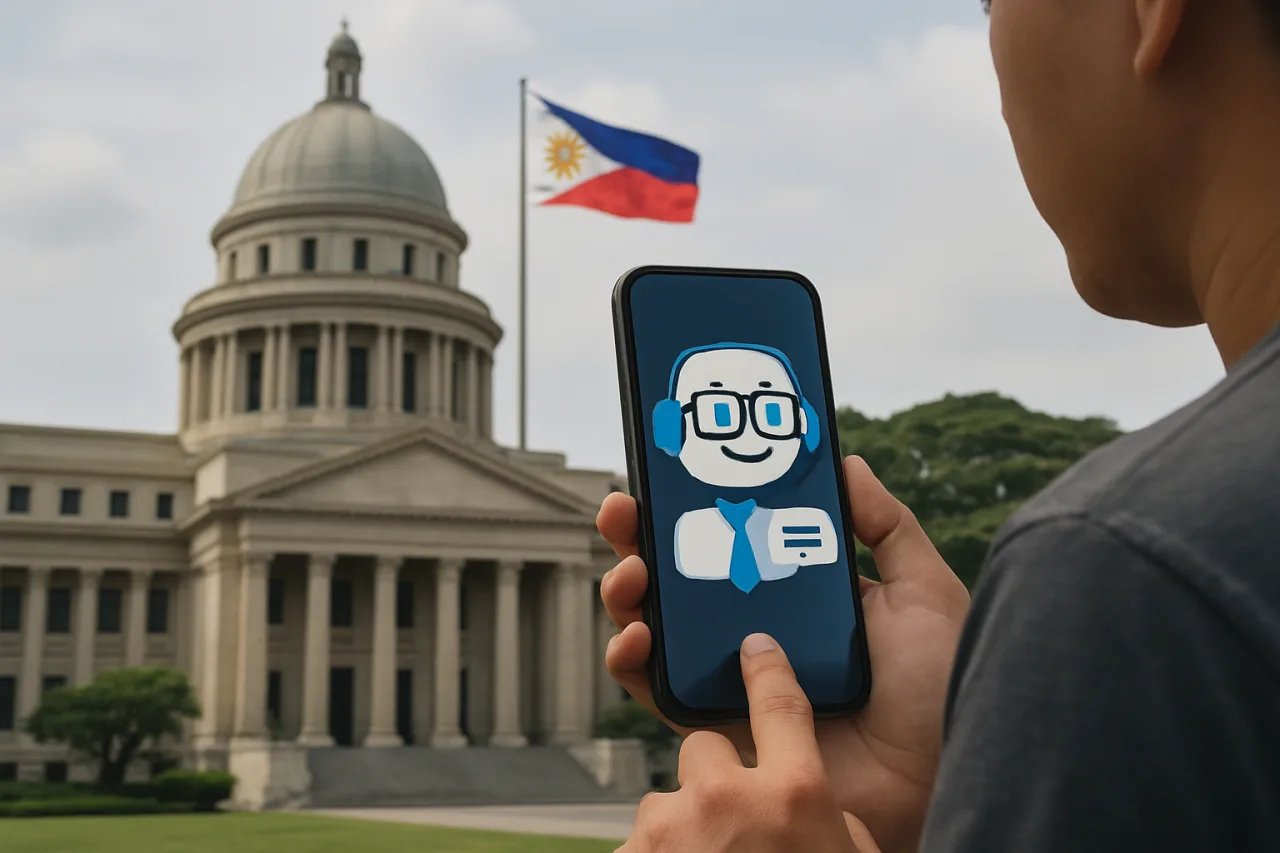
- 🤝 Meet “Kuya A”: the built-in assistant offers 11 main services at launch — real-time guidance through government services, document extraction, image identification, Philippine-language translation, form understanding, speech generation, and law/policy lookup.
- 💬 The language story is the sleeper feature: the translator understands most Philippine languages, bridging the communication gap that keeps many Filipinos out of digital government entirely.
- 🧰 For agencies, eGovAI streamlines routine processes; for citizens, it is 24/7 translation, document processing, and guidance in one app — the article hands over the practical ways to use each tool today.
- ⚠️ The honest limits: it guides and explains, but transactions still run through the underlying agency systems — Kuya A is the router, not the processor, and personal-data caution still applies.
The Launch: What Went Live on September 21
The Department of Information and Communications Technology launched eGovAI on Monday, September 21, 2026, at The Manila Hotel — and the feature set went live inside the eGovPH Super App the same day. The President headlined the launch with the policy framing: wider and more inclusive access to AI, because government services should be accessible, efficient, and inclusive. DICT Secretary Henry Aguda supplied the engineering detail that matters: the agency’s own developers built the new features, powered by Google Gemini — government code, government platform, free at the point of use.
The same ceremony carried the eGovPH Hackathon 2026 Awarding Ceremony, honoring the Top 30 teams that built digital solutions for government transformation. The pairing is deliberate: hackathon energy feeds the pipeline, and the platform absorbs it — a signal that eGovAI is infrastructure, not a press-release artifact.
The timing lands one week before OpenAI’s DevDay, and the contrast is worth stating: while the global platforms debate agent economies, the Philippine government shipped a working AI assistant inside its citizen-facing super app — free, verified-ID-gated, and integrated with actual government services. For the Filipino user, the question is not whether the technology exists but how to extract value from it this week; the guide below answers that.
Kuya A: the 11 Services Inside eGovAI
Kuya A is the public face of eGovAI — a built-in assistant providing real-time guidance to help users access government services online. Philstar’s launch report counts 11 main services at launch; DICT’s own materials list the core tools:
- AI Assistant (chatbot) — 24/7 answers to “where do I go, what do I need” questions, routing users to the right service
- Document extraction — pulls structured data from scanned government documents
- Image identification — identifies objects and documents from photos
- Philippine-language translation — understands most Philippine languages, bridging communication gaps
- Form understanding — explains what a government form is asking for, in plain language
- Speech generation — reads content aloud, closing the literacy gap
- Laws, policies and guidelines lookup — plain-language access to legal texts
- Tourism information — travel and destination guidance
- Health AI assistant — health-service guidance inside the app
- Identity AI assistant — secure identity verification support
- Coder/programmer assistant — a coding helper inside the government app, aimed at students and builders
The composition reads like a deliberate answer to the classic barriers DICT’s own materials name: language (“interact in the language you prefer”), clarity (“guidance to the right resources”), and availability (“anytime, anywhere”). A tricycle driver who speaks Pangasinense, a grandmother with a scanned document and no PDF skills, a student who cannot parse a policy’s legalese — each has a tool aimed at exactly their blockage.
How Filipinos Can Use eGovAI Today
Access is the same door as the super app itself: download or open eGovPH, verify your identity, and Kuya A is free from there. The five highest-value uses for the average Filipino, ordered by impact:
- Ask Kuya A what a service requires before you queue. “What do I need for a first-time passport renewal?” returns the checklist in plain language — the question most counter visits exist to answer.
- Use the form-understanding tool on any government PDF. Photograph or upload the form; the assistant explains each field and the documents that satisfy it. This is the feature that quietly kills the “fixer” economy at its root: uncertainty.
- Run the translator for family members. The Philippine-languages tool means the Tausug-speaking grandmother and the Tagalog form are no longer strangers — guidance in the user’s language is the inclusion promise made real.
- Use speech generation for accessibility. Have the assistant read instructions aloud for elderly relatives — the difference between an app they can use and one they abandon.
- Check the Laws and Regulations assistant for anything a landlord, employer, or collector claims. Legal-text lookup in plain language turns “trust me” conversations into verifiable ones — bring the official text, not the summary of a summary.
For OFW households, two uses stand out: helping family back home navigate BIR, SSS, or PSA requirements remotely (you guide the screen-share; Kuya A explains the steps), and the document-extraction tool for prepping scanned records before submission windows close. The super app strategy means the tools ride along with the services themselves — no separate account, no extra fee.
The Bigger Picture: Hackathon Winners and the Super App Strategy
eGovAI’s launch is the visible layer of a deliberate stack: the eGovPH Super App consolidates services, the hackathon seeds solutions on top, and the AI layer now routes and explains. The President’s framing at the launch — wider, more inclusive access — is the strategy’s test: government AI succeeds when it reduces the distance between the citizen and the service, not when it impresses at a podium. The 30 hackathon teams recognized at the ceremony are the local developer signal — the government platform is becoming a place Filipinos build for, which compounds the app’s usefulness every cycle.
The DICT developer story matters for trust too: with in-house developers and a named underlying model (Google Gemini), the accountability chain is short and checkable. The platform’s own site documents the operating boundaries — approved services, agency-specific guardrails, controlled integrations — which is the language of a platform being built for scale, not a pilot.
The Honest Limits: What Kuya A Cannot Do (Yet)
Three cautions keep expectations aligned. First, eGovAI guides; it does not issue. Permits, certifications, and transactions still run through the underlying agency systems — Kuya A explains and routes, it does not wave the queue. Second, it is an assistant, not an oracle: AI-generated summaries of laws or requirements can carry errors, and consequential decisions deserve verification against the official agency page. Third, the data-privacy ledger is still being written: a government AI with document-extraction capabilities touches personal data by design, and users should feed it only what the task requires — never more. The National Privacy Commission’s rules apply to government AI the same as any processor, but the habit belongs to the user: share the minimum, verify the official channel, keep the receipts.
None of these limits argue against using eGovAI — they argue for using it as it was built: a free, 24/7 explainer and router sitting inside the government’s own app. That is a service upgrade the 2026 Philippine user got ahead of most of the world.
Frequently Asked Questions
What is eGovAI?
The DICT-launched AI feature inside the eGovPH Super App: an AI assistant (“Kuya A”) plus tools for document extraction, image identification, Philippine-language translation, form understanding, speech generation, health guidance, identity verification, and laws-and-regulations lookup — free for verified eGovPH users, powered by Google Gemini and built by DICT’s own developers.
When did eGovAI launch?
Monday, September 21, 2026, at The Manila Hotel, headlined by President Ferdinand Marcos Jr. with DICT Secretary Henry Aguda; the event also hosted the eGovPH Hackathon 2026 awarding ceremony for the Top 30 teams.
How much does eGovAI cost?
Nothing — it is free for all verified eGovPH Super App users. Verification requires identity verification inside the app; the tools carry no per-use charges at launch.
What can Kuya A do?
Kuya A provides 24/7 real-time guidance through government services: answering “what do I need” questions, explaining forms, routing users to the right agency service, translating Philippine languages, reading scanned documents, and looking up laws and policies in plain language.
Is eGovAI available outside the Philippines?
The eGovPH Super App works wherever a Filipino user can download it, and the AI tools ride inside it — useful for OFW households guiding family members through Philippine government requirements remotely. Some underlying agency transactions remain Philippines-anchored, but the assistant itself runs without geographic restriction at launch.
Can eGovAI replace going to the agency office?
Not yet — and that is not its purpose. Kuya A explains requirements, translates, extracts document data, and routes users to the correct digital service; the transactions themselves still run through each agency’s systems. Think of it as the intelligent front door, not the office itself.