Key Takeaway
- 🛒 An online shopping scam now reaches most of the country before it reaches your wallet — surveys put 72% of Filipinos as targets of digital fraud attempts, and e-commerce is the top exposure point.
- 🏷️ The #1 bait in any online shopping scam is unchanged: brand items priced at 70-90% below market. A real seller cannot sell a ₱50,000 phone for ₱5,000 — a scammer can, because the phone was never coming.
- 🧾 The newest PH pattern is fake-COD and empty-box fraud — proof-of-delivery photos and bogus payment screenshots that arrive before your money question does.
- 💳 Pay inside the platform, always. Every scam converges on one instruction: move the conversation to Viber, GCash direct, or a “courier link” outside buyer protection.
- ✅ The 60-second vetting — seller age, review pattern, price sanity, payment path — catches nearly every documented scam before checkout.
Seventy-two percent of Filipinos report being targeted by digital fraud attempts, according to industry surveys circulating through Philippine news feeds — and the front door for most of those attempts is not a hacker in a hoodie. It is a product listing. An online shopping scam in 2026 looks like a Shopee seller with 4.9 stars, a Lazada flash sale, an Amazon warehouse deal, a Marketplace bargain from a profile with your town’s name in it. This guide dissects the nine red flags Filipino buyers keep missing, walks the real scam scripts, and ends with a safe-pay checklist you can run in sixty seconds.
Table of Contents
Why Online Shopping Scams Work in the Philippines
The economics favor the online shopping scam, not the buyer. Filipino platforms process millions of orders daily, COD remains a trust default, and platform buyer protection has real gaps — Sulit.ph’s Marketplace safety guide notes that Facebook Purchase Protection is shown as unavailable for Philippine locations, meaning ordinary Marketplace deals carry none of the checkout protection buyers assume. The Better Business Bureau’s long-running online purchase scam research places purchase scams among the top three riskiest scam types by prevalence, with roughly 81% of reporters losing money.
Regional reporting documents the same script across Southeast Asian platforms: researchers tracking Shopee and Lazada scam patterns describe bot-grown shops, below-market bait listings, brick-in-the-box deliveries, and shop-and-vanish cycles. The Philippine variants add local flavor — fake COD receipts, Viber off-ramps, and courier-brand phishing — but the skeleton never changes. Learn the skeleton and you spot every costume.
Red Flag 1: The Price That Defies Arithmetic
The single most reliable predictor. A brand-new flagship phone at 80% off, a “overstock” gaming laptop at half price, an iPhone listing at ₱5,000. Real businesses operate on margins; scammers operate on volume of victims. Run the sanity check: search the exact model’s current price across at least three other sellers. If the offer sits 40%+ below the floor, treat the listing as bait regardless of how good the shop looks. Scam pricing is engineered to make your payment finger move faster than your judgment.
Red Flag 2: The Shop That Was Born Yesterday
Check the seller profile the way a bank checks a borrower: account age, order history, and category consistency. High-risk signals: shop created weeks ago with dozens of five-star ratings already, product photos lifted from official brand pages (reverse-image search catches this), seller name that changed recently, or a shop selling everything from phones to puppies. The professional online shopping scam operation burns a shop in days and opens the next one — which is exactly why age-and-history beats rating-and-vibes.
Red Flag 3: Reviews That Read the Same
Bot-grown review farms have tells: review dates clustered within days, names with odd character strings, five-star text that names no specific product detail, and identical phrasing across reviews. Cross-check the item against reviews mentioning actual usage (“battery lasts two days,” “delivery took 5 days to Cebu”). Real reviews are messy. Uniform praise is manufactured.
Red Flag 4: “Let’s Move to Viber”
Every platform scam converges on one instruction: leave the platform. Off-platform, buyer protection dies — no dispute button, no evidence trail the platform can read. The script sounds reasonable: “cheaper outside the app,” “avoid platform fees,” “COD direct sa Viber para mabilis.” The moment the transaction moves, you are sending money to a stranger with a phone number and no accountability. In-platform payment with platform escrow is not a convenience feature; it is the only shield you have.
Red Flag 5: The Fake COD and Empty-Box Play
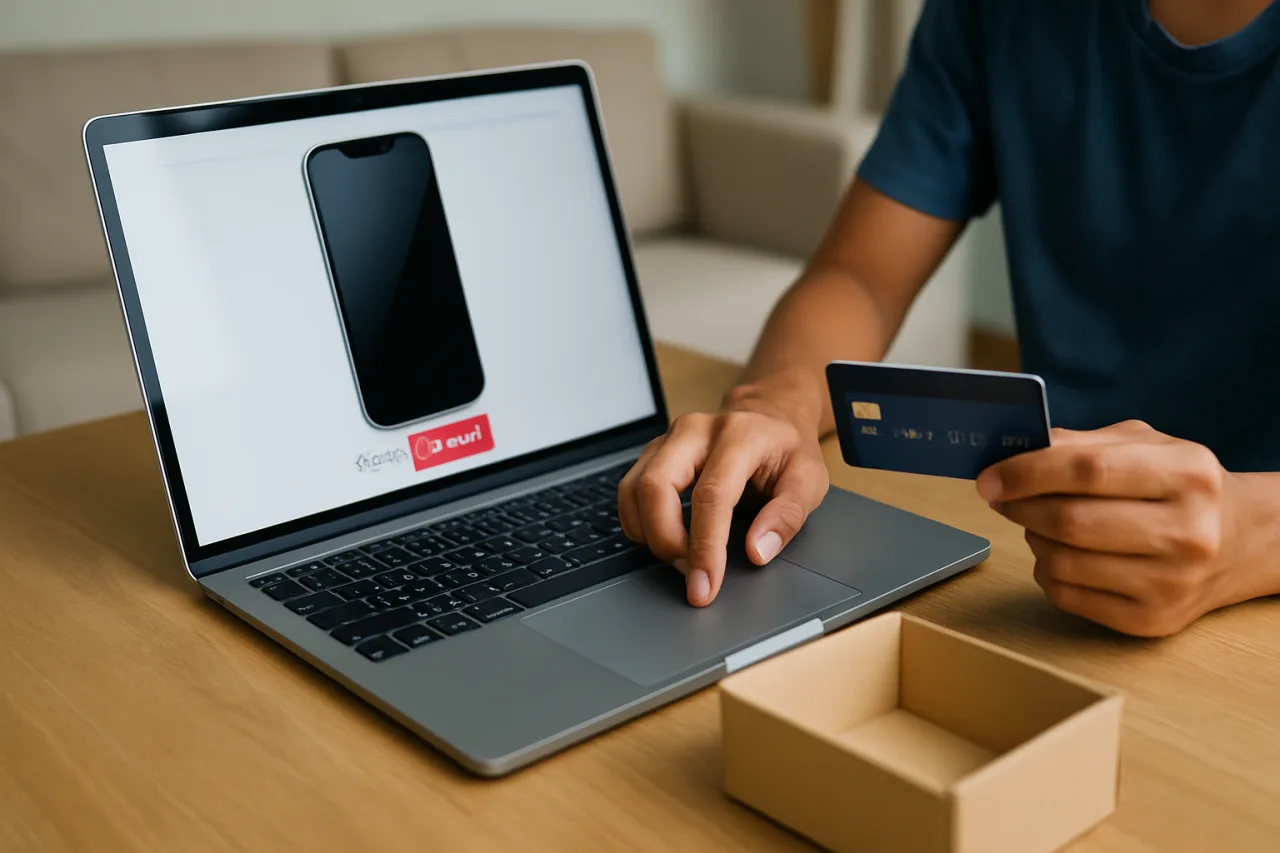
The newest Philippine patterns exploit the trust around cash on delivery. In one version, the “buyer” sends the seller a fake payment screenshot to harvest goods; in the consumer-facing version, you receive a box — sometimes with a brick, sometimes empty — alongside pressure to confirm receipt before inspection. Rules that neutralize both: never confirm receipt before opening the package on video, never accept “payment proof” as your own proof of anything, and inspect before the rider leaves. Video of the unboxing is the evidence that decides disputes.
Red Flag 6: The Courier Link You Did Not Order
The delivery-brand phishing wave — a cousin of the classic online shopping scam — rides on real orders: a text claiming your J&T, LBC, or Shopee Xpress package is “on hold” with a payment or verification link. If you have an actual pending order, open the courier’s official app or the platform’s tracking page directly — never the texted link. If you have no pending order, the text is the scam, full stop. This pattern merges the smishing playbook with shopping-season timing, which is why it spikes during 9.9, 10.10, 11.11, and 12.12 sales.
Red Flag 7: Suspicious URLs and Lookalike Shops
Experian’s consumer guidance puts the URL first for a reason: lookalike domains (shopee-ph.sale, lazada-outlet.store), brand names in odd spellings, and .shop/.store domains imitating official outlets. On social platforms, check for the blue check equivalents and shop verification badges the platforms actually offer. A shop whose only presence is a Facebook page with “PM for price” and no platform history is not a shop — it is a landing page for your payment.
Red Flag 8: Seller Pressure and Fake Urgency
“3 buyers checking this now.” “Reservation feeexpires tonight.” “Last stock, pay now or lose it.” Pressure is the scammer’s tool to stop you from doing exactly what this guide recommends: pause, verify, cross-check. No legitimate deal collapses in the fifteen minutes a vetting takes. Urgency is a tell, and the stronger the urgency, the weaker the deal underneath it.
Red Flag 9: Payment Methods With No Protection
Rank your payment paths by protection — the online shopping scam always asks for the weakest one: platform-managed escrow (strongest), credit card with chargeback rights, e-wallet with buyer protection programs — then everything else. Direct GCash/Maya transfers to strangers, bank transfers to personal accounts, and crypto sit at zero protection. Scammers specifically request zero-protection rails because reversals are near-impossible. If the seller cannot accept payment through the platform’s own checkout, the seller’s story is the scam.
The 60-Second Safe-Pay Checklist
- Price sanity: cross-check the item’s price on three other sellers — 40%+ below floor means walk away.
- Shop DNA: account age, order volume, category consistency, real-usage reviews.
- Photo origin: reverse-image search one product photo — stolen brand shots kill the listing.
- Stay on platform: payment, chat, and tracking all inside the app; refuse every off-ramp.
- COD discipline: video the unboxing, inspect before confirming, never pay “reservation fees” to strangers.
- Courier links: track only through official apps; ignore texted links.
- Payment rail: escrow or protected payment only — no personal transfers, no crypto.
If You Already Paid — the First Hour Matters
Act in this order: (1) screenshot everything — listing, chat, payment record, tracking; (2) report inside the platform and request order cancellation or dispute immediately; (3) if you paid by card or e-wallet with protection, file the chargeback or protection claim the same day; (4) if you transferred to a GCash or bank account, report to that provider’s fraud line at once — early reports sometimes freeze funds before withdrawal; (5) file with the NBI Cybercrime Division or the DOJ Office of Cybercrime for amounts worth pursuing. Speed is the variable you control after an online shopping scam; most recoverable cases are the fast-reported ones. If any account credentials were shared along the way, run the cleanup in our breach hygiene guide, and if the scam included identity details, the SIM swap defense guide shows how to close the phone-number door they will try next.
Frequently Asked Questions
What are the most common online shopping scam types in the Philippines?
The big five: below-market bait listings with brick-or-nothing delivery, fake COD and payment-screenshot fraud, off-platform Viber/GCash moves that kill buyer protection, courier-brand phishing texts during sale seasons, and lookalike shop websites. All five share one skeleton — build trust fast, move your money somewhere it cannot be reversed.
Is COD safe for online shopping?
COD is safe-ish when it is real COD: you inspect before paying, on video, before the rider leaves. It becomes unsafe when scammers invert it — fake payment screenshots, pressure to confirm receipt before inspection, or “COD” that actually means a bank transfer first. The protection lives in the inspection ritual, not in the payment label.
Can I get my money back after an online shopping scam?
Sometimes, and speed decides. Platform disputes filed immediately with full screenshots recover funds when the seller still has platform-held money. Card chargebacks work when the transaction ran through a protected rail. Direct e-wallet or bank transfers to personal accounts are the hardest — report to the provider’s fraud line within the hour, and file with the NBI or DOJ cybercrime units for the paper trail.
How do I verify if an online seller is legit?
Four checks: platform account age and order history, review pattern (dates, specificity, uniform-praise detection), reverse-image search on product photos, and price sanity against three other sellers. Add one more for social-media sellers: a verifiable business registration or platform shop badge. A seller who fails two or more checks is not worth the discount.
Are Facebook Marketplace buys protected?
In the Philippines, effectively no — Facebook Purchase Protection is shown as unavailable for local transactions, so Marketplace deals run on personal trust alone. Treat every Marketplace purchase accordingly: meet in person for valuable items, pay in cash on inspection, and never send deposits or “reservation fees” to profiles you cannot verify.
What is the safest payment method for online shopping?
Platform-managed escrow (Shopee/Lazada checkout) first — the platform holds funds until you confirm receipt. Credit cards second, for chargeback rights. E-wallets third, only when the app offers a buyer-protection program. Direct transfers to strangers rank last: no dispute mechanism, no freeze rights, no recourse beyond goodwill.
Final Word: The Discount Is the Product — You Are the Payment
Every online shopping scam in 2026 sells the same thing: the feeling of beating the market. The 72% fraud-targeting figure should reframe what a listing really is — a proposal asking for your money in advance of your trust. Run the sixty-second checklist, keep the payment inside the escrow, and let the too-good deals die unopened. The buyers who never get scammed are not luckier; they just make the scammer’s script fail its first line.