Table of Contents
Key Takeaways
- OFW digital safety 2026 is now a top priority: In February 2026, DMW signed a landmark MOU with the Global Anti-Scam Alliance (GASA) — the first government-level digital fraud protection partnership for overseas Filipino workers.
- Scam surge: DMW reports scam attempts against OFWs have increased significantly in 2026, driven by AI-powered phishing, romance scams, and fake job offers on social media.
- Romance scams targeting OFWs: The Philippine Embassy in UAE issued a Valentine’s Day 2026 warning after a spike in romance scams. PSA reports AI-powered romance scams are rising globally.
- Fake job traps: Hundreds of thousands of job seekers are being lured by fake social media job postings into cross-border scam compounds — OFWs are prime targets.
- Ponzi schemes: BG Wealth collapsed in February 2026 (SEC-classified Ponzi scheme). Binance received a SEC advisory for unauthorized operations in the Philippines.
- OFW digital safety 2026 requires new skills: Beyond antivirus — OFWs need to understand social engineering, deepfake verification, secure remittance hygiene, and how to report fraud across borders.
OFW digital safety 2026 is not the same as it was two years ago. The threats are smarter, faster, and more targeted. AI-generated phishing emails that perfectly mimic your recruiter. Romance scams that use deepfake video calls to build fake relationships. Fake job postings on Facebook and Telegram that lure OFWs into scam compounds across Southeast Asia. And Ponzi schemes disguised as investment opportunities promising 20% monthly returns. The Philippine government has responded — with the DMW-GASA partnership, embassy warnings, and SEC advisories. But ultimately, OFW digital safety 2026 depends on every overseas Filipino worker knowing how to protect themselves. This guide covers every major threat, every red flag, and every practical step you need to take.
OFW Digital Safety 2026: Why the Threat Landscape Changed
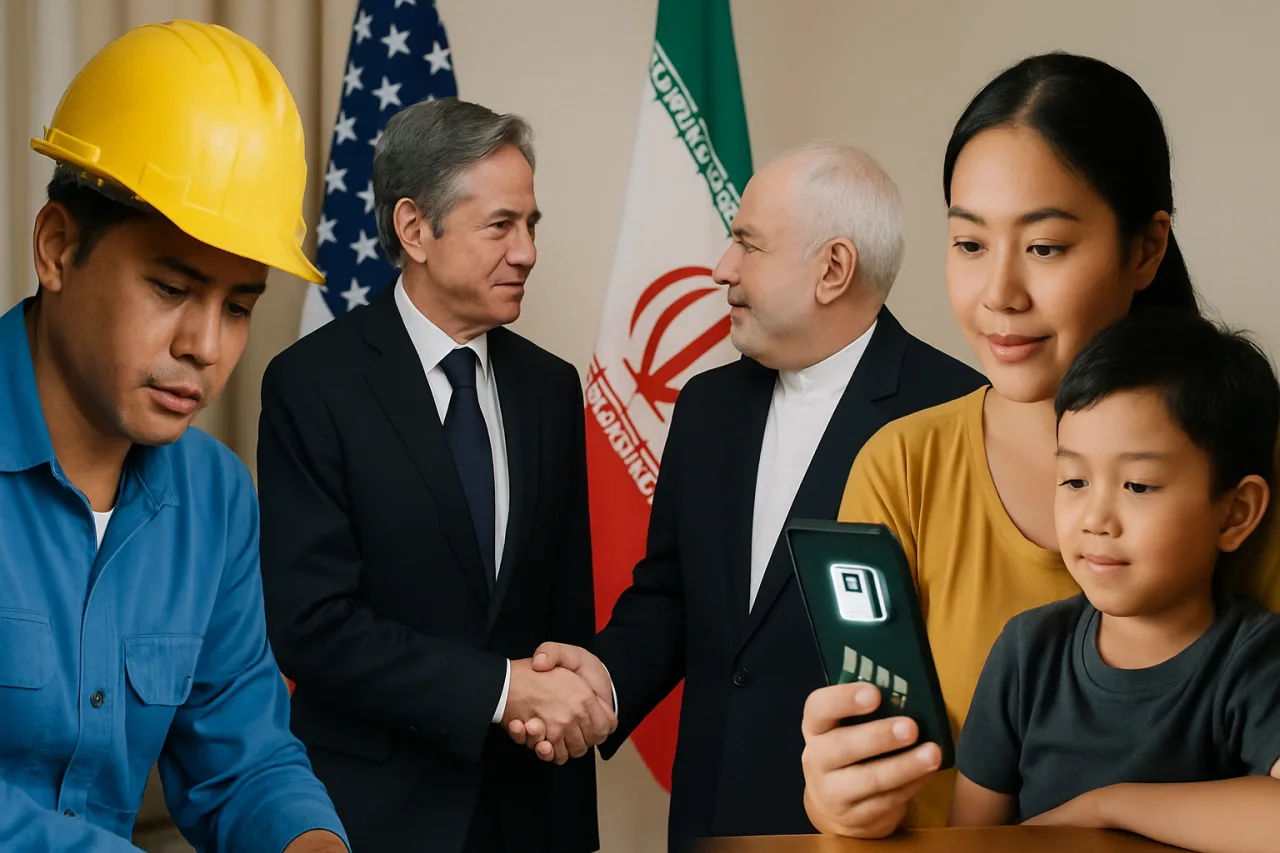
OFW digital safety 2026 faces a fundamentally different threat landscape than even one year ago. Three converging forces have made overseas Filipino workers prime targets — and understanding them is the first step to protection:
AI-powered attacks: Scammers now use large language models to write flawless phishing emails in Filipino, English, and Arabic. Deepfake technology enables fake video calls where scammers impersonate recruiters, embassy officials, or even family members. The Philippine Statistics Authority (PSA) has specifically warned about AI-powered romance scams targeting Filipinos abroad.
Social media as a hunting ground: Facebook, Telegram, and TikTok have become the primary channels for targeting OFWs. Fake job postings, fake investment groups, and fake romantic profiles are deployed at scale — and OFWs, who are often separated from their support networks and eager for connection or opportunity, are particularly vulnerable.
Cross-border complexity: When an OFW in Dubai or Saudi Arabia gets scammed, reporting is complicated by different jurisdictions, languages, and legal systems. Scammers exploit this complexity, knowing that OFWs often don’t know where to turn.
The government recognized the severity. In February 2026, DMW Secretary Hans Leo Cacdac signed an MOU with the Global Anti-Scam Alliance — the first bilateral government-level digital fraud protection partnership for OFWs. “These agreements represent our commitment to real, accessible, and lasting support systems for every Filipino migrant worker,” Cacdac said. For OFW digital safety 2026, this partnership is a game-changer.
Romance Scams: the Silent Threat Targeting OFWs
Romance scams are one of the most damaging — and least reported — threats to OFW digital safety 2026. The Philippine Embassy in UAE and PSA have both issued warnings. Here’s how they work:
The setup: Scammers create fake profiles on dating apps, Facebook, or Instagram. They target OFWs who are lonely, far from home, and looking for genuine connection. The fake persona is often attractive, claims to be based in the same country as the OFW, and has a detailed backstory.
The build: Over weeks or months, the scammer builds emotional intimacy. Daily messages. Voice calls. Video calls (using deepfake technology or stolen footage). The scammer becomes the OFW’s emotional anchor.
The ask: Once trust is established, the scammer introduces a financial emergency — a medical bill, a business crisis, a travel expense to “finally meet in person.” The OFW, emotionally invested, sends money. The requests continue and escalate.
The Philippine Embassy in UAE issued a specific Valentine’s Day 2026 warning after a spike in romance scam reports from OFWs in Dubai and Abu Dhabi. The PSA followed with a broader advisory about AI-powered romance scams targeting Filipinos globally.
Red flags every OFW should know:
🔴 They refuse to video call — or the video call is suspiciously low-quality (deepfake masking)
🔴 They profess love unusually fast (within days or weeks)
🔴 They always have an excuse for why they can’t meet in person
🔴 They ask for money — no matter the reason
🔴 They ask you to keep the relationship secret
🔴 They pressure you to send money urgently via GCash, Wise, or crypto (hard to trace)
Related: OFW Fake App Scam: Fake eGovPH App Stole P1M from a Dubai Domestic Worker
Fake Job Scams: Luring OFWs into Traps
Fake job scams represent one of the most physically dangerous threats to OFW digital safety 2026. Unlike phishing or romance scams, these can trap OFWs in physical danger across borders. The DMW has issued specific warnings about this growing threat.
Investigations in 2026 revealed that hundreds of thousands of job seekers across Asia have been lured by fake social media job postings into scam compounds — particularly in Myanmar, Cambodia, Laos, and the Philippines itself. The scam works like this:
The bait: Attractive job postings on Facebook and Telegram promise high salaries for “customer service representatives,” “data entry specialists,” or “marketing agents” in Thailand, Malaysia, or the Middle East. The postings often use stolen logos from legitimate companies.
The process: Applicants are interviewed over WhatsApp or Telegram — never in person. They’re told they’ve been hired and are given a “job offer letter.” They’re instructed to travel to a specific location for “orientation” or “training.”
The trap: Upon arrival, victims discover they’ve been recruited into scam operations — forced to run investment scams, romance scams, or phishing operations against other people. Their passports are confiscated. They’re threatened with violence if they don’t meet quotas.
While this primarily affects new job seekers rather than existing OFWs, returning OFWs looking for new placements are also at risk. The DMW recommends verifying all job offers through the POEA (Philippine Overseas Employment Administration) website before accepting any overseas position.
Ponzi Schemes and Investment Frauds Targeting OFWs
OFWs are prime targets for investment fraud — they have savings, they want their money to grow, and they’re often looking for ways to prepare for their return to the Philippines. Scammers know this, making investment fraud a critical OFW digital safety 2026 concern.
BG Wealth (February 2026): The Philippine Securities and Exchange Commission (SEC) issued a definitive advisory against BG Wealth Sharing Ltd., outright classifying it as a Ponzi scheme before it collapsed. The scheme promised unrealistically high returns — the hallmark of any Ponzi operation. OFWs who invested lost their savings.
Binance advisory (2026): The SEC also issued an advisory against Binance for operating without authorization in the Philippines. While Binance is a legitimate exchange globally, its unauthorized PH operations meant Filipino users had no local regulatory protection.
Red flags of investment fraud:
🔴 Promises of guaranteed high returns (20%+ monthly is always a scam)
🔴 Pressure to recruit new members (Ponzi/pyramid structure)
🔴 No SEC registration or license number
🔴 Complex strategies you can’t explain to someone else
🔴 Requests to invest via GCash, crypto, or personal bank accounts (not through regulated channels)
🔴 Testimonials that sound too good to be true
The SEC maintains a public list of registered investment companies at sec.gov.ph. Before investing any OFW savings, verify the company is on that list.
Related: BSP Crypto Crackdown 2026: New Rules Every OFW Must Know
Phishing and Social Engineering 2026
Phishing remains the most common OFW digital safety 2026 threat. But the attacks have evolved far beyond the obvious “Nigerian prince” emails. In 2026, phishing targeting OFWs looks like this:
Recruiter impersonation: Scammers send emails or WhatsApp messages impersonating legitimate recruitment agencies — Al Manpower, JML Saudi, or established Gulf employers. They ask OFWs to click links to “upload documents” or “confirm interview schedules.” The links lead to fake websites that steal login credentials and personal data.
Embassy/DMW impersonation: Messages claiming to be from the Philippine Embassy, DMW, or POEA asking OFWs to verify personal information or pay “processing fees” via GCash or bank transfer. Real government agencies never ask for money via GCash.
Remittance phishing: Fake texts or emails that look like they’re from your bank or Wise, saying “Your remittance of $500 was blocked. Click here to verify.” The link takes you to a fake login page that steals your banking credentials.
AI voice cloning: The most sophisticated 2026 threat. Scammers use AI to clone the voice of a family member or friend and call OFWs saying they need emergency money. If you receive an unexpected call from a “family member” asking for money, hang up and call them back on their known number.
The 3-second rule: Before clicking any link or sending any money, pause for 3 seconds. Ask: Was I expecting this? Does this make sense? Can I verify this through an official channel? Three seconds can save you months of financial recovery.
OFW Digital Safety 2026: Practical Protection Guide
Here’s your OFW digital safety 2026 action plan — concrete steps you can take today to protect yourself and your family:
1. Secure your accounts:
✅ Use a password manager like NordPass (Bitwarden is free, 1Password has a family plan)
✅ Enable two-factor authentication (2FA) on ALL accounts — GCash, email, social media, bank
✅ Use an authenticator app (Google Authenticator, Authy) instead of SMS for 2FA
✅ Change passwords immediately if you suspect any account has been compromised
2. Verify before you trust:
✅ Always verify job offers through the POEA website (poea.gov.ph)
✅ Check SEC registration before investing any money (sec.gov.ph)
✅ Confirm embassy/DMW communications through official channels — call the embassy directly
✅ Be skeptical of any investment promising more than 15% annual returns
✅ Never send money to someone you haven’t met in person
3. Protect your devices:
✅ Keep your phone and laptop software updated — updates fix security holes
✅ Install a reputable mobile security app (Bitdefender, Malwarebytes)
✅ Don’t download apps from unofficial sources — only Google Play or App Store
✅ Avoid public WiFi for banking or remittances — use your mobile data or a VPN
✅ Enable remote wipe on your phone in case it’s lost or stolen
4. Secure your remittances:
✅ Only use registered remittance channels (check BSP’s list at bsp.gov.ph)
✅ Enable transaction alerts on your bank account and GCash
✅ Never share your OTP (one-time password) with anyone — ever
✅ Double-check recipient details before sending any money
✅ Keep records of all remittance transactions
5. Know how to report:
✅ DMW OFW Welfare Hotline: 1348 (from the Philippines) or +632 8-1348 (from abroad)
✅ Philippine National Police Anti-Cybercrime Group: pnp.gov.ph
✅ SEC enforcement: sec.gov.ph
✅ GASA (Global Anti-Scam Alliance): gasa.org — they have a global scam reporting tool
✅ Your local embassy or consulate’s emergency hotline
DMW-GASA Partnership: What It Means for OFWs
The OFW digital safety 2026 ecosystem got a major upgrade in February 2026 when DMW signed the MOU with GASA (Global Anti-Scam Alliance). Here’s what it actually means for workers on the ground:
Enhanced digital security programs: GASA will work with DMW to develop digital literacy training specifically designed for OFWs — covering phishing recognition, safe social media practices, and secure remittance hygiene.
Cross-border coordination: GASA’s international network enables faster reporting and response when OFWs are scammed across jurisdictions. If an OFW in Kuwait is scammed by a Nigeria-based operation, the coordination can happen through GASA’s network rather than waiting for slow diplomatic channels.
Expanded legal protection: The partnership includes provisions for legal assistance to OFWs who are victims of digital fraud — including help recovering funds and navigating foreign legal systems.
Family protection: The MWO (Migrant Workers Office) will extend digital safety resources to OFW families in the Philippines, who are also targeted by scammers impersonating their loved ones abroad.
This partnership is a signal that the Philippine government is taking OFW digital safety 2026 as seriously as physical safety and labor rights. OFWs can also take advantage of free training programs like the DMW-Amazon Free AI and Cybersecurity Training to build their digital defense skills.
FAQ
What is the biggest cybersecurity threat to OFWs in 2026?
Based on DMW and GASA data, phishing and social engineering attacks are the most common threats to OFWs in 2026, followed by romance scams and fake job offers. AI-powered attacks — including voice cloning and deepfake video — are the fastest-growing category. The OFW digital safety 2026 landscape is evolving faster than most workers realize, making awareness the first line of defense.
How can OFWs protect themselves from romance scams?
Key rules: Never send money to someone you haven’t met in person. Be suspicious of anyone who professes love unusually fast or always has excuses for not meeting. Verify video calls are real by asking the person to do something specific on camera. Check with friends or family before making any financial decisions based on an online relationship. Report suspicious profiles to the dating platform and to your embassy.
What should I do if I get scammed as an OFW?
Act immediately: (1) Stop all communication with the scammer. (2) Take screenshots of all messages, transactions, and profiles as evidence. (3) Report to your bank or GCash to attempt to reverse the transaction. (4) File a report with the DMW OFW Welfare Hotline (1348) or your local embassy. (5) Report to the PNP Anti-Cybercrime Group. (6) File a report with GASA at gasa.org. Do not be embarrassed — reporting helps protect other OFWs.
Is GCash safe for OFW remittances?
GCash is a BSP-registered electronic money issuer and is generally secure for remittances. Enable 2F authentication, set up transaction alerts, and never share your MPIN or OTP. However, GCash transactions are harder to reverse than bank transfers, so always double-check recipient details before sending. For larger amounts, consider using a bank transfer or Wise for additional protection layers.
How do I verify if a job offer is legitimate?
Always verify through the POEA website (poea.gov.ph) — legitimate overseas jobs are registered there. Check the recruitment agency’s POEA license number. Be wary of jobs offered only through WhatsApp or Telegram with no in-person interview. Never pay upfront fees for “processing” or “documentation” — this is illegal under Philippine law. If the job sounds too good to be true, it almost certainly is.
What is the DMW-GASA partnership?
Signed in February 2026, the MOU between the Department of Migrant Workers and the Global Anti-Scam Alliance is the first government-level digital fraud protection partnership for OFWs. It provides enhanced digital literacy training, cross-border scam reporting, legal assistance for victims, and digital safety resources for OFW families in the Philippines.
Are AI scams really targeting OFWs?
Yes. The Philippine Statistics Authority and GASA have both confirmed that AI-powered scams targeting Filipinos are on the rise in 2026. This includes AI-generated phishing emails that mimic legitimate recruiters, deepfake video calls in romance scams, and AI voice cloning where scammers impersonate family members asking for emergency money. OFWs are specifically targeted because they’re separated from family and often communicate primarily through digital channels.
This article is for informational purposes only and does not constitute legal or financial advice. OFW readers should consult licensed professionals for specific concerns. Data sourced from DMW, GASA, PSA, SEC, BSP, Philippine Embassy UAE, POEA, and World Bank (as of June 2026).
Disclosure: WorldNgayon may earn a commission if you purchase through links in this article. Full details on our disclaimer page.