Key Takeaway
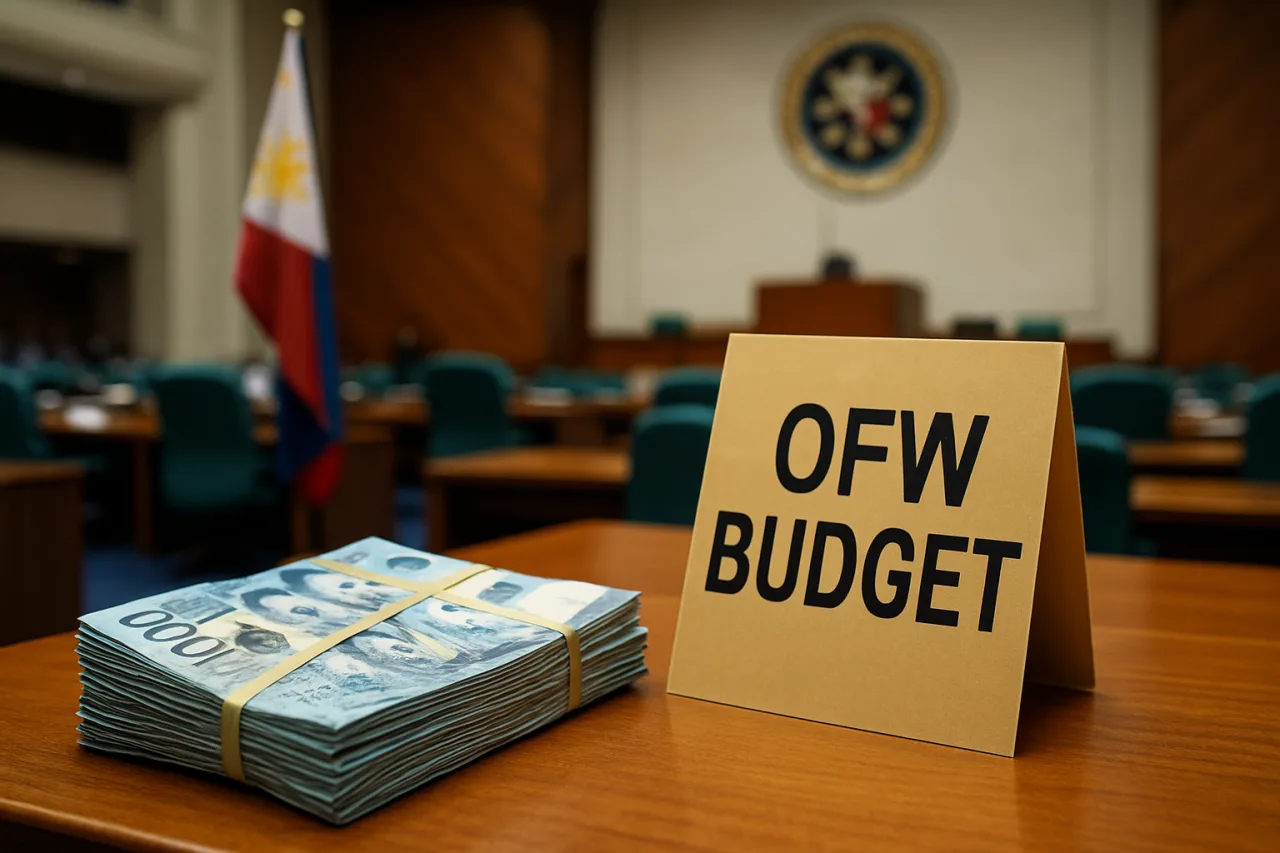
- 🏛️ The numbers: the 2027 National Expenditure Program allocates ₱11.616 billion for DMW (₱7.267B) and OWWA (₱4.349B) — and the House appropriations panel has backed it.
- ➕ The ask: DMW wants ₱4 billion more on top — ₱2B each for the Office of the Secretary and OWWA — citing “geopolitical possibilities” in the Middle East and elsewhere.
- 📉 The nuance: the proposed 2027 base is actually lower than 2026’s ₱11.75B GAA allocation — the real fight is over the additional ask.
- 🚨 Where OWWA money goes: emergency repatriation, welfare programs, and the Alagang OWWA caravans — the services OFWs actually claim when crises hit.
- 📋 The claim guide: seven services OFWs can access right now — from repatriation to legal assistance — and what each requires.
Table of Contents
Where the OFW Budget Goes, Line by Line
Every OFW contributes to the system: OWWA membership fees, Pag-IBIG, PhilHealth premiums, Medicare. The budget season is when the OFW budget gets its accounting — and 2027’s numbers deserve attention. The National Expenditure Program proposes ₱11.616 billion across the two migrant-work agencies: ₱7.267 billion for the DMW proper and ₱4.349 billion for OWWA. The House appropriations committee has endorsed the proposal, moving it through the budget process.
Here is the nuance headlines miss: the proposed base is lower than what Congress approved for 2026 — the 2026 General Appropriations Act gave DMW ₱11.75 billion. That is why the agencies’ own ask matters: at the August 26 House deliberations, the DMW requested an additional ₱4 billion — split evenly between the Office of the Secretary and OWWA — with Secretary Hans Cacdac framing it as anticipating “geopolitical possibilities” across the Middle East and other flashpoints where Filipino workers concentrate.
The Gap Between the Ask and the Allocation
The scale of the gap tells its own story. OWWA proposed a ₱12.882-billion program for 2027 and received ₱4.349 billion in the NEP — about a third of what it judged necessary. DMW-wide funding requests totaling around ₱26 billion were reportedly excluded from the budget draft. The House’s endorsement locks the ₱11.616B base; the ₱4B supplement now lives or dies in the plenary and bicam stages, where last-minute restorations historically happen.
For OFWs, the practical reading: the services that worked in 2026 run on comparable money in 2027, but expansion — bigger repatriation reserves, more legal-assistance capacity, wider welfare coverage — depends on the supplement clearing.
What the Money Actually Funds
The 2026 budget shows the pattern the 2027 money follows. OWWA’s 2026 allocation of ₱4.2 billion — itself a 26% increase over 2025’s ₱3.4 billion — carries the programs members touch directly: the Emergency Repatriation Program (₱1.286 billion in 2026), the Alagang OWWA caravan services that bring government services to regions, welfare assistance programs, and the training and scholarship funds. The DMW’s ₱7.267B side runs the regulatory machinery: licensing and inspection of recruitment agencies, the overseas labor offices, worker protection desks, and the anti-illegal-recruitment enforcement that polices the industry’s worst actors.
| Program | Agency | What it does |
|---|---|---|
| Emergency Repatriation | OWWA | Brings OFWs home from crisis zones — flights, processing, transit care |
| Alagang OWWA caravans | OWWA | Mobile service delivery to OFW families in the provinces |
| Legal assistance | DMW/OWWA | Legal Aid Fund for cases against employers and agencies |
| Recruitment regulation | DMW | Agency licensing, inspections, illegal-recruitment enforcement |
| Overseas labor offices | DMW | Attaches and welfare officers in destination countries |
| Scholarships and training | OWWA | OFW-dependant scholarships, skills upgrading |
Seven Services OFWs Can Claim Now
- Emergency repatriation — if a host country destabilizes, contact the nearest Philippine embassy/consulate or the DMW command center; OWWA covers the flight home for active members.
- Legal assistance fund — cases against employers or agencies can access funded representation through the DMW’s legal track; start at the overseas labor office or the Migrant Workers Office.
- OWWA scholarships — dependants of active members qualify for education grants; application windows open through the membership period.
- Skills training — OWWA’s training programs upskill returning and active members; check the regional welfare office calendar.
- Reintegration support — returning OFWs can access livelihood programs and business-loan facilitation through OWWA’s reintegration services.
- Welfare case assistance — contract violations, unpaid wages, and abuse cases route through the overseas labor offices; document everything early.
- Family support caravans — the Alagang OWWA caravans bring membership renewal, benefits processing, and government services to provincial hubs; watch the local announcements or the OWWA portal.
How the OFW Budget Moves From Congress to the Consulate
The OFW budget travels a fixed chain: the NEP proposal from Malacañang, House appropriations hearings (where the ₱4B supplement entered the record), Senate deliberations, the bicam conference that reconciles both versions, and the President’s signature — with agencies unable to spend until the GAA lands, usually December. Each stage is an amendment window; each amendment window is where OFW-sector advocates argue for the repatriation reserves and legal-assistance lines the NEP trimmed. The 2026 GAA’s 34% OWWA increase did not happen by default — it happened because the sector’s claims showed up in the rooms where money gets divided.
Understanding the chain also explains the “why now” of the agencies’ aggressive asks: crisis contingencies cannot wait for supplemental budgets when a conflict erupts mid-year. The repatriation flights that brought workers home from regional flashpoints in past years drew on reserves sized in advance — the OFW budget is insurance pricing, and the supplement is the premium increase the world situation demands.
The Accountability Angle
Budget season is also claim season — the numbers above are what the contributions buy, and the services listed are entitlements of membership — utilization feeds the next OFW budget fight, not favors. The OFW family’s leverage over the process is using the services: utilization data feeds next year’s budget arguments, and the agencies whose programs get used are the ones whose asks get approved. The bicam deliberations run through year-end; the ₱4B supplement’s fate will be decided in those rooms, and the OFW sector’s voice — through its party-lists and associations — is the input that matters.
Follow the OFW budget from Congress to the consulate, and the budget stops being an abstraction. It is the repatriation flight, the lawyer’s fee, the scholar’s tuition — already paid for, waiting to be claimed.
The Contribution-to-Service Chain, Traced
Follow one peso from your pocket to a program and the budget stops being abstract. The OFW pays the OWWA membership — $25 per two-year contract cycle, roughly ₱1,400 — alongside the Medicare contribution that funds PhilHealth coverage abroad and the Pag-IBIG remittance that builds the housing-fund ledger.
Those streams pool into OWWA’s fund, which the annual budget then programs: the repatriation reserve that brings workers home from conflict zones, the caravan vans that carry services to provincial hubs, the scholarship checks that reach dependants every enrollment season.
The chain explains why utilization matters — a program whose claim volume is invisible gets a smaller line the following year, while the programs members use loudly defend their allocations in the appropriations hearings.
The budget is not charity flowing downhill; it is a pooled insurance system whose premiums you already pay and whose claims you file when needed.
The 2027 numbers make the pooling explicit. The proposed ₱11.616 billion is less than 2026’s ₱11.75 billion — meaning the system’s base budget is flat-to-down before the ₱4 billion supplement is counted. Every service in the table above exists inside that constraint, and the supplement decides whether the system shrinks or expands.
That is the concrete stake in the bicam rooms this quarter: not “more money for agencies” but “does repatriation capacity grow to meet the geopolitical risk the Secretary named.”
How to Claim Each Service: The Paper Trail
Services fail in practice at the paperwork step, so the trail matters. Emergency repatriation: your OWWA membership number is the key — keep it on your phone alongside your passport photo page; the embassy or the DMW command center runs the case the moment membership verifies.
Legal assistance: the Migrant Workers Office in your host country takes the case intake; bring the employment contract, payslips or payment records, and any employer correspondence — the fund covers representation when the case qualifies, and the intake officer’s documentation checklist is your roadmap.
Scholarships: OWWA’s education programs open application windows aligned to the Philippine school year; the regional welfare office processes dependant applications with the membership certificate and the dependant’s school records. Skills training: enrollment runs through the same regional offices, calendar-driven.
Reintegration: returning OFWs register at the airport-area service desks or the regional OWWA offices, where the livelihood-program referrals start.
In every lane, the pattern repeats: active membership, documents ready, and the office that owns the program contacted directly — the services exist for exactly these claims, and the budget argument each year is made by the people who file them.
The Geopolitical Risk Math Behind the ₱4 Billion
Why would a repatriation reserve need four billion pesos more? Because the region’s risk map moved. The Middle East flashpoints — where hundreds of thousands of Filipinos work across construction, healthcare, and domestic work — carry evacuation scenarios whose per-worker cost is measured in charter flights, transit accommodation, and processing.
The 2026 budget’s ₱1.286-billion emergency repatriation line was sized for a different world than the one the Secretary described to the House in August. A single large-scale evacuation from one country can consume the entire annual line in days — which is why the supplement asks for capacity ahead of need, not after.
Insurance pricing works exactly this way: the premium is cheap the year before the fire. The ₱4 billion, split between the Office of the Secretary’s contingency machinery and OWWA’s service capacity, is that premium — and the alternative is the supplemental-budget scramble that past crises ran, slower by months and costlier by far.
What the House Panel’s Backing Means — and Doesn’t
The appropriations committee’s endorsement is momentum, not money.
The Philippine budget process moves through stages where each can amend the last: the committee-level approval the agencies secured, the plenary votes in both chambers, the bicameral conference that reconciles House and Senate versions, and the President’s signature on the General Appropriations Act — usually December, sometimes later.
At each stage the ₱4-billion supplement can survive intact, get trimmed, get restructured into “for release” designations, or vanish entirely. The panel’s backing does carry weight: it puts the agencies’ ask inside the version that enters plenary, and historically, asks that clear committee with a named geopolitical rationale fare better in bicam than late-floor additions.
The OFW sector’s role in the remaining stages is advocacy — the party-lists and associations that show up in the hearings are the input that historically moves allocations, because utilization data and sector testimony are the evidence the bicam responds to.
Frequently Asked Questions
How much is the proposed DMW and OWWA budget for 2027?
₱11.616 billion total in the NEP — ₱7.267 billion for DMW and ₱4.349 billion for OWWA — with the House appropriations panel backing the proposal. The agencies have asked for ₱4 billion more.
Why do DMW and OWWA want ₱4 billion more?
Secretary Hans Cacdac cited “geopolitical possibilities” — crisis contingencies in the Middle East and other regions with large OFW populations — plus capacity expansion; OWWA alone proposed ₱12.882 billion but received a third of it in the draft.
Is the 2027 budget bigger than 2026?
No — the proposed base (₱11.616B) is below 2026’s ₱11.75B GAA allocation. The supplement is what would push 2027 above 2026 levels.
What is the Emergency Repatriation Program?
OWWA’s program that brings Filipino workers home from crisis situations — flights, processing, and transit care — funded at ₱1.286 billion in 2026 and available to active OWWA members through the embassies and the DMW command center.
How do I claim OWWA benefits as a member?
Through your membership: scholarships and training via regional welfare offices, legal assistance via Migrant Workers Offices, repatriation via embassies — active OWWA membership (renewed every two years) is the key that unlocks each.