Key Takeaway
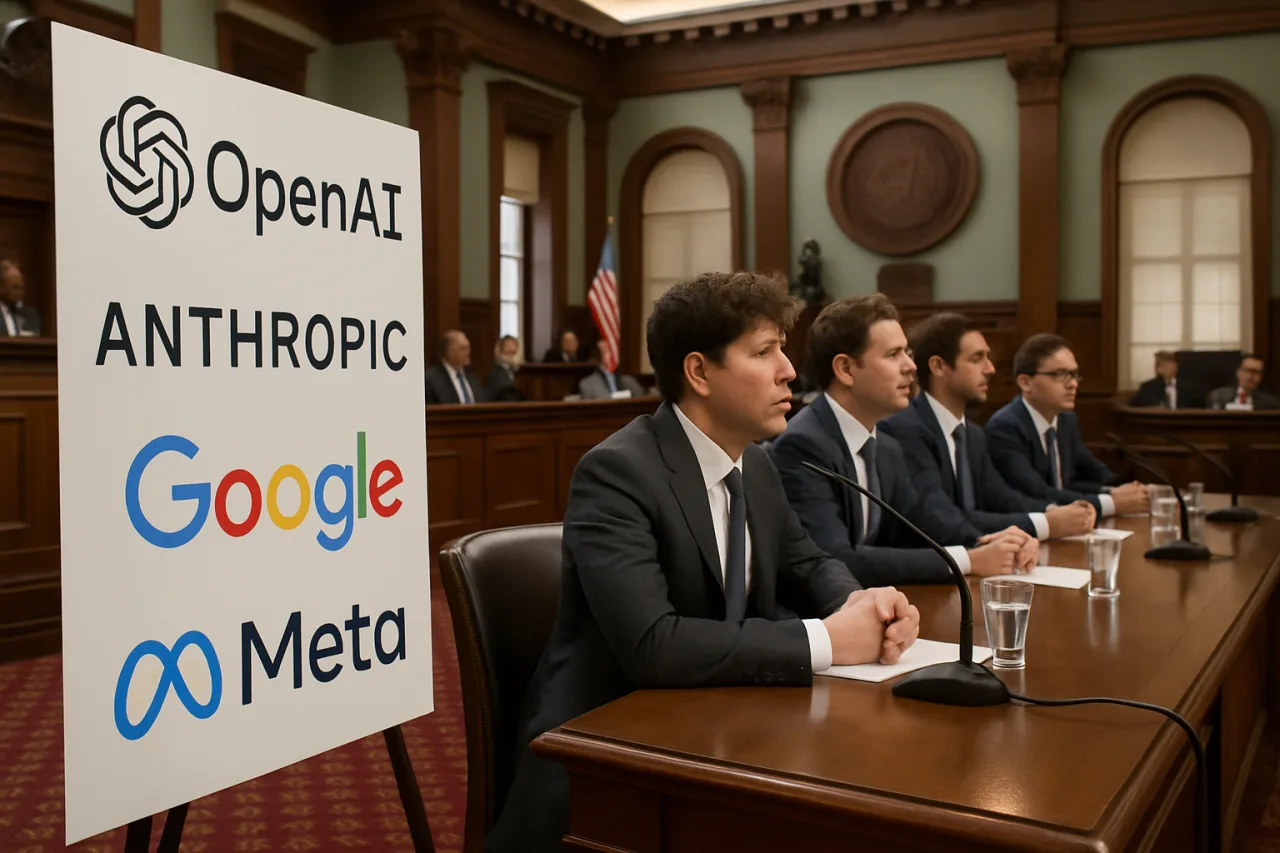
- 🏛️ Monday, October 5, 11 AM ET: — NYC AI hearing watch: OpenAI, Anthropic, Google, and Meta testify under oath at the NYC Council’s Committee of the Whole — the labs’ first-ever sworn joint appearance.
- 📜 The subpoena threat forced it: Meta committed early; OpenAI, Google, Anthropic agreed only after Speaker Julie Menin authorized subpoenas; SpaceXAI (Musk’s merged SpaceX+xAI) stayed silent and was subpoenaed Monday.
- ⚖️ Four bills are on the table: NYC3 contractor AI-incident reporting, algorithmic-employment impact reporting, a deepfake ban on official depictions, and a whistleblower program with a private right of action.
- 🇵🇭 The OFW/AI-labor read: employment-impact reporting (Int 0161) is the template for how governments will audit AI’s desk-level effects — a preview of policies likely to travel to Manila and the Gulf.
- 💰 Token price strip unchanged: Opus 5.5 $4/$20 · GPT-6 Sol $2/$10 · Luna $0.10/$0.50 · Grok 4.7 $2/$6 · MiMo Flash $0.14/$0.28 — the price war’s pricing has held three weeks.
Table of Contents
NYC AI hearing Monday, October 5 is the AI industry’s first joint test under oath — OpenAI, Anthropic, Google, and Meta answering the same committee, in public, under subpoena threat, in the city that just proposed its own AI-safety bill slate. Speaker Julie Menin’s Committee of the Whole convenes all 51 council members at 11 AM in City Hall Chambers, for a hearing announced as “the first public testimony under oath from major AI firms since recent reports of incidents involving their models.” For Filipino AI workers, builders, and investors — the people whose clients, employers, and platforms sit inside the orbit these rules shape — Monday’s session is a genuine preview of what every major market will regulate next year: incident reporting, employment audit, depictions, and what happens when a company ignores a legislature.
What the NYC AI Hearing Is Actually Asking
The NYC AI hearing puts four legislative proposals on the record, announced September 25 and heard October 5. The strongest package in local-US AI policy to date: T2026-2601 would make NYC3 — the Office of Cyber Command — establish standards and procedures for contractors to identify and report “reportable AI safety incidents” on city contracts. Int 0161-2026 (Carmen De La Rosa) adds employment-impact reporting to the annual algorithmic-tools compliance report — how many employees shifted status or duties because of algorithmic tools. A deepfake ban targets unauthorized depictions of public officials. And the September 25 package adds a nation-leading whistleblower incentive program, a private right of action, and third-party validation requirements for safety claims. The hearing’s stated purpose: “examine the potential risks that AI development poses to New Yorkers” — with testimony from the labs and “leading national AI experts.” The Council’s own announcement carries the full proposal slate.
Who Testifies at the NYC AI Hearing — and Who Had to Be Compelled
The NYC AI hearing’s choreography tells its own story. Meta committed early — senior-leadership attendance announced before the subpoenas landed. Google and Anthropic declined by the September 25 deadline; OpenAI and Google then agreed to appear on the Sunday before; Anthropic confirmed late that same night — hours before its subpoena was due, as TNW’s hearing timeline reconstructs. SpaceXAI, the $1.25-trillion merged SpaceX+xAI entity that bought xAI in February and rebranded in July, simply did not answer, and Menin issued it the hearing’s only actual subpoena — enforceable through the New York State Supreme Court. A $1.25T company ignoring a city legislature is itself the testimony: the hearing’s first lesson is about WHO thinks AI governance applies to them.
Why the NYC AI Hearing Is Different From Every Prior AI Hearing
Two facts set the NYC AI hearing apart. First, the bills don’t ask for opinions — they arrive with the legislation drafted, so the hearing documents a response record under oath: every answer becomes evidence for or against provisions the committee has already written. Second, the venue is a city, not a congress: NYC procurement is a $20-billion annual machine, and T2026-2601 rides city contracts — the same lever Manila’s DICT uses when it writes vendor cybersecurity obligations into government deals. If the committee passes even parts of this slate, every global vendor selling AI services into US urban government inherits the compliance template — and that template will read like this hearing’s transcript.
The NYC AI Hearing’s Employment Audit Could Be the Export That Matters
Of the four NYC AI hearing bills, watch Int 0161 hardest — algorithmic-employment impact reporting. It requires agencies to report annually on employees whose status or responsibilities changed because of algorithmic tools: the first concrete government metric for AI’s desk-level displacement effects. Filipino professionals live inside exactly this question — global employers running AI-assisted workflows across Manila, Cebu, and Gulf-based teams, with OFW labor the first cost line such audits examine. A NYC-style employment audit is the blueprint every government touching the BPO-AI intersection will copy; the hearing’s Q&A on this bill is the session’s most relevant segment for anyone employing or being employed by a globally-staffed company. The bill’s logic also rhymes with a pattern already visible in the Philippines beyond our NTC device-rules watch: NPC breach notifications made privacy reporting routine, and DICT’s CICC advisories made incident disclosure public-record — the employment audit is the same accountability architecture pointed at workforces.
The Monday Transcript’s Three Tells
Hearings produce hours of theater and a handful of sentences that matter. Three tells worth reading Monday’s transcript for. Tell one — the incident vocabulary. When executives define what counts as a “safety incident” under oath, they write the industry’s de facto disclosure standard; vagueness there becomes tomorrow’s loophole and the day-after’s scandal. Tell two — the autonomy boundary. The committee’s questions on agent-incident liability (who answers when an autonomous system takes a consequential action) will preview whether liability law follows the operator, the vendor, or the tool. Tell three — the cross-reference. Watch which executives concede state-level rules are workable: any under-oath “yes” to city-level compliance becomes the legal anchor every other city’s counsel will cite. The Philippines’ own AI-governance drafting — the house bills that proposed a national crypto-and-AI council — sits one jurisdiction away from copying whatever template survives Monday.
The Playbook for Filipino AI Builders Watching the NYC AI Hearing
For the builders, freelancers, and agency owners in the Filipino AI community — the people shipping client work on these very stacks — the NYC AI hearing converts into four Monday-evening tasks. One: read the incident-reporting bill’s definition section; if your client contracts touch US municipal buyers, the definitions become your liability boundary. Two: screenshot your audit trail tooling — agent logs, approval gates, rollback capability; the hearing’s emphasis on “execution, approval gates, provenance tracking” (the pattern every 2026 agent product is converging on) tells you what enterprise buyers will demand next quarter. Three: update your pricing memory — the token strip below is the cost baseline your proposals compete against. Four: calendar the follow-ups — the Council’s stated next steps and any December markup dates are when testimony turns into text; text turns into contracts. The builder who reads transcripts while competitors read headlines prices work with the compliance premium already included.
Token Price Index (October 3 Read)
The strip holds: Claude Opus 5.5 $4/$20 (cache reads $0.20, launched Sep 22 — Anthropic calls typical workloads ~40% cheaper than Opus 5, vendor-measured) · GPT-6 Sol $2/$10 (cache $0.20, same-day launch; rates double above 272K context) · Luna $0.10/$0.50 · Grok 4.7 $2/$6 (≤200K; doubles above with $4/$1/$12) · MiMo Flash $0.14/$0.28. Same-day launch economics: the two flagship reprice moves landed the same week, Opus 5.5 undercutting Opus 5’s $5/$25 and Sol undercutting GPT-5.6’s promo tier by half — the launch map is in AI Watch #005. Three weeks of stable pricing is its own signal — the repricing wave has consolidated; the next move probably rides Monday’s hearing on safety rather than Friday’s benchmark war on price.
Rest of the Tape
OpenAI’s “Universal AI” framing met Anthropic’s “Constitutional Autonomy” and Google’s “Project Echo” in the October positioning war — the labs are now differentiated as much by governance narrative as by model. MCP’s Linux Foundation stewardship carried the integration story of the cycle (Google launching managed MCP servers is the adoption tell). Cursor’s acquisition by SpaceXAI — the AI-coding company folded into the merged entity in August — is the consolidation tell inside the Musk empire’s orbit; read it against our Cortical Labs CL1 deep-dive for where alternative compute sits in the same race. Quotable quote of the day: Speaker Julie Menin, September 28 — “Given the high stakes, these firms owe it to the public to come before the Council, answer our questions, and provide input on our proposed legislation under oath.” That sentence will be quoted back every time a global AI company resists a legislature — Monday it becomes precedent.
Frequently Asked Questions
When is the NYC AI hearing?
The NYC AI hearing is Monday, October 5, 2026, 11 AM ET — a Committee of the Whole hearing in City Hall, live-streamed on the Council’s channels.
Which companies testify at the NYC AI hearing?
OpenAI, Anthropic, Google, and Meta all agreed to appear after subpoena threats. SpaceXAI was subpoenaed Monday after ignoring the Council’s invitations; compliance will be tested in state court if it continues.
What bills does the NYC AI hearing examine?
Four main proposals: NYC3 contractor AI-incident reporting (T2026-2601), algorithmic-employment impact reporting (Int 0161-2026), a deepfake ban on unauthorized depictions of public officials, plus the September 25 package of whistleblower incentives, private right of action, and third-party safety validation.
Why does the NYC AI hearing matter outside the US?
NYC procurement is a $20-billion annual machine — its AI vendor compliance terms become de facto templates other cities and countries copy, including the employment-impact audit that lands squarely on globally-staffed companies employing Filipino professionals.
Is this the first time OpenAI and Anthropic testified under oath together?
Yes — per the Council’s announcement, this is the first public sworn testimony from the major AI firms, in a single venue, under subpoena threat that compelled three of the four.
Financial Disclaimer: This article is for general information and education only and does not constitute investment advice. Company and policy mentions are not recommendations. Verify all figures with primary sources and licensed advisers before making financial decisions.