Key Takeaway
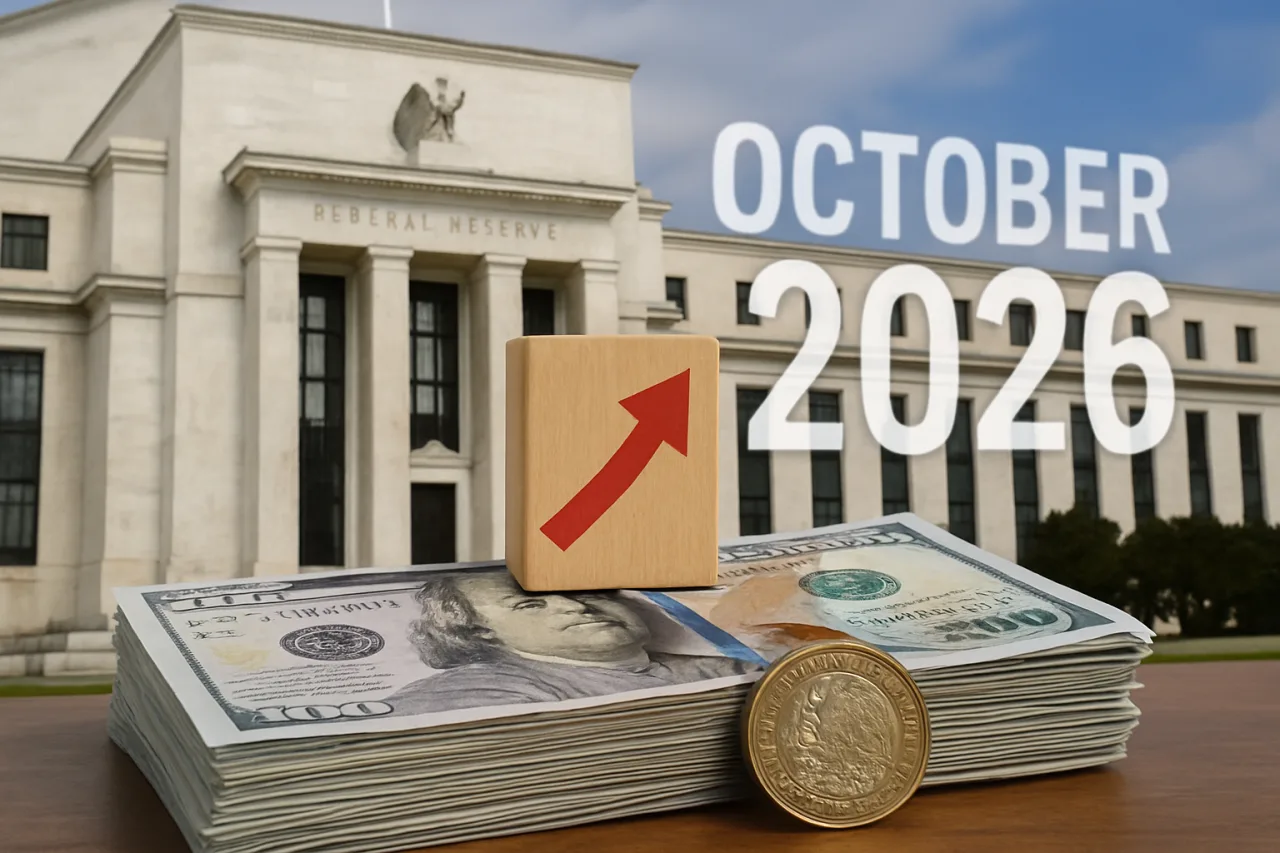
- 📈 The Fed rate hike October 2026 question has a date: October 27-28 — and the odds just flipped: 70%+ priced Thursday before a weak September jobs report Friday; by Friday’s close the market put October at 17% and December above 75%.
- 🏦 September’s hike stands: 3.75-4.00%, the first increase in three years, unanimous — with 16 of 18 dot-plot members seeing one more hike (four see two).
- 💼 Wednesday’s FOMC minutes are the week’s main event for peso-side investors; Thursday’s preliminary University of Michigan sentiment is the second bead.
- 🇵🇭 The OFW reading: a higher-for-longer Fed narrows the peso carry that has powered PH risk appetite; S&P 500 closed 7,720 Friday (−1.2% week) as repricing ran.
- 🧭 The playbook: treat dollar-yield vehicles as the new baseline, verify peso-hedged exposure before October 28, and let the minutes — not the headlines — move the allocations.
Table of Contents
Table of Contents
Fed rate hike October 2026 odds just took the violent repricing that weeks of speeches could not deliver — and it happened in nine hours of payroll data. On Thursday, October 1, CME FedWatch put a quarter-point hike at the October 27-28 FOMC near 70-75%, after Fed Governor Barr declared further hikes “likely” in his base case. One calendar day later, a weaker-than-expected September jobs report blew October’s odds down to 17% (Kalshi to 18% from 70%), while pushing December above 75%. That is not noise repositioning — that is a market re-deciding the whole hiking path in one data print. This is the World Investment Watch #009 of that decision: what the hiking cycle means, what Wednesday’s minutes will confirm, and what a Filipino investor with dollars, pesos, or both should do about a Fed that has turned Hawk in an election month.
Where the Fed Actually Stands on a Fed Rate Hike October 2026
The Fed rate hike October 2026 debate starts from where Chair Kevin Warsh’s Fed — only its fifth meeting under his stewardship — actually hiked 25 basis points at the September session to a 3.75-4.00% target range, the first increase since July 2023, reversing the prior easing cycle. The vote was unanimous; the September Summary of Economic Projections put the median end-2026 dot at 4.10%, up from 3.80% in June, with the median 2027 projection holding 4.10% and the longer-run rate nudged to 3.20%. Translation from the SEP: this is not one hike, it is a level — the committee re-anchored policy around a higher plateau through 2027. Barr’s “further policy adjustments are likely” line on Thursday, delivered at a Chicago Fed housing summit, was the governor class validating that path — until Friday’s payrolls split the committee’s momentum against the calendar.
The Jobs Report That Flipped the Fed Rate Hike October 2026 Odds
The Fed rate hike October 2026 repricing came from a September employment print that landed weaker than expected Friday, and the market’s interpretation was instant: Vanguard senior economist Adam Schickling called it a report that “strengthens the case for the Federal Reserve to remain patient,” with the labor market neither deteriorating sharply nor strengthening meaningfully — precisely the conditions in which a central bank that just moved a month earlier prefers to wait. By Friday’s settlement on CME FedWatch the probability of an October hike had collapsed from near 70% to 17%; Kalshi showed the same shape (70 to 18). December, however, stayed a live hike window above 75% — the repricing moved WHEN, not WHETHER, which is exactly the distinction that decides bond yields vs equity flows differently. Add the historical guard-rail Zacks noted: since 1990 the Fed has never hiked at an October meeting sitting directly before a midterm election. That base rate is now the October 27-28 default; Friday’s data locked it in.
What the FOMC Minutes Say About a Fed Rate Hike October 2026
The September FOMC minutes arrive Wednesday, October 7 — the Fed rate hike October 2026 decision’s next official data point — the first document the committee has published since Barr’s speech and Friday’s payrolls, which makes it the market’s single best window into how the committee reconciles its own hawkish dots with a cooling labor print. Three sentences matter: first, any explicit discussion of the pace between moves (one-and-done vs a series), because Deutsche Bank’s strategists had flagged the SEP as signaling “the start of a modest hiking cycle” — language the minutes will either own or soften. Second, how the committee describes energy-driven inflation: the Iran-war oil shock is the stated reason inflation stayed sticky, and Warsh himself has said the Fed cannot stop oil shocks, only prevent their broadening — minutes language on that boundary sets the bar for December. Third, the balance-sheet discussion: QT pace is the quiet lever that moves liquidity, and it moves peso assets by the drain it performs on global dollars. Thursday delivers the second bead: preliminary University of Michigan consumer sentiment, the inflation-expectations check that Warsh’s committee watches as its credibility gauge.
The Peso Math Behind a Fed Rate Hike October 2026
The Fed rate hike October 2026 transmission to Manila starts from the carry: the Philippines enters the hiking cycle with its BSP policy rate at 5.00% (per the latest readings after its August move) against the Fed’s new 4.00% floor — a one-point carry that narrows every time the Fed climbs. The OFW transmission is concrete: dollar deposits and dollar-bond yields rise with the Fed while the peso’s interest advantage over the dollar shrinks — historically the regime shift that preceded peso bond outflows and peso weakness.
The reader playbook falls out of the arithmetic, not opinion:
The PSEi closed Friday at 5,629.03 (−0.01% day, −7.26% month, −7.85% year-on-year): the local tape already trades like a market waiting for yields to bite. The reader playbook falls out of the arithmetic, not opinion: one, dollar-yield vehicles (time deposits, dollar bonds, USD stablecoin lanes) are suddenly competitive against peso fixed income at the widest margin in a year; two, peso-hedged equity exposure deserves a verify before October 28 (the rate decision will hit long-duration small caps hardest); three, the minutes’ pace-language decides whether December’s 75% odds hold or fold — treat Wednesday, not the October meeting, as the real decision event.
The Equity Tape Under the Fed Rate Hike October 2026 Question
The Fed rate hike October 2026 story shows directly in the S&P 500, which closed Friday at 7,720 — up 0.70% on the day but down 1.2% for the week, its worst weekly run since August, with the Dow off 1.8% — while consumer-discretionary and tech outperformed into the Friday repricing. The week’s tape carried the regime fingerprint: Treasury yields spiked as investors weighed a Fed at 4.00% against a slowing payrolls line — exactly the yield-curve steepening scenario the pre-hike skeptics warned about (an “ugly steepening” if the Fed hesitated, a credibility premium if it delivered). The reading that matters for Filipino portfolio decisions splits into lines.
First line: large-cap technology carries the resilience (Nvidia, Microsoft, Broadcom names led Friday’s advance), while rate-sensitive sectors inherit the pressure. The PSEi’s week-ahead risk is mechanical from here: when US long-end yields run, PH rate-sensitives (banks, property, utilities with debt costs) reprice with the spread — which circles straight back to the Meralco rate reset watch still pending in Manila as the domestic compounding variable — tracked live in our PSE Dynamic Threshold Week-ahead.
The OFW Money Map Under a 4.00% Fed
Where does the family money actually sit when the Fed climbs? Three shelves of the OFW balance sheet reprice on this decision. Shelf one: dollar cash and dollar time deposits — the direct beneficiary, because banks in the US and in the region pass Fed hikes into deposit rates with a lag, and Philippine dollar deposits follow competitive pressure. Shelf two: peso fixed income — retail treasury bonds, pag-ibig MP2, and bank peso deposits feel the narrowing carry but stay the peso-hedge for families spending in pesos. Shelf three: real estate and small-cap equities — the two shelves that a hiking Fed pressures first, because their discount rates move with the long end of the curve, and the Meralco-style regulated cash flows suddenly compete with risk-free yields.
The actionable rule is a shelf-mapping exercise, not a market-timer’s call: list what you own in dollars and in pesos, note which shelf pays what after conversion cost, and let Wednesday’s minutes — which either confirm the December window above 75% or crack it — decide which shelf gets next month’s contribution. The family that shelves its decisions to calendar events pays the same rates as the family that guessed; the difference is the guessers pay for being early or late, and the mappers pay only when the data changes.
The December Question Is the Real Question
October is effectively decided — the pre-midterm base rate and a 17% odds read make a pause the default. December 8-9 (the Fed’s own calendar) is the hike the market still prices above 75%, and between now and then three checkpoints feed that pricing: Wednesday’s minutes (the committee’s own words on pace), the October CPI that lands mid-month (the inflation trajectory versus the dot plot’s assumptions), and the November jobs report (the labor signal that flipped October working again in reverse if it strengthens the case). For peso-side readers, the BSP’s own meeting calendar inserts a fourth checkpoint: if the BSP delivers its own hike to defend the carry, the peso math changes shape entirely — that is the scenario the PSEi’s banks trade first — the borrowed-cash dynamic we mapped in PSEi’s October borrowed-cash watch —, and it is why the local tape’s next three weeks matter to anyone holding either currency.
Rest of the Fed Rate Hike October 2026 Tape
Gold holds its bid as the hedge against both outcomes (hike = credibility play; pause = liquidity play) — the only asset positioned for either Fed. Oil stays the wildcard: the Iran-war premium keeps the inflation boundary argument alive, meaning the December window stays open unless energy relieves. Bitcoin at $85,977 (+2.13%) sits as a liquidity barometer: a hiking-cycle Fed tightens global dollar liquidity, the tide Bitcoin historically reads first; the peso’s own digital counter is the BSP stablecoin 2027 pilot — its October tape answers whether the risk appetite believes the December odds — and the corridor-security map for your remittance dollars is in our spoof-watch piece
Frequently Asked Questions
Will the Fed rate hike October 2026 still happen?
The market collapsed October’s odds to 17% after Friday’s weaker September jobs report, from nearly 70% midweek. The Fed has never hiked at a pre-midterm October meeting since 1990. December, above 75%, is now the priced window.
The Fed rate hike October 2026 minutes arrive
When do the FOMC minutes come out?
Wednesday, October 7 — they cover the September meeting where the Fed hiked to 3.75-4.00% and released a hawkish dot plot (16 of 18 members saw one more hike in 2026).
What did the Fed rate hike October 2026 do to the peso?
The peso story is the carry: the BSP’s 5.00% rate sits one point above the Fed’s 4.00% floor, and every Fed hike narrows that spread — historically the trigger for peso outflows and weakness. Watch BSP’s own meetings for the counter-move.
How does a Fed rate hike October 2026 cycle affect PSE stocks?
A Fed rate hike October 2026 cycle hits PSE stocks through the rate-spread channel: higher US yields pull flows from emerging-market equities and raise discount rates on long-duration names. Bank-heavy and index-heavyweight names absorb it better; small caps and debt-heavy property/utilities feel it first.
Is a Fed rate hike October 2026 good or bad for OFW families?
Mixed: dollar-denominated savings and bonds yield more (a direct win for salaries paid in USD), while remittance conversion costs and peso-market investments face headwinds from the narrowed carry. The concrete move is verifying where your dollars sit before October.
What else should investors watch besides the Fed rate hike October 2026?
Thursday’s preliminary University of Michigan sentiment (inflation-expectations gauge), earnings season openers, the pending Meralco rate-reset ruling in Manila, and Monday’s NYC landmark AI hearing — the regulatory variable that touches every AI-linked name.
Financial Disclaimer: This article is for general information and education only and does not constitute investment advice, nor a recommendation to buy or sell any security or currency. Markets involve risk, including possible loss of principal. Verify all figures with primary sources and a licensed financial adviser before acting.