Key Takeaway
- The signal: On October 8, 2026, ten government agencies from seven countries published joint advisory AA26-281A naming Integrity Technology Group, a China-based company with PRC government links, as the supplier behind years of scanning, intrusion, and email theft against public and private networks.
- The same day: The Justice Department and FBI seized seven domains powering the firm’s Microscan vulnerability-scanning tool and FishHub spear-phishing platform — Washington’s second disruption of the company since the September 2024 Mirai botnet takedown.
- The structural lesson: This was not one crew with one campaign. It was a contractor business that supplied scanning, infrastructure, and tooling to multiple crews — the same supplier model that powers commodity ransomware, now confirmed at nation-state scale.
- Who is exposed: US critical infrastructure operators, government and law enforcement bodies, education and religious institutions, and — documented in the advisory itself — victims across Southeast Asia, the region where WorldNgayon’s readers live and work.
- The fix list is unglamorous and free: disable unneeded internet-facing services, patch known-exploited flaws, require MFA, replace default credentials, and treat org-wide email as the prize attackers actually collect.
Table of Contents
For more than a decade, security teams have filed alerts about scanning waves, credential brute-forcing, and stolen government email under a long list of threat-group labels. The joint advisory published on October 8, 2026, rewrote that filing system. It says a single Chinese company — Integrity Technology Group — quietly supplied the tooling, the botnets, and the hosting that many of those crews ran on. The FBI, CISA, and NSA issued it alongside partners in the United Kingdom, Australia, Canada, Japan, New Zealand, and Spain, and the Justice Department unsealed court documents the same day. One supplier, ten signatories, seven domains seized.
This piece is not a recap of the press release. The lesson that outlasts this news cycle is about how state-linked hacking actually gets made in 2026: not by soldiers in basements, but by a company that hires staff, buys assets, charges clients, and operates — according to the advisory — like a service provider whose product is intrusion. That model matters to every organization that owns an internet-facing device, because Integrity Technology Group ran it at industrial scale, and it matters in a specific, personal way across Southeast Asia, because the advisory documents email theft from government, law enforcement, healthcare, and religious institutions in exactly that region.
What Happened on October 8, 2026: Two Actions, One Target
Two coordinated actions landed within hours of each other. First, the advisory — AA26-281A, titled “Chinese Government-linked Cyber Threat Actors Combine Automated and Hands-on Hacking Tools to Steal Sensitive Data” — laid out the technical detail: the tactics, techniques, and procedures (TTPs) of the actors that Integrity Technology Group enables, plus a downloadable indicator-of-compromise (IOC) set and MITRE ATT&CK mappings drawn from multiple FBI investigations. Second, the Justice Department announced court-authorized seizures, unsealed in the Western District of Pennsylvania, of the seven domains that carried the company’s two flagship tools.

The DOJ filing names the two signature tools built by Integrity Technology Group. Microscan, reached through the seized domain c0cc[.]cc, is a vulnerability-scanning platform — the advisory describes it as a Python-based web application holding more than 1,300 penetration-testing scripts targeting services from Oracle WebLogic and Apache Struts to WordPress and Jenkins. Court documents say its scan targets included a US power company based in South Carolina, a multinational non-governmental organization, airports in Japan and Poland, Taiwanese natural-gas and power companies, and two Taiwanese universities. FishHub
— the DOJ calls it a spear-phishing tool “alleged” to facilitate exploitation through five seized delivery domains (98aicai[.]com, 98aicode[.]com, outlook3650[.]com, youtubecard[.]com, and linkedinns[.]net) — dropped follow-on malware after a successful phish, giving Integrity Technology Group’s clients remote access or file-theft capability. Its confirmed victims, per the department, included roughly 20 Taiwanese universities.
The quotes federal officials chose are worth reading in their exact words. Assistant Attorney General for National Security John A. Eisenberg said the United States “will not allow China or its proxies to operate against United States interests with impunity in cyberspace.” FBI Cyber Division Assistant Director Brett Leatherman was more specific about the business model: “The PRC relies on contractor and enabling companies to expand the reach and scale of its malicious cyber activity.” That sentence is the article’s argument in one line — the government’s own framing says the story is Integrity Technology Group’s supply line.
Honesty about the evidentiary limits, before the analysis: the advisory describes Integrity Technology Group’s activity in the present tense but gives no victim count and no dates for any theft. DOJ press materials say Microscan was used to scan named targets and, “in some cases,” to hack them; only the two Taiwanese universities are documented as confirmed intrusions that followed a scan. A scan is a beacon, not a breach. Everything in this article keeps that line — scans confirmed, access alleged, theft documented only where the source documents it.
Who Is Integrity Technology Group? A Contractor, Not an Agent
The advisory’s own description is deliberately businesslike. It describes Integrity Technology Group as “a China-based for-profit company with links to the Chinese government” that “employs individuals who support malicious cyber activity, including acquiring or building cyber tools for use and sale and compromising networks across global victims.” Read that as a job listing and it describes a normal firm: employees, procurement, products, clients. What makes it abnormal is the product line — intrusion — and the customer base that the FBI says it feeds inside what the document calls “the larger Chinese cyber ecosystem, which aims to exfiltrate sensitive data from victims around the world.”
Two details sharpen the picture. First, Integrity Technology Group is a repeat offender by Washington’s own timeline: the September 2024 disruption of its Mirai-variant botnet of more than 200,000 consumer devices preceded this month’s seizure by roughly two years, and U.S. Attorney Troy Rivetti explicitly called these seizures Integrity Tech’s “second disruption… in as many years.”
Second, the advisory is candid that its label for Integrity Technology Group is an umbrella, not a unit roster. The activity it describes is publicly tracked by vendors under other names — Flax Typhoon, Ethereal Panda, and Red Juliett, among others — and the document itself warns that vendor-grouping methods “may not be a 1:1 correlation” with how the US government attributes activity. Multiple crews, one supplier.
That supplier structure explains a puzzle that has frustrated defenders for years: why the same infrastructure keeps reappearing under different threat-actor names. If each named crew were an independent studio with its own toolchain, takedowns and rebrands would fragment the trail. The evidence in AA26-281A says otherwise in practice: one firm acquiring or building the tools, hosting the infrastructure, and renting or delivering it onward.
When law enforcement takes down one tool, the crews it served do not vanish; they wait for the next supplier or the next version. Washington disrupted the same company twice, two years apart. The model survived the first attempt.
This is also where the advisory connects to a pattern every security professional already knows from the criminal side. Ransomware operations pioneered hack-work-as-a-service: initial-access brokers sell a foothold, affiliates rent the encryptor, negotiators handle payment. What AA26-281A documents is the state-aligned mirror image of that marketplace — Integrity Technology Group’s clients get scanning at scale, phishing platforms, mail-collection bots, and persistent access, without any single crew needing in-house capability. The barrier to entry drops; the attribution maze deepens; the same seized domain can show up in investigations that were filed under three different group names.
How the Attack Chain Actually Works — in Plain Language
Strip away the acronyms and the advisory’s chain reads in five plain stages:
1. Find the open doors. The Integrity Technology Group toolchain runs automated scanning tools — BBScan, dirsearch, Fscan, masscan, Nmap, and others — against internet-facing services, hunting unpatched services and misconfigurations. The advisory’s scan target list reads like a map of any mid-sized organization’s forgotten perimeter: the VPN appliance nobody updates, the WordPress plugin installed in 2019, the admin panel left answerable to the whole internet.
2. Walk through the weakest one. Confirmed Integrity Technology Group exploitation paths include years-old CVEs in web and email infrastructure — the advisory’s appendix lists exploited vulnerabilities ranging from Shellshock-era bugs to 2023 Exchange flaws — plus password spraying and password guessing against Microsoft Exchange and Office 365 mailboxes using an open-source tool called EBurst. Nothing exotic: the bulk of the access comes from doors that patching and credential hygiene would have closed.
3. Plant a quiet seat inside. For persistence, Integrity Technology Group’s operators install a legitimate VPN client — SoftEther — renamed to look like standard Windows processes (conhost.exe, dllhost.exe), because security software is slower to flag a real product than a known malware family. The takeaway is uncomfortable: the attacker’s best hiding spot on your network is your own trust in normal software.
4. Harvest the keys to everything else. Credential collection gets industrial treatment in the Integrity Technology Group workflow: the FBI recovered scripts interfacing with Microsoft’s mail APIs to pull entire mailboxes, a custom bot built on a PHP script that compressed and encrypted stolen email before upload, domain-controller replication tricks to copy password hashes wholesale, and a custom web application for browsing the stolen mail. The advisory also documents an XSS payload that rewrites a webpage’s login form to send credentials to the attacker — phishing that wears a trusted site’s own skin.
5. Warehouse the take. Stolen email lands in a searchable archive Integrity Technology Group maintains for its clients — an operational detail that says volumes about scale. In some instances, the advisory notes, access to the exfiltrated data was restricted to IP addresses from Xiamen, China.
Why Southeast Asia Keeps Appearing in the Evidence
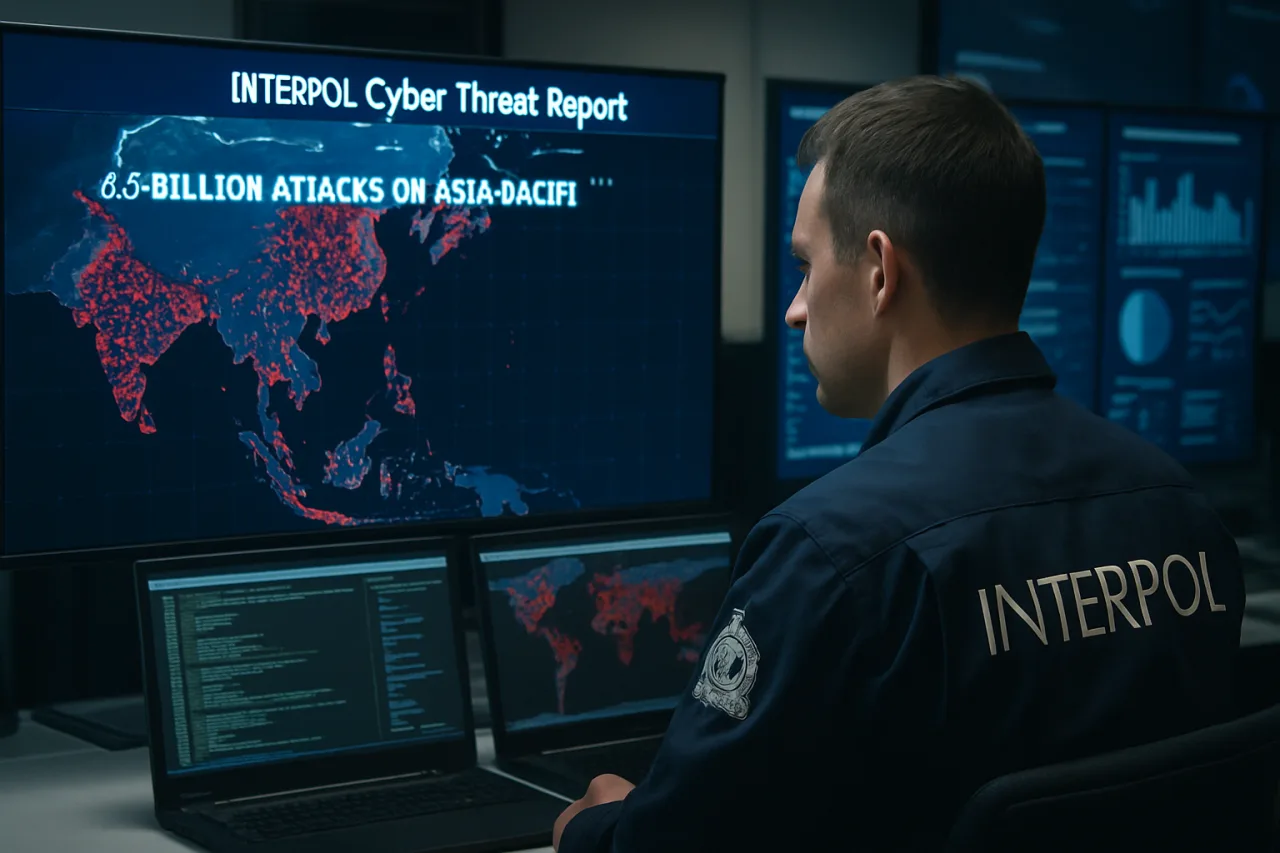
The advisory’s victim geography is not rhetorical for this audience. Observed Integrity Technology Group email-theft victims include government organizations, law enforcement agencies, healthcare systems, and religious institutions located in Southeast Asia; the DOJ filing adds the airports and the Taiwanese institutions. The CISA press release separately notes real-world investigations across North America, Southeast Asia, and Africa. For a Philippines-based, regionally-read publication, that is the uncomfortable point: the region is not collateral damage in a superpower contest — it is where the evidence shows collections actually happening.
Regional readers should also weigh the practical asymmetry. Scanning is constant everywhere; what differs is the defense budget behind the scanned device. A government unit, a university, a hospital network, or a religious organization in Southeast Asia is often running the same internet-facing appliances as any Western enterprise — with thinner security staffing, slower patch cycles, and no threat-intel team watching the IOC feeds. The gap does not make regional organizations safer by obscurity; when the economics of an Integrity Technology Group-supplied attack are this cheap, thin defenses are the addressable market. That is why the mitigations in this advisory — cheap, procedural, mostly free — matter more here than anywhere.
One more regional note, and it is a hard limit: nothing in the advisory names Philippine entities, and no Philippine regulator has published a linked notice as of October 10, 2026. The Philippine connection here is regional exposure and the nationality of readers — not a confirmed domestic incident. Readers should treat any social-media claim of a named Philippine victim as unverified until a regulator or the affected organization confirms it.
What Defenders Should Actually Do: The Advisory’s Checklist, Translated
The advisory’s mitigation section aligns with CISA and NIST’s Cross-Sector Cybersecurity Performance Goals (CPGs) — deliberately basic controls, because basic controls are exactly what the Integrity Technology Group toolchain defeated. Translated out of compliance language, the list divides by audience:
IT, security, and development teams: inventory every internet-facing service and disable what is not needed — the advisory’s first named action, and the one most organizations skip. Patch the known-exploited CVEs first, not the full backlog in order. Compare firewall and VPN configurations against a known-good baseline and hunt for added accounts. Forward appliance and authentication logs to centralized, retained storage before an incident, because local logs rotate away evidence. Monitor for the two signatures this toolchain leaves behind: unexpected remote-access software appearing on endpoints, and abnormal volumes of outbound mail traffic from accounts that never shipped that much before.
Organizational leaders and small-business owners: require MFA on webmail, VPNs, and every account that touches critical systems — the advisory’s own emphasis — and replace default passwords on anything networked. Treat org-wide email the way you would treat the company safe: it holds the password-reset links, the invoices, the vendor relationships, and the history an intruder needs to impersonate you. Backups follow the 3-2-1 habit — three copies, two media, one offline — because recovery without ransom is the only leverage that matters when persistence has evaded the first line.
Individual professionals and creators. You are scanned too — constantly, by tooling like this and worse. Update the router, the NAS, the self-hosted anything the week patches land; remove admin panels from public reach; turn on MFA everywhere, app-based if possible, hardware keys for anything that matters. Use a password manager so one leaked password cannot unlock ten services. If an email or login page ever looks subtly wrong — a prompt that appears inside a site you trust, a password field where none was — close it and reach the service by a bookmark, not the link. That instinct defeats the page-injection technique this advisory documents.
Families and consumers: the same rules, smaller scale. Updates on, MFA on, defaults changed, and a shared rule that nobody enters credentials through a link someone else sent them.
Nothing here promises complete protection — no control set does against a patient, funded adversary. The realistic goal is measurably harder targets: patching closes the doors this toolchain scans for, MFA burns the value of the credentials it harvests, and central logs turn a quiet months-long presence into something an analyst can actually find.
This month’s evidence also lands inside an unusually dense security fortnight, which reinforces the structural point. On October 6, the FBI and US Secret Service published a separate advisory on the FortiBleed credential-compromise campaign, which left more than 86,000 internet-facing Fortinet gateways exposed across 194 countries and served as an entry point for ransomware crews. CISA added fresh Citrix NetScaler vulnerabilities — including CVE-2026-107406, disclosed October 8 (per Citrix’s own bulletin) — to its actively exploited catalog within days.
Different vendors, different crews, same pattern: the perimeter appliance that holds the keys is the target, and the supplier model that packages the attack keeps the crews fed. The FortiBleed credential leak that exposed tens of thousands of VPN credentials earlier this year followed the same perimeter-first playbook — three separately documented stories, one lesson about where keys live.
Where the Accountability Line Should Fall
A contractor-supplied attack ecosystem stretches every existing policy instrument, and the October 8 actions show two of them operating at once. Law enforcement works the infrastructure — seizures deny specific tools, and the DOJ framed this as its second disruption aimed at Integrity Technology Group as an enabler, rather than at any single crew. Diplomacy and sanctions work the firm-and-state relationship — the US sanctioned Integrity Technology Group in 2024, and this advisory re-frames the firm as ecosystem infrastructure rather than one more tracked crew.
Both instruments, on the timeline so far, have failed to stop the activity — acknowledged plainly in Rivetti’s own “second disruption in as many years” framing, which is the government’s way of saying the Integrity Technology Group model survived round one.
For security teams, the practical reading is more useful than the policy debate. If your incident-response playbooks still treat every named threat group as a separate adversary with separate infrastructure, the Integrity Technology Group advisory says your bookkeeping is fiction for at least this family of actors. Run the Integrity Technology Group indicators as one sweep; a hit tells you which crew you met, but the toolchain answer is the same either way.
It is the same consolidation, decades old, that collapsed individual malware families into their build kits: the name on the case file matters less than the supplier of the tools. One hunt, many crews — and the shared infrastructure is the place to look.
What Remains Unknown — and What Would Change the Assessment
Three gaps deserve monitoring, and the assessment should move if any of them closes:
The client list. The advisory says Integrity Technology Group enables “threat actors” without naming or counting them. If indictments or sanctions designations later identify specific client crews, attribution for a decade of unsolved incidents could re-sort overnight.
The scan-versus-breach gap. The DOJ documents confirm Integrity Technology Group scans against the South Carolina power company, the multinational NGO, the Japanese and Polish airports, and the Taiwanese energy firms — but only the two Taiwanese universities as confirmed intrusions after scanning, and roughly 20 universities confirmed through FishHub. If a named target later confirms intrusion, the incident severity changes materially, and so does the mitigation urgency for every similarly configured peer.
The seizure’s measurable effect. Watch for renewed scanning infrastructure, successor vendors, or a third disruption action. If activity shifts to a new supplier within months, the supplier model itself will look stronger; a durable drop would suggest enforcement works. Either outcome is newsworthy, and the follow-through matters more than the announcement.
Frequently Asked Questions
What is Integrity Technology Group? Per the October 8, 2026 advisory, Integrity Technology Group is a China-based, for-profit cybersecurity-adjacent company with links to the PRC government that — per a ten-agency advisory published October 8, 2026 — supplies scanning tools, botnet infrastructure, spear-phishing platforms, and hosting to crews conducting espionage-style intrusions worldwide. US authorities sanctioned Integrity Technology Group in 2024 and have now disrupted its infrastructure twice.
Are Flax Typhoon and Ethereal Panda the same thing? Not exactly — but they overlap. Those are vendor names for activity families whose TTPs the advisory says are consistent with the actors Integrity Technology Group enables, and the advisory itself cautions that vendor groupings may not match the US government’s attribution methodology. Same Integrity Technology Group supplier, several names, possibly several crews.
Did any Philippine organization get breached? No Philippine entity is named in the advisory or the DOJ documents, and no Philippine regulator had published a related notice as of October 10, 2026. What the documents do confirm is email theft from unnamed government, law enforcement, healthcare, and religious organizations located in Southeast Asia. Absence of a named Philippine victim is not absence of risk — regional organizations should still run the checklist above.
I run a small business with one firewall and a website. Is any of this about me? The Integrity Technology Group tooling is literally aimed at what you own: internet-facing services, default passwords, unpatched apps, WordPress scripts. The five-step checklist in the defenders section is written to be executable this week with no security hire.
What single step reduces the most risk first? Patch — and if patching takes coordination you do not have, remove the internet-exposed service’s reachability today and schedule the patch. An unpatched service that cannot be reached from the internet cannot be exploited by the scanning-driven attacks the Integrity Technology Group toolkit automates.
About This Analysis
This article is security intelligence for informational purposes only and is not legal or financial advice. Claims are drawn from joint advisory AA26-281A (CISA), the Justice Department press release of October 8, 2026, the Integrity Technology Group seizure filings, and CISA’s advisory announcement, each linked in the body text as of October 10, 2026. Where a claim is alleged rather than confirmed — FishHub’s exploitation mechanism, most notably — the article labels it as such. Attribution judgments about specific crews remain the sources’; the supplier-model analysis is WorldNgayon’s own, labeled as analysis.
Digital Intelligence for the AI-Powered World — WorldNgayon explains the security stories that outlast the news cycle, so professionals, builders, and global Filipinos can make better decisions after the headlines fade.