Table of Contents
Key Takeaway
- A hardware wallet protects keys with a chip, but the weakest link is now the path the device traveled before it reached you — hardware wallet security starts at the purchase channel, not at setup.
- Confirmed supply-chain tampering in 2026 showed an implant can copy a recovery phrase from a device’s own screen circuitry and transmit it by cellular radio, while the device still passes every electronic authenticity check.
- For real hardware wallet security, buy direct from the manufacturer whenever possible; treat marketplace listings, gift purchases, and “authorized reseller” badges on e-commerce platforms as unverified custody.
- Initialize only a device you personally unsealed, generate the recovery phrase on the device itself, and run a small test transaction before any real funds move in.
- Hardware wallet security maintenance is a trigger discipline too: if a device’s chain of custody is unknown — or a tampering incident touches your purchase channel — rotate the signer and the seed together; a rotation is only complete when the old phrase can never be restored again.
Why hardware wallet security starts before you unbox the device
The mental model most buyers carry is simple: buy the device, set it up, write down 24 words, and the crypto is safe. That model assumes the device was honest when it arrived. The 2026 implant disclosures broke that assumption in public. A device sold through an authorized-seeming reseller in Southeast Asia was confirmed to contain unauthorized hardware — and the failure did not happen on a computer, over the network, or at the chip. It happened in the distribution chain, months before a wallet was ever funded.
The lesson generalizes beyond one brand and one region. Any hardware wallet security plan that starts at setup is already incomplete, because the deciding variable — who physically handled the device between the factory and your desk — is fixed before you touch the box. This guide is the buyer-side answer: a concrete ritual for buying, verifying, initializing, and maintaining cold storage so that the device’s history stops being an act of faith. It is written as a hardware wallet security ritual in seven steps, and each step closes a specific attack path that has actually been used against real buyers.
The 2026 supply-chain lesson in one paragraph
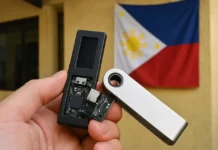
Understanding why this hardware wallet security ritual looks the way it does takes one incident as context. On-chain investigators traced millions of dollars in drains to wallets whose devices had been bought — not stolen — through a reseller in Indonesia, Malaysia, and the Philippines. The manufacturer confirmed an unauthorized hardware implant in at least one device. Teardown research later described how such implants work: extra circuitry on the lines feeding the display reconstructs each recovery phrase word as it is shown during setup, and a small modem with an eSIM transmits the words out.
The secure element that generates the phrase stays honest; the leak happens after it, at the screen. The manufacturer’s own documentation acknowledges the boundary: the genuine check verifies the secure element and cannot detect unauthorized physical modifications when the original chip remains intact. Electronic attestation certifies the chip that was designed — not the board that was delivered. Every step in this guide exists to compensate for that boundary.
The Hardware Wallet Security Ritual: 7 Steps
Step 1 — Buy from the manufacturer first, and let distance cost you money. Direct purchase is the foundation of hardware wallet security because it shortens the custody chain to its minimum: factory, shipper, you. Ordering from the official store costs more in shipping and waiting than grabbing a device off a marketplace shelf, and it buys exactly one thing: fewer hands in between. If direct shipping to your country is blocked, a manufacturer-listed authorized distributor is the fallback — verified against the manufacturer’s own website, never against the seller’s own claim.
Step 2 — Treat “authorized reseller” as a lead, not a guarantee. The 2026 incident involved a reseller that appeared in the manufacturer’s own directory. A directory listing proves the relationship at some point in time; it does not prove the inventory on the shelf today is the inventory that entered the warehouse. If you must buy through a reseller, prefer established retail chains with corporate accountability over individual marketplace sellers, and check the manufacturer’s site for any active incident or suspension notices before paying — directory status needs maintenance, and hardware wallet security decays with the directory.
Step 3 — Never initialize a device that arrived set up, used, or pre-sealed oddly. A cold storage wallet must arrive blank: it should boot asking you to create a new wallet or import one, and you should always choose create. A device that offers a pre-generated phrase on paper, arrives with a PIN already configured, or comes with a recovery sheet in the box is a compromised device — no exceptions, no matter how convincing the story.
This single rule defeats the entire class of “helpful seller” scams, which are still the most common wallet fraud in online marketplaces. Sealed packaging matters for tamper evidence, but it is second-order in hardware wallet security: seals can be replaced, so treat seal condition as a reason to refuse, never as a reason to trust.
Step 4 — Initialize offline, at home, on your own schedule. The setup window is the highest-risk moment in the device’s life, because that is when the recovery phrase exists in displayable form. Do it at a private location, from a computer you control, with no one else in the room, and with the device never connected to a public or shared machine. If anyone offers to “help you set it up” — in person, in a store, or over a call — the answer is no.
Step 5 — Generate the seed phrase on the device, and let the phrase stay there. The words must be produced by the secure element itself and shown on the device’s own trusted display, never typed into a website, generated by an app, or derived from dice-and-wordlist homebrew unless you deeply understand the entropy argument. Write the words on paper or stamp them into steel, in order, by hand. The phrase never enters a phone, a computer, a photo, a cloud note, a password manager, or a messaging app — each of those is a copy of the master key stored on someone else’s infrastructure, and every copy outside the metal is a hole in your hardware wallet security.
Step 6 — Verify what you can, and know what you cannot. Screen confirmation is a hardware wallet security habit, so run the manufacturer’s genuine check from its official app; update firmware only through the same official app; confirm the receive address on the device screen matches what your computer shows. Then accept the boundary: a passed check confirms the chip, not the circuitry around it. That is why steps 1 through 5 are not optional — verification is one layer of hardware wallet security, custody is the other, and the 2026 implants sit precisely in the gap between them.
Step 7 — Fund it like a stranger. The first transfer should be a small test amount that you can afford to lose. Receive it, unplug the device, re-verify the address on the screen, confirm the balance appears, and only then move serious funds. Before loading meaningful value, practice one full recovery drill offline: restore your written phrase onto the device or a spare, confirm the same accounts reappear, wipe it, and return to your initialized device. A backup you have never restored is a theory; a backup you have drilled is a plan.
Seed phrase handling: the phrase is the wallet
Everything above exists to protect one asset: the recovery phrase. Three rules govern it. First, copies: the spoken rule is exactly one written copy per purpose — a working copy and, for larger holdings, a geographically separate disaster copy — and zero digital copies anywhere. Second, access: a phrase that two people can read is a phrase one person can leak; decide who knows where it is, and treat every unexplained knowledge of the words as a rotation event.
Third, the restore rule the 2026 implant cases made brutal: if the words may have leaked, restoring them on new hardware does not make them safe again — it re-arms the leak. A rotation means generating a brand-new phrase on trusted hardware and moving the funds forward. An old phrase can never be washed.
When to rotate a seed phrase: the decision triggers
Rotation is the repair operation of hardware wallet security, and it needs triggers, not vibes. Rotate when: a device’s chain of custody is unknown or unverifiable, because marketplace buys and untraceable reseller purchases are the exact exposure the 2026 ledger implant cases exploited; your purchase channel is named in a tampering or draining incident; the device shows behavior you cannot explain — a passphrase prompt you never set, addresses that change, firmware that fails to update; or any person or service has learned your words who did not need to.
Do not rotate in a panic because of headlines about a brand you bought direct from the manufacturer with no incident touching your order. Panic rotations done sloppily — phrase photographed “for safety” mid-move — create the very leak the rotation was meant to close.
Ongoing hygiene: firmware, apps, and the escalation path
A cold storage device is a tiny computer, and it patches like one. Update firmware only from the manufacturer’s official app, and decline update prompts that arrive by email, SMS, or pop-up. Keep the companion app from the official store — official apps are where hardware wallet security patches land — and re-verify receive addresses on the device screen every time — screen-confirm defeats host-machine clipboard malware that swaps addresses.
For holdings that grow past what you would casually carry, escalate: a passphrase (the 25th word) turns a leaked phrase into a dead end for a thief who does not know it, and multi-signature setups remove single-device custody entirely for larger treasuries. The escalation ladder — seed, seed plus passphrase, multisig — is the practical answer to “what about very large amounts.”
The Filipino and OFW buyer reality
For Filipinos, cold storage is increasingly not abstract: remittance savings, salary converted at receiving platforms, and small-business float all end up on-chain, and the 2026 incident made the Philippines a named territory in the affected distribution channel. Local marketplaces and mall-front gadget stalls are exactly the custody environment where provenance is weakest — a device that changed hands twice in Quiapo costs less and protects less, because hardware wallet security is priced in custody, not in pesos. The OFW-specific trap is the gift purchase: a well-meaning relative buys a wallet abroad to send home, and the custody chain crosses two postal systems and an airport.
If that is your situation, treat the device as unverified custody and rotate immediately after receipt into a phrase you generated yourself. And map the rail side too: the money that would sit in cold storage usually arrives through stablecoin and banking rails, and those rails carry their own freeze and compliance risks — see our stablecoin payment rails analysis and the Coins.ph suspension playbook for what happens when a rail operator gets suspended. Hardware wallet security and rail diligence fail differently, so hedge both.
General information notice
This guide is general information, not financial or security advice tailored to your situation. Product names are referenced for context only; no endorsement is implied. Always follow your device manufacturer’s current official guidance, and consider consulting a security professional before moving significant value into self-custody.
For more context, see our report on crypto TradFi and who controls your money — custody is the same question at personal and institutional scale.
FAQ
Can a genuine check detect a tampered hardware wallet?
No, not reliably. The check verifies the secure element chip, and per the manufacturer’s own documentation cannot detect unauthorized physical modifications such as spying implants when the original chip stays intact, and cannot verify the device’s physical supply-chain history. In hardware wallet security terms, custody discipline — not attestation — closes that gap.
Is it safe to buy a hardware wallet on Lazada, Shopee, or Amazon?
Marketplace purchases put unknown hands in the custody chain — the highest-risk purchase path. If marketplace is the only option, buy only from the platform’s official brand store, inspect for signs of prior setup, and follow the full ritual including the immediate post-purchase checks. Direct from the manufacturer remains the standard this hardware wallet security guide is built around.
What if my device arrives already set up or with a seed phrase?
Refuse it, return it, and treat it as compromised: pre-configured devices are the classic resale scam. A legitimate cold storage wallet always arrives blank and asks you to create a new wallet during setup.
How often should I rotate my seed phrase?
Only on triggers: unknown custody, an incident touching your purchase channel, unexplained device behavior, or exposure of the words. Routine panic rotation creates more risk than it removes. If nothing on the trigger list has happened, a drilled backup and disciplined storage outrank churn.
Should I use the passphrase feature for extra protection?
For meaningful holdings, yes — a passphrase acts as a 25th word that makes a leaked seed phrase alone useless to a thief. The cost is real: lose the passphrase and the hidden accounts are gone, so it demands the same paper-and-steel discipline as the phrase itself.
Do I need a hardware wallet at all for small amounts?
For amounts you would carry in a wallet on a night out, a well-secured software wallet on a clean phone is a proportionate tradeoff. Cold storage pays for itself once the balance would hurt to lose — and the threshold is personal, not technical.
What does “rotate the signer and the seed together” mean in practice?
It means the rotation is one operation with two parts: generate a brand-new recovery phrase on a trusted device, move every asset to the new accounts, and retire the old phrase permanently — never restoring it, never re-testing it anywhere. Restoring an old phrase after a suspected leak — the exact scenario the 2026 ledger implant cases created — re-creates the exposure the rotation was meant to remove.