Table of Contents
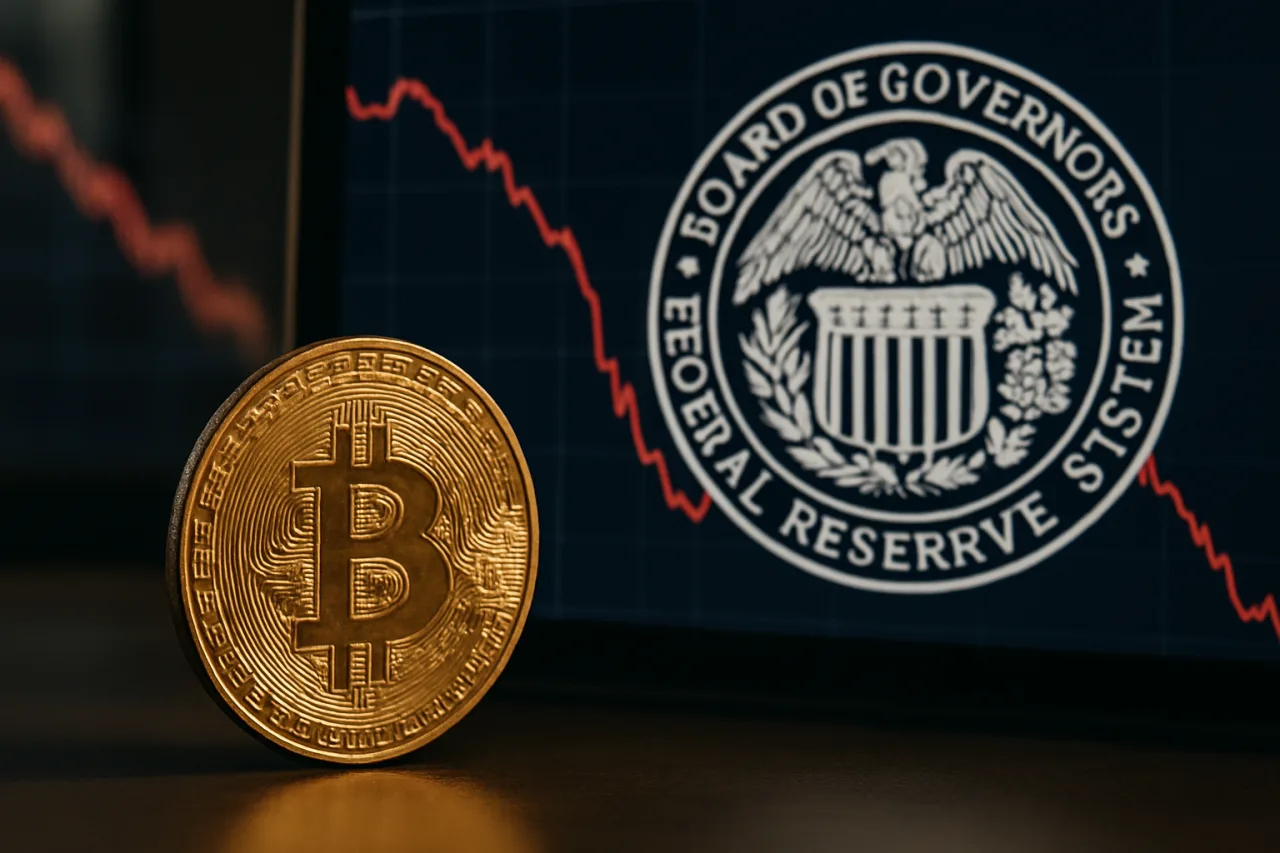
The Fed rate hike odds doubled after CPI. Bitcoin: ~$81,500, -2.8% in 24h after CPI (touched ~$84,000 pre-print) | Ethereum: ~$2,382, -5.4% | RWA sector: -6.33% led the day | October 28 hike odds: 43.7% (up from 22.1% in one day) | BTC+ETH ETFs: -$986.3M in October through Thursday
Key Takeaway
- 📈 Inflation broke the pause narrative: September CPI hit 3.7% y/y (vs 3.6% forecast) — the highest print of the latest run — with core CPI accelerating to 2.6% from 2.4%. October Fed hike odds jumped from 22.1% to 43.7% in a day (CME FedWatch via ActionForex); a hold remains narrowly favored at 56.3%.
- 🪙 Bitcoin answered first: BTC slid below $82,000 within hours of the print — after trading near $84,000 — while ETH (~$2,382, -5.4%) and RWA tokens (-6.33% sector) led the downside. A $352M ETH whale long now sits ~$60 from liquidation.
- 🎯 The real decision line is October 28: the September report (released Oct 14) is the last inflation print the FOMC holds before voting. Next CPI data only arrives Nov 10 — after the decision.
- 🏛️ The Fed’s own path is split: NY Fed’s Williams (FOMC vice chair) says one more hike is enough and “no reason” for more in 2027 — but futures price 93% odds rates end 2027 at least 50bp higher, and December 9 is now the market’s expected hike date.
- 📋 The trade plan: watch $81,500 and $84,000 on BTC as pre-meeting range markers, the Oct 28 statement language on further hikes, and ETF flow prints for confirmation (Farside reported -$261.4M Oct 14; vendors conflict — check your source).
The Fed rate hike question just handed crypto its sharpest macro test since September. On October 14, the Bureau of Labor Statistics printed September inflation at 3.7% — a tenth above forecasts and up sharply from 3.4% — and within hours Bitcoin had slipped below $82,000, Ether sat near $2,400, and the odds of another hike at the Fed’s October 28 meeting had more than doubled. But the same week, the Fed’s own vice chair told Bloomberg he sees the summit: one more hike, then no need for more in 2027. Which Fed rate hike forecast wins — the market’s or the vice chair’s — decides whether Bitcoin sees $90,000 or $70,000 first.
That Fed rate hike gap — between what the market prices and what the Fed’s own leadership says it will do — is now the single trade that decides crypto’s year-end tape. The most direct takeaway: this is not a forecast piece, it’s a decision-map piece. Below: exactly what printed, what the Fed rate hike odds did, what the ETF tape did, where the whale liquidations sit, and the five dates that frame November and December.
What Printed: the September CPI in 60 Seconds
The numbers themselves (BLS CPI data via Blockhead’s Oct 15 report, Wednesday Oct 14):
- Headline CPI: 3.7% year over year (August: 3.4%; forecast: 3.6%). Monthly: +0.6% seasonally adjusted, in line.
- Core CPI: 2.6% y/y (August: 2.4%; forecast: 2.5%). Monthly: +0.3% — the second straight 0.3% print, ahead of the 0.2% forecast.
- Energy did the damage: gasoline +9.1% in the month — over half the headline rise. Gasoline is +34.2% y/y; the energy index +20.4%.
- The worry is the pass-through: car rentals and hotels both rose sharply. Shelter +0.4% m/m (+3.2% y/y). Core inflation had been the Fed’s best friend — its August 2.4% was the lowest since March 2021 — and the September rebound suggests energy is finally pushing through to services.
Read this carefully: a headline spike from gasoline alone is tolerable for the Fed. A core acceleration alongside it is not. The September print delivered both — which is precisely why the October 28 odds repriced so hard despite the October meeting falling after the US midterms and before the Fed’s December projections.
What the Odds Did: 22.1% → 43.7% in One Day
Per CME FedWatch data (via ActionForex), the probability of a Fed rate hike at the October 28 meeting surged from 22.1% the day before the print to 43.7% after it — the sharpest two-day odds shift for a rate decision this year — from 17.7% just a week earlier. A hold is still narrowly favored at 56.3%, but the tape message is unambiguous: the market no longer assumes the Fed can afford to pause.
The dollar and Treasuries confirmed the read. The DXY broke above 102.60 to 102.72; the 2-year yield jumped toward 4.94 and the 10-year rebounded above 5.30%. Higher cash yields are the macro gravity that pulled crypto down after the Fed rate hike repricing: every basis point the front end adds raises the return on doing nothing — and tightens the dollar liquidity that crypto, and especially leveraged crypto, drinks from first.
One verification note, reported honestly: other odds trackers print a different number — BeInCrypto cited October hike odds at 23.8% and Investing.com’s Fed monitor shows a different distribution, and prediction markets had run as high as 69-75% on other days (Polymarket, post different events). Vendor disagreement is real in this tape. The 22.1→43.7% ActionForex print is the cleanest same-day, same-source measure of the CPI shock itself — that’s the number to carry. The 89.8% figure sits further out: futures currently expect the NEXT hike at the December 9 meeting, not October 28.
Williams’s Case: One More Hike, Then Done
The week’s key voice for the other side: New York Fed President John Williams — also FOMC vice chair — in a Bloomberg interview (CoinDesk carried the tape move) Tuesday:
“I haven’t changed my view that it may be appropriate to have one more rate hike. I don’t think at this time I have any reason to believe that we would need to do more.”
Why does a Fed rate hike or its absence matter this much? His arithmetic: the New York Fed’s trend inflation measure sits around 2.3%, and the Dallas Fed’s trimmed mean is at a similar level — underlying inflation, by these gauges, is close to target. Energy, in his view, becomes a disinflationary force in 2027 as this year’s gasoline spike drops out of the annual comparison. What he’s watching instead: AI-driven demand as the inflation driver of 2027.
The market’s counter, per the same report: futures price 93% odds that the Fed rate hike path ends 2027 at least 50 basis points higher than Williams’s implied path — a steeper path than the vice chair endorses. Inside the FOMC itself, the split is visible: 8 of the 18 officials projecting 2027 rates expect a further hike beyond this year, with Cleveland Fed’s Hammack and Dallas’s Logan open to more than one.
What Crypto Did: the Tape in Real Time
The sequence, hour by hour:
- Pre-print: Bitcoin reclaimed the $83,000s, reaching a high near $84,000 — the tape’s initial framing was ‘hold on Oct 28, relief rally.’
- Post-print: BTC fell below $82,000 (down about 2.5-2.8% on 24h, per CoinGecko data via Blockhead), Ether dropped 3.6-5.4% intraday to ~$2,382-2,400, and Solana (~$104) and XRP (~$1.32) fell 3-4%.
- Overnight recovery attempt: after Williams’s comments, BTC popped +1.5% back toward $83,900 in Asian morning trade Wednesday — before the inflation math reasserted itself and the tape faded again.
- Sector damage: RWA tokens led the washout (-6.33% sector: Maple/SYRUP -10.2%, Ondo -6.2%), Layer 2s -4.4%, DeFi -3.6% (with Pyth +8.9% the notable buck), even ZEC, the week’s hottest privacy-coin story, fell 10.6% off its run (full backdrop in our ZEC privacy-coin revival piece) — a caution that this macro washout does not discriminate by narrative.
- Leverage flashpoint: one $352M whale long on ETH faces liquidation between $2,290 and $2,301 — a few dollars below the current ~$2,400 level. Forced selling begets forced selling: watch the ether liquidation cascade risk if $2,400 breaks.
What the ETF Tape Did: the Institutional Check
The ETF channel — the same institutional buyer that absorbed ~$2.65 billion of net inflows in September per CoinDesk — has turned cautious ahead of the Fed rate hike window in October: US spot Bitcoin and Ether ETFs had shed a combined $986.3 million in October net outflows through Thursday, per Farside Investors data (via Cointelegraph). Ether funds logged an eight-session withdrawal streak worth $641 million. Bitcoin’s single biggest day was October 8: $485 million out — the largest daily outflow since June — which erased October’s net inflows.
The October 14 print: another $261.4 million net outflow (IBIT -$110.9M, FBTC -$152.7M, with Bitwise’s BITB the rare +$2.2M holdout), per Farside-reported data. One honesty note: some daily trackers printed October 14 as a +$167.6M inflow — the vendors disagree on same-day attribution; Farside is the reference most desks cite, and multi-day totals (-$618M per week per Farside-tracked data) matter more than any single print. Crypto’s institutional bid has paused, not necessarily rolled over — the flow prints between now and October 28 will show which.
The November-December Map: 5 Dates That Frame the Tape
- October 28 (FOMC decision, 2:00 PM ET): the line item. A hold with a cautious statement ≈ risk-asset relief. A Fed rate hike against 43.7% priced odds ≈ violent repricing. Either way, the statement’s language on ‘further adjustments’ is the tell for December.
- November 10 (October CPI): the next inflation read the market gets — and the last major data before the December meeting.
- December 8-9 (FOMC + updated projections): the market’s currently expected hike date (89.8% odds per CME FedWatch data via BeInCrypto, Oct 14). This is also the meeting with refreshed dot plots — the document that either validates or breaks Williams’s ‘one more hike’ framing.
- Mid-November (ETF flow checkpoint): whether October’s $1B+ outflow pattern was positioning or exit. Sustained inflows into any pre-December weakness would signal the institutional bid is still there.
- Whale liquidation watch (this week): the $352M ETH long’s $2,290-2,301 zone — and the wider Hyperliquid whale tape (Abraxas Capital’s accounts, up $331M+ on short positions now exceeding $1.45 billion) — where forced flows cluster when levels break.
What This Means for the Practical Reader
If you hold or earn in crypto, the playbook is about positioning before the decision, not predicting it:
- Know your leverage exposure now. The tape’s forced-selling risk sits in visible places — whale longs within dollars of liquidation, perp funding turning, exchange inflows. If you’re leveraged long, the October 28 window is exactly when liquidation cascades cluster; size accordingly.
- Stablecoin strategy stays unaffected. A Fed rate hike-or-hold October decision doesn’t change what USDC or USDT pays for settlement — but it changes the dollar’s relative attractiveness for yield. For peso earners and dollar savers across Asia — the remittance corridor math runs through the same dollar cycle — a higher-for-longer dollar keeps USD deposits competitively priced against crypto yields.
- Watch the dollar, not just Bitcoin. The DXY at 102.72 and the 2-year at 4.94% are the leads; crypto is the lag. If those levels hold after October 28, the macro tape (already hostile for a month) stays hostile. If the Fed holds and both fade, risk assets get their window.
- The 2027 framing matters for sizing: if the Fed rate hike cycle really does end on Williams’s ‘one more hike then done’ path, 2027 opens with a Fed moving from tightening toward neutral — historically the liquidity condition under which crypto’s recoveries accelerate. That’s a positioning argument, not a prophecy: futures currently price the opposite (93% odds of a steeper path). For the other macro pieces of this tape, our October odds-flip analysis and the Glamsterdam Sepolia timeline cover the Fed-side and ETH-side setup this quarter built on.
The region’s parallel is direct for Filipino and OFW readers: the Fed path is also the peso path. A December hike tightens dollar liquidity into year-end — historically a stronger-Dollar window where peso-based crypto buyers get more BTC per remitted dollar, while dollar-earning OFWs watch transfer rates. The October 28 decision lands inside that corridor math.
FAQ
How likely is a Fed rate hike on October 28, 2026?
Per CME FedWatch (via ActionForex), the post-CPI odds of a hike at the October 28 meeting reached 43.7% — up from 22.1% a day earlier and 17.7% a week ago — with a hold narrowly favored at 56.3%. Other trackers print different levels; single-day odds moved fast enough that the decision itself is the only real resolution.
Why did Bitcoin fall below $82,000 this week?
September CPI printed above forecast (3.7% headline, 2.6% core), lifting October Fed rate hike odds and dollar/Treasury yields. Bitcoin slipped from near $84,000 to below $82,000 on the print (about -2.5-2.8% in 24 hours), with Ether and RWA tokens leading losses.
Does the Fed want more rate hikes in 2026 and 2027?
It’s split. NY Fed President Williams (FOMC vice chair) says one more hike this year is enough and he has ‘no reason’ to expect more in 2027. But 8 of 18 officials projecting 2027 rates expect another, futures price 93% odds rates end 2027 at least 50bp higher, and the December 9 meeting currently carries ~89.8% hike odds per CME FedWatch data.
Are Bitcoin ETFs selling off in October 2026?
Yes, so far. US spot Bitcoin and Ether ETFs shed a combined $986.3 million in October net outflows through Thursday Oct 9 (Farside, via Cointelegraph), including a $485 million single-day Bitcoin outflow on Oct 8 — the largest since June — and an eight-session Ether withdrawal streak worth $641M.
What happens to crypto if the Fed hikes again?
Historically, a Fed rate hike means dollar strength, tighter liquidity, and downward pressure on risk assets including crypto — which is exactly why the odds repriced the tape so fast. If the Fed instead holds and signals a gentle path, relief rallies tend to follow. The October 28 statement language on ‘further adjustments’ is the practical tell either way.
When is the next US inflation report?
October CPI is due November 10, 2026 — after the October 28 FOMC decision and after the US midterms. That makes September’s 3.7% print the last inflation data the FOMC holds when it votes.
Financial Disclaimer: This article is for general information and analysis, not financial advice. Markets move on data, positioning, and decisions that evolve in real time; figures reflect the October 14-15, 2026 window and cited sources. Verify current rates, odds, and flows with primary sources and your financial adviser before making decisions. Crypto assets are volatile and can lose value.