Table of Contents
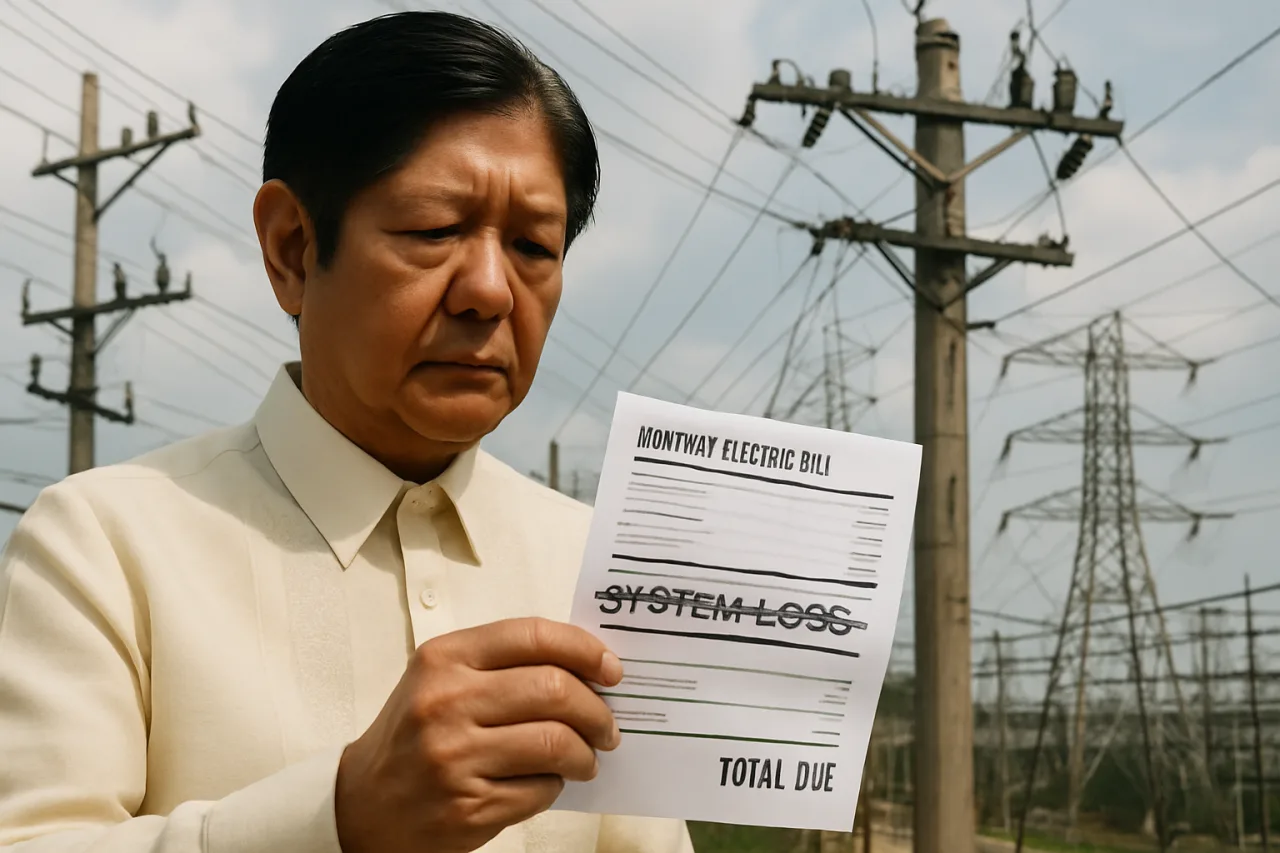
President Ferdinand Marcos Jr. used his fifth State of the Nation Address on July 28, 2026, to demand the immediate amendment of the Electric Power Industry Reform Act (EPIRA) of 2001, calling on Congress to prohibit the passing of system loss charges — and the 12 percent value-added tax on those charges — to consumers. The EPIRA amendment, if passed, would remove a line item that comprises approximately 5 percent of the typical Meralco electricity bill and up to 8.25 percent for electric cooperative customers, delivering what Senate Energy Committee Chairman Erwin Tulfo described as a “significant” reduction in monthly power costs. The push comes as the Philippines struggles with electricity rates that remain among the highest in Southeast Asia, with the average residential rate in Metro Manila exceeding P12 per kilowatt-hour — more than double the rates in Vietnam or Malaysia.
Key Takeaway
- Marcos demanded EPIRA amendment in his SONA. The President called for the immediate prohibition of system loss charges and the 12 percent VAT on those charges being passed to consumers, stating: “It is not the fault of the consumer why there is systems loss.”
- System loss charges cost consumers 5-10% of their bill. For Meralco customers, system losses comprise approximately 5 percent of the electric bill. The ERC caps system loss at 5.5 percent for private distribution utilities and up to 8.25-12 percent for electric cooperatives.
- Senate Energy Committee is fast-tracking the measure. Chairman Erwin Tulfo filed resolutions to investigate system loss charges, repeal the Energy Tax law, and remove the 12% VAT. He targets passage before the end of 2026, with three more committee hearings before sponsorship.
- Multiple senators have filed supporting bills. Sen. Kiko Pangilinan filed Senate Bill No. 2124 to exempt system loss charges from VAT. Sen. Risa Hontiveros filed Senate Bill No. 2706 for the same purpose, while calling for broader review of generation, transmission, and distribution charges.
- Industry claims P60 billion in losses. Power utilities argue that scrapping system loss charges would cost the industry P60 billion. Lawmakers are weighing this against the consumer burden of paying for electricity that is lost or stolen before it reaches their homes.
What Is EPIRA and Why It Needs Amendment
The Electric Power Industry Reform Act, or EPIRA, was enacted in 2001 to restructure the Philippine electric power industry. The law unbundled the industry into four components — generation, transmission, distribution, and supply — and privatized many state-owned power assets. At the time, EPIRA was promoted as the solution to the country’s electricity crisis, promising lower rates through competition and private sector efficiency.
The push comes as households and businesses continue to face electricity bills shaped not only by generation, transmission and distribution charges, but also by items such as system loss and taxes that have long drawn scrutiny in Congress. According to the Philippine News Agency, Marcos urged Congress to “immediately amend” EPIRA to bring down the price of electricity. While the proposals would not rewrite the power market overnight, senators said the measures are intended to chip away at charges that consumers pay each month and which have become a recurring issue in debates over the country’s high cost of living.
More than two decades after EPIRA’s passage, Philippine electricity rates remain among the highest in Asia. One of the most contentious provisions of the law allows distribution utilities to pass system loss charges directly to consumers. System loss refers to electricity that is lost during transmission and distribution — caused by natural physical processes as power passes through lines and transformers, as well as by outright theft through illegal connections and meter tampering.
Under EPIRA, the Energy Regulatory Commission sets caps on the amount of system loss that utilities can pass to consumers: 5.5 percent for private distribution utilities like Meralco, and up to 8.25 percent (with some exceptions reaching 12 percent) for electric cooperatives serving provincial areas. For a household consuming 200 kWh per month at P12 per kWh, a 5.5 percent system loss charge adds approximately P132 to the monthly bill — plus 12 percent VAT on top of that, adding another P15.84, for a total of nearly P148 per month in charges for electricity the household never actually used.
Marcos framed the issue in direct terms during his SONA: “If we’re talking about reducing the price of electricity, I believe it is time to scrap the systems loss that is being passed on to consumers. It is being passed on to consumers and added to the bill with value-added tax on top of it.” The statement drew a standing ovation from lawmakers — a rare moment of bipartisan consensus on an issue that has frustrated Filipino consumers for over two decades.
What the EPIRA Amendment Would Change
The proposed EPIRA amendment targets two specific charges that appear on every Filipino electricity bill:
1. System loss charges. Currently, utilities pass the cost of lost and stolen electricity to consumers. The amendment would prohibit this practice, requiring utilities to absorb system losses as an operational cost — the same way any other business absorbs losses from shrinkage, spoilage, or theft. Utilities would need to invest in better infrastructure, theft prevention, and technical efficiency to minimize losses rather than simply billing customers for them.
2. VAT on system loss charges. Even the system loss charge itself is subject to 12 percent value-added tax. Removing the system loss charge automatically eliminates the VAT on it, but senators are also filing legislation to ensure the VAT removal is codified separately in case the system loss prohibition faces delays.
According to Senate Energy Committee Chairman Tulfo, the combined impact would be substantial. “If we remove the 12% VAT and the 5% to 10% system loss, the bill reduction will be significant,” he stated during a news briefing on July 28. For a household paying P2,400 per month (200 kWh at P12/kWh), removing 5 percent system loss plus 12 percent VAT on that charge would save approximately P148 per month, or P1,776 per year. For businesses with higher consumption, the savings scale proportionally.
The EPIRA amendment also intersects with the broader Meralco refund story. On August 2, 2026, the ERC ordered Meralco to refund P9.51 billion in over-collected charges. While the refund is a one-time adjustment for 2025 over-recoveries, the EPIRA amendment would create a permanent structural change to how electricity is billed. For more on the refund, see our Meralco refund guide.
Who Supports and Who Opposes the Amendment
The EPIRA amendment has drawn support from across the political spectrum, though with varying degrees of ambition:
| Lawmaker | Position | Key Action |
|---|---|---|
| Sen. Erwin Tulfo (Energy Committee Chair) | Supports full removal of system loss + VAT | Filed resolutions to investigate, repeal Energy Tax law, remove 12% VAT. Targets passage before end of 2026. |
| Sen. Kiko Pangilinan | Supports VAT exemption on system loss | Filed Senate Bill No. 2124 to exempt system loss charges from VAT |
| Sen. Risa Hontiveros | Supports removal but wants broader reform | Filed Senate Bill No. 2706 for VAT removal. Calls for review of generation, transmission, and distribution charges too. |
| Rep. Sarah Jane Elago | Wants EPIRA repealed entirely | Argues EPIRA itself is the root cause of high rates. Says amendment is not enough — the law must be “junked.” |
| Pres. Ferdinand Marcos Jr. | Demanded immediate amendment | SONA directive to Congress. Also proposed “Sariling Kuryente Act” for solar + battery storage and nuclear energy revival. |
On the opposing side, the power industry has warned of significant financial impact. Senate deliberations weighed industry claims of a P60 billion loss from scrapping system loss charges, according to the Senate of the Philippines. Distribution utilities argue that absorbing system losses would require raising base rates or reducing investment in grid infrastructure. Meralco Chairman and CEO Manuel V. Pangilinan has previously questioned who will absorb the financial burden of electricity reforms, while Energy Secretary Sharon Garin has acknowledged that removing system loss charges “will really take time.”
The counterargument from consumer advocates is straightforward: every business experiences losses, but not every business is allowed to pass those losses directly to customers. As one Facebook commenter on the Philstar story noted: “Every business has losses. Not everyone has the right to pass on the losses to their customers.”
What This Means for Filipino Consumers and Businesses
For Filipino households, the EPIRA amendment would provide permanent monthly savings on electricity bills. The exact amount depends on consumption and the utility’s current system loss rate, but a typical Meralco household could save P100-150 per month, while electric cooperative customers in provinces — where system loss caps are higher — could save even more. Over a year, this represents P1,200-1,800 in savings per household, money that stays in consumers’ pockets rather than subsidizing transmission inefficiencies and electricity theft.
For businesses, the impact is more significant. A small business consuming 1,000 kWh per month would save approximately P660-740 per month on system loss charges alone. Manufacturing operations with high energy consumption would see proportionally larger savings, improving competitiveness in a country where electricity costs are a persistent drag on industrial productivity. For context on how electricity costs affect business operations, see our Visayas power grid crisis report.
For investors, the EPIRA amendment creates both risks and opportunities. Distribution utilities like Meralco face the prospect of absorbing costs they previously passed to consumers, which could affect profit margins. However, renewable energy companies stand to benefit from the companion “Sariling Kuryente Act” proposed by Marcos, which would make it simpler and less expensive for consumers to install solar panels and battery storage. Distributed solar generation reduces reliance on the grid, directly addressing the system loss problem by generating electricity at the point of consumption. For investment context, see our PSEi rebalancing guide and PSE blue chip stocks guide.
The Timeline: When Will Consumers See Relief?
The EPIRA amendment is not an overnight fix. Senate Energy Committee Chairman Tulfo outlined a timeline that involves three more committee hearings before the measure can be sponsored on the Senate floor. Tulfo expressed confidence that the amendments could be accomplished “before the end of this Congress,” and specifically targeted the system loss and VAT measures for passage before the end of 2026.
Even after legislative passage, implementation would require ERC rule-making and adjustments by distribution utilities to their billing systems. Based on the timeline for previous electricity rate reforms in the Philippines, consumers could realistically see the changes reflected in their bills by mid-2027 — assuming the legislation passes by early 2027 as targeted.
The broader context is important. Marcos also used his SONA to call for nuclear power revival, the Sariling Kuryente Act for rooftop solar, and the completion of 200 power projects totaling nearly 10,000 megawatts of capacity by the end of his administration. He noted that the Luzon, Visayas, and Mindanao grids are now fully connected, and that the ASEAN Power Grid framework agreement has been ratified under the Philippines’ ASEAN chairship. These initiatives, combined with the EPIRA amendment, represent the most ambitious electricity reform agenda in the Philippines since EPIRA itself was passed in 2001.
Whether the reform delivers on its promise depends on execution. EPIRA itself was supposed to lower electricity rates — and 25 years later, the Philippines still has among the highest rates in the region. The system loss charge removal is a concrete, measurable change that would provide immediate bill relief. But as Sen. Hontiveros cautioned: “It’s a step in the right direction, but this is only the beginning.” The deeper structural issues — generation costs, transmission efficiency, market competition, and the regulatory framework — will require sustained attention beyond a single amendment.
Frequently Asked Questions
What is the EPIRA amendment?
The EPIRA amendment is a proposed reform to the Electric Power Industry Reform Act of 2001, initiated by President Marcos in his July 28, 2026 SONA. The amendment would prohibit distribution utilities from passing system loss charges to consumers and remove the 12 percent VAT on those charges. System loss charges currently add approximately 5 percent to Meralco bills and up to 8.25-12 percent for electric cooperative customers.
How much will I save if the EPIRA amendment passes?
A typical Meralco household consuming 200 kWh per month would save approximately P100-150 per month on system loss charges and the VAT on those charges. For a household consuming 300 kWh, savings would be approximately P150-220 per month. Electric cooperative customers in provinces, where system loss caps are higher, could save more. Annual savings per household are estimated at P1,200-1,800.
When will the EPIRA amendment take effect?
Senate Energy Committee Chairman Erwin Tulfo has targeted passage of the system loss and VAT measures before the end of 2026. The measure requires three more committee hearings before Senate floor sponsorship. After legislative passage, implementation requires ERC rule-making and utility billing system adjustments. Consumers could realistically see changes in their bills by mid-2027.
Why are system loss charges on my electricity bill?
System loss charges cover electricity that is lost during transmission and distribution. Losses occur from natural physical processes as power passes through lines and transformers, and from electricity theft through illegal connections and meter tampering. EPIRA currently allows utilities to pass these losses to consumers. The amendment would require utilities to absorb them as operational costs instead.
Will removing system loss charges raise base electricity rates?
Industry representatives warn that absorbing P60 billion in system losses could force utilities to raise base rates or reduce infrastructure investment. Consumer advocates argue that utilities should improve efficiency and theft prevention rather than passing losses to customers. The Senate Energy Committee is weighing both positions during hearings. The net effect on total bills will depend on how the amendment is structured and whether base rate adjustments are permitted alongside the system loss removal.
Disclaimer: This article is for informational and educational purposes only and does not constitute financial, legal, or policy advice. Legislative proposals are subject to change during the congressional process. Savings estimates are based on current system loss rates and electricity prices as of August 2026. Readers should consult the ERC and their local utility for specific billing information. The author and publisher disclaim any liability for actions taken based on this information.