Table of Contents
Key Takeaway
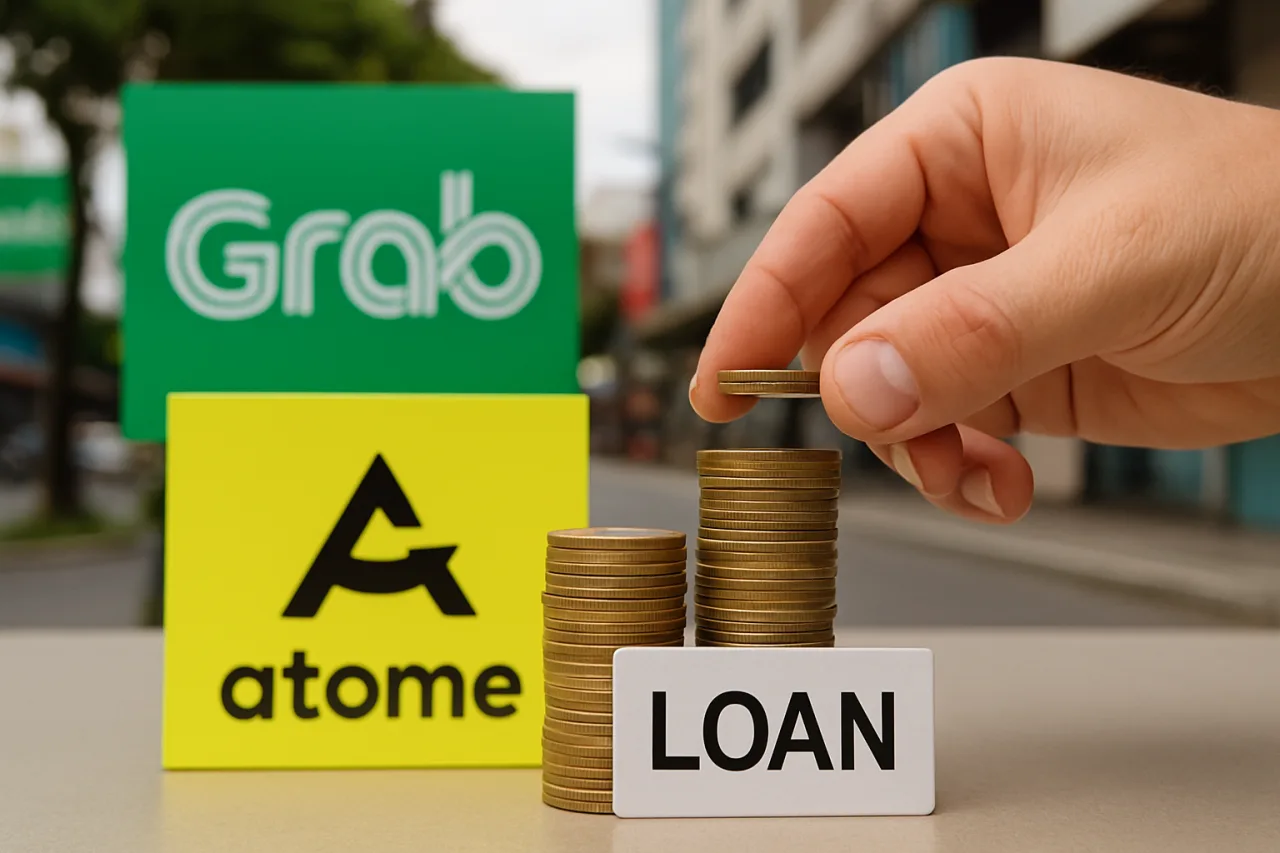
The Grab Atome acquisition turns a ride-hailing app into Southeast Asia’s consumer lender. Grab (NASDAQ: GRAB) agreed on September 15, 2026 to buy a controlling 60% stake in Atome Financial — the digital financial services platform of Advance Intelligence Group — for $1.49 billion in cash, with the remaining 40% to follow about two years after closing under a performance-linked formula valuing the whole business between $2.0 billion and $4.5 billion. Closing is targeted by Q3 2027, pending regulatory approvals.
Atome’s books include BNPL loans, consumer cash loans, BNPL cards and digital lending across five markets — Singapore, Malaysia, the Philippines, Indonesia and Thailand — with a gross loan portfolio of $1 billion as of June 30, 2026.
The deal mechanics, dated and sourced
The structure is a two-phase earn-out. Phase 1: Grab acquires 60% for $1.49 billion, of which about $260 million is primary growth capital that goes into Atome’s business rather than to sellers, announced via Grab’s investor release and Reuters on September 15, 2026. Phase 2: the remaining 40% roughly two years after completion, priced by formula rather than fixed — a 13.0x multiple on annualized adjusted EBITDA and 2.5x on annualized revenue, measured over the six months before Phase 2 closes and weighted 75%/25%, with at least half the consideration in cash against a $2.0 billion floor and a $4.5 billion cap.
The earn-out discipline is the tell. Grab pays full multiples only if Atome actually performs between Phase 1 and Phase 2 — the same return-tested approach it says governed the 60% price. SpinDepth’s October 5 analysis called it a full price for a lender in a year when many lending start-ups raised at flat or falling valuations: at $1.49 billion for 60%, the implied whole-business value sits near $2.5 billion before any earn-out uplift.
Why Grab Atome matters for the Philippines specifically
Manila Times reported October 7 that Grab initiated the Grab Atome acquisition “as the regional technology group seeks to expand its financial services business in the Philippines.” Atome already operates across the five-market footprint with 25 million cumulative transacting users and more than 30,000 brand partners. The deal combines that book with Grab’s payments, digital banks and lending services on top of Grab’s nearly 54 million monthly transacting users — instantly making the combined entity one of the largest consumer-credit data holders in the Philippine market.
For Filipino consumers the practical change shows up in three places: checkout options — the Grab Atome installments inside Grab-affiliated merchants; cash-loan offers inside super-apps that already know spending patterns; and the consolidation of credit histories under one platform’s risk model. The Grab Atome deal makes Grab a lending company that happens to run rides — not a ride company that offers loans.
The credit-concentration question regulators will ask
One platform holding mobility, delivery and BNPL data for tens of millions of users creates the exact concentration SEA regulators have been building firewalls around all year. Indonesia moved digital-asset supervision to OJK and is drafting its 2026-2031 roadmap; Vietnam’s data-sanctions decree takes effect November 11; the Philippines operates its own SEC-registered BNPL disclosure regime. Grab’s financial services ambition now includes the Philippines as a named expansion market — the Grab Atome transaction will face Philippine regulatory review as part of its closing conditions, alongside approvals in the other markets where Atome operates.
The consolidation also raises the consumer-protection mirror: BNPL’s core risk is invisible debt stacking across merchants. A single Grab Atome platform seeing all the stacks can manage that risk better than fragmented providers — or exploit it by approving more debt precisely because it sees more. Which way the Grab Atome consolidation cuts depends on disclosure rules still being written, and on whether regulators require open credit-bureau reporting of BNPL exposure.
For OFW families: the fine print that matters
Remittance households are the population BNPL marketing targets first: high income urgency, thin formal credit histories, and smartphone-first spending — the same households reading our remittance cost guide. The Grab Atome combination puts a $6 billion loan-portfolio target (Grab’s 2028 Financial Services goal) behind a platform with 25 million users — capital like that makes credit easier to get and harder to evaluate. Three disciplines survive any Grab Atome-platform marketing: no BNPL stack should exceed one repayment cycle’s capacity; deferred payment is not a discount; and a missed BNPL installment now writes the same credit-bureau history a housing loan will read.
The broader read matches our regional coverage: this is scale-up week for Southeast Asian fintech — Grab buying its lending book, Sea applying for a Thai banking license, OCBC and Ant International tokenizing deposits, Thai regulators courting crypto tourists. Capital chose infrastructure this week, too — it is choosing platforms over products. Grab’s Grab Atome deal is the largest single bet in that wave, and its Q3 2027 close date makes it the calendar item regulators in five capitals now share.
What $1.49 billion buys: a lender, not a feature
Grab’s 6-K filing to the US Securities and Exchange Commission spells out the ambition behind payment: the combined Financial Services segment targeted to deliver $500 million in segment adjusted EBITDA and a gross loan portfolio above $6 billion by 2028, with group targets raised to $1.7 billion adjusted EBITDA and 30%-plus revenue CAGR from 2025 to 2028. Those are lender economics, not checkout-feature economics. The {A} transaction converts Grab’s ecosystem into a regulated credit business with the fleet scale to price risk from behavioral data that banks cannot see.
Atome brings the origin engine: BNPL loans, consumer cash loans, BNPL cards and digital lending already running across Singapore, Malaysia, the Philippines, Indonesia and Thailand, with backers the Grab Atome filing names as Standard Chartered, HSBC, Bank Jago, DBS Bank, SMBC, BlackRock and Evolution. The management team stays to run the business — Grab explicitly says Atome Financial’s management continues to drive its growth — then financially consolidates the whole book into Grab’s Financial Services segment once closing completes in Q3 2027.
Why buy instead of build: the lending-speed math
Building a consumer loan book from Grab’s own base would have taken years of originations, charge-off history and regulator trust before any underwriting model had a track record to validate. Buying Atome imports a five-market operation with 25 million cumulative users, a $1 billion gross loan portfolio for the six months ended June 30, 2026, and a merchant network above 30,000 brands. SpinDepth’s read: Grab is paying up for speed, betting an established lender is cheaper than years-building one. The {A} structure caps what Grab pays if performance lags — the earn-out formula means the sellers shoulder valuation risk between phases.
That two-phase design also answers the question investors asked all year about BNPL economics: no one wanted to pay fixed prices for unproven loan books — the Grab Atome earn-out prices performance instead. Tying 40% of the consideration to 13.0x EBITDA and 2.5x revenue measured at Phase 2 — with a floor of $2.0 billion and a cap of $4.5 billion — prices performance, not promise. The weighted formula (75% EBITDA, 25% revenue) leans the payout toward profitability rather than top-line growth, a direct response to the 2024-2025 BNPL repricing cycle.
Grab Atome regulatory map: five approvals, five clocks
The Grab Atome closing by Q3 2027 requires regulatory approvals across the markets where Atome operates, plus customary conditions. Three national clocks run hottest. The Philippines: Grab named the market as its financial-services expansion target, so Philippine competition and SEC oversight will weigh a super-app consolidating credit data. Indonesia: OJK absorbed digital-asset supervision in January 2025 and is mid-roadmap on consumer safeguards, with 22.93 million digital financial asset accounts already registered. Singapore: home market for both, and the MAS has been explicit about BNPL conduct standards since the industry code launched.
The {A} deal lands in a region that just spent a year writing data rules: Indonesia’s GR 33/2026 (effective January 16, 2027) adds DPIA requirements for large-scale processing and automated decisions; Vietnam’s Decree 363 (effective November 11, 2026) attaches license suspension powers to data violations; Thailand’s SEC is finalizing stablecoin and digital-asset frameworks. Consumer-lending consolidation across borders now triggers exactly those regimes — credit files are personal data, and the Grab Atome cross-border scoring is exactly the regulated activity.
BNPL in the remittance household: the stack problem
The {A} platform inherits the sector’s structural risk: BNPL’s convenience comes from invisible debt stacking — four installment plans at four merchants, each individually affordable, together exceeding monthly capacity. Fragmented providers cannot see the stack; a consolidated super-app lender can. That cuts both ways. Risk-managed well, the {A} consolidation lets a lender decline the fifth installment plan because it sees the first four. Managed for growth, the same visibility justifies approving more debt because default likelihood is more precisely priced.
Which direction dominates is a disclosure question. The Philippine framework already requires SEC registration for BNPL operators; credit-bureau reporting of BNPL exposure is where policy is headed region-wide. For households, the discipline stays constant:
Installments are claims on next month’s income; late fees compound faster than remittance margins; and BNPL histories following users into bureaus — the Grab Atome consolidation makes those histories unified — mean the ₱2,000-per-month convenience purchase can price the housing loan three years later.
The Grab Atome week: platforms over products
The regional week that contains the {A} close-date news also holds Sea’s Thai digital banking license application, OCBC and Ant International’s tokenized-deposit treasury pilot between Singapore and Malaysia, Thailand’s national crypto-tourist sandbox, and OJK’s 2026-2031 digital-asset roadmap preparation. Each is a different answer to the same question: who owns the customer’s financial relationship in Southeast Asia’s next decade. Grab’s answer is the platform with the data; the {A} acquisition is the down payment on that thesis.
For the Grab Atome market map, note what Grab did NOT buy: a bank. It bought a lender that plugs into Grab’s payments, digital banks and existing lending services — the filing’s own phrase — keeping the regulated-bank questions simpler while capturing the consumer-credit margin. Sea chose the opposite route (licenses); OCBC chose the infrastructure route (tokenized deposits). The {A} deal proves the platform route has the most expensive entry ticket: $1.49 billion, earn-out to $4.5 billion, and five regulatory clocks running until Q3 2027.
What the credit-files concentration means in five markets
A combined Grab-Atome entity would hold behavioral and credit data spanning mobility patterns, delivery preferences, installment histories and repayment timing for tens of millions of users. Under Indonesia’s GR 33/2026, large-scale processing and automated decision-making trigger mandatory impact assessments from January 2027 — the Phase 1 closing year. Vietnam’s decree attaches suspension powers to data violations from November 11. Philippine BNPL operators face SEC registration duties already, and the Data Privacy Act governs whatever scoring models run on Filipino consumers. The Grab Atome transaction is therefore the first mega-deal priced after SEA’s new data architecture became binding — its compliance build will be studied by every platform lender that follows.
The merchant side is equally concentrated: more than 30,000 brands already take Atome at checkout across five markets, and Grab’s super-app can bundle BNPL into delivery, mobility and in-app retailing at once. That is the flywheel effect the filing celebrates. The question for 2027-2028 is whether regulators require shared infrastructure — credit-bureau reporting, interoperable exposure data — so that a household’s installment stack is visible to every lender, not only to the platform that owns the apps they already open. Financial inclusion gains from the Grab Atome scale-up are real; so is the precedent of one private company seeing the whole household balance sheet.
The bottom line for consumers across the five markets: the Grab Atome entity will know more about a household’s money flow than any bank in the region, and the pricing of that knowledge — in interest, limits and approvals — is the consumer story to track from Phase 1 closing through 2028. Watch the credit-bureau reporting rules as closely as the deal itself; they decide whose data the new lender sees.
Sources: Grab Holdings press release and investor filing, September 15, 2026 (60% for $1.49B; $0.26B primary capital; Phase 2 formula 13.0x EBITDA/2.5x revenue weighted 75/25, floor $2.0B, cap $4.5B); Reuters, September 15, 2026; The Business Times, September 15-16, 2026; SpinDepth analysis, October 5, 2026 (25M cumulative users, $1B gross loan portfolio as of June 30, 2026); Manila Times, October 7, 2026 (Philippines expansion framing). Figures as announced; not financial advice.