Table of Contents
Key Takeaway
- 💰 The credit card income ladder, from the BDO’s own requirements page (2026): ₱15,000/month minimum opens the Bench, ShopMore, Standard Mastercard, Visa Classic, JCB Lucky Cat and the Blue-from-Amex classes; ₱33,000 opens Gold/HOPE/Diners/Amex-Cashback; ₱66,000-₱165,000 prices the Explorer, Platinum, Diamond and Visa-Signature classes — the full table runs in the piece.
- 🪪 The OFW’s own honest gap: the standard card classes expect the BIR-stamped ITR (the self-employed class runs it + 2 years of audited financials) — an OFW earning abroad has no Philippine ITR; the honest routes that fill the gap: the OFW-account programs (the BPI Pinoy Abroad class), the remittance-history proof, and the family-side applications (the supplementary-card class).
- 🏦 The banks’ own classes: the Filipinos qualify on citizenship (the resident-of-record class), the age classes run 21-60 for the principal and 13+ for supplementary; the foreigner-resident class rides the ACR/ICR/visa proofs (the Metrobank’s own page).
- ⚠️ The use-right honesty: the cards’ finance-charge classes run monthly percentages — revolved balances cost double-digit percentages annually; the honest card use = the full-payment habit, with the card serving rewards, the online-purchase rails and the fraud layer — never as long-term credit.
- 🛡️ The fraud layer is real value: the card classes carry chargeback protections (the disputed online purchases run the reversal classes) — the honest reason the card sits in an OFW’s online-shopping rail beside the wallet classes.
The credit card for OFWs has an honest architecture problem: the standard application classes expect Philippine-paper income proofs an OFW doesn’t hold, while the income ladder itself starts at ₱15,000 monthly — below what most deployments earn. This credit card guide maps the whole picture: the verified income-tier tables (the BDO’s own classes), the banks’ identity and age rules (the citizen/resident classes), the OFW’s honest gap and the routes that fill it (the OFW-account programs, the remittance-history classes, the supplementary route), and the use-right law — the full-payment habit, the fraud layer’s class, and the honest placement of card credit beside the ladder framework the desk’s pieces teach. Every class anchors to the banks’ own pages or the dated community desks; nothing invented.
The Credit Card Income Ladder: the BDO’s Own Tiered Table, 2026
The verified rows, priced from the BDO’s own requirements page: ₱15,000 monthly gross (Bench, ShopMore, Standard Mastercard, Visa Classic, JCB Lucky Cat, the Blue-from-American-Express and the Installment Card classes); ₱33,000 (Gold, HOPE Mastercard, Diners Club International, Amex Cashback); ₱66,000 (the Amex Explorer); ₱77,000 (Platinum Mastercard, Visa Platinum, JCB Platinum, Diners Club Premiere); ₱93,000 (Diamond UnionPay, Amex Platinum); ₱165,000 (Visa Signature). The honest reading: the tier’s shape prices the card’s class before the perks-conversation starts — and the OFW’s earnings classes ride most tiers honestly; the gap is not the income — it’s the PAPER (the next section).
The Credit Card Paper Gap: Why OFW Applications Stall
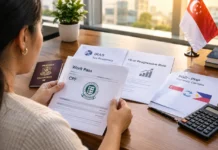
- The employed-class route runs the ITR: the standard requirements expect Philippine-paper income documents; the self-employed class runs the BIR-stamped ITR + 2 years of audited financial statements + the DTI/SEC registrations (the BDO’s own list); the OFW’s class — absent onshore ITR — stalls exactly there, unless the application runs the OFW-route classes the banks’ own OFW programs carry.
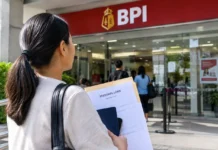
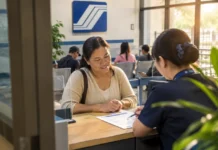
- The honest route one — the OFW-account programs: the OFW banking programs (the BPI’s Pinoy Abroad class — the BPI’s own OFW page) carry the bank-relationship classes: the deposit history, the remittance record, the loan/card classes beside — the honest principle: the bank that knows your peso history prices you inside it; the desk’s savings-account guide carries the programs.
- The honest route two — the remittance-history proof: the consistent remittance records (the corridor rails’ statements — the desk’s corridor guides) function as the income-trail class where the ITR-class is absent; the honest verify: each bank’s OFW-class requirements read at application month.
- The honest route three — the supplementary-card class: the family-side application (the spouse or the parent’s principal card with the supplementary line at 13+) puts an OFW’s online-spending rails in the household’s own class — with the honest note: the supplementary card rides the principal’s credit and the principal’s responsibility.
Credit Card Identity and Age Classes: Who Qualifies
The banks’ own rules: the BDO class — 21-60 years for the principal, 13+ for the supplementary; the applicant a Filipino citizen or a foreigner resident of the Philippines; the contact class (a mobile or a landline in the residence or workplace); the business-operating class (2+ years) for the self-employed. the Metrobank’s foreigner classes — the ACR/ICR or the visa proofs (the Metrobank’s own card page); the honest note for the OFW: the non-resident-Filipino status reads exactly where the OFW-route classes (the programs and the SPA-routes) carry the application — the desk’s honest framing: the standard-page classes and the OFW-programs run DIFFERENT routes; the OFW’s application decides which route’s paper its life already carries.
Using the Right Way: the Full-Payment Law and the Fraud Layer
- The full-payment habit: the finance-charge classes run monthly percentages on revolved balances — the honest credit card arithmetic: a ₱50,000 revolved balance at the standard monthly rate class costs thousands of pesos monthly; the card’s honest role runs as a payment RAIL (the full-payment habit + the billing-date discipline), not as long-term credit — the ladder framework’s own honest boundary.
- The rewards’ honest class: the cashback and the travel classes reward the disciplined payer only — the interest class eats thin rewards’ value at the first revolved balance; the honest read: the rewards’ arithmetic runs positive only under the full-payment law.
- The fraud layer: the card classes carry the disputed-purchase rails (the chargeback classes) — the honest value for the online-shopping class (the OFW’s own PH-side orders and the family’s own purchases); the wallet classes (the GCash/Maya rails the desk’s guides carry) run cheaper but thinner-protection classes — the honest comparison prices the card’s layer as the online-fraud insurance beside its rewards.
- The abroad-class honesty: the peso-card’s foreign-transaction classes (the conversion-class fees the bank’s own schedules carry) price the OFW’s own international spending — the desk’s honest advice-class: the peso-earned cards serve PH-side rails; foreign-currency spending runs the multi-currency classes the desk’s guides carry.
A Short History: How the OFW Card Lane Opened
The honest arc: the Philippine card market ran the branch-class model for decades — the applications walked paper through branches, and the OFW’s absence meant the paper’s absence; the OFW-banking programs (the Padala-era structures) built the remittance rails first, the account-relationship classes second, and the card classes came last — the ladder the OFW wallet climbed in reverse of the domestic wallet’s class. The digital era’s own change: the online applications ran the paper’s distance-problem down, the OFW-programs’ classes (the BPI-PA’s own rails) made the bank-relationship class the honest entry point, and the supplementary-card class ran the family’s own bridge at every stage. The honest lesson the history carries: the OFW’s card lane opened from the BANKING side and the FAMILY side, not from the card side — which is why the honest applications read the account classes first; the desk’s framing: the card is the top of the OFW-ladder, not its door.
The OFW Card vs the Virtual-Card Classes: the Honest Comparison
The honest comparison against the virtual classes (the desk’s Revolut guide carries their own class): the virtual-card class (the fintech wallets and the multi-currency rails) runs remote-opening, multi-currency balances and low-cost FX rows — the OFW’s abroad-spending layer — but carries no Philippine credit-building class (the fintech spends don’t feed the PH credit-score system the desk’s guide carries) and no chargeback class in the bank-card’s shape. the bank credit card’s class runs the PH credit-history’s own building rail (the scores’ systems read the card classes), the chargeback protections, and the PH-side family’s own spending rails — with the heavier papers (the OFW-route classes) and the FX classes on foreign spending. The honest ladder: the virtual classes carry the ABROAD layer; the bank card carries the PH-HISTORY layer; the honest OFW wallet runs both where the life’s classes demand them — and the desk’s honest caution: the credit-history layer matters at the loan classes (the housing-loan and the motor classes the desk’s pieces carry), where the fintech-only wallet shows an empty score the banks’ own systems never read.
The Credit Card’s Role in the OFW Wallet’s Ladder
The honest placement, in the ladder framework’s own shape: the card sits OUTSIDE the savings ladders (the MP2, the TD, the PERA classes run savings rails) and OUTSIDE the boundary envelope — its honest roles price three: the spending rail (the online-purchases’ dispute-protected class), the score-building class (the PH-credit-history’s own feeding system), and the emergency-credit class (the honest last-resort line whose finance-charge classes price the emergency’s cost honestly — the desk’s framing: the emergency CASH envelope (the buffer classes) runs first; the card’s credit runs as the secondary line whose cost is known in advance). The honest family-class: the supplementary-card class carries the household’s spending rails with the principal’s own responsibility — the family-budget conversation (the desk’s split guide) prices the card’s line beside the envelopes, because the card’s spend class feeds the same ledger.
What Would Change This Reading: the Invalidation Ledger
- An income-tier move: the ₱15K-₱165K classes re-price with each bank update — the banks’ own requirement pages are the re-verify point.
- The OFW-program classes: the routes’ own classes (the BPI-PA’s card classes, the remittance-history routes) — the programs’ pages re-verify at each cycle.
- The finance-charge classes: the monthly-rate classes move with the BSP’s own rate-framework cycles.
- The fraud rails: the chargeback classes run the networks’ own rules — the banks’ own dispute pages carry the current classes.
What the Evidence Supports, by Reader Situation
Education desk, not an advisory service — decision inputs, never instructions.
- If you want online-purchase protection: the honest class: the supplementary route (the family’s principal card) or the OFW-program route — priced against the wallet classes’ thinner protection; the card carries the fraud rail’s honest value.
- If you’re building Philippine-paper credit: the honest sequence: the OFW-account relationship first (the deposit + the remittance history), the card classes second — the bank-that-knows-you class; the desk’s credit-score guide carries the score’s own classes.
- If the card already exists and revolves: the honest arithmetic first: the finance-charge class’s monthly cost — the full-payment law is the piece’s only strong rule; everything else is class-pricing.
FAQ
Can OFWs get a credit card in the Philippines?
Yes — through the OFW-route classes: the OFW-account programs (the banks’ own OFW banking classes), the remittance-history routes, or the supplementary-card rail (the family’s principal). The standard-page classes expect Philippine-paper income proofs; the OFW routes price the deployed income’s own classes.
What is the minimum income for a credit card?
The BDO-class’s own tiers: ₱15,000 monthly for the standard classes, ₱33,000 for Gold-tier, up to ₱165,000 for Visa Signature — each bank’s own requirement page carries its exact tiers at application month.
What documents does an OFW card application need?
The honest set: the identity classes (the IDs, the citizenship proof), the OFW-route’s income classes (the employment contract, the remittance records), and where the supplementary route runs — the principal’s own card relationship; the standard-class routes run the ITR-paper that OFWs don’t hold.
How old do I have to be for a credit card?
The principal classes run 21-60 years; the supplementary class starts at 13 — the banks’ own age classes.
What happens if I don’t pay the full balance?
The finance-charge classes run monthly interest on the revolved part — the honest arithmetic: revolved balances cost thousands at the standard monthly classes; the full-payment habit is the piece’s only unconditional rule.
Are credit cards safer than wallets for online shopping in the Philippines?
The honest comparison: the card classes carry chargeback protections (the disputed purchases run the reversal rails) — The honest comparison class closes on three rows: the wallet rails win the convenience and the cost class for daily spends; the virtual classes win the abroad-currency layer; the bank credit card wins the dispute-rail and the score-building layer — the OFW’s honest wallet runs all three where its life’s classes call for them, and the piece’s honest rule: no single rail carries every layer; pick per use, price per class.
Financial Disclaimer
This article is for general information and education only. It is not financial, investment, legal or tax advice, and it does not recommend any card, bank or course of action. Income tiers, requirements, rates and protections change by institution without notice; every figure was verified against the banks’ own pages and the cited dated sources as of November 2026 and must be re-confirmed with the bank itself before any application or decision. WorldNgayon is not affiliated with any institution named; no content on this site should be acted upon without independent verification and, where appropriate, advice from licensed professionals.
- bdo.com.ph/personal/cards/credit-cards/application-requirements — the BDO’s own requirements page
- bpi.com.ph/personal/overseas-filipino — the BPI’s own OFW page
- metrobank.com.ph/personal/cards/credit-cards — the Metrobank’s own card page
External sources linked in this article, in order of first mention. Spotted an error or a broken link? Tell us.
Cite this pagePublished Nov 2, 2026
Agron, E. (2026, November 2). Credit Cards for OFWs: How to Get Approved and Use Them Right (2026). WorldNgayon. https://worldngayon.com/credit-cards-ofw-guide/
Agron, Edmon. “Credit Cards for OFWs: How to Get Approved and Use Them Right (2026).” WorldNgayon, 2 Nov. 2026, worldngayon.com/credit-cards-ofw-guide/.
Agron, Edmon. “Credit Cards for OFWs: How to Get Approved and Use Them Right (2026).” WorldNgayon, November 2, 2026. https://worldngayon.com/credit-cards-ofw-guide/.
Agron, E. (2026) ‘Credit Cards for OFWs: How to Get Approved and Use Them Right (2026)’, WorldNgayon, 2 November. Available at: https://worldngayon.com/credit-cards-ofw-guide/.
E. Agron, “Credit Cards for OFWs: How to Get Approved and Use Them Right (2026),” WorldNgayon, Nov. 2, 2026. [Online]. Available: https://worldngayon.com/credit-cards-ofw-guide/
@online{agron2026creditcards,
  author       = {Agron, Edmon},
  title        = {{Credit Cards for OFWs: How to Get Approved and Use Them Right (2026)}},
  year         = {2026},
  date         = {2026-11-02},
  organization = {WorldNgayon},
  url          = {https://worldngayon.com/credit-cards-ofw-guide/},
  urldate      = {}
}TY - ELEC AU - Agron, Edmon TI - Credit Cards for OFWs: How to Get Approved and Use Them Right (2026) T2 - WorldNgayon PY - 2026 DA - 2026/11/02/ UR - https://worldngayon.com/credit-cards-ofw-guide/ Y2 - ER -
Cite the version you read; the page may be updated. Zotero and Mendeley can also import this page directly.