Table of Contents
Key Takeaway
- 🔑 The Flaw: AI notetaker platform tl;dv left a Google Firestore database without tenant isolation, exposing 181,874 meeting records across 35,003 email domains — including live conference IDs for government, university, and corporate calls.
- ⚠️ The Access Path: Any authenticated tl;dv user could query the meetings collection and obtain conference IDs, then join live calls roughly 80% of the time by impersonating an AI notetaker bot.
- ⏱️ The Delay: Researcher BobDaHacker reported the flaw on January 28, 2026. Six months later, it remained unfixed while tl;dv marketed SOC 2 and GDPR compliance to over 2 million users.
- 🌍 SEA Impact: The exposed meeting metadata spanned 23 government domains globally, including a Malaysian Ministry of Education call with 157 participants — directly relevant to Southeast Asian professionals using AI meeting tools.
- 🛡️ What You Should Do: Audit any AI notetaker your organization uses, enforce waiting room controls on all calls, and verify whether your meeting tool vendor isolates tenant data at the database level.
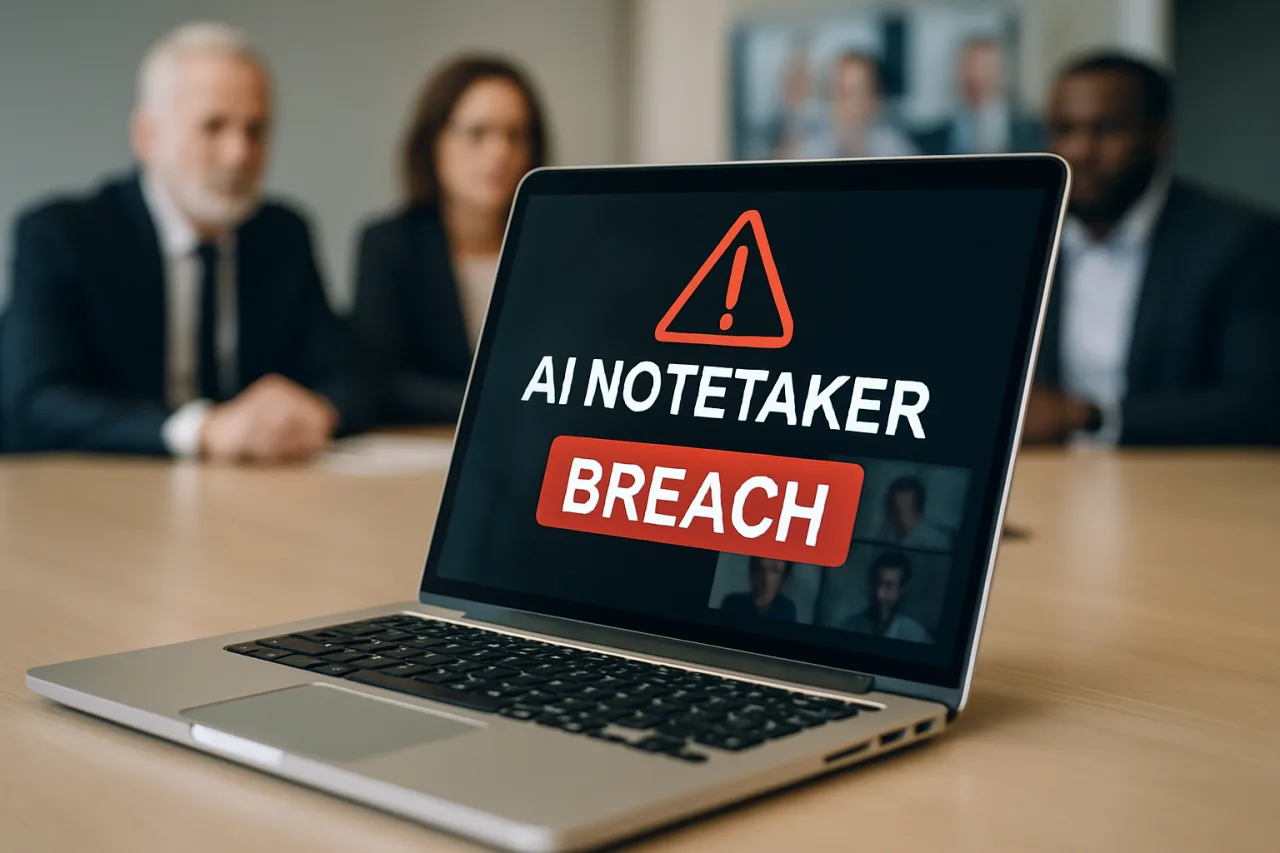
The numbers tell one story. The architecture beneath them tells another. When a security researcher using only a free account on tl;dv — an AI notetaker platform with over 2 million users — queried a single Firestore collection and retrieved 181,874 meeting records belonging to other customers, the failure was not a sophisticated zero-day or a nation-state exploit. It was a missing tenant boundary in a serverless database. The AI notetaker had authentication. It lacked authorization.
That distinction — authentication versus authorization — is the fault line running through the entire AI tooling ecosystem. As Filipino professionals across IT, finance, engineering, and remote work adopt AI meeting assistants to record, transcribe, and summarize confidential calls, they are entrusting trade secrets, hiring decisions, and client negotiations to platforms whose security posture may not match their marketing claims. The tl;dv breach is not an isolated incident. It is a structural warning about what happens when SaaS velocity outpaces access control engineering.
Why the AI Notetaker Threat Is Happening Now
The AI notetaker market exploded between 2023 and 2026. Tools like tl;dv, Otter.ai, Fireflies.ai, and Read.ai promised to solve a real problem: meeting fatigue and the cognitive load of manual note-taking. By 2026, these platforms had evolved from simple transcription services into what RuntimeWire described as “repositories for corporate memory” — ingesting audio, video, screen shares, participant identities, calendar context, and post-meeting content, then generating AI summaries, follow-up emails, CRM updates, and sales scoring.
This expansion dramatically increased the sensitivity of data sitting behind each platform’s access controls. A meeting recording is not just a file. It is a transcript of who said what, when a strategic decision was made, what a client revealed about their pipeline, and how a team debated a product roadmap. When that data concentrates in a shared cloud database — as it does in tl;dv’s Firestore backend — a single authorization error exposes the conversation history of every organization using the tool. Google’s own Firestore security documentation specifically warns against rules that grant every authenticated user access to a shared database, recommending user-based or role-based rules that verify ownership for each request.
The timing matters for Filipino professionals specifically. The Philippines ranks among the world’s most active users of AI tools, with IT-BPM firms, remote workers, and startups integrating AI notetaker bots into daily Google Meet, Zoom, and Microsoft Teams workflows. A 2026 CrowdStrike threat report documented that AI-powered attacks doubled in the first half of 2026, as covered in our analysis of AI cyberattacks trends. The tl;dv breach demonstrates that the threat is not only from external attackers — it can come from the AI tools themselves.
What the tl;dv Breach Reveals — and What It Misses
Application security researcher BobDaHacker published the disclosure on August 4, 2026, after reporting the flaw privately to tl;dv co-founder Raphael Allstadt on January 28 and receiving no substantive response for six months. The technical mechanism was straightforward: when a user authenticated to tl;dv, the platform issued a JWT and exchanged it for a Firebase token via gw.tldv.io/v1/users/firebase/token. That token allowed queries against a Cloud Firestore database at projects/lmi-store/databases/(default). The original disclosure and full technical details are available on BobDaHacker’s research blog, with independent reporting from Dark Reading confirming the flaw remained active at publication.
Most collections in that database enforced proper tenant isolation. Users, chats, transcripts, clips, recordings, videos, notes, teams, and organizations all returned 403 errors when queried across accounts. The meetings collection was the exception. Any authenticated user could list documents from that collection across all tenants, exposing the meeting creator’s email address, conferencing provider, recording status, timestamps, and conference ID.
For meetings marked with status: recording, that conference ID corresponded to a live, active call on Google Meet or Microsoft Teams. BobDaHacker estimated roughly 1,000 records carried that status at any given time, effectively creating a real-time directory of ongoing confidential conversations. The researcher used conference IDs from Firestore to join two live calls: a Malaysian Ministry of Education meeting with over 157 participants and a US university startup meeting with 21 participants.
The 181,874 figure requires careful interpretation. It describes exposed meeting metadata — creator emails, timestamps, conference IDs — not 181,874 accessible recordings. BobDaHacker reported that recordings, transcripts, clips, and notes returned authorization errors and remained private by default. The exposed metadata alone, however, carried significant operational value: it covered government domains from 23 countries, universities including UC Berkeley and the University of Tokyo, and companies including HubSpot, Confluent, and Mitsui Fudosan. Meeting timing, employee addresses, and live conference IDs can reveal who is speaking, when a call is happening, and how an outsider might approach it.
The Two-Stage Attack Path Nobody Is Watching
The tl;dv exposure illustrates a two-stage attack path that security teams are not adequately monitoring. Stage one is the technical failure: a missing tenant boundary in a SaaS vendor’s database that leaks meeting metadata across customers. Stage two is the human and procedural failure: meeting hosts who routinely admit AI notetaker bots without verifying which account sent them.
BobDaHacker told Dark Reading that impersonating an expected AI notetaker and requesting admission worked in approximately 80% of tested cases. This admission success rate points to a security problem that extends far beyond database rules. Meeting bots have become familiar participants in corporate calls. Hosts see a generic notetaker identity, assume another attendee invited it, and approve entry without checking whether the bot belongs to their organization’s subscription. The AI notetaker has become a trusted object by default — and that trust is now weaponizable.
This mirrors the pattern seen in the coding agent vulnerability disclosed earlier this month, where a GitHub issue allowed malicious code to breach multiple AI companies. In both cases, the attack surface was not a traditional network perimeter — it was the implicit trust placed in AI-powered automation tools that operate within legitimate workflows.
The Compliance Theater Problem
Perhaps the most damning detail in the tl;dv disclosure is the company’s security page. At the time the flaw remained unfixed, tl;dv displayed six compliance badges: SOC 2, GDPR, EU AI Act, EU hosting, AES-256 encryption, and a founder commitment video. The page included a statement promising that the security team would respond to vulnerability reports within 24 hours. BobDaHacker emailed the CTO directly on January 28. Six months later, no response had come.
This is compliance theater — the practice of acquiring certifications and displaying badges without maintaining the operational security hygiene those certifications imply. SOC 2 attestation examines controls at a point in time. It does not continuously verify that every Firestore collection enforces tenant isolation. GDPR compliance addresses data protection principles. It does not prevent a developer from shipping a database rule that grants every authenticated user access to every customer’s meetings.
For Filipino professionals evaluating AI tools, this means a compliance badge is necessary but insufficient. The question is not whether a vendor holds SOC 2 — it is whether the vendor responds to security researchers within the timeframe their own security page promises. The gap between tl;dv’s stated 24-hour response commitment and its six-month silence is the real vulnerability report.
What Filipino Professionals Should Do Now
The tl;dv breach is not hypothetical. Filipino professionals — remote workers, BPO team leads, startup founders, OFW engineers — are actively using AI notetaker tools in meetings where confidential information is discussed. The following steps reduce exposure:
1. Audit your AI notetaker subscriptions. Identify every AI notetaker tool used in your organization. For each, determine whether the vendor enforces tenant isolation at the database level, not just at the application layer. Ask the vendor directly: can one authenticated user query another customer’s records? If the vendor cannot answer, treat the tool as high-risk. The U.S. Cybersecurity and Infrastructure Security Agency (CISA) Secure by Design guidance recommends that organizations demand verifiable security controls from software vendors before adoption — not after a breach.
2. Enforce waiting room controls on all meetings. The tl;dv breach exposed conference IDs, but joining a call still required host admission. The 80% success rate of bot impersonation shows that hosts are not verifying meeting participants. Enable waiting rooms, require host approval for all external participants, and do not auto-admit bots claiming to be notetakers unless you recognize the specific service.
3. Segment sensitive conversations. Do not use AI notetaker bots in meetings discussing trade secrets, client confidential information, hiring decisions, or financial data. The convenience of automated transcription is not worth the risk of exposing that content through a vendor’s database misconfiguration. This principle aligns with the zero trust approach we have recommended for small businesses.
4. Build incident response readiness for SaaS breaches. When a vendor discloses a security failure, your organization needs a protocol for assessing exposure. Which meetings were affected? What data was in those calls? Who needs to be notified? Our incident response planning guide provides a framework that applies directly to SaaS vendor breaches.
5. Monitor vendor security communications. The tl;dv flaw was publicly disclosed on August 4, 2026. If your organization used tl;dv and was unaware of the breach for weeks, that is a vendor management failure. Subscribe to security advisories from your SaaS vendors and track disclosures through sources like Dark Reading and The Hacker News. In the Philippines, the Department of Information and Communications Technology (DICT) issues cybersecurity advisories that Filipino organizations should monitor for emerging threats affecting AI and SaaS tools.
The Second-Order Effect: AI Tool Trust Erosion
The tl;dv breach will not be the last. The pattern — SaaS velocity outpacing access control engineering — is systemic across the AI tooling ecosystem. As more Filipino organizations adopt AI agents for work, as documented in our practical AI agent workflows guide, the attack surface expands faster than security teams can assess it.
The second-order effect is trust erosion. If professionals cannot trust that an AI notetaker will keep their meetings private, they will stop using the tool — or worse, they will continue using it without awareness of the risk, creating a silent exposure that no one monitors until a breach is publicly disclosed. The 93% breach rate among Philippine firms in 2026 already signals that the gap between AI adoption and security readiness is dangerously wide.
The answer is not to abandon AI tools. The answer is to demand the same security rigor from AI tool vendors that we expect from banks, telcos, and cloud providers. A Firestore security rule that enforces tenant isolation takes minutes to implement. Six months of ignoring a researcher who reported the flaw is not a technical failure — it is a governance failure. Filipino professionals should hold their AI tool vendors to the standard their marketing pages claim to meet.
Frequently Asked Questions About AI Notetaker Security
What is the tl;dv AI notetaker security breach?
The tl;dv AI notetaker platform had a missing tenant boundary in its Google Firestore database that allowed any authenticated user to query 181,874 meeting records belonging to other customers. The exposed data included meeting creator emails, conference IDs, and recording status — information sufficient to identify and potentially join live confidential calls.
Can someone join my meeting through an AI notetaker breach?
Possibly. The tl;dv breach exposed conference IDs that corresponded to live Google Meet and Microsoft Teams calls. A researcher reported joining calls approximately 80% of the time by impersonating an AI notetaker bot and requesting admission. Enabling waiting rooms and verifying all meeting participants — including bots — significantly reduces this risk.
How do I know if my AI notetaker is secure?
Ask the vendor whether they enforce tenant isolation at the database level, not just the application layer. Check whether they respond to security researcher reports within their stated timeframe. Review their security disclosure history. A SOC 2 badge alone does not guarantee ongoing security — the tl;dv breach persisted for six months while the company displayed compliance certifications.
Which AI meeting tools are affected by this type of vulnerability?
Any AI notetaker that uses a shared cloud database without proper tenant isolation could be vulnerable. The tl;dv case involved Google Firestore, but the architectural pattern — shared database, authenticated users, missing authorization rules — exists across many SaaS platforms. The risk applies to any tool that stores meeting data in a multi-tenant cloud database.
What should Filipino professionals do to protect meetings from AI tool breaches?
Enable waiting rooms on all calls, do not auto-admit unrecognized bots, avoid using AI notetakers in highly sensitive meetings, audit your vendor’s security practices, and maintain an incident response plan for SaaS vendor breaches. Treat every AI notetaker as a privileged third-party participant in your meeting — not a passive transcription feature.
Was the tl;dv vulnerability fixed?
As of the public disclosure on August 4, 2026, researcher BobDaHacker reported that the Firestore access remained available. Dark Reading independently confirmed the flaw was active at publication time. The vulnerability was first reported to tl;dv on January 28, 2026 — over six months earlier. The company’s co-founder Raphael Allstadt acknowledged the report but did not provide a substantive fix timeline.
Does this affect Filipino OFW professionals using AI meeting tools?
Yes. Filipino professionals worldwide use AI notetaker tools in remote meetings with clients, employers, and colleagues. The exposed data in the tl;dv breach included government domains from 23 countries and organizations across Southeast Asia. OFW professionals who conduct confidential work meetings through platforms with AI notetaker integrations should evaluate whether their meeting content could be exposed through vendor security failures.
Cybersecurity Disclaimer: This article is for informational purposes only and does not constitute professional cybersecurity advice. Readers should consult their organization’s IT security team or a qualified cybersecurity professional before making decisions about AI tool adoption, meeting security configurations, or incident response planning. The tl;dv vulnerability details are based on publicly available disclosures as of August 2026.