
Table of Contents
Solar Energy Revolution: How Kenyan Entrepreneurs Are Powering Businesses With Sunlight

Key Takeaway
- ☀️ Solar Revolution: Kenyan entrepreneurs are adopting solar-powered machines like grain mills, cutting operating costs by up to 80% compared to diesel alternatives.
- 📉 Plummeting Costs: Solar panel prices have dropped from $3 per watt to just cents in recent years, making off-grid solar increasingly accessible across Africa.
- 🌍 Universal Access Goal: Kenya aims to deliver universal electricity access by 2030 without driving up emissions, with off-grid solar as a key strategy.
- 💡 Business Innovation: Companies like Agsol are designing solar-powered equipment specifically for small businesses, creating new economic opportunities in underserved communities.
- 🌏 Global Relevance: The solar energy lessons from Kenya apply to the Philippines and other developing nations where OFWs seek investment opportunities in renewable energy.
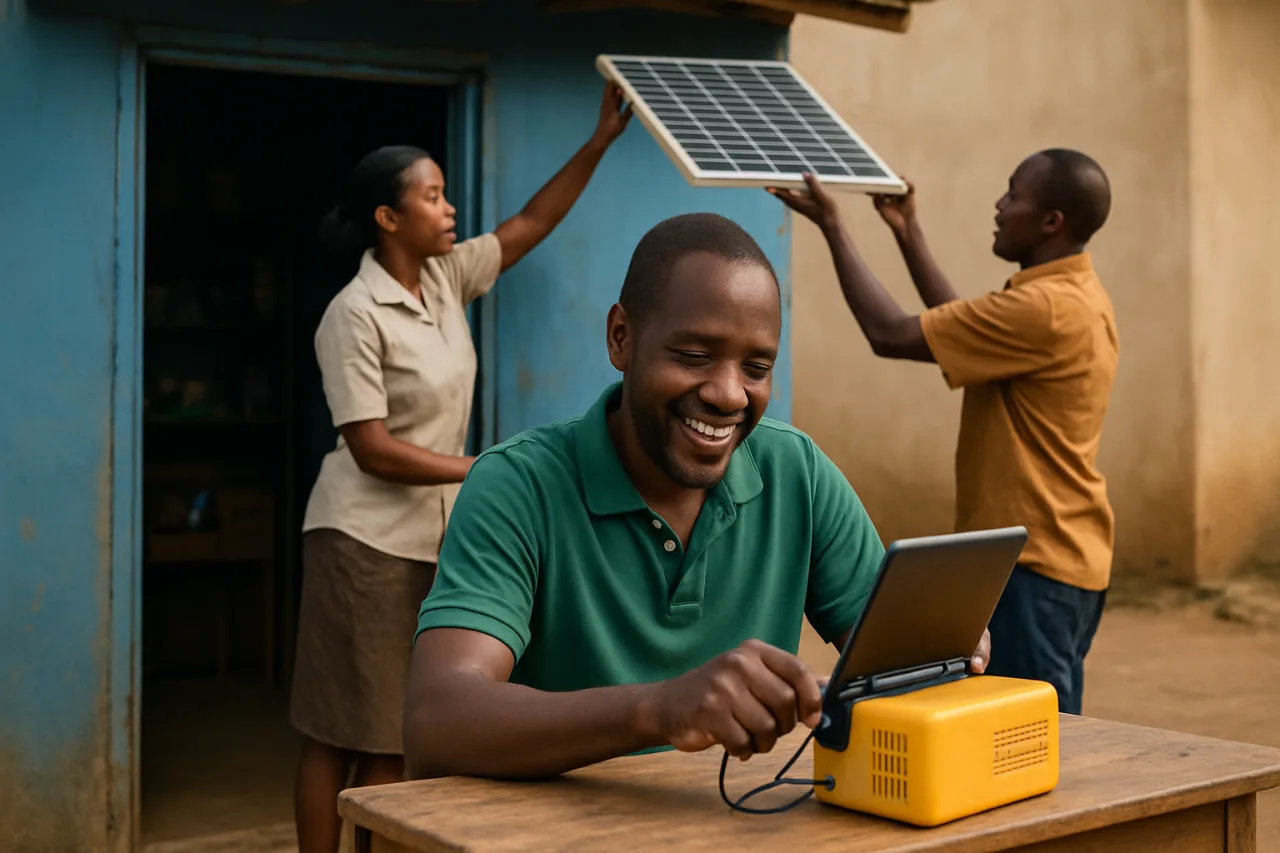
Across Africa, a quiet solar energy revolution is transforming small businesses — and the lessons resonate far beyond the continent. In Nairobi, Kenya, shopkeepers like Milcah Wanjiru are ditching diesel-powered grain mills for solar-powered machines that slash operating costs by up to 80%. As solar panel prices plummet from $3 per watt to just cents, off-grid solar energy is becoming the go-to solution for the 25% of Kenyan communities that lack centralized electricity. For OFWs looking at investment opportunities in renewable energy — whether in Africa, the Philippines, or elsewhere — Kenya’s solar energy entrepreneurs offer a compelling blueprint for clean energy adoption in developing markets.
The Shopkeeper Powering Her Business With Sunlight
On the margins of bustling Nairobi, past a mix of high-rises and hardware shops interspersed with small plots growing corn or potatoes, Milcah Wanjiru runs a street-side stall. She sells milk, bread, and matches, but her core business is a service: milling corn flour for local residents who use it to make ugali, a common Kenyan dish similar to polenta.
In the middle of her small shop stands a milling machine on three adjustable legs. Unlike most grain mills in the area, which burn diesel fuel, Wanjiru’s machine runs on solar energy or grid electricity. She’s been using it since December 2025, and it has transformed her business economics.
“Whenever customers came to mill their grain, they asked for other goods,” Wanjiru explains, “and this is how I got to stock these other items.” The solar mill doesn’t just power her core business — it has become a catalyst for diversification, attracting customers who might not have otherwise visited her shop.
The mill does have one drawback: it can be slow, and grains sometimes get stuck in the feeding chamber. Matt Carr, CEO and cofounder of Agsol — the company that designed the mill — explains that the machine automatically reduces speed when grain is damp, allowing the pulverizing hammers to extract as much flour as possible. This trade-off between thoroughness and speed is a challenge the company continues to refine.
How Solar Is Transforming Small Business Economics
The economic case for solar-powered equipment is compelling. According to Carr, about 40% of what shop owners using diesel-powered mills charge customers goes toward fuel costs. By contrast, operating Agsol’s solar-powered machine can be up to 80% more profitable once the initial investment — approximately $1,300 — is paid off, which typically takes between six and 12 months.
For small business owners in low-income neighborhoods, this cost difference is transformative. The savings can be reinvested into inventory, expansion, or simply provide a more stable income in communities where every dollar counts. Wanjiru’s experience illustrates this: the solar mill not only reduced her operating costs but also attracted new customers because it can handle very small amounts of grain that diesel mills cannot process efficiently. Over time, these small advantages compound into significant economic gains for entire communities.
Agsol launched its first product in 2018 in Kenya and has since raised over $4 million in investment, much of it through a UK government program supporting clean energy projects in the region. Last year, the company sold 530 units and has received orders from as far as Mozambique and Angola, demonstrating the growing demand for solar-powered commercial equipment across Africa. The company employs over 50 people at its facility just outside Nairobi and plans to expand into West Africa by the end of 2026, targeting Nigeria and Ghana as the next markets for its solar milling technology.
The economics of solar technology have improved dramatically. Just a few years ago, a solar panel cost about $3 per watt. Today, that cost has dropped to cents per watt, making solar installations increasingly accessible even for small businesses in developing economies. This cost reduction is a key driver of the off-grid solar movement that is bringing electricity to communities that centralized grids have failed to reach.
Kenya’s Bold Vision: Universal Electricity by 2030
Kenya’s solar revolution is not just a grassroots movement — it is central to the nation’s energy strategy. Most of Kenya’s power grid already runs on renewables, primarily geothermal and hydroelectric. But with 25% of communities lacking centralized electricity, the nation is looking to off-grid solar to hit its goal of delivering universal electricity access by 2030 without driving up emissions.
This goal aligns with the United Nations Sustainable Development Goal 7, which calls for universal access to affordable, reliable, sustainable, and modern energy by 2030. Kenya’s approach — combining grid expansion with off-grid solar solutions — is being watched closely by other developing nations as a model for clean energy transition. The country has already made significant progress, with electrification rates rising from just 23% in 2009 to over 75% in 2025, largely driven by off-grid solar installations in rural areas.
The Kenyan government has implemented several policies to accelerate solar adoption, including tax exemptions for solar equipment, streamlined permitting for solar installations, and partnerships with international development organizations to fund off-grid solar projects in rural areas. These policies have created a favorable environment for companies like Agsol to scale their operations and for entrepreneurs to invest in solar-powered businesses with confidence.
According to the International Energy Agency, Africa has the world’s highest solar irradiance levels, yet accounts for less than 2% of global solar capacity. This gap represents an enormous opportunity for solar entrepreneurs and investors across the continent.
Lessons for the Philippines and OFWs
The solar energy transformation in Kenya holds important lessons for the Philippines, where millions of people in remote islands and rural areas still lack reliable electricity access. Like Kenya, the Philippines has abundant solar resources and a growing need for off-grid energy solutions in underserved communities.
For OFWs considering investment opportunities in renewable energy, the Kenyan model demonstrates that solar-powered small business equipment can be both commercially viable and socially impactful. Companies that design products specifically for the needs of small businesses in developing markets — affordable, durable, and easy to maintain — can tap into enormous demand while contributing to sustainable development.
The Philippines’ own solar energy market is growing rapidly. The Department of Energy has set a target of 35% renewable energy in the power generation mix by 2030, and solar is expected to play a major role. Learn more about renewable energy opportunities in the Philippines and how OFWs can participate in the clean energy transition.
Moreover, the falling cost of solar energy technology means that OFWs in countries with strong solar industries — including Saudi Arabia, the UAE, and other Gulf states investing heavily in solar — can gain valuable knowledge and connections that may benefit renewable energy development back home. The Gulf region’s massive solar investments, including Saudi Arabia’s NEOM project and the UAE’s Al Dhafra solar plant (one of the world’s largest), are creating a wealth of expertise in solar installation, maintenance, and business development that OFWs can tap into. Explore our guide on investment opportunities for OFWs to learn more about diversifying into clean energy.
The global solar energy market is projected to grow from $250 billion in 2025 to over $400 billion by 2030, according to industry analysts. This growth is being driven by continued cost reductions, supportive government policies, and increasing corporate demand for clean energy. For OFWs with savings looking for long-term investments, solar energy funds and renewable energy stocks offer exposure to one of the fastest-growing sectors in the global economy.
The Bigger Picture: Solar Energy as Economic Empowerment
The story of Milcah Wanjiru and Agsol is not just about technology — it is about economic empowerment through solar energy. When a shopkeeper can mill grain more cheaply and efficiently, she can serve more customers, offer lower prices, and reinvest in her business. When a community gains access to solar power, children can study at night, clinics can refrigerate vaccines, and small businesses can operate longer hours.
This is the promise of distributed solar energy: not just replacing fossil fuels, but creating new economic opportunities that were previously impossible. In Kenya, solar-powered grain mills, water pumps, and cold storage units are enabling small businesses to compete with larger operations, leveling the playing field in communities that have been left behind by centralized infrastructure.
For the global community, Kenya’s solar journey demonstrates that the clean energy transition is not just a developed-world concern. Developing nations are leapfrogging traditional energy infrastructure — much as they leapfrogged landline telephones and went straight to mobile — and building their energy systems around distributed renewable sources from the start. The International Renewable Energy Agency reports that renewable energy capacity in Africa grew by over 10% in 2025, with solar leading the expansion.
As MIT Technology Review’s reporting from Nairobi shows, the entrepreneurs driving this transformation are not waiting for governments or utilities to bring them power. They are building their own energy independence, one solar panel at a time. For OFWs who want to understand how solar energy is reshaping developing economies — and where the opportunities lie — Kenya’s story is an essential case study.
Frequently Asked Questions (FAQ)
Q: How much can solar-powered machines save compared to diesel?
A: According to Agsol CEO Matt Carr, about 40% of what diesel mill owners charge customers goes toward fuel costs. Solar-powered machines can be up to 80% more profitable after the initial investment (about $1,300) is paid off, which takes 6-12 months.
Q: What is Kenya’s goal for universal electricity access?
A: Kenya aims to deliver universal electricity access by 2030 without driving up emissions. Off-grid solar is a key strategy, since 25% of communities currently lack centralized electricity. Most of Kenya’s grid already runs on renewables (geothermal and hydroelectric).
Q: How much have solar panel costs dropped?
A> Solar panel prices have fallen from about $3 per watt a few years ago to just cents per watt today. This dramatic cost reduction has made solar installations increasingly accessible for small businesses in developing economies.
Q: What is Agsol and what do they make?
A: Agsol is a Kenya-based company that designs and manufactures solar-powered equipment for small businesses, including grain mills. Founded in 2018, the company has raised over $4 million in investment and sold 530 units last year, with orders from Mozambique and Angola.
Q: Are there solar energy investment opportunities for OFWs?
A: Yes. The Philippines’ renewable energy sector is growing, with a target of 35% renewable energy by 2030. OFWs can invest in solar installations, solar-powered businesses, or renewable energy funds. The falling cost of solar technology makes this an increasingly attractive investment.
Q: How does Kenya’s solar model apply to the Philippines?
A: Both countries have abundant solar resources and significant populations in remote areas without reliable electricity. Kenya’s approach — combining grid expansion with off-grid solar solutions for small businesses — offers a blueprint for the Philippines to expand clean energy access while supporting economic development. For more on green energy investment opportunities for OFWs, explore our dedicated guide.
Disclaimer: This article is for informational purposes only and does not constitute investment or financial advice. Solar energy investments carry risks, and readers should consult qualified professionals before making investment decisions. Product claims and statistics are sourced from MIT Technology Review’s June 2026 reporting.