Table of Contents
AI Dating 2026: Nearly Half of Singles Reject AI Romance, Match Survey Reveals
Key Takeaway
- 🚨 47% Negative: Nearly half of US singles aged 18-39 have a negative view of ai dating, according to Match Group’s survey of 1,000 people.
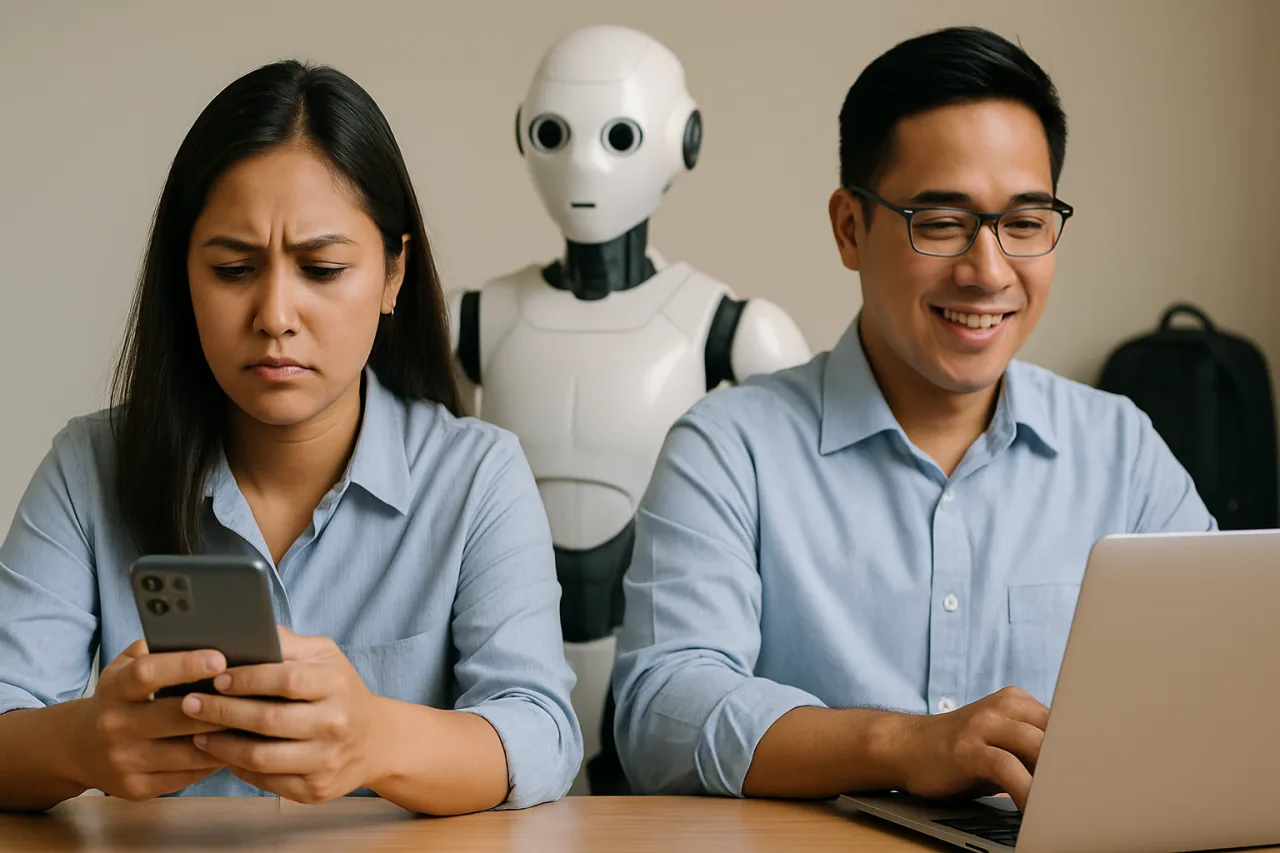
- 🤖 AI Companion Rejection: About 40% of singles say they would refuse to date someone who uses an AI companion app — rising to 51% among women ages 18-24.
- ✅ AI as Tool, Not Partner: 64% of respondents see value in AI helping with profiles, photo selection, and conversation starters — but want humans to make the real connection.
- 💬 The Boundary: Singles want AI to help with the “hard parts” of dating but keep its hands off the “human parts” — authentic emotional connection must remain human.
- 🌍 Global Relevance: As AI dating features expand worldwide, Filipino singles and OFWs using dating apps should understand both the benefits and risks of AI-mediated romance.
As artificial intelligence reshapes every corner of daily life, the AI dating revolution is no exception. But a new Match Group survey reveals that nearly half of US singles feel negatively about AI’s growing role in romance. The study of 1,000 Americans aged 18-39 exposes a fascinating contradiction: while most people reject the idea of dating an AI, a majority are open to using AI as a tool to improve their dating experience. For millions of Filipinos — both at home and abroad — who use ai dating apps like Tinder, Hinge, and Bumble, these findings offer important insights into how technology is changing love in 2026.
What the Match Group Survey Found
Match Group, the ai dating app giant that owns Tinder, Hinge, OkCupid, and other popular platforms, conducted one of the most comprehensive surveys yet on how singles feel about ai dating and AI in romantic contexts. The results paint a nuanced picture of a generation grappling with technology’s role in their love lives.
The headline finding: 47% of US singles have a negative view of AI’s use in dating. This skepticism is even more pronounced among younger women — 51% of women ages 18-24 say they would refuse to date someone who uses an AI companion app. Yet the same survey reveals that 64% of respondents can see how AI might help them in their dating journey, suggesting that the issue is not AI itself but how it is used.
The survey distinguishes between two very different uses of ai dating. On one hand, there are AI companion apps — chatbots designed to simulate romantic relationships, similar to the concept explored in the movie “Her.” Match describes “near-universal” disapproval of actually dating an AI. On the other hand, there are AI-powered features within dating apps that help users write better profiles, choose flattering photos, and keep conversations flowing. This second category enjoys broad acceptance.
Only 12% of 18- to 24-year-olds reported using an AI companion app in the past three months, and only about a third of those users said they were seeking genuine connections with chatbots. This suggests that while AI companion apps exist, most young people view them as novelty or entertainment rather than serious romantic substitutes.
The ai dating Arms Race
Despite mixed feelings from users, the AI dating arms race is accelerating. Bumble introduced a dating assistant named Bee that helps users navigate the app and improve their matches. Tinder has spent so heavily on AI tools that it reportedly slowed its hiring process to fund the technology. Hinge’s former CEO stepped down last year specifically to launch a more AI-focused dating app.
This industry push creates a tension: companies believe AI can improve user experiences and boost engagement, but users are wary of dating becoming too automated. The Match survey suggests that the most successful AI features will be those that assist users without replacing the authentic human elements of dating.
As Match summarized in a blog post: “Ask singles what they want from ai dating, and the answer is pretty consistent: help with the hard parts, but hands off for the human parts.” Users want AI to help punch up a profile or suggest what to say when a conversation goes quiet, but the actual emotional connection must remain theirs to create.
This finding has significant implications for the global AI dating market, which is projected to reach $11.7 billion by 2028 according to Statista. As AI features become standard across platforms, understanding user boundaries will be critical for companies seeking to retain trust and engagement.
Why Filipino Singles and OFWs Should Pay Attention
The Philippines has one of the most active dating app markets in Southeast Asia. With over 80 million internet users and a young, tech-savvy population, platforms like Tinder, Bumble, and Filipino-specific apps have become mainstream tools for finding relationships. For OFWs living abroad, dating apps are often the primary way to meet new people in unfamiliar cities.
The Match survey’s findings are directly relevant to Filipino users. As AI dating features become more prevalent in dating apps worldwide, Filipino singles will encounter AI-generated profile suggestions, automated conversation prompts, and algorithm-driven match recommendations. Understanding the boundaries that users in other markets have set can help Filipinos navigate these features wisely.
More broadly, the survey highlights a growing global conversation about AI literacy — the ability to understand how artificial intelligence affects daily life. For OFWs who are already navigating cultural differences in dating, adding AI awareness to their digital toolkit is increasingly important. Learn more about online safety practices for OFWs to stay protected in digital spaces.
The rise of AI dating also raises important questions about authenticity. In Filipino culture, where personal connections and family approval play central roles in relationships, the idea of AI-mediated romance may feel particularly foreign. Yet as global dating apps standardize AI features, Filipino users will need to decide for themselves where to draw the line between helpful automation and inauthentic interaction.
The Bot-vs-Bot Dating Problem
One of the most provocative findings from the Match survey relates to the concept of AI agents dating on behalf of users — a trend some call AI dating automation. Bumble founder Whitney Wolfe Herd recently suggested that dating app users could have “personal bots that date other users’ bots” — essentially AI agents that evaluate potential matches through conversations with each other before their human owners ever interact.
The Match survey makes clear that this concept has very limited appeal. While users are comfortable with AI helping them present themselves better, the idea of AI conducting the actual dating process on their behalf crosses a clear boundary. As TechCrunch noted, “his bot asked my bot out, and our bots hit it off” will never be a socially acceptable meet-cute.
This finding is particularly relevant as AI agent technology advances rapidly. In 2026, AI agents can already hold sophisticated conversations, evaluate compatibility based on stated preferences, and even negotiate on behalf of users in commercial contexts. But the Match survey confirms that when it comes to romance, most people want to remain in the driver’s seat.
For Filipino users, this is an important reminder: while AI can be a powerful tool for improving your dating profile and finding better matches, the actual process of getting to know someone — the conversations, the vulnerability, the shared laughter — must remain authentically human. No algorithm can replicate the spark of a genuine connection.
How AI Is Already Changing Dating Apps
Even if users reject the idea of dating AI itself, AI is already deeply embedded in the AI dating app experience. Every major dating app uses some form of matching algorithm, and the latest generation of AI features goes far beyond simple matching:
Profile Optimization: AI tools analyze your photos and bio to suggest improvements. Some apps can now generate entire profile descriptions based on a few prompts, helping users who struggle with self-presentation put their best foot forward.
Conversation Assistance: When a conversation stalls, AI can suggest responses based on the other person’s profile and previous messages. This feature is particularly popular among users who experience social anxiety or language barriers — a significant benefit for OFWs dating in non-English-speaking countries.
Match Recommendations: AI algorithms analyze swiping patterns, conversation lengths, and relationship outcomes to improve match quality over time. The more you use the app, the better it understands your preferences.
Safety Features: AI-powered content moderation detects inappropriate messages, fake profiles, and potential scams. This is especially important for OFWs who may be targeted by romance scammers exploiting their overseas status.
The challenge for dating app companies is implementing these features without making the experience feel artificial. The Match survey provides a clear roadmap for AI dating features: AI should be invisible infrastructure that improves the experience, not a visible participant in the dating process.
What ai dating Means for the Future of Romance
The Match Group survey captures a moment of transition in how humans relate to technology. AI is becoming capable of simulating conversation, emotional connection, and even romantic interest with increasing sophistication. But the survey confirms that most people — across age groups and genders — still fundamentally desire human connection. The full original report is available on TechCrunch.
For the dating app industry, the message is clear: AI features that assist users will be welcomed, but features that replace human agency in dating will be rejected. Companies that strike this balance will thrive; those that push too hard toward automation risk alienating their core user base.
For individual users — Filipino or otherwise — the survey offers permission to embrace AI as a dating tool without guilt. Using AI to write a better profile or get through an awkward conversation lull is not cheating; it’s adapting to the modern dating landscape. But knowing where to draw the line — keeping the real connection human — is the key to finding genuine love in the age of artificial intelligence. For more on how AI is transforming relationships and digital life, explore our complete AI technology guide for OFWs.
Frequently Asked Questions (FAQ)
Q: What percentage of singles have a negative view of ai dating?
A: According to Match Group’s 2026 survey of 1,000 US singles aged 18-39, 47% have a negative view of AI’s use in romantic contexts. The negativity is higher among young women, with 51% of women ages 18-24 saying they would refuse to date someone who uses an AI companion app.
Q: Do dating app users reject all AI features?
A: No. While 47% have a negative overall view, 64% of respondents said they could see how AI might help them in their dating journey. Users are open to AI assisting with profile writing, photo selection, and conversation prompts — but reject the idea of AI replacing human connection.
Q: What are AI companion apps and why do people dislike them?
A: AI companion apps are chatbots designed to simulate romantic relationships. Match Group found “near-universal” disapproval of actually dating an AI. About 40% of singles say they would refuse to date someone who uses these apps. Only 12% of young adults have used one in the past three months.
Q: How is AI already used in dating apps like Tinder and Bumble?
A: AI is used for profile optimization (suggesting better photos and bios), conversation assistance (suggesting responses when chats stall), match recommendations (improving algorithm accuracy), and safety features (detecting scams and inappropriate content). Bumble’s AI assistant “Bee” and Tinder’s AI tools are prominent examples.
Q: Should OFWs be concerned about ai dating apps?
A: OFWs should be aware but not alarmed. AI features can genuinely improve your dating experience — especially conversation help for language barriers and safety features against romance scammers. The key is using AI as a tool while keeping authentic human connection at the center of your dating life.
Q: What is bot-vs-bot dating and will it become common?
A> Bot-vs-bot dating refers to AI agents dating on behalf of users — essentially bots evaluating potential matches through conversations with each other. Bumble’s founder suggested this concept, but the Match survey shows very limited user interest. Most people want to conduct their own dating conversations, even if AI helps behind the scenes.
Disclaimer: This article is for informational purposes only and does not constitute professional relationship or technology advice. Survey data cited is from Match Group’s 2026 study. Dating app features and availability may vary by region and are subject to change.