Table of Contents
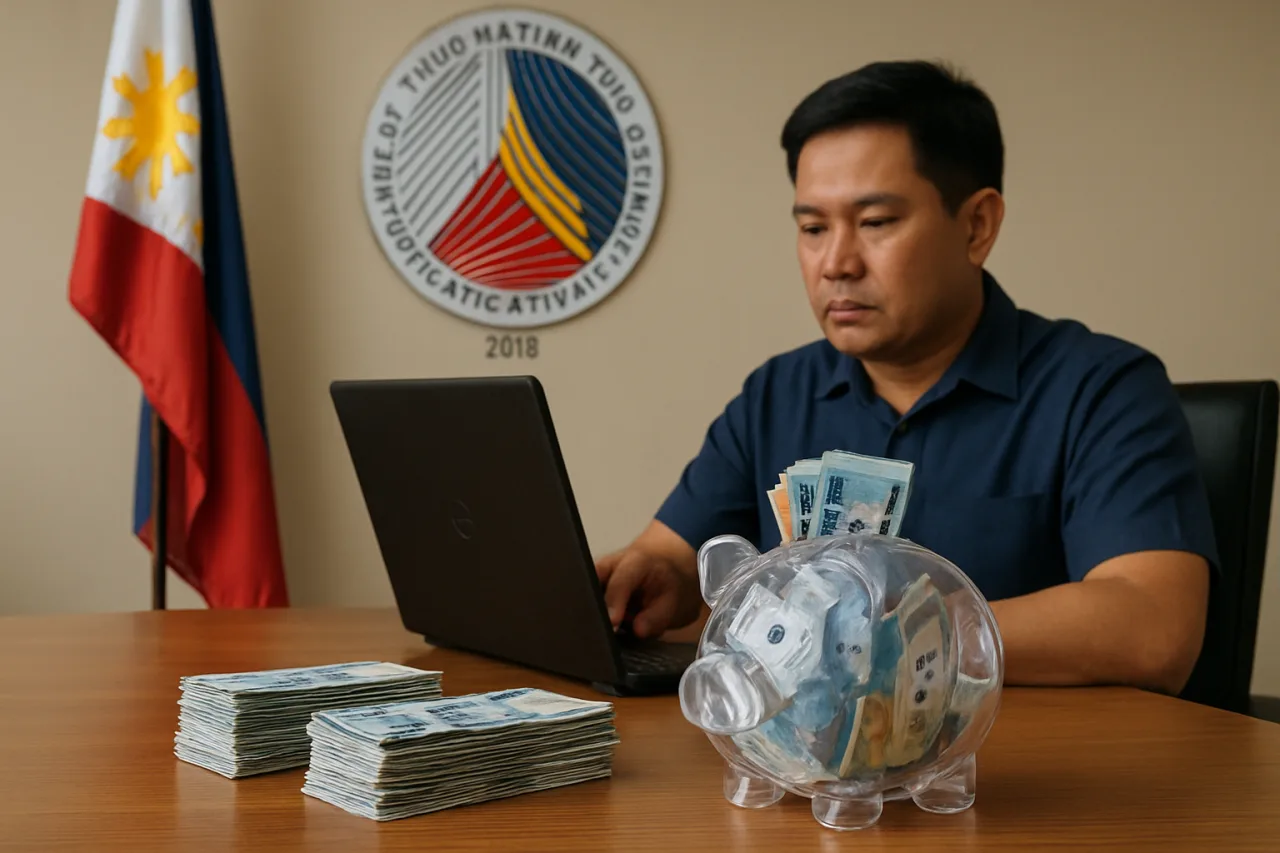
The Philippine government could save up to ₱40 billion annually by eliminating duplicate information and communications technology systems across agencies, according to the Department of Information and Communications Technology (DICT). The estimate, based on the DICT’s ongoing audit of government IT spending under the E-Governance Act, reveals that overlapping systems, redundant software licenses, and duplicated digital infrastructure are costing Filipino taxpayers billions every year. For a country where every peso matters, the DICT’s unified eGov initiative represents one of the largest potential cost savings in Philippine government history — and a rare opportunity to redirect billions from redundant bureaucracy to public services that directly benefit citizens and their families.
Key Takeaway
- ₱30 to ₱40 billion in annual savings is possible by consolidating duplicate government ICT systems, according to DICT Undersecretary Dave Almirol.
- The E-Governance Act provides the legal framework for mandating shared digital infrastructure across all national government agencies.
- The savings would fund roughly 20% of the DICT’s entire 2026 budget — money that could be redirected to digital literacy, cybersecurity, and AI infrastructure.
- OFWs and Filipino families benefit directly through faster government services, fewer redundant processes, and reduced bureaucratic costs passed on to citizens.
- The DICT has already acknowledged problems from its first eGov Hackathon and pledged to improve, signaling a willingness to course-correct.
The Problem: How Duplicate Systems Drain Philippine Resources
The Philippine government operates hundreds of separate IT systems across its agencies — each procured independently, maintained separately, and often duplicating the functionality of systems used by other agencies. One agency might have its own email platform. Another might have its own document management system. A third might have its own payment gateway. Each system requires its own servers, software licenses, security updates, and IT staff — multiplying costs that could be shared across the government.
DICT Undersecretary Dave Almirol, speaking at a government technology forum in July 2026, revealed that the agency’s audit found extensive duplication across national government agencies. The estimate of ₱30 to ₱40 billion in potential savings represents the cost of maintaining these overlapping systems — money that is effectively wasted on redundant infrastructure rather than invested in improving public services.
For context, ₱40 billion is roughly equivalent to the annual budget of a mid-sized Philippine government department. It could fund the construction of 10,000 new classrooms, the hiring of 50,000 new teachers, or the deployment of free Wi-Fi to every public school in the country. Instead, it is being spent on duplicate software licenses and redundant servers.
How the Unified eGov Initiative Works
The DICT’s unified eGov initiative, authorized under the E-Governance Act, aims to consolidate government ICT systems into shared platforms. The approach involves:
- System audit and mapping: DICT is conducting a comprehensive audit of all IT systems across national government agencies to identify duplicates, overlaps, and underutilized platforms.
- Shared infrastructure: Instead of each agency maintaining its own servers, DICT is building shared cloud infrastructure that all agencies can use — reducing hardware costs, maintenance costs, and energy consumption.
- Unified applications: Common functions — email, document management, payment processing, identity verification — are being consolidated into single government-wide platforms rather than being procured separately by each agency.
- Shared cybersecurity: Rather than each agency maintaining its own security operations, DICT is building centralized cybersecurity monitoring that protects all government systems from a single command center.
- The eGovPH app: The unified eGovPH mobile app is the citizen-facing front end of this consolidation, providing a single point of access to multiple government services. According to Biometric Update, the eGovPH app is growing rapidly in adoption.
The initiative also aligns with the government’s Google Cloud partnership, which is deploying AI agents into public service delivery and strengthening cyber defenses across government platforms. For more on how the DICT is pushing AI-powered government services, see our coverage of the Philippine AI investment landscape.
What ₱40 Billion in Savings Means for Filipinos
The ₱30 to ₱40 billion in potential savings is not just a number on a spreadsheet. It represents resources that could be redirected to programs that directly benefit Filipino citizens:
For OFWs: Faster, more efficient government services mean shorter processing times for documents like passports, OWWA membership, and DMW clearances. The unified eGov system is designed to reduce the number of separate agency visits and redundant document submissions that OFWs currently face. For OFWs in Saudi Arabia, the UAE, and other Middle East countries, this could mean processing documents through a single digital portal rather than navigating multiple agencies.
For businesses: Government permits, licenses, and registrations that currently require visits to multiple agencies could be processed through a single unified platform, reducing bureaucratic delays and corruption opportunities. The Philippine government has committed PHP 2.6 billion to AI projects by 2028, and the savings from ICT consolidation could accelerate this investment.
For taxpayers: ₱40 billion in savings is money that stays in the national treasury rather than being spent on redundant software contracts. This can fund infrastructure, education, healthcare, and digital literacy programs. For more on how government spending affects the Philippine economy, see our OECD Philippines 2026 analysis on the country’s productivity gap. The savings from the unified eGov initiative could also help fund the government’s PHP 2.6 billion AI investment commitment by 2028, creating a virtuous cycle where efficiency gains in one area of government technology directly enable new investments in another. The DICT’s unified eGov is not just about cutting waste — it is about reallocating resources from redundant infrastructure to forward-looking digital capabilities that position the Philippines for the AI era.
The eGov Hackathon: Acknowledging Problems
The DICT’s willingness to acknowledge its own shortcomings is a positive sign. After the first eGov Hackathon in July 2026, the DICT publicly acknowledged problems and pledged to improve, according to TechWatchPH. This transparency is unusual in Philippine government — most agencies avoid public admission of difficulties. The DICT’s approach suggests a culture of iteration and improvement, which is essential for a technology initiative of this scale.
The eGovPH Hackathon, which challenged Filipino innovators to transform public services, also demonstrated that the DICT is actively seeking external input — engaging developers, entrepreneurs, and citizens in building better government technology. This collaborative approach is more likely to produce systems that actually meet citizen needs than the traditional top-down procurement model. The unified eGov initiative is not just about cutting costs — it is about fundamentally rethinking how the Philippine government delivers digital services to its citizens. By consolidating infrastructure and sharing resources, the DICT is creating a foundation for future innovations that would be impossible if every agency continued to operate its own isolated systems.
The unified eGov initiative also addresses a critical problem in Philippine government IT: fragmentation. When each agency builds its own system, data cannot flow between agencies. A citizen applying for a business permit might need to submit the same documents to the DTI, the LGU, the BIR, and the SEC — because each agency’s system cannot talk to the others. The unified eGov platform breaks down these silos, enabling data sharing and cross-agency workflows that reduce processing times and eliminate redundant submissions. For Filipino professionals and businesses, this means less time navigating bureaucracy and more time doing productive work.
Challenges Ahead
The unified eGov initiative faces significant challenges. Consolidating ICT systems across hundreds of government agencies requires overcoming entrenched procurement practices, agency-specific vendor relationships, and bureaucratic resistance to change. Some agencies have invested heavily in their own systems and may resist migration to shared platforms, viewing their independent IT infrastructure as a mark of autonomy rather than a source of inefficiency. Cybersecurity is also a concern — centralizing government IT creates a larger attack surface that must be defended against the growing wave of Philippine phishing attacks and cyber threats.
Beyond technical and bureaucratic challenges, the initiative must also address the digital divide. Not all Filipinos have reliable internet access — particularly in rural areas and remote provinces. A unified eGov system that assumes universal connectivity will exclude the very citizens who most need efficient government services. The DICT must ensure that the unified eGov platform is accessible through low-bandwidth connections, mobile-first interfaces, and offline-capable features for areas where connectivity is intermittent. This is not a secondary consideration — it is a requirement for equitable service delivery.
Training is another critical factor. Government employees who have been using their agency-specific systems for years will need training on the new unified platforms. The transition must be managed carefully to avoid service disruptions during the migration period. A phased approach — migrating one agency at a time, starting with the most duplicative systems — is more likely to succeed than a big-bang cutover that risks breaking critical services.
However, the potential payoff — ₱40 billion in annual savings, faster services for citizens, and a more secure digital infrastructure — makes the effort worth the challenges. The DICT’s commitment to transparency and iteration, combined with the legal mandate of the E-Governance Act, provides a foundation for success. The Philippines has already demonstrated its digital ambition through initiatives like the TESDA Digital Skills Passport and the DICT-Google Cloud partnership. The unified eGov initiative is the infrastructure layer that makes all of these digital ambitions sustainable.
For Filipino professionals who interact with government services regularly — registering businesses, filing taxes, applying for permits — the unified eGov platform promises a fundamentally better experience. Instead of navigating a maze of agency-specific portals, each with its own login, its own forms, and its own processing timeline, citizens will access a single platform that handles the routing, data sharing, and inter-agency coordination automatically. The ₱40 billion in savings is the financial argument. The reduction in bureaucratic friction is the human argument. Both are compelling.
Frequently Asked Questions
What is the DICT unified eGov initiative?
The DICT unified eGov initiative is a government-wide program to consolidate duplicate ICT systems, share digital infrastructure, and provide citizens with a single point of access to government services through the eGovPH app. It is authorized under the E-Governance Act and aims to save ₱30 to ₱40 billion annually.
How much can the Philippine government save by consolidating ICT systems?
According to DICT Undersecretary Dave Almirol, the government could save ₱30 to ₱40 billion per year by eliminating duplicate IT systems, redundant software licenses, and overlapping digital infrastructure across agencies.
How does this benefit OFWs?
OFWs benefit through faster processing of government documents, fewer agency visits, and a unified digital portal for accessing government services from abroad. The consolidation reduces bureaucratic delays that currently make it difficult for OFWs to process passports, OWWA memberships, and other documents.
What is the eGovPH app?
The eGovPH app is the citizen-facing mobile application of the unified eGov initiative. It provides a single point of access to multiple government services, reducing the need to visit separate agency websites or offices. The app is growing rapidly in adoption, according to reports from Biometric Update. The app represents the most visible part of the unified eGov initiative for ordinary Filipinos — it is the interface through which citizens will experience the benefits of government IT consolidation firsthand.
How does this compare to other countries’ digital government initiatives?
The Philippines is not alone in consolidating government IT. Singapore’s GovTech agency operates a unified digital platform that serves as a model for Southeast Asia. Estonia, the world’s most digitally advanced government, runs nearly all public services through a single digital infrastructure. The Philippines’ unified eGov initiative is ambitious for the country’s size and complexity — with over 100 million citizens spread across more than 7,000 islands, the scale of the consolidation is unprecedented in Southeast Asia. If successful, it could serve as a model for other developing nations facing similar challenges of fragmentation and limited resources.
What happens to the government employees who manage the existing systems?
The DICT has indicated that the transition will involve retraining rather than layoffs. Employees who currently manage agency-specific systems will be trained on the unified platforms, with their roles shifting from system-specific administration to broader platform management and citizen support. This approach preserves institutional knowledge while redirecting human resources toward higher-value activities like service improvement and innovation.
This article is based on publicly available information from DICT announcements, BusinessWorld, and other news reports. The savings figures are estimates provided by the DICT and may be revised as the audit progresses. The author and publisher disclaim any liability for actions taken based on this information.