Table of Contents
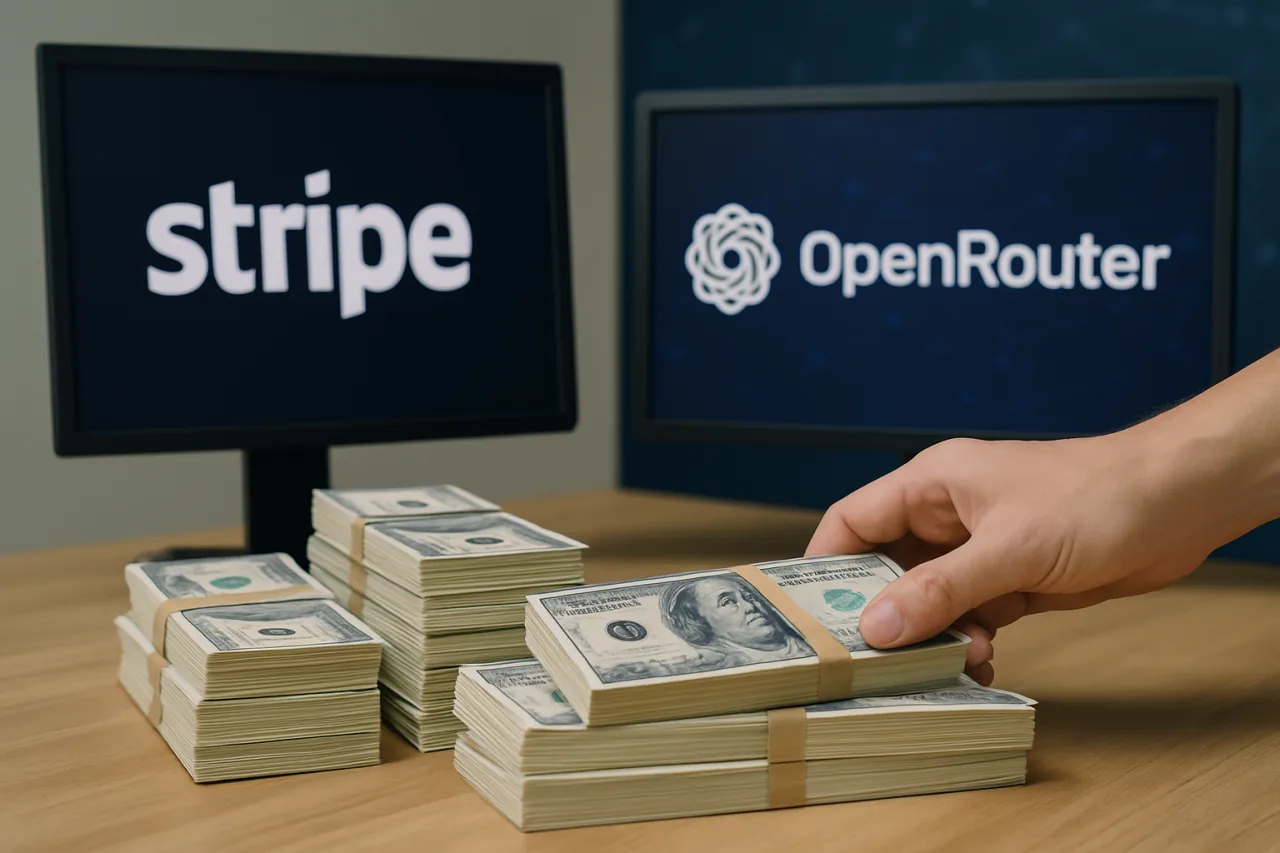
Stripe just bought the toll booth on the AI highway for $7.5 billion. On August 19, 2026, the payments giant confirmed its acquisition of OpenRouter, the leading AI model gateway that routes requests across more than 400 models from over 80 providers. The deal closed less than three months after OpenRouter raised $113 million at a $1.3 billion valuation — a 5.4x markup in 82 days. The routing platform processes more than 10 trillion AI tokens per day for more than 10 million developers and companies, with token volume compounding at 9 percent per week year-to-date. Stripe CEO Patrick Collison called the product “a truly delightful developer tool” and said the acquisition would help businesses “maximize profitability by routing their requests intelligently and spending their tokens efficiently.” The deal unites Stripe’s payments infrastructure with OpenRouter’s model routing technology — and it tells us where the AI economy is heading next.
Key Takeaway
- 💰 $7.5 Billion Deal: Stripe acquired OpenRouter for approximately $7.5 billion — $1.5 billion to founders, $6 billion to investors. The price represents a 5.4x markup over OpenRouter’s $1.3 billion Series B valuation from just 82 days earlier.
- 🛣️ 10 Trillion Tokens Daily: OpenRouter processes more than 10 trillion AI tokens per day for over 10 million developers, routing requests across 400+ models from 80+ providers. Token volume is compounding at 9% per week.
- 💳 Tokens Are the New Currency: Stripe CEO Patrick Collison said “tokens are the central currency for companies building with AI.” The acquisition positions Stripe as the economic infrastructure for the entire AI token economy.
- 🌐 Geopolitical Angle: A CNBC investigation found Chinese-origin models captured 46% of US enterprise token usage on OpenRouter. By acquiring this gateway, Stripe becomes a gatekeeper for a platform where nearly half of enterprise traffic flows through Chinese models.
- ⚡ For Filipino Developers: The deal signals that AI model routing — choosing the right model for each task at the right price — is becoming a strategic skill. Filipino developers building AI applications should understand multi-model routing to optimize costs.
Why Stripe Bought a Model Router
The strategic logic of the acquisition becomes clear when you understand what OpenRouter actually does. OpenRouter sits between AI model providers — OpenAI, Anthropic, Google, xAI, DeepSeek, Alibaba, and dozens of others — and the applications that use them. When a developer sends a request, OpenRouter decides which model to route it to based on cost, latency, capability, and availability. It is a single API endpoint that gives access to every major model. The company charges a 5.5% fee on credit purchases.
By owning this routing layer, Stripe positions itself as the economic infrastructure for AI — not just payments, but the entire token economy. “Tokens are the central currency for companies building with AI,” Stripe CEO Patrick Collison said in a statement. “Together with OpenRouter, we’ll help businesses maximize profitability by routing their requests intelligently and spending their tokens efficiently.”
The acquisition builds on Stripe’s existing push into AI economics. The company already launched Token Billing and has been working to help businesses optimize token costs and usage. The gateway’s routing technology adds the intelligence layer — knowing which model to send each request to for the best result at the lowest cost. For Filipino developers building AI-powered applications, this means the infrastructure for managing multi-model AI costs is becoming more sophisticated and more centralized. As The New York Times reported, the deal unites Stripe’s payments business with OpenRouter’s technology for directing spending on AI models — combining two forms of routing into a single platform.
The Numbers Behind the Deal
The $7.5 billion price tag is the most striking detail. OpenRouter raised $113 million in its Series B in May 2026 at a $1.3 billion valuation, with participation from Sequoia, Andreessen Horowitz, Menlo Ventures, and Alphabet’s Capital G. Three months later, Stripe is paying 5.4 times that valuation. The rapid appreciation reflects the perceived criticality of the infrastructure layer that OpenRouter occupies.
The volume tells the story. OpenRouter processes more than 10 trillion tokens per day for more than 10 million developers and companies. Token volume is compounding at 9 percent per week year-to-date — a growth rate that suggests the platform’s traffic could double roughly every eight weeks if sustained. At that scale, the 5.5% fee on credit purchases generates substantial revenue, though the company has not disclosed specific figures.
The same day the deal was announced, corporate expense-management platform Ramp launched Router.com, a competing single-endpoint router that directs each request to the lowest-cost model meeting performance needs. Ramp says its router cut its own costs by approximately 30% and is delivering 40% average savings for early users. The emergence of competition validates the market — but also means Stripe is paying a premium for a category that is not yet locked up. For context on how AI infrastructure is being valued, see our coverage of the AI industry’s $400 billion revenue problem.
The Geopolitical Dimension
The acquisition carries geopolitical weight that the press release did not mention. A CNBC investigation published on July 7, 2026, revealed that Chinese-origin models captured 46% of US enterprise token usage on OpenRouter. Models from DeepSeek, Alibaba’s Qwen, and Zhipu’s GLM family are routing through OpenRouter to US enterprises at massive scale — and OpenRouter is the primary marketplace for accessing models from multiple providers.
By acquiring this gateway, Stripe assumes the role of a gatekeeper for a platform where a significant portion of enterprise activity relies on Chinese-origin models. This raises questions about data handling, regulatory compliance, and the US-China AI cold war that escalated this week. If the US government restricts Chinese model access through American infrastructure — as it is reportedly considering — Stripe would be the entity enforcing those restrictions on OpenRouter’s traffic. For more on the US-China AI cold war, see our AI World This Week #006 coverage.
What This Means for Filipino Developers and Businesses
The Stripe-OpenRouter deal matters for Filipino developers and businesses in three practical ways:
1. Multi-model routing is becoming a standard practice. OpenRouter’s growth — 10 million developers, 10 trillion tokens daily — shows that companies are no longer betting on a single AI model. They are routing requests across multiple models based on cost and capability. For Filipino startups, this means the era of “just use GPT-5.6” is ending. The future is multi-model, and the infrastructure to manage it is becoming as important as the models themselves. For guidance on how to evaluate AI tools, see our AI tools guide for small businesses.
2. Token cost optimization is a real skill. Ramp’s Router.com claims 30-40% cost savings by routing each request to the lowest-cost model that meets performance needs. For Filipino businesses operating on thin margins, the ability to optimize token costs across multiple AI models can be the difference between a profitable AI deployment and a money-losing one. The advice from Satya Nadella — stop trusting one AI model — is now backed by infrastructure that makes multi-model routing practical.
3. The AI infrastructure layer is consolidating. Stripe’s acquisition of OpenRouter is the latest in a series of deals that are consolidating the AI infrastructure market. SpaceX acquired Cursor for $60 billion. Anthropic is preparing a $2 trillion IPO. NVIDIA secured a $105 billion Ohio factory. The pattern is clear: the companies that own the infrastructure layer — payments, routing, compute, and developer tools — are becoming the most valuable players in the AI economy. Filipino developers should understand which infrastructure they are building on and what happens if the owner changes the terms. For more on how AI infrastructure consolidation affects the broader market, see our coverage of AI industry alliances and the AI bubble debate.
The Competitive Landscape: Who Else Is Routing?
Stripe is not the only company that sees opportunity in AI model routing. The same day the OpenRouter acquisition was announced, corporate expense-management platform Ramp launched Router.com, a competing single-endpoint router that directs each request to the lowest-cost model meeting performance needs. Ramp says it built the router internally over three years, cut its own costs by approximately 30 percent, and is delivering 40 percent average savings for early users. Routing is free through 2026, and the platform supports OpenAI, Anthropic, xAI, DeepSeek, NVIDIA, and others.
The emergence of competition validates the market — but also means Stripe is paying a premium for a category that is not yet locked up. The platform’s advantage is scale: 10 million developers and 10 trillion tokens daily give it a network effect that new entrants cannot easily match. But Ramp’s router, with its cost-savings claims and free pricing through 2026, could capture price-sensitive users who do not need OpenRouter’s full breadth of models. For Filipino startups evaluating which routing platform to use, the decision comes down to model breadth (the platform’s 400+ models) versus cost transparency (Ramp’s lowest-cost routing).
The company has said its product, mission, and current commitments will remain unchanged, and it expects to continue operating independently after the acquisition closes, according to Channel Insider. Whether that independence holds under Stripe’s ownership is a question that the developer community will be watching closely — particularly the 46% of US enterprise token traffic that flows through Chinese-origin models on the platform.
What the Deal Tells Us About the Future of AI Spending
The OpenRouter acquisition reveals a structural truth about the AI economy that is still underappreciated. The companies building AI applications — startups, enterprises, and developers — are spending money on tokens the way they used to spend on cloud computing. Tokens are the unit of consumption. Models are the product. Routing is the logistics. And payments are the plumbing that makes it all flow.
Stripe’s bet is that AI spending will follow the same trajectory as cloud spending: starting with a few large customers, expanding to mid-market, and eventually becoming universal. If that happens, the company that owns the routing and billing layer — the infrastructure that decides which model handles each request and how the customer pays for it — sits at the center of the economy. That is the position Stripe is buying for $7.5 billion.
For Filipino businesses, the implication is practical. If you are building an AI-powered application, your token costs will be one of your largest operating expenses. Understanding how to route requests across models — using a cheaper model for simple tasks and a premium model for complex ones — can reduce costs by 30 to 40 percent, according to Ramp’s data. That margin difference is enough to make a Filipino startup profitable or unprofitable. The AI tools landscape is no longer about choosing the best model — it is about choosing the right model for each task and managing the cost across all of them.
Frequently Asked Questions
What is OpenRouter?
OpenRouter is an AI model gateway that routes requests across more than 400 AI models from over 80 providers through a single API endpoint. It processes more than 10 trillion tokens per day for more than 10 million developers and companies, charging a 5.5% fee on credit purchases.
How much did Stripe pay for OpenRouter?
Stripe acquired OpenRouter for approximately $7.5 billion, with $1.5 billion going to the founders and $6 billion to investors. The price represents a 5.4x markup over OpenRouter’s $1.3 billion Series B valuation from May 2026 — just 82 days earlier.
Why did Stripe buy OpenRouter?
Stripe acquired OpenRouter to position itself as the economic infrastructure for AI. By owning the model routing layer, Stripe can help businesses optimize token costs and route requests intelligently. CEO Patrick Collison called tokens “the central currency for companies building with AI.”
What does the OpenRouter acquisition mean for developers?
For developers, the acquisition means the AI model routing layer is becoming part of a larger payments and economic infrastructure ecosystem. OpenRouter has said its product, mission, and current commitments will remain unchanged, and it expects to continue operating independently after the acquisition closes.
Does the OpenRouter deal have geopolitical implications?
Yes. A CNBC investigation found that Chinese-origin models captured 46% of US enterprise token usage on OpenRouter. By acquiring this gateway, Stripe becomes a gatekeeper for a platform where nearly half of enterprise traffic flows through Chinese models. If the US restricts Chinese model access, Stripe would enforce those restrictions.
How can Filipino developers use multi-model routing?
Filipino developers can use platforms like OpenRouter or Ramp’s Router.com to route AI requests across multiple models based on cost, latency, and capability. This can reduce token costs by 30-40% compared to using a single premium model. The key skill is knowing which model to use for which task — coding, reasoning, creative writing, or data analysis.
Disclaimer: This article is for informational and educational purposes only and does not constitute financial, investment, legal, or regulatory advice. References to specific companies, valuations, and acquisitions are based on publicly available information as of August 23, 2026.