Table of Contents
📊 THE BOARD — Tuesday, September 29, 2026: PSEi Monday close 5,788.87 (−0.64% — the first close below 5,800 in the dip week) · breadth 128 losers vs 51 gainers · turnover ₱5.19B (thin) · miners led decliners · AB Capital levels: 5,770 floor / 5,800 hurdle · GCash final pricing tomorrow (Oct 1) · Fed Oct hike odds 66-70% pressuring the rate-sensitive complex.
Key Takeaway
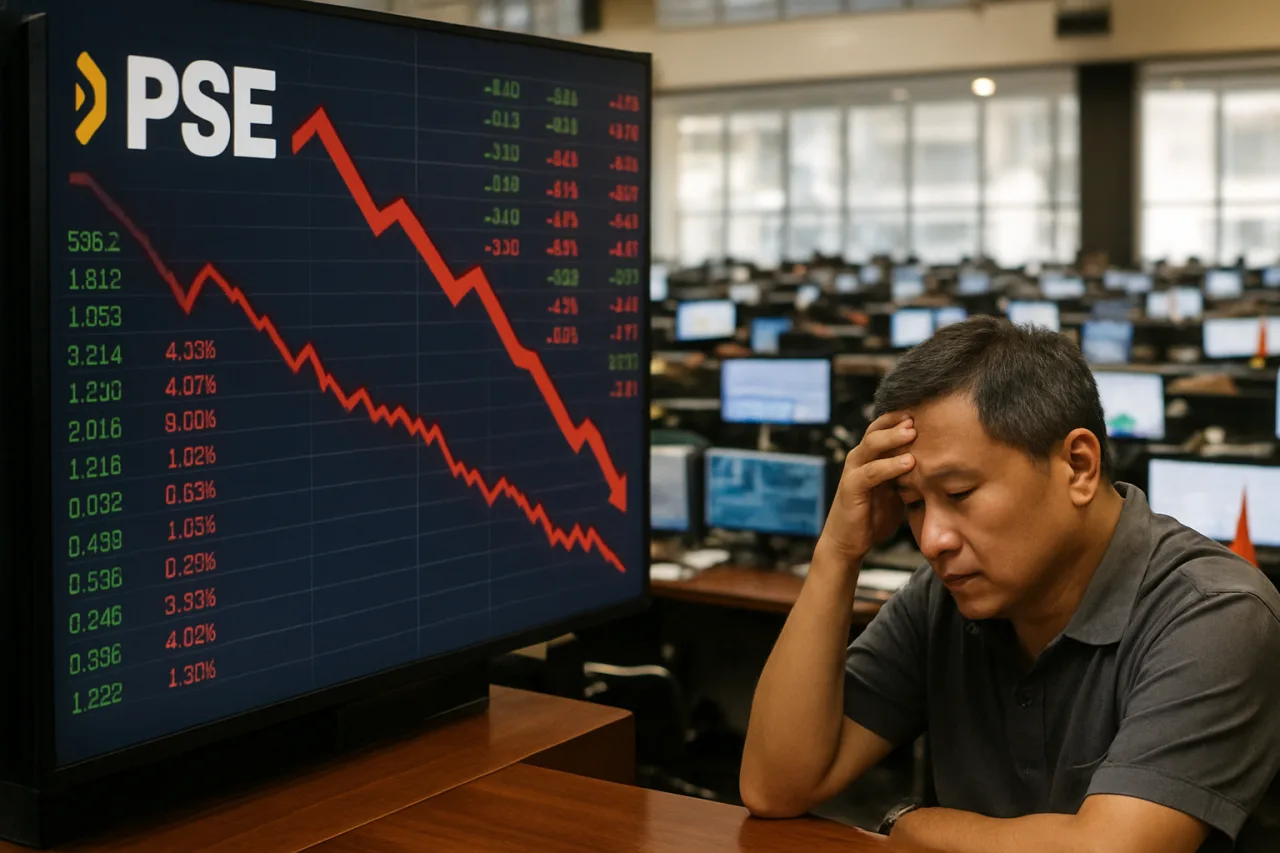
- 📉 5,800 is lost again: PSE stocks closed Monday at 5,788.87, down 0.64%, with 128 decliners flattening 51 gainers on a thin ₱5.19B of turnover — a dip with no conviction bid behind any bounce.
- 📍 The number that matters is 5,770: AB Capital’s floor level sits 19 points below Monday’s close — a single session’s soft morning prints it — and a clean break turns the dip week into a revaluation.
- 🏗️ Miners led the fall: the nickel-and-gold complex gave back its recent outperformance as metal prices slid on the 5.22% 10-year yield — the rate-sensitive corner is teaching the same lesson the index is.
- 📅 Pricing day is tomorrow: the GCash IPO’s final pricing lands October 1, and the bookbuild’s retail subscription cash is money that will not re-enter PSE stocks this week — the flow vacuum has a date.
- ✅ What you do with this: the four-tranche ber-months ladder from PSE Watch #003 assigns floor-test-day behavior in advance — hold the tranche, run the rule, and let 5,770 make the market’s case instead of your nerves.
The dip week just produced its most technical close: PSE stocks finished Monday at 5,788.87, down 0.64%, with the board’s internals doing more damage than the headline number suggests — 128 issues fell against 51 gainers, turnover came in at a thin ₱5.19 billion, and the miners’ complex, which had been the market’s stubborn strength all quarter, led the PSE stocks decline as metal-backed indexes slid alongside the 5.22% US 10-year yield. The level that now matters was drawn before the session: 5,770, the floor AB Capital flagged when the index first lost 5,800, sits within a single session’s morning drift of Monday’s close, and the entire dip-week thesis compresses into one question — does 5,770 hold on the test, or does the market reprice below it before tomorrow’s event? That event is not a small one: October 1 is GCash’s final IPO pricing, the subscription window’s last days are absorbing retail cash at the fastest rate the domestic market has seen all year, and the money funding those subscriptions is provably not buying anything else. This is PSE Watch #004, and it does what #003 did for PSE stocks and the ladder: takes the levels, applies them to the four-tranche ber-months structure, and pre-assigns the behavior for each floor-test outcome before the print arrives.
Related: Solana Alpenglow Test Hits 150ms Finality: 5 Numbers to Know
Monday’s PSE Stocks Internals — the Numbers Behind a 19-Point Loss
The headline loses 19 points; the internals tell the story that forecasts the next three sessions. Breadth of 128 down versus 51 up means the decline was board-wide, not concentrated in one heavyweight’s misprint — when nearly every second issue falls, the buying power behind any intraday rally is rationed, which is exactly what ₱5.19 billion of turnover confirms: this was a Monday where PSE stocks found no wall of bids to lean against, so every attempt to rally got sold into thinness. The leadership detail is the miner complex — the Philippines’ largest-listed gold and nickel producers — sliding together alongside the rest of PSE stocks on a day when COMEX gold fell more than 3% to $4,111 and the 10-year Treasury touched 5.22%, its highest since 2007 (BSP’s rate-forecast watchpoint anchors the peso side): the mechanism is the Fed’s October pricing again (65-70% odds of a second hike), which punishes everything metal-backed and dollar-priced. The foreign-flow picture stayed the PSE stocks dip week’s quiet constant: modest net foreign selling, no panic exit, and none of the ₱8-10 billion sessions that marked the GCash offer weeks — the flow narrative matches the price narrative. And the month’s trajectory frames the stakes: PSE stocks have now given back more than 5% this month, the second straight monthly decline of the ber-months dip, which is precisely the pattern the ladder was built to buy into rather than fear.
WorldNgayon Analysis: Breadth-plus-volume beats the headline — a 19-point loss on 128 decliners describes PSE stocks waiting for a date, not breaking down, not a market breaking down.
Bottom Line: 5,788.87 with 128 losers and no bid depth — PSE stocks: absent, not crashing; the test is 5,770,, and it is scheduled.
The 5,770 Floor Test — Why This Level Decides This Week for PSE Stocks
AB Capital’s map from the last dip (the 10-month-low bounce PSE Watch #002 covered) re-drew the PSE stocks trading range with two lines: support at 5,770 and the 5,800 ceiling that has now repelled three consecutive closes. The floor’s logic is mechanical — it sits at the September bounce origin where the dip-buyers who caught the 10-month low last put real size to work, so a retest there re-meets bids left over from that successful defense — and its test is now imminent: 19 points below Monday’s close, one soft open away. What breaks it: a clean sub-5,770 close (not an intraday wick — a settled print below the line) converts the dip week into a range revaluation, and the next support cluster only arrives at 5,700 round-number territory, a full 88 points deeper. What confirms it: a hold at 5,770 paired with a bid back through 5,800 on ₱7B+ turnover — the combination that marked every durable bounce of the 2026 correction — turns tomorrow’s pricing-day headline into the excuse for the reclaim rather than the cause of the break. The GCash event interacts with both paths: tomorrow’s final pricing at the ₱6.60-anchored band (the analysis in the GCash price-eve piece holds) lands as either an ignition (allocation confirmed, subscription money’s attention returns to the market after the listing’s cash-lockup unwinds) or a shrug (if the pricing disappointment leaks into the week). The floor test happens first, in either order — which is why the tranche rules below are written against levels, not dates.
Bottom Line: 5,770 is where September’s buyers left their bids and 5,800 is where they stop being paid — the floor test decides which line the week’s next tranche reads.
GCash Pricing Eve — the Cash Vacuum With a Calendar
The flow event of the quarter runs its final act tomorrow, and its interaction with PSE stocks is a subtraction story — the second time this series has clocked it: every peso subscribed into the GCash offer between the bookbuild’s start and October 1 is a peso not bidding for any listed stock this week — that is the vacuum, and it is measurable in the turnover data (₱5.19B Monday is a fraction of the ₱8-10B runs on GCash-hype sessions). The subscription window’s close converts the story: once the final allocation is set (the offer’s pricing lands October 1, listing follows in mid-October), the two flows that matter return — subscription refund excesses and the attention of every retail account that spent the past two weeks fixed on one ticker. The GStocks dimension belongs in the same paragraph: the retail queue that bought GStocks in the last IPO cycle has already learned the listing-day pattern in PSE stocks (initial pop, then distribution), and GCash’s scale makes it the largest test yet of whether the retail cohort’s cash returns to the broad market or waits for the wallet’s own listing to trade. For the dip week specifically, the pricing eve is the last thin day: the vacuum peaks, ₱5B turnover type sessions persist, and the floor test runs on rationed liquidity — which biases the tape toward the floor getting tested cleanly. The subscriber reading this who also owns ladder positions: your GCash subscription and your PSE stocks ladder were always the same money plan in two compartments, and this is the week the compartments connect.
WorldNgayon Analysis: IPO subscriptions are the market’s hidden selling program — money that was going to bid for stocks this week agreed to not do so, in writing, for two weeks.
Bottom Line: Tomorrow’s pricing ends the thinnest-flow week of the quarter — and the return of that cash is the bounce fuel the floor test may be loading.
The Ladder’s Floor-Test Rules — Four Tranches Written Against Levels
The four-tranche ber-months structure from PSE Watch #003 (₱5,000-example edition) converts to floor-test mechanics in four lines. Tranche one — already placed: the ladder’s first tranche deployed in the 5,8xx zone when the dip was confirmed; its job was never to be optimal, only to be in the market early enough that a rebound pays it first — unchanged, untouchable, and it is the reason a 5,770 break cannot touch the plan’s average. Tranche two — the floor-test tranche: this is the level-keyed tranche — it deploys ONLY on one of two prints: either a hold at 5,770 with a same-day reclaim of 5,800 (buy the confirmation), or a settled break below 5,770 followed by a stabilization day (buy the capitulation’s second day) — never on the break itself, because first-day breaks extend. Tranche three — the GCash-response tranche: keyed to tomorrow’s pricing print — an oversubscribed multiple or an above-anchor pricing (₱6.80+) becomes demand-side confirmation for the whole ber months basket and deploys on the reaction session; a pricing below the ₱6.60 anchor keeps this tranche in cash for the 5,700-zone contingency. Tranche four — the insurance leg: reserved for the ber months’ actual dip-window (the late-October window where the ladder’s seasonal thesis lives) — it stays unspent through the floor test, the pricing, and the PCE print, because its job is to be ready for a level nobody has printed yet. The rules are level-keyed and date-staggered so no single event can spend the whole ladder, and the floor test — the scariest headline of the dip week — only touches tranche two by design.
Bottom Line: One tranche per event: floor test = tranche two, pricing = tranche three, the seasonal dip = tranche four — no headline can spend the whole ladder at once.
What Would Change This Reading — Three Checks Before the Pricing Print
Check one — Tuesday’s close (tomorrow’s print before the print): a close back above 5,800 on real turnover voids the floor-test framing entirely and puts the reclaim thesis on the board by default; a settled sub-5,770 activates tranche two’s capitulation rule. Check two — the GCash final pricing band tomorrow: above ₱6.80 reads as demand confirmation (tranche three deploys on the reaction); below ₱6.60 reads as demand softening (tranche three parks, and the 5,700 contingency arms). Check three — Wednesday’s US PCE (the Fed’s inflation print with October hike odds at 66-70%): a hot print re-prices the peso and the rate-sensitive complex again, and the foreign-flow numbers on Thursday will show whether the dip-buying that marked the last two ber months is re-emerging. Three checks, each with an assigned tranche consequence — the reading updates on data, not vibe, and the ladder absorbs whichever data arrives first.
Bottom Line: Tuesday’s close, tomorrow’s pricing band, Wednesday’s PCE — three scheduled checks, each pre-mapped to a tranche action the ladder already owns.
Frequently Asked Questions
What does the 5,770 floor level mean for PSE stocks?
It is the support line AB Capital mapped at the September bounce origin — the 10-month-low buying zone. A hold confirms the dip week’s range (5,770-5,800 trading); a settled close below revalues the range with the next support arriving near 5,700. Monday’s 5,788.87 close sits 19 points above it — the test is imminent, and tranche two of the ladder is keyed to exactly this event.
Why did PSE stocks fall again below 5,800?
Three forces stacked: 128 decliners versus 51 gainers as the board-wide decline fed itself on thin ₱5.19B turnover; the miners-led drop as gold slid to $4,111 on the 5.22% US 10-year yield and 66-70% October hike odds; and the GCash subscription week’s cash vacuum, with offer money committed and unavailable for other listings until the pricing settles.
Is the GCash IPO affecting the broader Philippine market?
Yes, mechanically — subscription cash is the market’s largest liquidity withdrawal of the quarter: pesos wired into the offer don’t bid for any other stock, which is why dips run deeper on turnover this thin. The effect has a date: final pricing lands October 1, and the cash plus attention returns after allocation — the ladder’s tranche three is keyed to that reaction.
Should I buy the dip at 5,788 or wait for 5,770?
Follow the level, not the urge: the ladder’s tranche two deploys on a floor-hold confirmation (5,770 holds with a same-day 5,800 reclaim) or a capitulation second-day after a settled break — never on the break itself. Already-placed tranche one handles the waiting cost. Waiting for an exact level before any position is placed is how dip weeks end with nothing bought.
What is the ber-months dip pattern in the PSE?
The Q4 pattern where remittance-season inflows peak while the index historically drifts soft through October-November, then firms with holiday liquidity — the four-tranche ladder spreads deployment across the window so the seasonal dip becomes the buying calendar. PSE Watch #003 built it; this edition applies it to the week’s floor test.
Financial Disclaimer: This article is for general information and education, not investment or financial advice. Stock market participation involves risk; past performance does not guarantee future results. Consult a licensed financial adviser before investing. WorldNgayon.com is not a stockbroker or financial adviser.