Table of Contents
Key Takeaway
- 🤝 The Agreement: The Philippines and Romania renewed their bilateral labor framework on August 6, 2026, in Bucharest, with the first Joint Committee Meeting scheduled to strengthen protections for approximately 2,000 Filipino workers in Romania.
- 📋 Key Provisions: Romania’s Emergency Ordinance No. 32/2026 mandates digital registration of recruitment agencies, explicitly bans placement fees on foreign workers, and requires employer accountability for fair working conditions.
- 🏭 Worker Demographics: The 2,000 Filipinos in Romania work primarily in automotive production, manufacturing, and domestic services, with a new Migrant Workers Office in Bucharest opening by end of 2026.
- ⚓ Black Sea Connection: DMW Secretary Cacdac visited Tulcea after July 6 maritime attacks, meeting 200+ Filipino shipyard workers at VARD Tulcea and paying tribute to a Filipino chief engineer killed in the incident.
- 🌍 Why It Matters: Romania joins a growing list of European labor destinations for Filipino professionals, offering EU-level wages, ethical recruitment standards, and a legal framework that bans placement fees — a model other EU countries may follow.
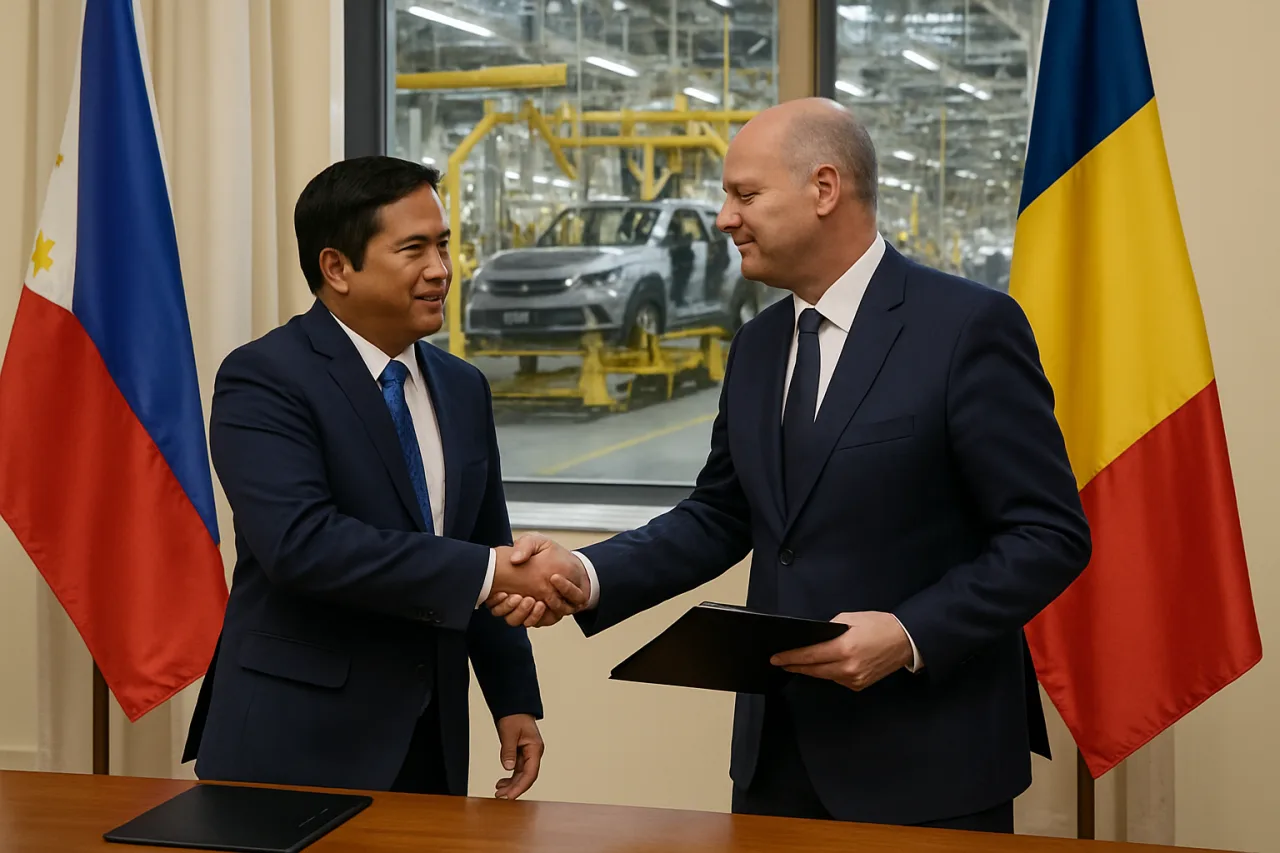
On August 6, 2026, in Bucharest, Department of Migrant Workers (DMW) Secretary Hans Leo J. Cacdac and Romanian Minister of Labor Dragoș-Nicolae Pîslaru formalized the renewal of the Philippines Romania labor agreement, a bilateral framework first established under a 2021 memorandum of understanding. The renewed agreement introduces the first Joint Committee Meeting between the two nations, the establishment of a Migrant Workers Office in Bucharest by end of 2026, and alignment with Romania’s new Emergency Ordinance No. 32/2026, which overhauls the country’s non-European Union labor migration rules.
The initiative focuses on four pillars: ethical recruitment, fair working conditions, social protection, and employer accountability. Romania’s Emergency Ordinance No. 32/2026, adopted in April 2026, mandates digital registration and licensing for all recruitment agencies operating in the country while explicitly banning placement fees and commission charges on foreign workers — a provision that directly addresses one of the most exploitative practices in overseas employment. The Philippines Romania labor agreement creates a legal framework where recruitment costs shift from worker to employer under both Philippine and Romanian law. For Filipino professionals considering Romania as a labor destination, the Philippines Romania labor agreement offers a structured pathway aligned with EU labor standards.
“As we pursue the renewal of our bilateral labor agreement, convene the Joint Committee Meeting, and establish the Migrant Workers Office in Bucharest, we are strengthening a modern framework that promotes ethical recruitment, protects the rights and welfare of Filipino workers, and supports Romania’s evolving labor market needs,” Cacdac said during the bilateral discussions, as reported by the Daily Tribune and confirmed by the Department of Migrant Workers.
The Numbers Behind the Philippines Romania Labor Agreement
Data from the DMW shows approximately 2,000 Filipino temporary migrant workers currently reside in Romania. Their employment distribution reveals a labor market that extends beyond the traditional OFW sectors of construction and domestic work:
| Sector | Description | Worker Share |
|---|---|---|
| Automotive Production | Manufacturing and assembly roles in Romania’s automotive industry, one of the country’s largest economic sectors | Primary employer |
| Manufacturing | Industrial production roles including textiles, electronics, and machinery | Secondary employer |
| Domestic Services | Household work and care services | Minority but present |
Romania’s automotive industry is one of the largest in Central and Eastern Europe, with manufacturers including Ford, Renault-owned Dacia, and Toyota supplier networks. The sector faces labor shortages that EU labor migration is designed to address — and Filipino workers with automotive manufacturing experience are well-positioned to fill these roles under the renewed agreement’s ethical recruitment framework.
What Emergency Ordinance No. 32/2026 Means for Filipino Workers
Romania’s Emergency Ordinance No. 32/2026 represents a significant shift in how the country manages non-EU labor migration. The legislation, adopted in April 2026, introduces three key changes that directly benefit Filipino workers:
1. Mandatory digital registration and licensing for recruitment agencies. All agencies recruiting foreign workers in Romania must now register through a digital system and obtain official licensing. This eliminates the gray market of unregistered recruiters — a key vector for the illegal recruitment practices that Filipino workers have faced globally. For context on how illegal recruitment networks operate and how to identify them, read our essential guide to the Russia recruitment crisis.
2. Explicit ban on placement fees and commission charges. The ordinance makes it illegal for recruitment agencies to charge placement fees or commission to foreign workers. Under the renewed Philippines Romania labor agreement, this ban aligns with Philippine law, which also prohibits placement fee collection from workers. The double-layered protection means a Filipino worker recruited for Romania should not pay any placement fees to either Philippine or Romanian agencies.
3. Employer accountability for working conditions. The ordinance places direct responsibility on employers for ensuring fair working conditions, social protection coverage, and compliance with Romanian labor law. This shifts the compliance burden from the worker to the employer — a model that reduces the vulnerability of foreign workers who may be unfamiliar with local labor regulations.
The Bucharest Migrant Workers Office
Secretary Cacdac announced during a dialogue with Filipino community leaders at the Philippine Embassy in Bucharest that the DMW is targeting the establishment of the Migrant Workers Office (MWO)-Bucharest by the end of 2026. The office will serve as the on-the-ground support system for Filipino workers in Romania, providing services that include contract verification, welfare assistance, legal support, and repatriation coordination.
The Bucharest Migrant Workers Office will be the Philippine government’s direct operational presence in Romania under the Philippines Romania labor agreement, staffed by DMW personnel. Currently, Filipino workers in Romania rely on the Philippine Embassy in Bucharest for consular services and the DMW’s central office in Manila for labor-related concerns. The new office under the Philippines Romania labor agreement closes that gap, giving approximately 2,000 Filipino workers a dedicated support structure within their host country.
OWWA Administrator Patricia Yvonne Caunan, who accompanied Cacdac on the visit, also met with Filipino workers and community representatives in Constanța on August 6. During the visit, the delegation attended to a distressed Filipino domestic worker and extended legal, welfare, and financial assistance. The DMW and OWWA confirmed they would continue monitoring the case and assist in facilitating the worker’s safe return to the Philippines.
The Black Sea Connection: Tulcea and VARD Shipyards
During the bilateral talks in Bucharest, Cacdac briefed Romanian authorities on the Philippine delegation’s recent visit to Tulcea, a major shipbuilding hub on the Danube River near the Black Sea. The visit followed the July 6 maritime attacks on vessels in the Northern Black Sea that killed a Filipino chief engineer and trapped approximately 180 Filipino seafarers.
The delegation paid tribute to the Filipino chief engineer killed in the incident and met with more than 200 Filipino shipyard workers at VARD Tulcea, a subsidiary of the Fincantieri Group, one of the world’s largest shipbuilding companies. The workers raised safety concerns related to the proximity of Black Sea shipping routes to active conflict zones — a concern that has intensified for Filipino seafarers globally. For a comprehensive account of the Black Sea crisis and its impact on Filipino seafarers, see our report on the maritime attacks that killed three and trapped 180.
The Tulcea visit underscores the complexity of the Philippines Romania labor agreement. Romania is not only a destination for automotive and manufacturing workers — it is also a base for Filipino shipyard workers in VARD Tulcea and a transit point for Filipino seafarers on Black Sea routes. The renewed bilateral framework must address the safety of these workers in addition to standard labor protections.
How the Agreement Compares to Other Philippine Labor Pacts
The Philippines Romania labor agreement is part of a broader network of bilateral labor frameworks that the Philippine government maintains with host countries. What makes the Romania agreement distinctive is the alignment with Emergency Ordinance No. 32/2026, which provides a host-country legal infrastructure that mirrors Philippine anti-placement-fee laws.
| Feature | Philippines-Romania (2026) | Standard Bilateral Labor Agreement |
|---|---|---|
| Placement fee ban | Double-layered (PH law + RO ordinance) | PH law only |
| Recruitment agency licensing | Digital registration mandated (RO) | PH-side only |
| Migrant Workers Office | Opening Bucharest by end 2026 | Varies by country |
| Joint Committee Meeting | First ever scheduled | Standard provision |
| EU legal framework | Yes — Romania enforces EU labor standards | N/A for non-EU countries |
Romania’s membership in the European Union means Filipino workers employed there under the Philippines Romania labor agreement operate under EU labor law, which provides protections including maximum working hours, minimum wage requirements, health and safety standards, and anti-discrimination provisions. This is a higher regulatory floor than what exists in many traditional OFW destinations in the Middle East. For comparison, the Canada-Philippines free trade agreement negotiations represent a similar effort to establish bilateral frameworks with developed-economy labor standards.
What Filipino Professionals Should Know About Working in Romania
For Filipino professionals considering Romania as a labor destination under the renewed Philippines Romania labor agreement, several practical points emerge from the bilateral framework and Emergency Ordinance No. 32/2026:
Eligible sectors: Automotive production, manufacturing, shipbuilding (VARD Tulcea), domestic services. Romania’s labor market is also experiencing shortages in healthcare, IT, and construction — sectors where the Joint Committee Meeting may expand coverage.
Recruitment process: All recruitment must go through DMW-licensed Philippine agencies and Romania-licensed agencies under the new digital registration system. Workers should verify both the Philippine agency’s DMW license and the Romanian employer’s registration before signing any contract.
Placement fees: Filipino workers should not pay any placement fees to either Philippine or Romanian recruitment agencies. The double-layered ban under Philippine law and Emergency Ordinance No. 32/2026 makes placement fee collection illegal in both jurisdictions. Any agency demanding placement fees should be reported to the DMW.
Support infrastructure: The MWO-Bucharest will provide on-the-ground support once operational. Until then, the Philippine Embassy in Bucharest handles consular and labor concerns. The DMW and OWWA also maintain monitoring programs for distressed workers.
Safety considerations: Workers at VARD Tulcea and other Black Sea-adjacent locations should be aware of the security situation in the Northern Black Sea. The DMW has deployed assistance to the region following the July 6 maritime attacks and continues to monitor safety conditions.
The Philippine Delegation and Bilateral Partners
The bilateral discussions in Bucharest included key officials from both nations. The Philippine delegation was led by DMW Secretary Hans Leo J. Cacdac, with Ambassador Noel Eugene Servigon and OWWA Administrator Patricia Yvonne Caunan. The Romanian side was represented by Minister of Labor Dragoș-Nicolae Pîslaru and State Secretary Silvia Monica Dinică.
The participation of both the DMW Secretary and OWWA Administrator signals the Philippine government’s commitment to both the labor agreement framework and the welfare support system for workers already in Romania. The delegation’s visit to both Bucharest and Constanța — Romania’s largest Black Sea port — reflects the dual focus on policy negotiation and on-the-ground worker support.
Frequently Asked Questions About the Philippines Romania Labor Agreement
What is the Philippines Romania labor agreement?
The Philippines Romania labor agreement is a bilateral framework first established under a 2021 memorandum of understanding between the Department of Migrant Workers and Romania’s Ministry of Labor. The agreement was renewed on August 6, 2026, in Bucharest, introducing the first Joint Committee Meeting, a new Migrant Workers Office in Bucharest, and alignment with Romania’s Emergency Ordinance No. 32/2026 on labor migration.
How many Filipino workers are in Romania?
Approximately 2,000 Filipino temporary migrant workers reside in Romania as of August 2026, according to DMW data. They are primarily employed in automotive production, manufacturing, and domestic services. An additional 200+ Filipino shipyard workers are based at VARD Tulcea, a shipbuilding facility on the Danube River.
Does the Philippines Romania labor agreement ban placement fees?
Yes. Romania’s Emergency Ordinance No. 32/2026 explicitly bans placement fees and commission charges on foreign workers. Philippine law also prohibits placement fee collection from workers. The renewed bilateral agreement creates a double-layered ban — Filipino workers recruited for Romania should not pay any placement fees in either jurisdiction.
When will the Migrant Workers Office in Bucharest open?
DMW Secretary Hans Leo J. Cacdac announced that the Migrant Workers Office (MWO)-Bucharest is targeted for establishment by the end of 2026. The office will provide contract verification, welfare assistance, legal support, and repatriation coordination for Filipino workers in Romania.
What is Romania’s Emergency Ordinance No. 32/2026?
Romania’s Emergency Ordinance No. 32/2026, adopted in April 2026, overhauls the country’s non-EU labor migration rules. It mandates digital registration and licensing for all recruitment agencies, explicitly bans placement fees on foreign workers, and places employer accountability for fair working conditions and social protection coverage.
Is Romania a safe country for Filipino workers?
Romania is an EU member state with EU-level labor standards, including maximum working hours, minimum wage requirements, and anti-discrimination protections. However, workers in Black Sea-adjacent locations such as VARD Tulcea should be aware of the security situation following the July 6 maritime attacks in the Northern Black Sea. The DMW has deployed assistance to the region and continues to monitor safety conditions.
How can I apply to work in Romania as a Filipino professional?
Recruitment must go through DMW-licensed Philippine agencies that partner with Romania-licensed agencies registered under the new digital system. Verify both the Philippine agency’s DMW license and the Romanian employer’s registration before signing any contract. You should not pay any placement fees under the double-layered ban. Contact the DMW or the Philippine Embassy in Bucharest for verification.