Table of Contents
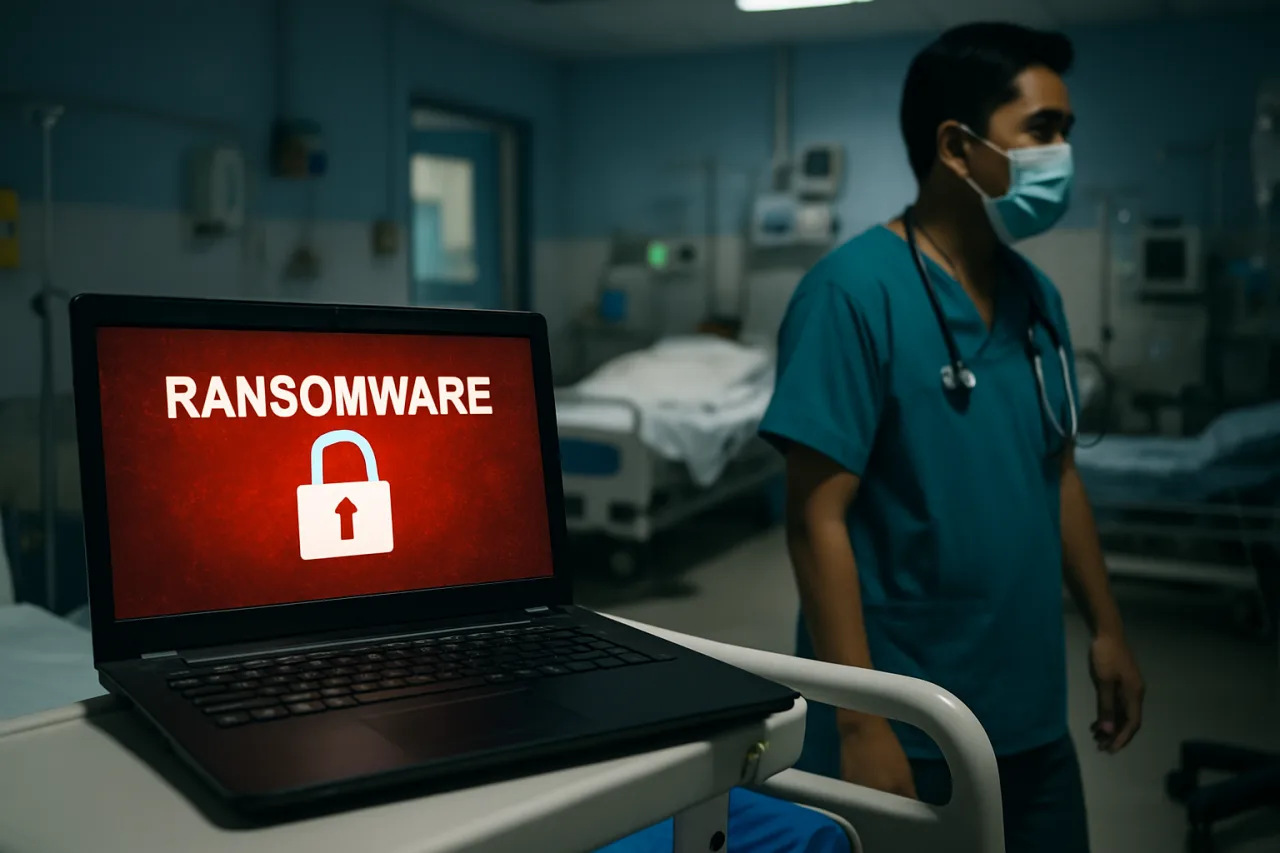
The most dangerous cyber threat in the Philippines isn’t targeting banks, government portals, or telecom networks. It’s targeting hospitals. According to CYFIRMA’s Philippines Evolving Cyber Threat Landscape 2025-2026 report, the healthcare sector has become the most targeted industry in the country, where Philippine healthcare ransomware now poses direct patient safety risks rather than purely technical disruptions. The shift is structural, not accidental: legacy systems, weak access controls, and the rapid expansion of Internet of Medical Things (IoMT) devices have created an attack surface that ransomware groups are actively exploiting. The PhilHealth Medusa attack of September 2023, which exposed the personal data of over 42 million Filipinos, was not an anomaly. It was a preview. The question for every Filipino healthcare IT professional is not whether the next Philippine healthcare ransomware incident will come, but whether their hospital will be ready when it does.
This article traces why Philippine healthcare ransomware has escalated, what the PhilHealth breach revealed about systemic vulnerabilities, and what healthcare IT teams across the country must do now — before the next attack forces another hospital onto paper charts and cancelled surgeries.
Why Philippine Healthcare Ransomware Is Happening Now
Three structural conditions have converged to make Philippine healthcare ransomware not just possible but inevitable at scale. The first is the legacy technology problem. A large proportion of Philippine hospitals still run operating systems and medical applications that no longer receive security updates. The FBI reported in 2022 that 53% of connected medical devices had at least one known critical vulnerability that remained unpatched, and roughly one in five connected medical devices ran on unsupported operating system platforms. In the Philippine context, where capital budgets for IT modernization are often dwarfed by clinical equipment needs, these figures are likely conservative. When a ransomware group scans for exposed services, unpatched hospital systems light up like runway lights.
The second condition is the IoMT explosion. Industry research predicts that smart hospitals globally will deploy over 7 million IoMT devices by 2026, more than double the number in 2021. Philippine tertiary hospitals are aggressively adopting connected infusion pumps, patient monitors, imaging systems, and telemedicine platforms. Each device is a potential entry point. And because most Philippine hospitals have not implemented network segmentation between clinical device traffic and general IT traffic, a single compromised IoMT device can become a bridge to the entire hospital network.
The third condition is dark web economics. CYFIRMA’s report confirms that medical records are valued 10 to 20 times higher than financial data on underground markets. A stolen credit card can be cancelled. A stolen medical record contains permanent information — diagnoses, prescriptions, insurance numbers, national ID numbers — that cannot be changed and can be monetized repeatedly through identity theft, insurance fraud, and targeted extortion. This economic premium is why Philippine healthcare ransomware groups are willing to invest more time and resources into hospital targets than they would for almost any other sector.
The convergence of these three conditions means that Philippine healthcare ransomware is not a random event. It is a predictable outcome of digital transformation outpacing security maturity. The CYFIRMA report notes that Q3 2025 alone registered the compromise of over 52 million user credentials in the Philippines, reflecting a rapidly escalating risk environment that healthcare organizations are poorly equipped to absorb.
What the PhilHealth Attack Taught Us — and What We Still Haven’t Learned
The Philippine Health Insurance Corporation (PhilHealth) ransomware attack of September 22, 2023 remains the most instructive case study in Philippine healthcare ransomware, and the most damning. The Medusa ransomware gang infiltrated PhilHealth’s systems and encrypted servers and workstations. The root cause, as later reported, was an expired antivirus software license. Not a sophisticated zero-day exploit. Not a nation-state APT. An expired license.
The Medusa gang demanded $300,000 — approximately 17 million Philippine pesos — and gave PhilHealth 10 days to pay. When the ransom wasn’t paid, the group leaked the stolen data. PhilHealth initially claimed that “no personal information and medical information has been compromised or leaked.” By October 2023, the government confirmed that the information of 8.5 million senior citizens was stolen. By April 2024, a portal revealed that 42,089,693 individuals had information included in the 430 gigabytes of data stolen by the ransomware gang. That is roughly 37% of the Philippine population at the time.
Three lessons emerge from the PhilHealth breach that every Filipino healthcare IT leader must internalize. First, basic security hygiene failures — not advanced threats — cause the most damaging Philippine healthcare ransomware incidents. An expired antivirus license is a procurement and governance failure, not a technical one. Second, the assumption that “our primary database is intact” is meaningless when attackers have already exfiltrated 430 gigabytes of data. Encryption is the final step of a ransomware attack, not the first. Third, failing to notify affected individuals is not just a compliance failure — it is a trust failure that compounds the damage. Philippine lawmakers grilled PhilHealth executives for months over the delayed notification, and the reputational cost far exceeded the ransom demand.
Yet two years later, the conditions that enabled the PhilHealth attack persist across the Philippine healthcare sector. Many hospitals still lack unified asset inventories. Many still run expired or unmanaged security tools. Many still have no incident response plan beyond “call DICT and hope.” The Philippine healthcare ransomware threat has evolved; the defense posture in many institutions has not.
The Economics That Make Hospitals Irresistible to Attackers
Understanding Philippine healthcare ransomware requires understanding why attackers choose hospitals over other targets. The answer is a combination of high data value, high operational urgency, and low defensive maturity — a combination that exists in almost no other sector.
The average cost of a healthcare data breach reached $7.42 million in 2025, per the IBM Cost of a Data Breach Report, making healthcare the most expensive sector for breaches for 14 consecutive years. For Philippine hospitals operating on thin margins, even a fraction of this cost can be existential. More critically, over 60% of healthcare breaches lead to operational disruption, according to CYFIRMA. When a hospital’s electronic medical record system goes down, emergency departments divert patients, surgeries are cancelled, medication dispensing systems go offline, and clinicians revert to paper charts. The Ponemon Institute, in partnership with Proofpoint, found that more than 20% of healthcare organizations hit by major attack types experienced increased patient mortality rates after the incident.
Here is the question that matters: when Philippine healthcare ransomware shuts down a hospital’s systems, who counts the cost in delayed treatments, missed diagnoses, and patient deaths? The answer, disturbingly, is almost no one. Philippine hospitals are not required to report patient safety impacts of cyber incidents. The financial cost is tracked. The clinical cost is not.
The economic pressure on attackers has also shifted. The Sophos State of Ransomware in Healthcare 2025 report found that median ransom demands against healthcare providers fell 91% year over year to $343,000, down from $4 million in 2024. Median payments dropped from $1.47 million to $150,000. This might seem like good news, but it reflects a strategic shift: ransomware groups are moving toward quieter data-theft and extortion models rather than noisy encryption. They steal the data, threaten to leak it, and skip the encryption entirely. For Philippine healthcare, this means the absence of a ransomware encryption event does not mean the absence of a breach. Data exfiltration can happen silently for months before anyone notices.
The Supply Chain Blind Spot No Hospital Has Mapped
The most underappreciated dimension of Philippine healthcare ransomware is the supply chain. Modern hospitals do not operate in isolation. They depend on electronic health record vendors, cloud infrastructure providers, medical device manufacturers, billing platforms, laboratory information systems, and managed service providers. Each of these third parties is a potential attack vector into the hospital network.
The 2024 Change Healthcare breach in the United States, which affected 192.7 million individuals and remains the largest healthcare breach ever reported, illustrated how a single vendor compromise can cascade across an entire healthcare ecosystem. Philippine hospitals are not immune to this pattern. CYFIRMA’s report highlights that a large proportion of Philippine organizations report adverse impacts from third-party breaches, and that data brokerage on the dark web has surged as stolen databases fuel secondary attacks including financial fraud, phishing, and credential stuffing.
The CYFIRMA report also documents a specific Philippine incident: a full data dump linked to a health technology provider, exposing sensitive medical data of over 2,000 patients, including clinical records and thousands of recorded calls. The data reportedly stemmed from improperly secured cloud infrastructure and third-party integrations. This is the supply chain threat in miniature — not a dramatic ransomware encryption, but a quiet data exposure through a partner’s misconfigured cloud.
For Filipino healthcare IT teams, the implication is clear: you cannot defend against Philippine healthcare ransomware by securing only your own perimeter. You must map your entire vendor ecosystem, understand which third parties have access to patient data, and enforce security requirements in every contract. Most Philippine hospitals have not done this. Most cannot even produce a complete list of vendors with network access.
What Filipino Healthcare IT Teams Must Do Before the Next Attack
The defense against Philippine healthcare ransomware is not a single product or a single policy. It is a set of disciplined practices that any hospital IT team can begin implementing immediately, regardless of budget. Here is what Filipino healthcare IT leaders should prioritize, ordered by impact.
1. Build a complete IoMT and IT asset inventory. The CYFIRMA report identifies exploitation of legacy and transitional systems as a key threat trend, and Fortified Health Security’s research names incomplete asset inventories as one of the five biggest security gaps in healthcare. You cannot protect what you have not identified. Every connected device — from infusion pumps to MRI machines to the CFO’s laptop — must be catalogued, with owner, operating system, patch status, and network location recorded.
2. Segment clinical device traffic from general IT. This is the single most effective architectural control against Philippine healthcare ransomware. If an attacker compromises a reception desk computer, they should not be able to lateral-move into the imaging network. Network segmentation, implemented through VLANs or software-defined networking, dramatically limits the blast radius of any breach.
3. Harden backups before attackers find them. CYFIRMA’s May 2026 ransomware tracking report documents how threat actors increasingly dedicate time to identifying and compromising backup infrastructure before deploying ransomware. Attackers locate backup servers, disaster recovery resources, storage snapshots, and administrative recovery tools, then disable or destroy them to weaken the victim’s ability to recover. Filipino hospitals must implement immutable, offline, or air-gapped backups that attackers cannot reach through the network. Test restoration quarterly. A backup you have never restored is a hope, not a plan.
4. Enforce least-privilege access and multi-factor authentication. The PhilHealth breach was enabled by weak access controls. Every user account — especially administrator and service accounts — should have the minimum permissions necessary for its function. Multi-factor authentication should be mandatory for all remote access, email, and administrative interfaces. Phishing-resistant MFA (FIDO2 hardware keys or passkeys) is now affordable and should be the standard for healthcare.
5. Join the Healthcare Cybersecurity Technology Alliance. In July 2026, the Healthcare Cybersecurity Technology Alliance (HCTA) was formally launched in the Philippines, inspired by the lessons of the PhilHealth ransomware incident. The alliance brings together healthcare organizations, cybersecurity experts, and industry leaders to build a cyber-resilient healthcare ecosystem. It is an official affiliate of Health-ISAC, giving Philippine hospitals access to global threat intelligence and best practices. The HCTA covers more than 2,000 healthcare entities in the Philippines and is expanding to 20,000 entities across the region. Joining costs nothing and provides access to shared intelligence that no single hospital could gather alone. For more on the broader Philippine cybersecurity incident landscape, see our analysis of NPC cybersecurity incidents doubling to 345 cases.
6. Comply with DICT’s mandatory cybersecurity testing. Starting February 2, 2026, the Department of Information and Communications Technology (DICT) requires critical digital systems to undergo independent third-party cybersecurity and reliability testing. This is not self-assessment. It is external validation, with no exceptions. Healthcare systems that qualify as critical digital infrastructure must be tested by accredited third parties. For Philippine hospitals, this is both an obligation and an opportunity — an external assessment will surface vulnerabilities that internal teams may have normalized.
The New Infrastructure of Defense
The Philippine response to healthcare cyber threats is maturing, though slowly. The HCTA launch in July 2026, with founding chair Jojo Nufable presenting on “Future Proofing Healthcare with Agentic AI Security Operations Center (SOC),” signals a shift toward collective defense. The alliance’s participation in the 2026 Health-ISAC Asia Pacific Summit in Bali demonstrates that Philippine healthcare is plugging into global threat intelligence networks. The DICT’s mandatory testing framework, which took effect in February 2026, establishes a regulatory floor for critical infrastructure security.
But infrastructure alone is insufficient. The CYFIRMA report warns that 78.3% of dark web threats targeting the Philippines are domestic-focused or state-linked, and that the intent is pre-positioning for disruption, not just data theft. This means that Philippine healthcare ransomware may evolve beyond financial extortion into something more strategic — attacks designed to disrupt healthcare services during crises, leveraging pre-positioned access to maximize impact. The convergence of cyber risk with national security is no longer theoretical.
For Filipino healthcare IT professionals, the path forward is clear. The threat is real, documented, and accelerating. The defensive measures are known, proven, and implementable. The gap between the two is not a technology gap — it is a priority gap. Hospitals that treat cybersecurity as an IT line item will continue to be victims. Hospitals that treat it as a patient safety imperative will build the resilience that the next attack demands. The Philippine healthcare ransomware threat will not wait for budgets to be approved or committees to convene. It is already inside the perimeter of hospitals that don’t yet know they’ve been compromised.
Frequently Asked Questions About Philippine Healthcare Ransomware
What is Philippine healthcare ransomware?
Philippine healthcare ransomware refers to ransomware attacks targeting hospitals, clinics, health insurers, and medical institutions in the Philippines. These attacks encrypt systems, steal patient data, and demand payment. According to CYFIRMA’s 2025-2026 report, healthcare is now the most targeted industry in the country, with groups like Medusa and Qilin actively paralyzing hospital operations.
What happened in the PhilHealth ransomware attack?
On September 22, 2023, the Medusa ransomware gang attacked PhilHealth, the Philippine government’s health insurance corporation. The root cause was an expired antivirus software license. The gang demanded $300,000 and, when unpaid, leaked 430 gigabytes of data containing the personal information of 42,089,693 individuals — roughly 37% of the Philippine population. PhilHealth initially denied data was compromised, a claim later proven false.
Why do ransomware groups target Philippine hospitals?
Hospitals are attractive targets because medical records are valued 10 to 20 times higher than financial data on dark web markets, hospitals cannot afford prolonged downtime due to patient safety risks, and many Philippine hospitals run legacy systems with weak security controls. The combination of high data value, high operational urgency, and low defensive maturity makes healthcare the highest-ROI target for Philippine healthcare ransomware groups.
How can Filipino hospitals defend against ransomware?
The most effective defenses are: building a complete IoMT and IT asset inventory, segmenting clinical device traffic from general IT networks, implementing immutable offline backups tested quarterly, enforcing least-privilege access with phishing-resistant MFA, joining the Healthcare Cybersecurity Technology Alliance for shared threat intelligence, and complying with DICT’s mandatory third-party cybersecurity testing framework.
Does Philippine healthcare ransomware affect patient safety?
Yes. Over 60% of healthcare breaches lead to operational disruption, according to CYFIRMA. The Ponemon Institute found that more than 20% of healthcare organizations hit by major attacks experienced increased patient mortality rates. When hospital systems go down, emergency departments divert patients, surgeries are cancelled, and medication dispensing systems go offline. Philippine hospitals are not currently required to report patient safety impacts of cyber incidents, meaning the clinical cost is largely invisible.
What is the Healthcare Cybersecurity Technology Alliance (HCTA)?
The HCTA is a Philippine alliance launched in July 2026 to build a cyber-resilient healthcare ecosystem. It was inspired by the PhilHealth ransomware incident and brings together over 2,000 healthcare entities, cybersecurity experts, and industry leaders. The HCTA is an official affiliate of Health-ISAC, giving Philippine hospitals access to global threat intelligence and best practices for defending against Philippine healthcare ransomware.
Is my hospital required to undergo cybersecurity testing?
Yes, if your systems qualify as critical digital infrastructure. Starting February 2, 2026, the DICT requires critical digital systems in the Philippines to undergo independent third-party cybersecurity and reliability testing. This is not self-assessment — it must be conducted by accredited external parties. Healthcare systems that meet the critical infrastructure threshold must comply.
What should I do if my hospital is hit by ransomware?
Immediately isolate affected systems from the network to prevent lateral spread. Report the incident to the DICT, the National Privacy Commission (NPC), and the Cybercrime Investigation and Coordinating Center (CICC). Do not pay the ransom — paying funds criminal activity and does not guarantee data recovery. Engage a qualified incident response firm. Preserve evidence for law enforcement. Notify affected patients as required by the Data Privacy Act of 2012. The PhilHealth official website provides breach advisory resources. For broader context on Philippine cyber incident trends, see our coverage of the Philippine ransomware surge and the Q1 2026 ransomware report.
Disclaimer: This article is for informational and educational purposes only and does not constitute professional cybersecurity or legal advice. Healthcare organizations should consult qualified cybersecurity professionals and legal counsel before implementing any security measures or responding to incidents. All statistics and threat assessments are sourced from cited reports current as of the publication date.