PayPal Invoice Scam: the Fake-Number Email, the Bitcoin Bait, and the Call-Now Trap
Key Takeaway
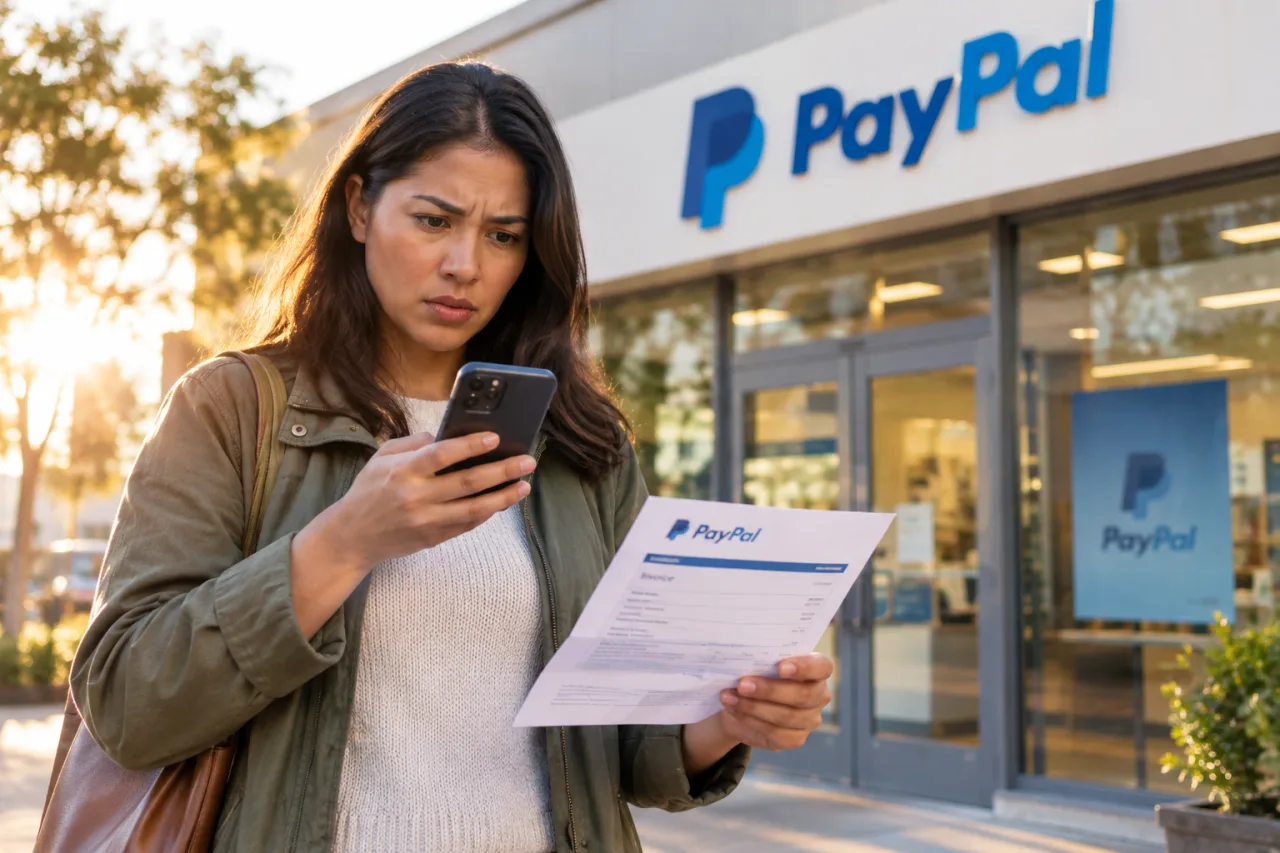
🧾 The PayPal invoice scam wave is the invoice that never charged you: a real-looking “invoice” or “billing notice” lands by email or text — often claiming a high-value bitcoin purchase you never made — and the whole design exists to make you panic and call the phone number inside the message.
🚫 The number inside the fake invoice is the scam: PayPal’s own warning states the pattern — a fake invoice email with a fraudulent “customer service” number, and the desk answers, ready to “help” you “cancel” the charge: that call is where the remote-access requests, the “refund” transfers, and the fee demands begin; every call belongs to the scammer, not PayPal.
✅ The real invoices live in one place: the Activity tab of the logged-in PayPal site or app — if the transaction doesn’t exist there, the invoice was never real, no matter how authentic the PDF, the logo, or the “case ID” looks; the scam’s power is entirely in the attached document, never in your actual account.
💸 The refund close is the second bite: the fake-support caller offers to “return” the money and asks you to send your own funds first (crypto, gift cards, a “refund” via wallet transfer) — a variant ABC7’s reporting on the same invoice family documented as the mistake-charge trap; legitimate platforms never refund by asking you to pay.
🛡️ The three-step neutralization costs nothing: don’t call any number in the message, don’t open the attachment from the email, check the Activity tab — and report the wave through PayPal’s own channels; the invoice-email family dies entirely on the one rule: verification runs in your logged-in account, never in the attachment.
Table of Contents
The PayPal invoice scam has survived a decade because the attachment does all the lying: an invoice PDF, numbered and itemized, “billing” you for a bitcoin order or an expensive service you never bought, with a support line right where your panic would look for help. The PayPal invoice scam’s anatomy — fake charge, panic, call, remote access or refund close — is the invoice scam family’s whole business model, and PayPal’s own guidance plus consumer-protection pages document every stage. This guide breaks the anatomy down, shows where the real invoice record lives (one tab in your logged-in account, the place the scam can’t reach), walks the PayPal invoice scam’s refund close that turns a scary email into a lost balance, and hands small sellers the extra layers their business accounts need — because merchant accounts carry fee invoices and payment-holds the scams love to imitate.
The Anatomy: Fake Charge, Panic Call, Takeover Offer
The wave runs three stages. Stage one, the fake invoice: an email or text arrives with a genuine-looking document — PayPal’s branding, an invoice number, a line item for a high-value bitcoin purchase or transfer the mark never made, with the fake support number waiting as the “quick solution” — and sometimes, per the reports that track the family, a phone number embedded in the attachment itself, so the panicked reader’s call is a single click. Stage two, the panic call: the number answers fast, professional, “confirming the unauthorized charge” — every syllable designed to make calling feel like a rescue rather than the attack it is. Stage three, the close: remote access (“let me show you the cancellation screen”), the credential harvest, or the refund arrangement where YOU pay first. PayPal’s own alert to its users cuts through the entire family: the invoice email with a fake customer-service number is the scam — do not call it, and the platform’s real support never arrives via a number printed in an attachment.
The PayPal Invoice Scam’s Weak Point: Where Real Charge Records Live
The verification that beats the wave runs in one place: the Activity tab of your logged-in account, whether PayPal itself or the payment platform the email names (GCash, the bank app, the card app) — the transaction history only you can see, which no attachment can imitate from the outside. If the “invoice” is real, the charge sits there; if it doesn’t sit there, no stage of the scam can harm you, because the fake document has no power without the call. The rule protects every variant the email family produces — the PDF attachments, the “case ID” texts, the “billing department” links, the QR codes — and it costs nothing, the same account-first verdict the wrong-send guide and every fintech guide here runs when the message claims money moved.
The Refund Close: Why the Scammer Wants to “Give You Money Back”
The PayPal invoice scam’s second act inverts the first: after the “charge” comes the “refund.” The caller — having never seen your real account — offers to return the phantom payment and walks you through the mechanics: a transfer from YOUR bank or wallet to theirs “to verify the refund channel,” a crypto purchase, gift cards, or a “test” transaction — the overpayment-and-refund pattern in its invoice costume, the mistakes-charged version ABC7’s reporting documents for the same family’s bank-impostor variants. The counter-rule: a genuine refund returns money to the account it came from, no action required from you, ever — the same source-account rule the wrong-send guides enforce; the moment your own wallet is asked to send, the phantom invoice has achieved its purpose. The remote-access close is the variant to name out loud to older relatives: genuine payment support never needs to see your screen.
For Sellers and Small Merchants: the Invoice Scam in Business Clothes
Small merchants meet the PayPal invoice scam family twice: the fake payment-notification (“you’ve been paid — ship now” emails imitating platform confirmation), and the real-invoice mimic (a fake fee or dispute notice with an urgent deadline and a “support” contact). The defense stack: confirm every payment in the platform’s own dashboard before shipping (the marketplace-scam rule in its payment layer), treat every invoice as a dashboard check first, never call numbers inside documents or emails, and run the business’s support needs through the logged-in help desk exclusively. The 2FA and device-hardening layers from the account-hardening guides apply with extra force here, because a merchant account that gets taken doesn’t just lose a balance — it ships inventory the real buyer never paid for.
The Report Lane: What to Do With the Email Once It’s Dead
The neutralized PayPal invoice scam email has one more job: evidence. Report it through the platform’s own channels (PayPal’s reporting routes, your email provider’s report-phishing button), forward nothing and click nothing while you do it — the FTC’s phishing guidance walks the report-the-attack steps and the what-if-I-already-clicked sequence the family sometimes catches people mid-way through, ending in the password-rotation and bank-contact steps this series’ recovery guides run in detail. The block-and-report loop feeds the platform’s own filters, and the invoice family — like every scripted wave this site documents — survives on targets who delete quietly and never report. One report costs a minute and shrinks the next wave.
The Season Pattern: Why Invoice Waves Spike and Who Gets Surfed
The PayPal invoice scam follows demand curves like every scripted fraud family: the waves spike when the real-transaction noise is highest (the holiday buying season, end-of-quarter billing for business accounts, the tax-filing weeks when official-looking documents feel routine), because a fake invoice hides best among genuine ones. The targeting reads the same pattern the site’s other guides document: the bitcoin-purchase versions aim at the crypto-curious (the people least likely to admit a coin order even to their own bank), the business-account versions aim at merchants mid-batch (the people least likely to pause shipping), and the elderly-focused variants ride the fear that a fixed income just “paid” for something enormous. The defense rhythm matches the wave: the dashboard check before every reaction, the season briefing for the relatives who get the elderly variants, and the report reflex — because each reported wave sharpens the next target’s filters. The invoice family has survived a decade on the gap between how official a document looks and how easy it is to verify; every season, the verification gets cheaper and the look-alike gets better, and the one tab in the logged-in account beats both.
Frequently Asked Questions
What Is the PayPal Invoice Scam?
A fake invoice — typically claiming an expensive bitcoin purchase or service charge — arrives by email or text with a working customer-service number inside, built to route your panic into a call the scammer answers. The invoice was never real (your logged-in Activity tab is the proof), and the call is the product: it ends in remote access, credential theft, or a refund arrangement where you send your own money. PayPal’s own alerts say exactly this: don’t call the number in the message.
I Got a PayPal Invoice for a Bitcoin Purchase I Never Made — What Do I Do?
Do nothing urgent — that urgency is the scam’s engine. Don’t call any number on the invoice, don’t reply, don’t open unexpected attachments; open the PayPal app or site yourself, check the Activity tab, and confirm the charge doesn’t exist. Then report the email through PayPal’s channels and your email provider’s phishing report, and delete. If a charge DID hit an account you own, the dispute runs inside that platform — never through a number that arrived in the same message as the problem.
Can I Get a Refund if I Already Paid the PayPal Invoice Scam Caller?
Move fast and by platform: freeze what’s controllable first (bank and card issuers if a card or transfer left your account, the wallet platform’s own dispute channels), report to law enforcement with the paper trail, and refuse any “recovery service” — the recovery-guide rule covers it as a second extraction targeting the first victim. Recovery odds depend on the payment rail and the hours elapsed, which is why the freeze is step one, not the phone call to anyone who calls you first.
How Do I Tell a Real PayPal Invoice From a Fake One?
Location is the tell: real charge records live in the logged-in account’s Activity tab, and real billing notices arrive from the platform with your name, your actual transactions, and links that never demand a call — while fakes attach mystery PDFs, invent “case IDs,” and print phone numbers. If you didn’t initiate the transaction a document claims, check the account before believing the document. Genuine billing never needs your urgency.
Should I Call the Customer Service Number in a PayPal Invoice Scam Email?
Never — the number inside the fake invoice is the scam itself, answered by the crew that sent it. Genuine support for PayPal or any payment platform is reached from the logged-in site or the app’s help desk, a number you looked up — never one that emailed you first. The rule costs nothing to obey and is the entire difference between a deleted email and an emptied account.
Financial Disclaimer
This article provides general consumer-protection and security information and does not constitute financial, legal, or professional advice. Platform policies, reporting channels, and scam tactics change over time; verify against official PayPal safety pages and consumer-protection resources before acting. The author and publisher disclaim any liability for actions taken based on this information.
External sources linked in this article, in order of first mention. Spotted an error or a broken link? Tell us.
Cite this pagePublished Nov 2, 2026
APA 7
Agron, E. (2026, November 2). PayPal Invoice Scam: the Fake-Number Email, the Bitcoin Bait, and the Call-Now Trap. WorldNgayon. https://worldngayon.com/paypal-invoice-scam/
MLA 9
Agron, Edmon. “PayPal Invoice Scam: the Fake-Number Email, the Bitcoin Bait, and the Call-Now Trap.” WorldNgayon, 2 Nov. 2026, worldngayon.com/paypal-invoice-scam/.
Chicago
Agron, Edmon. “PayPal Invoice Scam: the Fake-Number Email, the Bitcoin Bait, and the Call-Now Trap.” WorldNgayon, November 2, 2026. https://worldngayon.com/paypal-invoice-scam/.
Harvard
Agron, E. (2026) ‘PayPal Invoice Scam: the Fake-Number Email, the Bitcoin Bait, and the Call-Now Trap’, WorldNgayon, 2 November. Available at: https://worldngayon.com/paypal-invoice-scam/.
IEEE
E. Agron, “PayPal Invoice Scam: the Fake-Number Email, the Bitcoin Bait, and the Call-Now Trap,” WorldNgayon, Nov. 2, 2026. [Online]. Available: https://worldngayon.com/paypal-invoice-scam/
BibTeX
@online{agron2026paypalinvoice,
  author       = {Agron, Edmon},
  title        = {{PayPal Invoice Scam: the Fake-Number Email, the Bitcoin Bait, and the Call-Now Trap}},
  year         = {2026},
  date         = {2026-11-02},
  organization = {WorldNgayon},
  url          = {https://worldngayon.com/paypal-invoice-scam/},
  urldate      = {}
}
RIS
TY  - ELEC
AU  - Agron, Edmon
TI  - PayPal Invoice Scam: the Fake-Number Email, the Bitcoin Bait, and the Call-Now Trap
T2  - WorldNgayon
PY  - 2026
DA  - 2026/11/02/
UR  - https://worldngayon.com/paypal-invoice-scam/
Y2  -
ER  -
Cite the version you read; the page may be updated. Zotero and Mendeley can also import this page directly.