Table of Contents
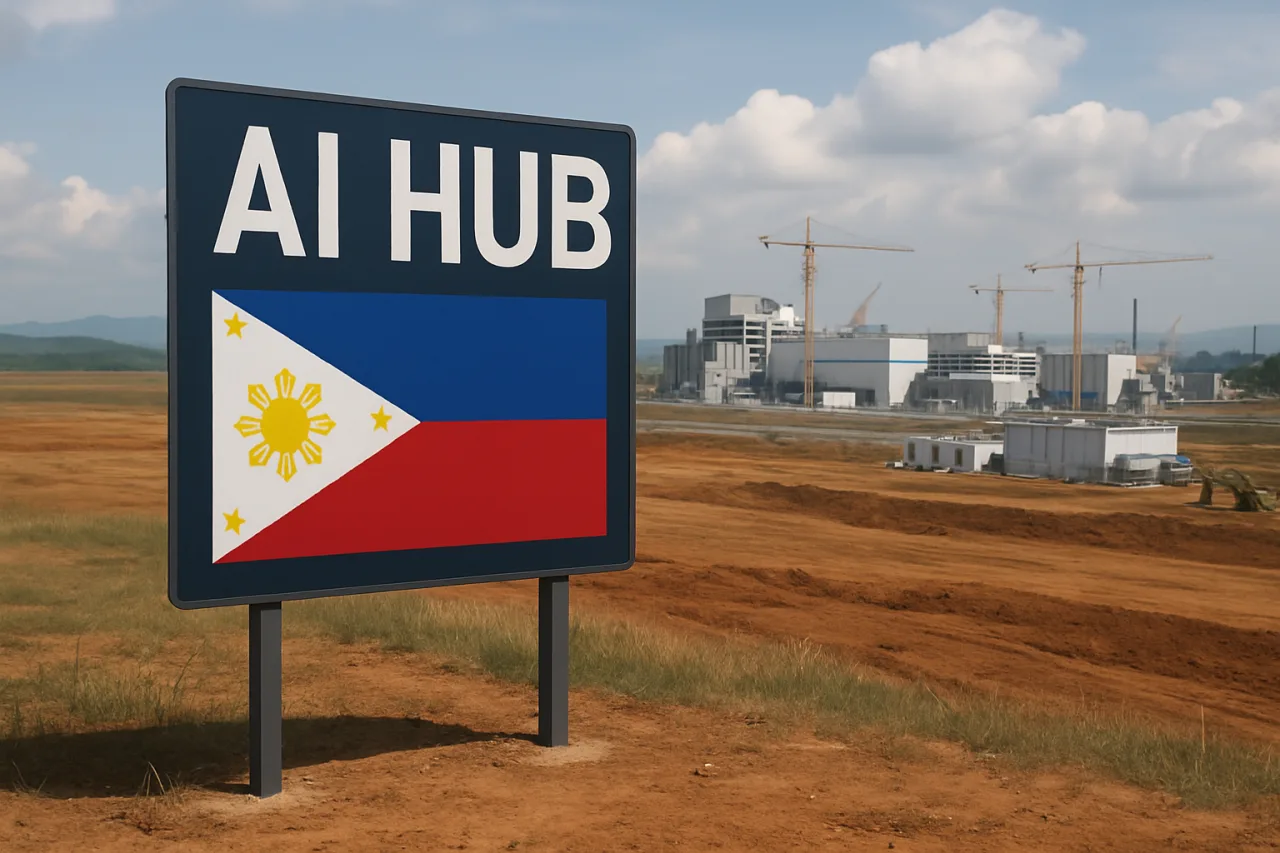
Pax Silica AI Hub in New Clark City represents the Philippines’ most ambitious attempt to position itself as a regional AI powerhouse — a 4,000-acre industrial zone dedicated to artificial intelligence, semiconductors, and advanced manufacturing under the US-led Pax Silica Declaration. The Philippines became the 13th nation to join the initiative in April 2026, with the Bases Conversion and Development Authority (BCDA) allocating the land within the Luzon Economic Corridor. For Filipino professionals in engineering, technology, manufacturing, and investment, the Pax Silica AI Hub signals a structural shift in the Philippine economy — from BPO services to AI-native industrial development.
Key Takeaway
- 🏗️ 4,000-acre AI hub in New Clark City: BCDA allocated a 4,000-acre lot in New Clark City, Tarlac as a Pax Silica Coordination Office — the first “Golden Node” under the US-led initiative.
- 🌐 Philippines is the 13th Pax Silica member: The country joined the US-led declaration to build a secure silicon supply chain covering critical minerals, semiconductors, AI, and advanced manufacturing.
- 💼 Jobs for Filipino engineers and tech professionals: BCDA CEO Joshua Bingcang said the hub will create “quality job opportunities for Filipinos” in AI, semiconductor, and advanced manufacturing sectors.
- 🏛️ Two-year lease grace period: BCDA is offering a two-year grace period on lease payments to attract technology firms, treated as an unconditional in-kind contribution to the initiative.
- 📈 PLDT and private sector interest: PLDT has expressed openness to investing in the Clark AI hub, but demands a clear government development plan before committing capital.
What Is the Pax Silica Declaration?
The Pax Silica Declaration is a United States-led initiative that seeks to build a secure, resilient, and innovation-driven silicon supply chain among trusted nations. It covers four pillars: critical minerals, semiconductors, artificial intelligence, and advanced manufacturing. The initiative is a geopolitical and economic framework — designed to reduce dependence on China-dominated supply chains and create a network of trusted nations that collaborate on semiconductor and AI technology development.
For the Philippines, joining Pax Silica means access to US technology partnerships, investment from American semiconductor and AI companies, and a seat at the table in shaping the global silicon supply chain architecture. Finance Secretary Frederick Go framed the decision in strategic terms: “By joining Pax Silica, the Philippines is ensuring that our mineral resources and strategic location are not simply supporting global industries from the margins, but are actively harnessed to build the industries of the future.”
The Philippines became the 13th nation to join the declaration, aligning its participation with the Marcos administration’s National AI Strategy Roadmap, which targets positioning the country as a regional AI powerhouse.
The 4,000-Acre New Clark City AI Hub
The Pax Silica AI Hub is not a concept — it has physical land allocation. BCDA has designated a 4,000-acre (approximately 1,600 hectares) property within New Clark City, Tarlac, to serve as the Pax Silica Coordination Office. This is the first “Golden Node” — a new model for AI-native investment acceleration hubs established under the Pax Silica framework.
US Undersecretary of State for Economic Affairs Jacob Helberg described the Golden Node concept in a statement: “The Golden Node is not about recreating the factories of the last century. It is about building the manufacturing ecosystems of the next century — AI-native from day one, anchored in the rule of law, and integrated into a network of trusted nations that will define global supply chain resilience for decades to come.”
BCDA President and CEO Joshua M. Bingcang positioned the hub as a transformational opportunity: “By establishing this Golden Node, we stand to position New Clark City as a vital link in the global supply chain for advanced technologies and next-generation manufacturing. On the ground, this will translate into more quality job opportunities for Filipinos and greater participation of local enterprises in the growing innovation-driven economy across the globe.”
What the Pax Silica AI Hub Means for Filipino Professionals
For Filipino professionals, the Pax Silica AI Hub represents a shift in the types of jobs and investments coming to the Philippines. The BPO industry — which employs 1.9 million Filipinos and generates $40 billion annually — is facing AI-driven displacement. The Pax Silica AI Hub represents the counter-trend: new high-value jobs in AI, semiconductors, and advanced manufacturing that pay significantly more than BPO roles.
Specific professional opportunities include:
1. Semiconductor and hardware engineers: The Pax Silica initiative covers semiconductor manufacturing, which requires electrical engineers, materials scientists, and process engineers. Filipino engineers who have been working abroad in semiconductor manufacturing — particularly in Taiwan, South Korea, and Singapore — may find new domestic opportunities as firms establish operations in the Clark AI hub.
2. AI and machine learning professionals: The hub’s focus on AI-native manufacturing means demand for data scientists, ML engineers, and AI product managers. Filipino AI professionals currently working remotely for foreign companies may find on-site opportunities at Clark.
3. Advanced manufacturing technicians: Advanced manufacturing under the Pax Silica framework includes robotics, precision manufacturing, and automated assembly — requiring skilled technicians with TESDA certifications and technical training.
4. Investment and finance professionals: The hub will attract venture capital, private equity, and corporate investment — creating demand for Filipino financial analysts, investment managers, and startup operators.
5. Construction and infrastructure: Building a 4,000-acre industrial hub requires architects, civil engineers, project managers, and construction workers — generating thousands of jobs in the near term.
PLDT’s Interest and the Private Sector Response
The private sector response to the Pax Silica AI Hub has been cautiously optimistic. PLDT, the Philippines’ largest telecommunications company, expressed openness to investing in the Clark AI hub — but with conditions. According to the Manila Bulletin (June 12, 2026), PLDT indicated willingness to invest but demanded a clear government development plan before committing capital.
This response reflects a broader pattern in Philippine infrastructure development: government announces ambitious projects, private sector expresses interest, but investment follows only when concrete plans, timelines, and incentives are published. For the Pax Silica AI Hub to move from concept to reality, BCDA will need to publish specific investment terms, infrastructure timelines, and partnership frameworks.
The two-year lease grace period that BCDA is offering is a concrete incentive. By treating the first two years of lease payments as an unconditional in-kind contribution, the government effectively gives technology firms free land use for 24 months — reducing the initial capital commitment required to establish operations at the hub.
How the Pax Silica AI Hub Fits the Philippine AI Landscape
The Pax Silica AI Hub does not exist in isolation. It connects to several existing Philippine AI and technology initiatives:
- National AI Strategy Roadmap: The Marcos administration’s plan to position the Philippines as a regional AI powerhouse — the Pax Silica AI Hub is the physical anchor for this strategy.
- Luzon Economic Corridor: The hub is strategically located within this corridor, which also includes Clark International Airport, Port of Subic, and existing technology parks.
- DICT AI initiatives: The Department of Information and Communications Technology has been pushing AI adoption and digital infrastructure — the Pax Silica AI Hub provides physical infrastructure for these digital initiatives.
- Data center investments: Multiple companies — including STT GDC (124MW), PLDT VITRO REIT, and G42 ($500M UAE investment) — are building data center infrastructure in the Philippines. The Pax Silica AI Hub could become the convergence point for these investments.
Risks and Challenges
The Pax Silica AI Hub faces significant challenges that Filipino professionals and investors should understand:
1. Execution risk: Large-scale Philippine infrastructure projects have a mixed track record. New Clark City itself was initiated in 2018 and development has been slower than originally projected. The 4,000-acre AI hub is even more ambitious.
2. Geopolitical risk: The Pax Silica Declaration is explicitly a US-led initiative designed to counter China’s dominance in semiconductors and AI. Philippines-China relations are strained by West Philippine Sea territorial disputes. Joining Pax Silica may have diplomatic consequences with Beijing.
3. Skills gap: The hub requires semiconductor engineers, AI researchers, and advanced manufacturing technicians — skills that the Philippine workforce currently lacks at scale. TESDA and CHED will need to rapidly develop training programs to meet the demand.
4. Capital intensity: Semiconductor and AI manufacturing are among the most capital-intensive industries in the world. Building facilities on 4,000 acres requires billions of dollars in investment — far beyond what the Philippine government alone can provide.
Investment Implications for Filipino Professionals
For Filipino professionals evaluating investment opportunities related to the Pax Silica AI Hub, the direct investment options are limited in the short term but significant in the medium to long term. The hub itself is a government-owned development — you cannot buy shares in it. However, the companies that will eventually operate within the hub are publicly traded or will seek public investment.
Filipino investors should watch three categories: Philippine companies with data center and technology infrastructure operations near Clark (PLDT, Converge ICT, Globe Telecom), semiconductor and electronics manufacturers with Philippine operations that may expand into the hub, and real estate companies developing properties in the Clark region that could benefit from increased economic activity. Additionally, Philippine REITs with exposure to Clark and surrounding areas may see long-term value appreciation as the Pax Silica AI Hub develops.
The two-year lease grace period means significant private sector investment is unlikely before 2028 — technology firms will explore, negotiate, and plan before committing capital. Filipino professionals should treat the Pax Silica AI Hub as a medium-term structural development, not a short-term trading catalyst. The real value will materialize when the first technology firms physically break ground — likely 2027 or 2028 based on the two-year grace period timeline. Until then, the hub remains a strategic signal of where the Philippine economy is heading: away from low-value BPO services and toward AI-native industrial development that demands higher skills and pays higher wages.
Frequently Asked Questions
What is the Pax Silica AI Hub?
The Pax Silica AI Hub is a 4,000-acre industrial zone in New Clark City, Tarlac, designated by the BCDA as a coordination office for the US-led Pax Silica Declaration. It is the first “Golden Node” — a model for AI-native investment acceleration hubs covering semiconductors, AI, and advanced manufacturing.
When did the Philippines join Pax Silica?
The Philippines became the 13th nation to join the Pax Silica Declaration in April 2026. The BCDA announced the 4,000-acre New Clark City allocation on April 20, 2026, with Finance Secretary Frederick Go and US Undersecretary of State Jacob Helberg issuing official statements.
What jobs will the Pax Silica AI Hub create?
BCDA CEO Joshua Bingcang said the hub will create “quality job opportunities for Filipinos” in AI, semiconductors, and advanced manufacturing. Specific roles include semiconductor engineers, AI and ML professionals, advanced manufacturing technicians, investment and finance professionals, and construction and infrastructure workers.
Is PLDT investing in the Pax Silica AI Hub?
PLDT has expressed openness to investing in the Clark AI hub but demands a clear government development plan before committing capital. The Manila Bulletin reported (June 12, 2026) that PLDT is willing to invest but needs specific infrastructure plans, timelines, and partnership frameworks from BCDA.
What is a Golden Node in the Pax Silica framework?
A Golden Node is a new model for AI-native investment acceleration hubs established under the Pax Silica Declaration. The New Clark City hub is the first Golden Node, designed as a convergence point where technology firms, research institutions, and government agencies collaborate on AI and semiconductor development. US Undersecretary Jacob Helberg described it as “building the manufacturing ecosystems of the next century — AI-native from day one.”
How does the Pax Silica AI Hub affect the Philippine BPO industry?
The Pax Silica AI Hub represents a potential structural shift from BPO services to AI-native industrial development. While the BPO industry faces AI-driven displacement, the hub creates new high-value jobs in semiconductor manufacturing, AI development, and advanced manufacturing — potentially offering higher-paying career paths for Filipino professionals transitioning out of BPO roles.
Sources
BCDA Official Announcement (April 2026); PhilStar (April 21, 2026); Manila Bulletin (June 12, 2026); w.media; Philippine Information Agency (PIA); Crypto Briefing; US Department of State; Finance Secretary Frederick Go statement; US Undersecretary Jacob Helberg statement; BCDA CEO Joshua Bingcang statement.