Table of Contents
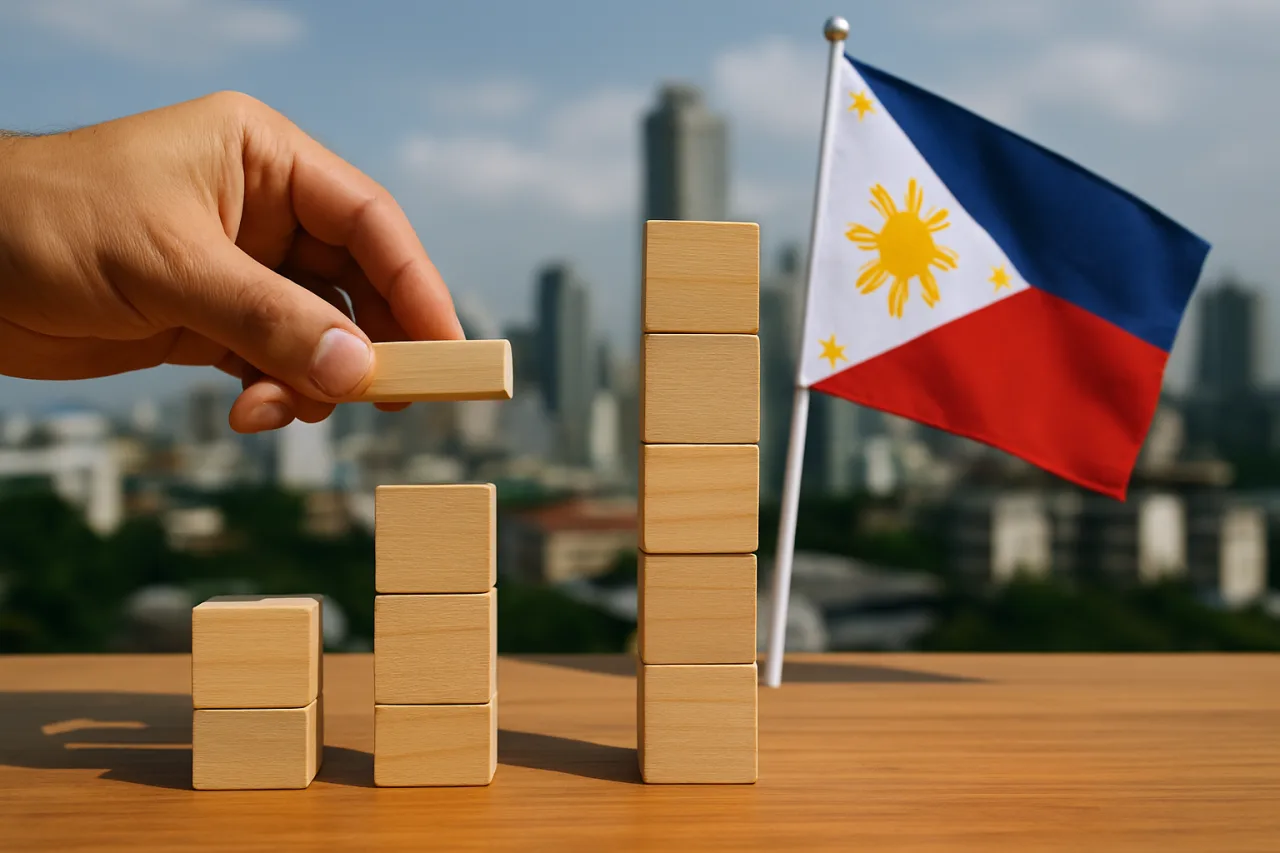
The OECD Philippines 2026 Economic Survey, published by the Organisation for Economic Co-operation and Development, contains a finding that every Filipino should understand: the Philippines needs to nearly double its productivity growth rate — from 3% to 5% annually — to triple income per capita by 2040. If it does not, the country will plateau. The OECD does not say this to criticize. It says this because the demographic tailwind that has carried Philippine growth for 15 years — a rapidly expanding working-age population — is fading. The country can no longer grow simply by adding more workers. It must grow by making each worker more productive. That shift, from quantity to quality of growth, will determine whether the next generation of Filipinos earns enough to stay home — or whether the OFW phenomenon continues for another decade. According to the OECD Philippines 2026 survey, the reforms needed are structural, not cyclical — and the window to implement them is narrowing.
Key Takeaway
- Productivity gap is the core challenge: The Philippines achieved 3% annual productivity growth over the past 15 years. To triple income per capita by 2040, it needs 5% — a 67% increase in productivity growth rate. This is the single most important number in the entire survey.
- Demographic dividend is fading: The working-age population growth that drove 15 years of economic expansion is slowing. Future income gains must come from productivity, not from adding more workers. This is why the OECD frames the challenge as structural, not cyclical.
- Two-thirds of Filipinos work in informal jobs: 66% of Filipino workers are employed in informal jobs without full social and labor protections. This is not a side issue — it is the central barrier to productivity growth. Informal workers cannot access training, cannot get credit, cannot scale their businesses, and cannot contribute to the pension system.
- Electricity and telecom costs are structural drags: Philippine electricity prices remain among the highest in Asia due to vertical integration between generation, distribution, and retail. Telecom services are costly by regional standards. Both raise costs for every business and every consumer in the country.
- The 2040 target is achievable but requires reform now: The OECD is clear that the reforms needed — competition policy, fiscal consolidation, formal job creation, climate adaptation — are not optional. Without them, the Philippines will not reach its income target. With them, it can.
The 2040 Income Target: What It Means for Every Filipino
The Philippine government’s Ambisyon Natin 2040 plan aims to triple income per capita relative to 2015 levels by 2040. This is not an abstract economic statistic — it is a promise about the daily life of every Filipino. Tripling income per capita means a worker earning ₱25,000 monthly today would earn the equivalent of ₱75,000 monthly in 2040, adjusted for inflation. It means families that currently struggle to pay for food, electricity, and school fees would have enough for savings, healthcare, and leisure. It means the Philippines would graduate from lower-middle-income to high-income status — and the OFW phenomenon would begin to fade because working abroad would no longer be financially necessary for millions of families.
The OECD’s finding is that this target is slipping. The Philippine economy has been among the fastest-growing emerging markets globally over the past 15 years — output has more than doubled since 2010, and poverty has halved. But the growth model that delivered those results was built on three engines: a rapidly expanding working-age population, solid labor productivity gains, and buoyant exports led by BPO and remittances. The OECD’s survey identifies that two of those three engines are weakening.
Population growth is slowing — which is good for sustainability but means fewer new workers entering the labor force each year. Global trade growth is weaker, and US tariff pressures are rising. The third engine — productivity — must now carry more of the load. But productivity growth has been running at approximately 3% annually for the past 15 years, and the OECD calculates it needs to reach 5% to hit the 2040 target.
Why does a 2-percentage-point gap matter so much? Because productivity compounds. At 3% annual growth, income per capita doubles in 24 years. At 5%, it doubles in 14 years. Over a 15-year period — the window between 2025 and 2040 — the difference between 3% and 5% productivity growth is the difference between tripling income and merely doubling it. That is the difference between a Philippines where OFWs come home and a Philippines where they keep leaving.
The Hidden Gem: Why 66% Informal Employment Is the Real Problem
The most important finding in the OECD survey is not about GDP growth rates or fiscal policy. It is about the 66% of Filipino workers who work in informal jobs — employment that does not provide full social and labor protections. This is the structural problem underlying every other economic challenge the Philippines faces, and the OECD devotes significant attention to it.
Informal employment is not just about legal status. It is about productivity. An informal worker cannot access formal credit to start or expand a business. They cannot access government training programs that require employer registration. They cannot contribute to SSS, PhilHealth, or Pag-IBIG, which means they have no safety net when they get sick, get injured, or retire. They cannot qualify for digital financial services that require formal income documentation. Informality traps workers in low-productivity, low-income, low-security work — and it traps the economy in a low-productivity equilibrium.
The OECD identifies three specific causes of high informality in the Philippines:
First, social contributions are too high for low-wage workers. When an employer hires a worker formally, they must pay SSS, PhilHealth, and Pag-IBIG contributions on top of the wage. For a low-wage worker earning near the minimum, these contributions can add 10-15% to labor costs — making it cheaper to hire informally. The OECD recommends reducing social contributions for low-wage workers to remove this disincentive.
Second, minimum wages are too high relative to productivity in low-income regions. In regions where productivity is low, the minimum wage can exceed what many workers can produce — making formal hiring economically irrational for employers. The OECD recommends moderating minimum wage increases in regions where wages are not aligned with productivity.
Third, dismissal rules are complex and create legal uncertainty. Strict employment protection makes employers hesitant to hire formally because firing an underperforming worker is legally difficult and expensive. The OECD recommends increasing predictability in employment protection, including capping compensation payments for dismissal.
The OECD’s proposed solution is a two-tier social protection system: a basic tier financed from general tax revenues providing universal coverage with essential benefits (non-contributory pensions, universal health insurance), and a second tier financed through social contributions for higher earners. This would broaden coverage while reducing the cost of formal employment for low-wage workers — the group most likely to be trapped in informality.
For the average Filipino, this matters because informality is the reason wages are low. If 66% of workers are informal, they compete in a labor market where the floor is set by workers with no protections, no benefits, and no bargaining power. Formalizing employment would raise the floor — and that would raise wages for everyone, not just those who move from informal to formal work.
Electricity and Telecom: The Hidden Tax on Every Filipino
The OECD Philippines 2026 survey identifies two sectors that act as a hidden tax on every Filipino business and consumer: electricity and telecommunications. Both are more expensive in the Philippines than in most regional peers, and both are expensive for the same reason — insufficient competition, as the OECD’s ECOSCOPE blog detailed in its analysis.
Electricity: Philippine electricity prices remain high, reflecting persistent vertical integration between generation, distribution, and retail supply. This means the same company that generates electricity also distributes it and sells it to consumers — eliminating the competitive pressure that would drive prices down. The OECD recommends requiring distribution utilities to divest generation assets and exit retail activities, which would create separate companies competing at each stage of the supply chain.
For the average Filipino household, high electricity prices mean less money for food, education, and savings. For the Philippine data center industry and BPO sector, high electricity costs raise operating expenses and reduce competitiveness against Vietnam, India, and Malaysia. The Philippines already tops ASEAN in power costs — a competitive disadvantage that directly affects job creation in the sectors that could employ returning OFWs.
Telecommunications: Telecom services are similarly costly by regional standards. The OECD recommends mandating open and non-discriminatory access to network infrastructure at regulated tariffs, overseen by an operationally independent regulator. This would encourage new entrants (the entry of DITO Telecommunity and the expansion of Globe and Smart competition has already shown how competition lowers prices) and improve service quality.
For the average Filipino, expensive telecom means slower digital adoption — which in 2026 means slower access to online education, telemedicine, digital banking, and remote work opportunities. The IT-BPM industry depends on reliable, affordable connectivity. If connectivity costs more in the Philippines than in competitors, BPO companies have a reason to locate elsewhere.
Fiscal Buffers and the Corruption Scandal
The OECD notes that public debt remains well above pre-pandemic levels and recommends rebuilding fiscal buffers — essentially, the government needs to collect more revenue and spend it more efficiently to prepare for future shocks and rising expenditure pressures from infrastructure, social protection, and climate adaptation.
One specific recommendation stands out: phasing out VAT exemptions that fail to help low-income households. The OECD notes that blanket exemptions for private healthcare, education, and all senior citizens often benefit higher-income households more than the poor. Replacing these exemptions with targeted social transfers — cash payments to vulnerable households — would raise revenue while protecting those who actually need help.
The survey also notes that a corruption scandal linked to public works has caused a sharp contraction in public construction, which weakened investment and GDP growth in the second half of 2025. The OECD recommends stronger prevention, well-resourced investigations, and consistent prosecution to reinforce accountability — because corruption doesn’t just steal money, it stops the infrastructure investment that the economy needs to grow.
For the average Filipino, corruption is not an abstract governance issue — it is the reason roads are not built, schools are not funded, and hospitals lack equipment. The OECD’s finding that a public works corruption scandal directly caused an investment contraction means that corruption is literally slowing the country’s economic growth. Every peso stolen is a peso not spent on the infrastructure that would create jobs for the workers who currently go abroad as OFWs.
Climate Change: The Disproportionate Impact on Vulnerable Filipinos
The OECD identifies the Philippines as highly exposed to climate change, with disproportionate effects on vulnerable populations. This is not a future risk — it is a current cost. Typhoons destroy infrastructure and housing every year, displacing workers and destroying livelihoods. Flooding disrupts business operations and supply chains. Drought reduces agricultural output and raises food prices.
The OECD recommends more consistent carbon pricing, expanded adaptation efforts in high-risk areas, and improved natural resource governance. Carbon pricing — taxing carbon emissions — would both raise revenue and incentivize the shift to cleaner energy. Adaptation investments — seawalls, flood management, resilient agriculture — would reduce the economic damage from climate events that already cost the Philippines billions annually.
For the average Filipino, climate change is not a global debate — it is the typhoon that destroys the house, the flood that ruins the small business, the drought that doubles the price of rice. The poorest Filipinos bear the highest cost because they live in the most vulnerable areas and have the least resources to recover. The OECD’s recommendation to expand social protection while investing in climate adaptation is not an environmental policy — it is a poverty reduction strategy.
What the OECD Philippines 2026 Survey Means for You
For OFWs and aspiring OFWs: The survey’s central finding — that productivity must nearly double — explains why wages in the Philippines remain low compared to wages abroad. If the country cannot raise productivity, it cannot raise wages, and the wage gap that drives OFW migration will persist. The OECD’s reform recommendations — formalizing employment, lowering electricity and telecom costs, reducing corruption — are the policies that would make staying home economically viable for millions of Filipinos. The 43% of OFWs who report being homesick are homesick because the Philippines has not yet built the economy that would let them come home. The OECD survey is a blueprint for building that economy.
For BPO and IT-BPM professionals: The OECD identifies business services as a competitive strength built on an educated, English-speaking workforce. But it warns that high electricity and telecom costs reduce the sector’s competitiveness. The reforms that would lower these costs — competition in electricity and telecom — would directly benefit the BPO industry by reducing operating expenses and improving connectivity. The Philippine AI career landscape depends on infrastructure that is currently too expensive.
For entrepreneurs and small business owners: The OECD’s finding that 66% of workers are informal means most small businesses operate outside the formal economy — without access to credit, government programs, or legal protections. The proposed two-tier social protection system would reduce the cost of formalizing, making it easier to register a business, hire employees formally, and access financial services. If you run a sari-sari store, a small farm, or a freelance practice, formalization is the path to growth — and the OECD is recommending policies that would make that path cheaper.
For investors: The OECD projects real GDP growth of 5.1% in 2026 and 5.8% in 2027 — strong by global standards. But the OECD Philippines 2026 survey also identifies downside risks: weaker public investment from corruption controls, global trade tensions, and high borrowing costs. For Philippine investors, the OECD’s analysis supports a cautiously bullish view — the economy is growing, but the structural reforms needed to sustain growth have not yet been implemented. The investment opportunity is real, but so is the risk that reform delays extend the timeline.
For students and young professionals: The OECD’s productivity finding is your career signal. If the country needs 5% productivity growth and is only achieving 3%, the workers who can deliver above-average productivity — through AI skills, technical expertise, and digital literacy — will be in the highest demand and earn the highest wages. The AI skills Filipino professionals need before 2027 are not just career advantages — they are the productivity improvements the entire economy needs.
The Bottom Line: Why This Survey Matters
The OECD Philippines 2026 is not a report for economists. It is a diagnosis of why the Philippines is not yet the country its people deserve — and a prescription for what would change that. The gems are not in the GDP projections or the inflation forecasts. They are in the structural findings:
The Philippines has 66% informal employment because formal hiring is too expensive. Fix the social contribution system and millions of workers gain protections, pensions, and higher wages.
The Philippines has the highest electricity costs in ASEAN because the same companies generate, distribute, and sell power. Force competition and every Filipino pays less for electricity — and every business becomes more competitive.
The Philippines is growing at 3% productivity when it needs 5%. The gap is not about working harder — it is about the structural barriers that prevent workers and businesses from operating at full efficiency. Remove the barriers and the growth follows.
This is why the OECD survey matters to every Filipino. It is not about what the government should do — it is about what would change in your daily life if the government did it. Lower electricity bills. Higher wages. Formal employment with benefits. A pension you can actually count on. An economy where your children do not need to go abroad to earn a living.
The OECD has provided the blueprint. The question is whether the Philippines will build on it.
Frequently Asked Questions About the OECD Philippines 2026 Survey
What is the OECD Economic Survey of the Philippines 2026?
The OECD Philippines 2026 Economic Survey is a comprehensive assessment of the Philippine economy published by the Organisation for Economic Co-operation and Development. It evaluates macroeconomic performance, identifies structural challenges, and recommends policy reforms. The survey’s special features focus on raising productivity growth, strengthening social protection, and confronting climate change. It projects GDP growth of 5.1% in 2026 and 5.8% in 2027.
What is the productivity gap the OECD identified?
The OECD Philippines 2026 survey found that the Philippines achieved approximately 3% annual productivity growth over the past 15 years. To triple income per capita relative to 2015 by 2040 (the government’s Ambisyon Natin 2040 target), productivity growth needs to reach 5% annually — a 67% increase. The OECD frames this as the central economic challenge: future income gains must come from making each worker more productive, not from adding more workers, because the demographic dividend is fading.
Why does 66% informal employment matter?
Two-thirds of Filipino workers are employed in informal jobs without full social and labor protections. Informal workers cannot access formal credit, government training, SSS/PhilHealth/Pag-IBIG, or digital financial services. This traps them in low-productivity, low-income work and traps the economy in a low-productivity equilibrium. The OECD recommends reducing social contributions for low-wage workers, moderating minimum wages in low-productivity regions, and simplifying dismissal rules to make formal hiring cheaper and less risky.
What does the OECD recommend for electricity and telecom?
The OECD recommends requiring distribution utilities to divest generation assets and exit retail electricity activities to create competition. For telecom, it recommends mandating open and non-discriminatory access to network infrastructure at regulated tariffs. Both reforms aim to lower costs for consumers and businesses, making Philippine companies more competitive against regional peers where electricity and connectivity are cheaper.
How does the OECD survey affect OFWs?
The survey’s central finding — that productivity must nearly double — explains why wages in the Philippines remain low compared to wages abroad. The OECD’s reform recommendations (formalizing employment, lowering electricity and telecom costs, reducing corruption) are the policies that would raise domestic wages and make staying home economically viable. The 43% of OFWs who report being homesick are homesick because the Philippines has not yet built the economy that would let them return.
What is the two-tier social protection system the OECD recommends?
The OECD recommends a two-tier system: a basic tier financed from general tax revenues providing universal coverage with essential benefits (non-contributory pensions, universal health insurance), and a second tier financed through social contributions for higher earners. This would broaden social protection coverage while reducing the cost of formal employment for low-wage workers — the group most likely to be trapped in informal employment.
What GDP growth does the OECD project for the Philippines?
The OECD projects real GDP growth of 5.1% in 2026, picking up to 5.8% in 2027. Inflation is expected to rise gradually to the mid-point of the central bank’s target range. Investment is expected to recover as public investment normalizes and borrowing costs decline, but global trade tensions may weigh on external demand. Risks are tilted to the downside due to potential weakness in public investment and geopolitical uncertainty.
This article is for informational purposes only and does not constitute economic policy analysis, investment advice, or legal counsel. The OECD Economic Survey findings represent the institutional view of the OECD, not the official position of the Philippine government. Economic projections are subject to revision. Always consult primary sources and qualified professionals before making decisions based on economic analysis.